Desert Online General Trading LLC
Dubai, United Arab Emirates
Desert Online General Trading LLC
Dubai, United Arab Emirates

Full description not available
R**N
Inspiring....Should be Required Reading for All Members of Humanity
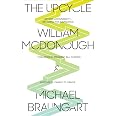
If you are already familiar with the work of Bill McDonough ("BM") and Michael Braungart ("MB", together "BMMB"), then my glowing praise should come as no surprise and you can probably stop reading my review and go get your copy now. As a bioentrepreneur running a company, I am well read on current thinking involving sustainability, biomimicry, biology, and futurism. All the same I just checked out and devoured this book in a day. My high expectations were not disappointed, and the marathon read spurred my creativity not just in business but all the way through the cycle down to my family life, which was the intention.In 1992 BMMB publicly presented the "Hannover Principles", a sustainability manifesto which advocates transcending basic design principles by also considering the impact on health and the environment, how the design impacts things on the periphery and identifying those relationships, eliminating waste and optimizing efficiency, and striving to holistically improve the end product. Together they identified and analyzed thousands of industrial materials and produced a ranking system that delineated their qualities along the lines of toxicity and true recyclable sustainability (as opposed to "downcycling", or reusing the materials of a primary product to produce something else with less and less quality/utility in the future). This work led to a major series of high level consultations producing a "butterfly effect" that is positively impacting us all, and will continue to do so ad infinium.Ten years later they wrote "Cradle to Cradle", which looked at how products could be made better by applying the Hannover Principles, and that doing so would make companies more profitable. I still count Cradle to Cradle as one of the best and most fascinating business books I have read, and this was largely due to the outstanding examples of how major corporations like Ford and Interface were able to make strategic changes that resulted in superior products, less harmful materials, less waste, etc. I refer to it as a business book in part because BMMB do not blame capitalism for all our troubles. Quite the opposite, they profoundly advocate it as an essential engine of progress and correctly illustrate through example (in both books) how an intention or lack of one will dictate a positive or negative outcome.Rather than rewrite Cradle to Cradle, the authors set out to explain why it exists, which they richly describe as follows, "The goal of The Upcycle is a delightfully diverse, safe, healthy, and just world with clean air, water, soil, and power - economically, equitably, ecologically, and elegantly enjoyed". Ambitious? BMMB suggest that if Cradle to Cradle principles are widely adopted then this would be the result and that the process would be endless through constant improvement; a true "Virtuous Cycle".In the 10-years following Cradle to Cradle, BMMB have had continuous forward momentum putting these principles into practice not just with major global corporations, but even with governments like China (who desperately need this help, for the sake of our entire biosphere). As such, BMMB have enjoyed a unique position working with and influencing powerful global forces and driving them towards positive progress. "The Upcycle" reflects this refined experience. It is a call to action for all of society to become conscious not just of what they design and produce, but also of how their decisions on consumption affect waste or produce toxicity, and that our choices thus affect future generations and indeed our planet. It asks us to consider not just how we can do a little here or there producing a "less bad" impact, but instead to analyze and discover how we can improve our habits and become a true force of positive impact. A simple example of putting this into practice is to begin zero consumption of products made by companies that fail to adopt these practices, thus depriving them of any economic reward (I haven't given fast food a single penny since 1989, nor do I patronize certain airlines or banks). When we empower ourselves and hold them accountable they are forced to change or they will disappear, and either outcome is a positive result.There are many ideas present that will inspire business managers and leaders to consider how they can optimize their processes and designs, and thus is arguably the best $15 you could spend on unleashing your creativity by challenging how you do things from the bottom to the top. As it is intended, it is no less valuable for everyone else as it teaches us to have higher expectations of industry, society, and ourselves. The Forward is by Bill Clinton who says the Optimist's glass is half full, the Pessimist's is half empty, while BMMB's glass is always full of half water and half air. Classic.Just as Cradle to Cradle was printed according to the best available practices of the time, The Upcycle's concepts were employed in printing this non-toxic biodegradable book to the highest standards of today; once again very cool. I'm looking forward to reading it again, which is rare.Enjoy!
M**R
A chemist and an architect
The Upcycle follows McDonough and Braungart's book, _Cradle to Cradle_. These are books everyone should read. There are two outstanding reasons why I like both books. One, they are written by an artist and a scientist. The blend of art and science is so necessary in our mechanistic, materialistic society. Secondly, these two authors spend their time finding incredible solutions to some of our worst non sustainable living problems. They don't spend any time griping about all of our problems; rather, they look for innovative solutions that go beyond recycling. Their solutions usually take obsolescent objects and make better products out of them so that they fit into a cyclical pattern instead of dead ending in an inferior recycled product, or worse yet, in a landfill. Both books are optimistic and thoroughly researched. I can't recommend them highly enough!
C**A
Cradle to Cradle, release 2.0
C2C and The UpcycleWilliam McDonough, an American architect, and Michael Braungart, a German chemist, combined to write Cradle to Cradle (C2C). C2C, published in 2002, discusses product design, with emphasis on materials utilization efficiency in an environmental context. C2C proposes that product design consider negative effects, especially toxicity, to humans and the natural world at every step in the product's value chain, including disposition when the product is no longer useful. In essence, C2C goes beyond "cradle to grave" design, which ends at a landfill or an incinerator, to "cradle to cradle" design, where non-toxic materials are reclaimed, recycled or reused in generation after generation of products.Recently, the same two authors published The Upcycle. The Upcycle isn't really a sequel to C2C. Rather, as its title implies, it is an expansion on C2C, based on experience -- in this case, two decades of experience. Think of The Upcycle as another generation of the same product, rather like release 1.0 and release 2.0 of a software package.Here are a few of the key ideas from The Upcycle:>> More good, rather than less bad: The general approach to environmental impacts and human well-being is to do less bad -- reduce atmospheric emissions, reduce industrial accidents and reduce waste to landfill, for example. The Upcycle asserts that reduction, even reduction to zero, isn't sufficient. Production should aim beyond shrinking its negative footprint on the world to producing an increasing positive footprint. Where the term "sustainability" confers a sense of steady state, "upcycle" suggests continuing improvement, product generation over product generation>> Design as a latchkey to abundance: I bought The Upcycle because of its subtitle: Beyond Sustainability -- Designing for Abundance. The book proposes that design -- tangible product design, as well as process and systems design -- can lead to upcycling, and that an emphasis on upcycling leads away from a world of scarcity to a world of abundance.>> "Biosphere" vs. "Technosphere": The Upcycle distinguishes between the "biosphere" -- the natural world and its biological cycles -- and the "technosphere" -- the realm of the synthetic. Natural products and natural cycles provide models for design within the technosphere. However, the recovery processes in the two spheres differ significantly, such that mixing natural materials with synthetic materials in the same product may impair upcycling.>> Regarding toxicity: C2C and The Upcycle both regard toxicity as both cumulative and pernicious. Cradle to cradle design relies on detailed assessment of the potential toxicology of all components of every material used in the manufacture of a product. The level of concern goes well beyond most governmental regulations on toxicity, as they existed at the beginning of the current century.The Upcycle provides the term "enchanted skepticism", which describes my general reaction to that book. Many of the ideas are fascinating. I'm quite convinced that radical improvements in materials utilization, across product generations, are possible. Recent product and process design innovations in the automobile industry and in building construction present interesting cases in point, although The Upcycle affords little attention to either. However, favorable examples are one thing. Broad practicability across a wide range of manufactured products may be another.
N**L
Win-win thinking applied to the big problems
The ideas contained in this book are awesome, encouraging, and inspirational. If you're familiar with the 7 Habits of Highly Effective People (R), think Habit 4. EVERYONE wins when this mentality guides our efforts. The goal says it all: "The goal of The Upcycle is a delightfully diverse, safe, healthy, and just world with clean air, water, soil, and power—economically, equitably, ecologically, and elegantly enjoyed." As a materials engineer, it's what I work toward. As a customer, it's what I will pay for. As a father, it's what I can give to my children. As a living, breathing human being, it just makes sense.
Trustpilot
5 days ago
1 day ago