Buy anything from 5,000+ international stores. One checkout price. No surprise fees. Join 2M+ shoppers on Desertcart.
Desertcart purchases this item on your behalf and handles shipping, customs, and support to Iceland.
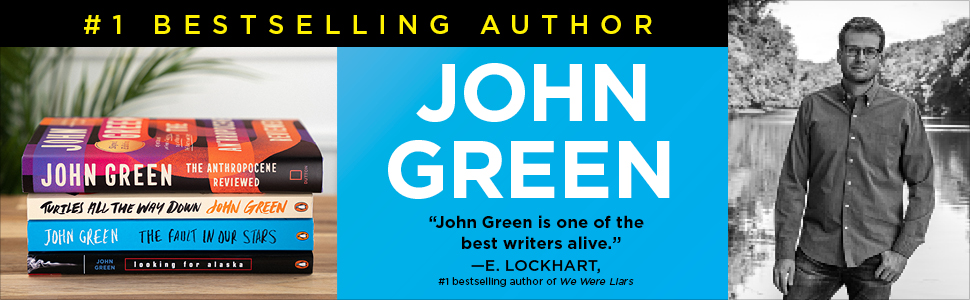
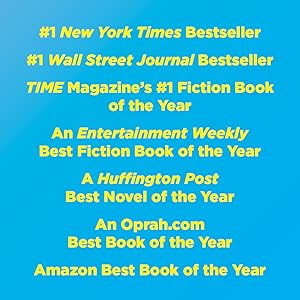
The beloved, #1 global bestseller by John Green, author of The Anthropocene Reviewed and Turtles All the Way Down “John Green is one of the best writers alive.” –E. Lockhart, #1 bestselling author of We Were Liars “The greatest romance story of this decade.″ – Entertainment Weekly #1 New York Times Bestseller • #1 Wall Street Journal Bestseller • #1 USA Today Bestseller • #1 International Bestseller Despite the tumor-shrinking medical miracle that has bought her a few years, Hazel has never been anything but terminal, her final chapter inscribed upon diagnosis. But when a gorgeous plot twist named Augustus Waters suddenly appears at Cancer Kid Support Group, Hazel’s story is about to be completely rewritten. From John Green, #1 bestselling author of The Anthropocene Reviewed and Turtles All the Way Down, The Fault in Our Stars is insightful, bold, irreverent, and raw. It brilliantly explores the funny, thrilling, and tragic business of being alive and in love. Review: The book you've been looking for.... - The Fault in our Stars is a love story of two cancer struck teenagers. The author, John Green, tells this story through the eyes and mind of the main character, Hazel Grace. John Green got inspiration for the title of the book from Act 1 Scene 2 of Shakespeare’s play Julius Caesar. “The fault, dear Brutus, is not in our stars, but in ourselves, that we are underlings.” The genre of “The Fault in our Stars” is realistic fiction and geared towards young adults but enjoyed by many ages. It was recently turned into a movie with the same name filmed by Josh Boone. TFIOS is the winner of the 2013 Children’s Choice Teen Book award. It was named TIME magazines #1 Fiction Book of the year on June 6th, 2014, a feature film adaption that was released and earned over $300 million in box office sales. Also, TFIOS won many Teen Choice Awards in 2014. The Fault in our Stars was a book that let me wanting more. I wanted to know more about the book after the ending. I wanted to know what happened with Hazel’s family. The book was well-written and I thoroughly enjoyed it. I just wish it was a more strung out plot. Moreover, on desertcart book reviews surviver_15 said “I think it is very well written. It covers a topic that is difficult to talk about and is often avoided” While scrolling through all the reviews I see several topics having their titles be, “The Best Book I’ve Read in Years”, or “Young Adult Fiction at its Finest.” In addition, on desertcart book review Helen said, “TFIOS is a word that defies its genre in all the best ways. The silly boy crushes and superficial gossip that writers think makes up 99% of high school steps aside for a beautiful, honest, heartrending story of life, death, and love. I can only compare this book to Markus Zuzak’s award-winning “The Book Thief” in terms of sophistication and depth.” Coming from one of our own Trumbull High School fellow classmates, Lily Clark also states, “This book was inspiring and heartwarming. It taught me to love my life and not take anything for granted.” In my opinion, the trip to meet Van Houten was the best part of the book. John Green described Amsterdam in a way where I could imagine the romantic dinner at the restaurant Oranjee and the canal ridden streets. The detail in which they described the suffering of Augustus Waters throughout the book was articulate and gave me an elaborate mental visualization of him. It was almost as if I could hear their voices in my head and I could feel their sadness. Looking at all these quotes from people I can definitely tell they agreed on how they felt about this book. So let’s talk about what this book is really about. TFIOS is a love story about two stage 4 cancer teenagers. Hazel Grace is a shy thyroid cancer stuck 16 year old girl. When her mom makes her go to a support group, she takes special interest in a 17 year old ex-basketball star who happens to be an amputee. Hazel recommends Gus to read, “An Imperical Affliction” which becomes the epitome of their relationship. After finishing the book, Gus reveals that he had been in touch with the author of the book and had been offered a meeting with him. After medical restriction problems and parent persuasion, they took a trip with Hazels mother to Amsterdam to meet the infamous Van Houten. After meeting with the drunken genius, Hazel loses interest in finding out “What happens next.” In this book on this romance filled trip, Gus tells Hazel his cancer has returned and he was in fact dying. When they return home Gus’s sickness worsens rapidly. Now I don’t want to give too much away but let’s just say you get that feeling of not wanting to put the book down, but also need a break from reading this heartwarming book. Most importantly, you can’t be afraid to let a few tears go. On the website theguardian.com Milo agrees by saying, “It enthralls, entertains, and educates and offers a jumping off point for young people to explore and discuss important philosophical issues. And yes, I did get something in my eye at the end. But it was only dust.’” The author did a great job of allowing us to feel different emotion throughout the book. At times it was hard to read, but I guess that’s what you should expect when reading at times romantic and funny, but at the sad time heart wrenching and heart breaking. John Green receives a question asking, “Did the themes and ideas from stories you had abandoned in the past help shape TFIOS?” He replied, “Yes , in a lot of ways. There are many lines from the sequel and the desert island book that ended up in TFIOS in different ways. John Green also adds, The desert island book was primarily about how we behave around each other when we are scared, how fear makes us both more and less human…..But then I ended up including a lot of metrification in TFIOS, so it founds its way in as well.” Concluding, if you have read some of his other book for instance, Paper Towns (2008), Will Grayson, Will Grayson (2010), as well as some short stories “Reasons” What you wish for (2011) or most recently, “Double on Call and other Short Stories (2012), the TFIOS is definitely the book for you. Overall, I wouldn’t hesitate to pick this book up and experience the feelings most of us felt during this movies, and I hope you leave off feeling the way I did. Review: Beautiful. Must Read. - Read this and other reviews at [...]. Okay, so to say a book changed my life is pretty serious business. This book, though, is serious. The Fault in Our Stars by John Green has changed my life. I couldn't decide if it ruined me. Or fixed me. I've decided to go with fixed me. In all honesty, a series changed my life last year - Fifty Shades of Grey - seems strange, maybe, but it's the truth. It opened me up to this whole other world of books, those independently published, prompted me to write reviews, and therefore start this blog, and since then meet so many amazing people and cultivate amazing friendships. Last spring, I came across The Fault in Our Stars by John Green. I read the synopsis, saw it was getting high praise, and then I chickened out. I couldn't have run faster. Young people. Cancer. No. Way. Generally, I'm a sucker when it comes to subjects like this anyway - I always watch Beaches or Steel Magnolias, but damnit, even though I know what happens, I still can't manage to not lie in the fetal position and snot all over myself. {{"That's the thing about pain...it demands to be felt."}} A couple months went by, and I crossed paths with some other avid readers, like myself, all who were SCREAMING for people to read this book. I always felt there was no way I could broach this. My husband's brother passed away in January 2011 (two years ago today, to be exact). My son was 5 weeks old, and it was a horribly dark time. So bittersweet. We had this awesome baby, and then Tim's (my husband) twin brother was dying. I knew reading this story would open up a lot of feelings I remember having in regards to Jeff's cancer, but more importantly to the way it affected my husband and my in-laws. I said at one point, not long after I had Cohen, that I could not ever imagine burying my child. John Green pointed this out for me not far into TFiOS. {{There is only one thing in this world shittier than biting it from cancer when you're sixteen, and that's having a kid who bites it from cancer.}} I fell in love with the characters (all of them), the writing and the story from page one. While I knew it was going to be a sad story, the way that John presented the subject was beautiful. It's amazing how connected to fictional characters you can become, and this was never truer than when reading this story. John was able to lace amazing humor, sarcasm, romance, and HONESTY, so much honesty into this, that it was impossible to put down, even while crying so hard, I couldn't see the screen of my iPad. {{It seemed like forever ago, like we'd had this brief but still infinite forever. Some infinities are bigger than other infinities.}} Yes, as I predicted, this story ripped me open, but it did much more than that. It truly put me back together in way that I didn't realize I was broken. It amazes me how much you can love and learn from people that aren't real. John is a genius. He created these characters that grab you IMMEDIATELY and don't let go. Ever. I finished this over a week ago, and have since found myself re-reading certain parts on numerous occasions. I wasn't even going to review it, to be completely honest, because I knew ^^^ this would occur. Just a whole lot of nonsensical rambling, with some memorable quotes interspersed. I know I'm not doing it justice. And no one can. It just must has to be experienced and felt. {{I want to leave a mark.}} The day after reading this, I crawled into bed with my son (he's 2) and had a long talk with him. He just stared at me, babbled on about the humidifier, his train table and the stars and moon. I knew, though, this story made me think. It gouged out some stuff in me, and hopefully I can be a better version of myself because of it. I was then watching Private Practice and Sheldon (one of the doctors on the show) said something that reminded me so much of this story, and just life in general. And its importance. {{The petty things, they don't matter - the things we argue about and wish we could change about another person: none of that matters. What matters is having someone there to hold your hand if you have cancer.}} Not everyone is so lucky to have that. But many are. I know for my husband, his family found comfort in the fact that Jeff had that. And I know someday I'd have that. It is easy to take for granted, but this book reminded me how important it is to make extra sure NOT to take advantage of this. And of life. I hope that if you're scared to read this, you'll give it a chance. Yes, it's a sad story. But it's more than that. And it deserves to be read for the reasons other than it's sad. Life is sad, sometimes; in fact, a lot of times, life is sad. And unfair. But reading a story like this, reminded me that even in the saddest of moments, for people in the worst circumstances, there's still happiness, and things can be okay. I'm not sure how I'll change my life, but I know it's already changed. And will keep changing. SIDE NOTE TANGENT (again): In John's speaking engagement at Carnegie Hall on Tuesday night he said, the true character of a hero is not being able to go from weakness to strength, but rather strength to weakness. I got goosebumps when he said that and I couldn't possibly agree more - especially when it comes to writing an obituary and the wording of so and so "lost his/her battle with cancer" -- there is no losing the battle. Fighting it at all is winning, suffering is winning, and being the kind of hero that lives through this is NEVER losing the battle. Unfortunately Cohen never got to meet Jeff because of all sorts of crappy circumstances at the end. But we know that he's left his mark and Cohen will know just great his Uncle Jeff was. It's nice that today, of all days, I've finally gotten this review up and written and it can serve to be a great remembrance of him. You don't get to know how long you'll be here for, but never underestimate your mark on the world. Oh - and in case I didn't make myself clear - read this book. Okay? Okay.


| Best Sellers Rank | #2,758 in Books ( See Top 100 in Books ) #1 in Teen & Young Adult Fiction about Self Esteem & Reliance #7 in Teen & Young Adult Fiction about Death & Dying #18 in Teen & Young Adult Contemporary Romance |
| Customer Reviews | 4.6 out of 5 stars 163,876 Reviews |
M**Y
The book you've been looking for....
The Fault in our Stars is a love story of two cancer struck teenagers. The author, John Green, tells this story through the eyes and mind of the main character, Hazel Grace. John Green got inspiration for the title of the book from Act 1 Scene 2 of Shakespeare’s play Julius Caesar. “The fault, dear Brutus, is not in our stars, but in ourselves, that we are underlings.” The genre of “The Fault in our Stars” is realistic fiction and geared towards young adults but enjoyed by many ages. It was recently turned into a movie with the same name filmed by Josh Boone. TFIOS is the winner of the 2013 Children’s Choice Teen Book award. It was named TIME magazines #1 Fiction Book of the year on June 6th, 2014, a feature film adaption that was released and earned over $300 million in box office sales. Also, TFIOS won many Teen Choice Awards in 2014. The Fault in our Stars was a book that let me wanting more. I wanted to know more about the book after the ending. I wanted to know what happened with Hazel’s family. The book was well-written and I thoroughly enjoyed it. I just wish it was a more strung out plot. Moreover, on Amazon book reviews surviver_15 said “I think it is very well written. It covers a topic that is difficult to talk about and is often avoided” While scrolling through all the reviews I see several topics having their titles be, “The Best Book I’ve Read in Years”, or “Young Adult Fiction at its Finest.” In addition, on Amazon book review Helen said, “TFIOS is a word that defies its genre in all the best ways. The silly boy crushes and superficial gossip that writers think makes up 99% of high school steps aside for a beautiful, honest, heartrending story of life, death, and love. I can only compare this book to Markus Zuzak’s award-winning “The Book Thief” in terms of sophistication and depth.” Coming from one of our own Trumbull High School fellow classmates, Lily Clark also states, “This book was inspiring and heartwarming. It taught me to love my life and not take anything for granted.” In my opinion, the trip to meet Van Houten was the best part of the book. John Green described Amsterdam in a way where I could imagine the romantic dinner at the restaurant Oranjee and the canal ridden streets. The detail in which they described the suffering of Augustus Waters throughout the book was articulate and gave me an elaborate mental visualization of him. It was almost as if I could hear their voices in my head and I could feel their sadness. Looking at all these quotes from people I can definitely tell they agreed on how they felt about this book. So let’s talk about what this book is really about. TFIOS is a love story about two stage 4 cancer teenagers. Hazel Grace is a shy thyroid cancer stuck 16 year old girl. When her mom makes her go to a support group, she takes special interest in a 17 year old ex-basketball star who happens to be an amputee. Hazel recommends Gus to read, “An Imperical Affliction” which becomes the epitome of their relationship. After finishing the book, Gus reveals that he had been in touch with the author of the book and had been offered a meeting with him. After medical restriction problems and parent persuasion, they took a trip with Hazels mother to Amsterdam to meet the infamous Van Houten. After meeting with the drunken genius, Hazel loses interest in finding out “What happens next.” In this book on this romance filled trip, Gus tells Hazel his cancer has returned and he was in fact dying. When they return home Gus’s sickness worsens rapidly. Now I don’t want to give too much away but let’s just say you get that feeling of not wanting to put the book down, but also need a break from reading this heartwarming book. Most importantly, you can’t be afraid to let a few tears go. On the website theguardian.com Milo agrees by saying, “It enthralls, entertains, and educates and offers a jumping off point for young people to explore and discuss important philosophical issues. And yes, I did get something in my eye at the end. But it was only dust.’” The author did a great job of allowing us to feel different emotion throughout the book. At times it was hard to read, but I guess that’s what you should expect when reading at times romantic and funny, but at the sad time heart wrenching and heart breaking. John Green receives a question asking, “Did the themes and ideas from stories you had abandoned in the past help shape TFIOS?” He replied, “Yes , in a lot of ways. There are many lines from the sequel and the desert island book that ended up in TFIOS in different ways. John Green also adds, The desert island book was primarily about how we behave around each other when we are scared, how fear makes us both more and less human…..But then I ended up including a lot of metrification in TFIOS, so it founds its way in as well.” Concluding, if you have read some of his other book for instance, Paper Towns (2008), Will Grayson, Will Grayson (2010), as well as some short stories “Reasons” What you wish for (2011) or most recently, “Double on Call and other Short Stories (2012), the TFIOS is definitely the book for you. Overall, I wouldn’t hesitate to pick this book up and experience the feelings most of us felt during this movies, and I hope you leave off feeling the way I did.
M**S
Beautiful. Must Read.
Read this and other reviews at [...]. Okay, so to say a book changed my life is pretty serious business. This book, though, is serious. The Fault in Our Stars by John Green has changed my life. I couldn't decide if it ruined me. Or fixed me. I've decided to go with fixed me. In all honesty, a series changed my life last year - Fifty Shades of Grey - seems strange, maybe, but it's the truth. It opened me up to this whole other world of books, those independently published, prompted me to write reviews, and therefore start this blog, and since then meet so many amazing people and cultivate amazing friendships. Last spring, I came across The Fault in Our Stars by John Green. I read the synopsis, saw it was getting high praise, and then I chickened out. I couldn't have run faster. Young people. Cancer. No. Way. Generally, I'm a sucker when it comes to subjects like this anyway - I always watch Beaches or Steel Magnolias, but damnit, even though I know what happens, I still can't manage to not lie in the fetal position and snot all over myself. {{"That's the thing about pain...it demands to be felt."}} A couple months went by, and I crossed paths with some other avid readers, like myself, all who were SCREAMING for people to read this book. I always felt there was no way I could broach this. My husband's brother passed away in January 2011 (two years ago today, to be exact). My son was 5 weeks old, and it was a horribly dark time. So bittersweet. We had this awesome baby, and then Tim's (my husband) twin brother was dying. I knew reading this story would open up a lot of feelings I remember having in regards to Jeff's cancer, but more importantly to the way it affected my husband and my in-laws. I said at one point, not long after I had Cohen, that I could not ever imagine burying my child. John Green pointed this out for me not far into TFiOS. {{There is only one thing in this world shittier than biting it from cancer when you're sixteen, and that's having a kid who bites it from cancer.}} I fell in love with the characters (all of them), the writing and the story from page one. While I knew it was going to be a sad story, the way that John presented the subject was beautiful. It's amazing how connected to fictional characters you can become, and this was never truer than when reading this story. John was able to lace amazing humor, sarcasm, romance, and HONESTY, so much honesty into this, that it was impossible to put down, even while crying so hard, I couldn't see the screen of my iPad. {{It seemed like forever ago, like we'd had this brief but still infinite forever. Some infinities are bigger than other infinities.}} Yes, as I predicted, this story ripped me open, but it did much more than that. It truly put me back together in way that I didn't realize I was broken. It amazes me how much you can love and learn from people that aren't real. John is a genius. He created these characters that grab you IMMEDIATELY and don't let go. Ever. I finished this over a week ago, and have since found myself re-reading certain parts on numerous occasions. I wasn't even going to review it, to be completely honest, because I knew ^^^ this would occur. Just a whole lot of nonsensical rambling, with some memorable quotes interspersed. I know I'm not doing it justice. And no one can. It just must has to be experienced and felt. {{I want to leave a mark.}} The day after reading this, I crawled into bed with my son (he's 2) and had a long talk with him. He just stared at me, babbled on about the humidifier, his train table and the stars and moon. I knew, though, this story made me think. It gouged out some stuff in me, and hopefully I can be a better version of myself because of it. I was then watching Private Practice and Sheldon (one of the doctors on the show) said something that reminded me so much of this story, and just life in general. And its importance. {{The petty things, they don't matter - the things we argue about and wish we could change about another person: none of that matters. What matters is having someone there to hold your hand if you have cancer.}} Not everyone is so lucky to have that. But many are. I know for my husband, his family found comfort in the fact that Jeff had that. And I know someday I'd have that. It is easy to take for granted, but this book reminded me how important it is to make extra sure NOT to take advantage of this. And of life. I hope that if you're scared to read this, you'll give it a chance. Yes, it's a sad story. But it's more than that. And it deserves to be read for the reasons other than it's sad. Life is sad, sometimes; in fact, a lot of times, life is sad. And unfair. But reading a story like this, reminded me that even in the saddest of moments, for people in the worst circumstances, there's still happiness, and things can be okay. I'm not sure how I'll change my life, but I know it's already changed. And will keep changing. SIDE NOTE TANGENT (again): In John's speaking engagement at Carnegie Hall on Tuesday night he said, the true character of a hero is not being able to go from weakness to strength, but rather strength to weakness. I got goosebumps when he said that and I couldn't possibly agree more - especially when it comes to writing an obituary and the wording of so and so "lost his/her battle with cancer" -- there is no losing the battle. Fighting it at all is winning, suffering is winning, and being the kind of hero that lives through this is NEVER losing the battle. Unfortunately Cohen never got to meet Jeff because of all sorts of crappy circumstances at the end. But we know that he's left his mark and Cohen will know just great his Uncle Jeff was. It's nice that today, of all days, I've finally gotten this review up and written and it can serve to be a great remembrance of him. You don't get to know how long you'll be here for, but never underestimate your mark on the world. Oh - and in case I didn't make myself clear - read this book. Okay? Okay.
J**E
All of The Things
~4.5/5 So, I'm feeling a little unsure about this book. And so I'm not totally sure what to say about it. I feel like I kind of don't think it was amazing, but it was amazing. And there is no reason for me to not think it was amazing. Maybe it was just so much, and I'm overwhelmed and very unsure or something. Also, I feel a little biased and pressured, and like I should only say amazing things about it. But I also don't feel like there's really anything not amazing about it in the first place. And I don't really know what rating to give it. I feel like, maybe, it doesn't really deserve a 4.5, and yet it also deserves nothing less? I'm just all kinds of conflicted. (But, I swear, I'm going to be honest throughout all of this review.) (Also, I promise, I'm not going to spoil anything big in this besides general plot. So, Spoiler Free!) So I understand what John Green (I kind of want to address him as John and not Green. But that's unprofessional, isn't it? [Not that, you know, I am professional or anything.] And yet, as a Nerdfighter, that's what I always think of him as. Maybe I'll just call him John Green through all of it?) was trying to say with all of it. I get the message. And it was awesome and completely well done. And I might talk more about it later, but I don't think that's what I'm going to focus on in this review. I am going to talk about Hazel, though. Ahh, Hazel Grace. First of all, I want to say how well John did at creating a real girl. Especially because, as a (you know, mostly) normal teenage(-ish) girl, I related to her in a lot of ways. She's a bit cynical, and not all that sure of herself, and she says 'um' quite a bit and ends a lot of what she says in a question. And I love how she thinks about boys, and just living in general. And she's smart, and in college even though she's sixteen (with a completely understandable and logical reason), and she's honest (at least to herself). She's a teenager, even if she does have cancer. And, ohhh, Augustus Waters. (Also, I want to mention that I love the names John Green came up with. They are brilliant.) I don't even... But I do, I do know what to say about him. He is simply amazing. He wants to mean something, and he's fun, and he likes Hazel and doesn't see why she shouldn't know this. He's just... full of swoon. He is all swoon. There is so much swoon with him that I don't even know what to tell you besides that you have to read it to fully understand the amazing-ness that is him and Hazel, when they are together and not. And I like that the drama wasn't pumped up very much or anything. Even when they have problems (that would usually cause a big scene or something), it isn't too tense, it's not dramatic. It just is what it is. And I wasn't expecting what... happened to him, to happen to him. Especially not before her. The situation was different from what I'd expected when I started the book, and I'm glad. It turned out different, in a very good way. Well, not very, but, you know... Also, you guys. I'd read several reviews and seen lots of people talking about it, and how it was full of all these emotions. And, since I'm not the type of person that cries at things, I was like, 'yea, okay', but my interest was piqued. And you guys, everyone was kind of right. A lot of the book is just fun and more fun, and there are a ton of cute moments between Hazel Grace and Augustus. It's much more funny than I thought it would be, like with moments of the three just joking around, which I really enjoyed. And, yea, there are several moments in the book where Hazel is by herself and thinking about things, and I enjoyed them, but I didn't think they were overwhelmingly upsetting or anything. But then. But then, you guys. A scene came up about Augustus. And I was completely caught off guard. I knew it was coming; it was obvious that it was coming. And even when it started, I was like 'aww, sad', but then, and I think I might have just put myself in Hazel's mind and imagined it for myself, but then I thought 'oh, there are tears in my eyes'. I'm not even kidding. This book brought me so close to crying, closer than anything I've read before. And it was amazing. Sad, but amazing. And then there's Isaac. He's one of their friends, who goes blind. But him and Augustus play violent video games together, and then him and Hazel play vocal video games, and he has a moment of denial and hard realization that's a bit sad (and honest, and I genuinely enjoyed it), and he's just generally awesome. We didn't see too much of anyone else's parents (although what we did see was usually pretty humorous or sad) besides Hazel's, who we saw often. She's close to both of them, and they were pretty awesome. Her dad, in particular, was so sweet, and very sensitive (and cried often). And she jokes around easily with her mom, for instance, when they take a trip with Augustus. Near the end, they got a bit pushy, but otherwise were pretty cool. Also, the subject matter. It made me a little wary, but it didn't put me off from reading it or anything, because I was much too excited for that. And I haven't even read much about people with cancer, or many novels with sick people. But he did it really well. It was (I'm assuming this, because I haven't, nor have I ever been around someone who has, experienced this,) realistic. And I'm pretty sure he knew what he was talking about, as there were several technical words and stuff thrown around, and I know that he did a lot of research (not that that he couldn't have been making it all up, though). He wasn't afraid of showing the ugly parts of it. It seemed very honest, with the way everyone reacted to it, and thought about living and dying, and how they're all treated because they're sick, like with the Perks and Support Group. (And I liked the, "depression is a side effect of dying" thing, in particular. There were several parts of the book that made me think, "That's a nice/interesting way of looking at things". There are just so many little things that matter so much in this book.) And whole thing with Van Houten and An Imperial Affliction. That's just... hm. (Kind of messy? And a bit sad?) There's the big similarities. With the endings, for example. And it is a bit frustrating, but I get it. So, fine. Fine. The book has John Green's general way of writing. It's his style. He's a bit subtle and honest and a little dark; just him. This book included text messages and letters and little things like that. They added more character to the story, more personality to the characters. I liked it. It was good. It was amazing. It wasn't amazing. It was all of the things and not, all at the same time. But aside from all that, I really enjoyed it, maybe even loved it, and I would suggest it. [P.S. Thank you, John Green for creating this book with such amazing characters. And, also, for signing so very many of them. I appreciate it. (I appreciate you.) (Best Wishes.)]
V**R
A Touching and Uplifting Read
I read this book immediately after reading "Everything Is Tuberculosis" by John Green. I had no idea they were both by the same author. They are very different with one being nonfiction and the other being fiction. The only commonality is the fact that both are about serious and often fatal illnesses. "The Fault in Our Stars" is about a group of terminally ill teens afflicted with cancer who meet in a support group in a grungy church.. We know from the start that everyone of them will die of their disease. At 13 Hazel contracts a case of stage IV terminal thyroid cancer. She is enjoying a delay in her disease progression of sorts, b/c of a new treatment which is working to stave off the end. Still she drags behind her an oxygen tank which feeds her oxygen through cannula tubing. In group she meets the charismatic Augustus Waters stricken with Osteosarcoma. He lost his leg below the knee, but his prothesis is inside his leg and attached to the remaining bone. He has a limp but is not obviously an amputee. Augustus and Hazel develop a romantic relationship as much as one can have such a relationship while taking debilitating cancer treatments. Oxygen cannula are not sexy and would interfere with kissing at the very least. Hazel loves a book called "An Imperial Affliction" written by the alcoholic author Peter Van Houten. The end of the novel is unclear and Hazel is determined to learn from the author what he meant by what he wrote. Now living in Amsterdam he refuses to discuss the novel on Facebook or any other digital platform. The only way he will discuss the book is if Hazel travels to Amsterdam to speak to him in person. I found this scenario unrealistic. Even a jaded alcoholic writer would feel for a teen stricken with terminal cancer who would have physical difficulties in traveling to Holland from the states. Hazel used her "Make A Wish Foundation" trip to go to Disney Land. Therefore, her parents must pay for the trip to Amsterdam. Augustus arranges the trip and the meeting with the author's aide and the promise that Peter Van Houten will meet with them to discuss the end of the book. Hazel's mother accompanies them on their trip. Such ill young people can't make an overseas trip on their own. Still she keeps to herself unless needed so as not to be a third wheel. The meeting is not successful and even though Hazel has come all this way to clarify the book, Van Houten refuses to engage. Still the fact that Augustus made the arrangements and accompanied Hazel throughout the journey is what impresses. These are very sick young people. One of the members of the support group has eye cancer. He has lost one eye and is facing the removal of the other. He will then be blind, never to see again. Yet Hazel picks him up and drives him to group after the surgery taking his second eye. Until he succumbs, Augustus displays a joie de vivre that is genuine and poignant. The book is never sentimental. Life in the midst of death is wonderful, sad, stark, beautiful and humorous. Hazel is clever and sassy and we are saddened that she will never grow up to be a wife and mother. Faced with the existential prospect of death at every turn, these brave stalwart youths assert their personalities including leadership traits whenever possible. It is as if facing death head on, there is no room for facades and teen angst. Instead it is as if there is a desire to live life to its fullest as much as possible. Green's use of simple clear language is wonderful b/c an author could easily have created a sentimental journey here. There is none of that in Green's depiction of courageous youths who in spite of their disease are still just teenagers experimenting in the world. Like all other teens they seek to break away from the confines of their families, but they cannot. They are so dependent on them for their mere existence. It is a very different portrayal of a teen group. While the subject is sad, it is also uplifting. If these teens can face life head on, then most certainly can the rest of us. After reading this book and "Everything Is Tuberculosis" by Green, I intend to read all of his books. A writer as talented as Green does not come around so often. I will also watch his films.
O**N
One of the Best Books I Have Read in Years
With such an amazing title and simple cover, I wasn't sure what to make of John Green's The Fault in Our Stars. What I uncovered was a book that I can't really explain with any great justice. It was a book that overwhelmed me with emotions and a book I simply could not put down. Quite simply, it was one of the best, if not the best book I have read in a long time. Hazel has cancer. She can tell you more about the particulars, but basically she is cancer. She isn't fighting a battle with cancer, she is made of cancer and her cancer is made of her. She stopped going to school years ago and got her GED, but she goes to Community College, which is her only real interaction with people other than her parents. Her mother wants her to have a normal(ish) life, so she encourages (makes) Hazel go to a cancer support group. At the support group, Hazel watches a revolving door of cancer people come and go (and by go, she means "from this earth"). What she didn't expect to happen on this particular day was that she would meet Augustus, a boy who lost his leg to cancer. Augustus is that rare individual who transforms every life he touches, but he does so in such an unassuming way, you can't help but absolutely love him. As he and Hazel get to know each other, she reveals her favorite book. An Infinite Affliction is about a young girl dying of cancer, but it is real. It isn't the type of book to romanticize the disease or create martyrs of innocent children because of the disease, but instead it tells the truth of it all, scary parts, sad parts, horrible parts and all. And then it ends. mid-sentence, it just ends. Whether because the girl died or was too weak to continue, it just ends. Hazel shares this story with Augustus, and neither of them can stop thinking of what happened to the people the girl left behind. Hazel has tried to contact the author before, but she was never as determined or crafty as Augustus. With his ability to charm himself in or out of anything, Augustus finds the reclusive author and manages an invite to go to Amsterdam and meet him. Although Hazel spent her one Wish (the wish given to dying kids because adults can't bear to see them die) years ago when she thought she was dying, Augustus has never spent his, until now. Although the trip to Amsterdam is crazy, whimsical, and inherently dangerous for a girl whose lungs are intent upon drowning, they go on the adventure that will make their short lives full to the brim. It isn't exactly what you would expect, but it was a Wish that was granted in some strange and life-altering ways. I am not sure how to describe this book because it really affected me in so many ways, so I will describe the emotions it made me experience. I was angry, so very angry. I was angry for Hazel and her swimming lungs, Augustus and the fact that cancer could hurt a boy who was so simply wonderful, for Isaac who lost both his eyes to cancer (and subsequently his girlfriend). I was heartbroken when Hazel worries that she is a "grenade" who will scatter shrapnel into everyone's lives she touches and scar them forever. I was happy, beyond happy, to watch Augustus take Hazel's life, much of which was filled with not living, but rather going through the motions, and make her live, love, hurt, breathe, and live again. I cried because of the poetic ending, and I laughed at Augustus' and his way of making you laugh even when you should be crying (or sobbing). But even now, I experience a feeling that doesn't really have a name. It is the feeling in your gut and in your throat you get when you remember a book or movie or song that has affected you so deeply, you want to pick it up and start all over again. It is the feeling that you get when you think about that book or movie or song that makes you smile and brings tears to your eyes at the same time. I loved this book. I can't tell you enough just how much I loved this book. John Green is not only a master, but he is an author who has the ability to change your life. This is a sad book, as its premise clearly tells you, but it is beautiful and happy as well. Don't discount this book as depressing or "too much" for a student, because it isn't. Sometimes I am skeptical about giving a book with a premise such as this to a kid who has experienced loss or grief, but this book would actually help a child who has lived through such a tragedy. It doesn't romanticize the illness, it just tells it like it is. At one point Augustus talks about wanting to leave a legacy when he is gone and Hazel disagrees with him. She just wants to live, live normally. She doesn't need to shape the world, she just wants to make it to her next birthday (which her family counts in half birthdays because a year is too long to wait for). The candidness of this book will affect you deeply, I warn you, but you will be better for it. So give it to everyone who will read it, young adult, (not so young) adult, ill, not so ill, anyone who will read it. Why? Because when you read a book like The Fault in Our Stars, you have to share it.
C**C
Best Book Ever
here comes a time in every readers life when you find THAT book. THAT book that makes you laugh, makes you cry, makes you sob and smile. THAT book that is SO very brilliant it surpasses anything and everything you have ever read. THIS, is THAT book. I have successfully made it my 24 years (almost 25 soon, eep) by only crying in 3 books up to this point. The first was when I was in middle school. The book was called A Child Called It: One Child's Courage to Survive by Dave Pelzer . That book ripped my heart out and I've never fully recovered. The second and third books that made me cry were Slammed and Point of Retreat by Colleen Hoover. A beautiful story that also ripped my heart out and slowly pieced it back together. I can now add a fourth. John Green says it best in this quote about Hazel's (the main character) favorite book, which could so easily be used to describe The Fault in Our Stars: "Sometimes, you read a book and it fills you with this weird evangelical zeal, and you become convinced that the shattered world will never be put back together unless and until all living humans read the book." This man is a mastermind, because although I ended the quote before he finishes that paragraph, that part made me go back to once I was done reading because that was exactly how I felt. Here is the summary of the book: "Despite the tumor-shrinking medical miracle that has bought her a few years, Hazel has never been anything but terminal, her final chapter inscribed upon diagnosis. But when a gorgeous plot twist named Augustus Waters suddenly appears at Cancer Kid Support Group, Hazel's story is about to be completely rewritten. Insightful, bold, irreverent, and raw, The Fault in Our Stars is award-winning-author John Green's most ambitious and heartbreaking work yet, brilliantly exploring the funny, thrilling, and tragic business of being alive and in love." Let me just tell you how much this story impacted me. I just copied and paste the summary into this post, and I'm already tearing up. Seriously. "The fault, dear Brutus, is not in our stars/But in ourselves" So when I was told to read this book, I was told I would cry (no one told me I would be sobbing, I mean, "I have the hiccups, can't catch my breath, haven't cried this hard since a grandparent passed away, since I dumped the last jerk" SOBBING). So when the book starts out, and I'm laughing, I have to text my best friend Nicole, and ask "Why am I laughing?" The book starts off with Hazel at a support group for people with cancer, or who is in remission from cancer. And in this support group, she meets Augustus. "Look, let me just say it; He was hot. A nonhot boy stares at you relentlessly and it is, at best, awkward and, at worst, a form of assault. But a hot boy... well." Yeah. He is hot. So they start forming a bond, a bond of friendship, that later transfers into love. You meet Issac who is Augustus' friend, who also has cancer, and who loses an eye. You follow Augustus and Hazel in their journey to meet Hazel's favorite book's author and site see Amsterdam. "The beautiful couple is beautiful" WAIT! Did I just end a review with one paragraph about the ACTUAL book and a couple of quotes from it? YES I DID. Why didn't I keep reviewing it? BECAUSE I CAN'T WITHOUT GIVING AWAY THE BOOK!!!! Yeah. I know. I stink. So go! Go buy it, go read it. I'm not going to tell you to bring tissues when you start it like people told me though. I'm going to tell you to keep a mop handy, maybe even a bucket for all the tears you'll be shedding. I'll also tell you to NOT read this book at work. I hit all the funny parts at work, but I am so glad I didn't hit the sad ones while I was there. I think my co-workers (who are mainly men towards the end of my day) would have been FREAKED OUT by a hysterical woman. That would have been me, the blubbering woman crying about a book. FAVORITE HIGHS WHILE READING: "I told Augustus the broad outline of my miracle: diagnosed with Stage IV thyroid cancer when I was thirteen. (I didn't tell him that the diagnosis came three months after I got my first period. Like: Congratulations! You're a woman. Now die.) "Okay" he said after forever. "Maybe okay will be our always" "My thoughts are stars I can't fathom into constellations"
C**Y
A Tearful and Heartwarming Read
This is my first John Green book. Please don't judge me. I try to avoid cancer books because I've lost too many family members and animals to cancer. I just can't handle the waterworks. I'll be curled up in a ball, rocking myself, going why why as Niagara Falls pours down my face. Okay, dramatic, I know. But this was like The Book Thief all over again. Two things I can't handle emotionally: cancer and the Holocaust. Oh, and dying animals (p.s. no animals were harmed in the writing of The Fault in Our Stars). Despite the tears and the inevitable sadness of Stage IV thyroid cancer and the Holocaust, I still loved The Fault in Our Stars and The Book Thief (random little thought there). The Fault in Our Stars was beautifully written, even the sad scenes. Despite the ever-present subject of dying, Green managed to skillfully intertwine humor and sadness, making the story all the more poignant. One moment, I would be fighting off tears, and the next I'd be laughing out loud. I honestly don't know how he did it. And there was poetry! As a poet, I'm all about poems in YA books or any books. Green fit philosophy, literature, and poetry into the story, and all of it was relevant to the plot. It flowed naturally, and it didn't seem like he was simply including quotes in order to appear highly intellectual. And "The Love Song of J. Alfred Prufrock" is one of my top favorite poems EVER. Good job Green! Green developed his characters so well. I felt like I knew them, and I wanted them to be real simply because I felt connected to them. I felt what they were feeling, whether it was happiness, despair, or anger. I loved their quirks, their ability to find happiness in the bleakest of situations. I loved their strengths and their weaknesses, their compassion and their hobbies. The video games, the books, the oxygen tank named Philip, and the little sayings they said to comfort each other fit wonderfully into the story. I couldn't help adoring Hazel and Augustus and Isaac. Especially Augustus. His energy and affection for Hazel was adorable. I think it's so hilarious though that he's a gorgeous, blue-eyed (Elijah Wood) cancer patient who knows big words and loves V for Vendetta. And they said so much in their conversation. I learned things I didn't want to know about the world and humanity and mortality, and it was all so meaningful. I was not a fan of the 35 year olds trapped in teenage bodies. It distracted me from the main plot and messed with my head. Okay, maybe cancer changes you, or forces you to leave childhood behind earlier than you'd like. But even the adults in this book were taken aback by Hazel's and Augustus's behavior. Their parents even recognized their children were weird. Because they were really weird. Sometimes it was endearing, but other times, it was annoying. It was a little too much for me, even if I chose to suspend disbelief or something like that. Augustus admits he's pretentious, and I have to agree. I just can't imagine teenagers saying what these two said. It was as if they had recited speeches for every minute of the day. Besides that, I really did enjoy this book. While it made me cry, I know it will last in my memory for a long time! It was definitely a more than worthwhile read.
A**E
The best stories are about memory
The best stories are about memory. The Fault in Our Stars by John Green is quite possibly the best standalone novel I have ever read and is certainly the most phenomenal book I’ve had the privilege to experience in the year 2013. It is my third favorite story and favorite non-fantasy novel. The title comes from Shakespeare’s Julius Caesar, and it sets the perfect tone for this story written in the first person by Hazel, a sixteen year old girl in the regressive stage of lung cancer who nevertheless is required to cart around an oxygen tank because (as she so perfectly puts it) her “lungs suck at being lungs.” Her mother forces her to go to a cancer patient/survivor group where she proceeds to exercise her considerable teenage snark and wit along with her friend Isaac who is suffering from a type of cancer that eventually requires the removal of an eye. One day Hazel catches the attention of a boy named Augustus and their romance is as breathtaking and expedient as it is completely genuine and uncontrived. Augustus has recovered from bone cancer that left him with a prosthetic leg, but did nothing to diminish his spirit. She can scarcely believe he’s as perfect as he projects and indeed feels as though she’s found his hamartia or fatal flaw when he puts a cigarette in his mouth. Hazel is of course livid that anyone who survived cancer would willingly place themselves into its way again, but Augustus never lights them using the act as a metaphor of having “the killing thing right between your teeth, but you not giving it the power to do its killing.” Both of them together have enough wit and snark to drown the world in metaphors and sarcasm with just the barest dash of bitterness for their plight. Hazel whom Augustus calls “Hazel Grace” for most of the novel feels incredibly guilty that she’s allowed Augustus to fall for her as she and her family expect her cancer to return full force at any moment, and yet their relationship parallels the ever moving train of her mortality. So much so that Hazel shares with him that her favorite book is a story by the reclusive author Peter Van Houten called An Imperial Affliction. “My favorite book, by a wide margin, was An Imperial Affliction, but I didn’t like to tell people about it. Sometimes, you read a book and it fills you with this weird evangelical zeal, and you become convinced that the shattered world will never be put back together unless and until all living humans read the book. And then there are books like An Imperial Affliction, which you can’t tell people about, books so special and rare and yours that advertising that affections feels like a betrayal.” Van Houten’s work is very meta to the larger story at hand being about a girl named Anna who suffers from cancer and her one-eyed mother who grows tulips. But Hazel makes it very clear that this is not a cancer book in the same way that The Fault in Our Stars is not a cancer book. Anna grows progressively sicker and her mother falls in love with a Dutch Tulip Man who has a great deal of money and exotic ideas about how to treat Anna’s cancer, but just when the DTM and Anna’s mom are about to possibly get married and Anna is about to start a new treatment, the book ends right in the middle of a- Exactly. This drives Hazel and eventually Augustus up the wall to not know what happened to everyone from Anna’s hamster Sisyphus to Anna herself. Hazel assumes that Anna became too sick to continue writing (the assumption being that her story was first person just as Hazel’s is), but for Van Houten to not have finished it seems like the ultimate literary betrayal. As terrified as Hazel was to share this joy with Augustus (and god knows I understand that feeling) it was the best thing she could’ve done because they now share the obsession and the insistence that the characters deserve an ending. The conversations of Hazel and Augustus are not typical teenage conversations, but they’re not typical teenagers. Mortality flavors all of their discussions and leads to elegance such as “The tales of our exploits will survive as long as the human voice itself. And even after that, when the robots recall the human absurdities of sacrifice and compassion, they will remember us.” They speak of memory and calculate how there are fourteen dead people for everyone alive and realize that remembering fourteen people isn’t that difficult. We could all do that if we tried that way no one has to be forgotten. But will we then fight over who we are allowed to remember? Or will the fourteen just be added to those we can never forget? They read each other the poetry of T.S Eliot, the haunting lines of Prufrock, “We have lingered in the chambers of the sea By sea-girls wreathed with seaweed red and brown Til human voices wake us, and we drown.” And as Augustus reads Hazel her favorite book she “…fell in love the way you fall asleep: slowly, and then all at once.” The quotes from this story are among the most poignant and beautiful I have ever seen. “Grief does not change you, Hazel. It reveals you.” “There will come a time when all of us are dead. All of us. There will come a time when there are no human beings remaining to remember that anyone ever existed or that our species ever did anything. There will be no one left to remember Aristotle or Cleopatra, let alone you. Everything that we did and built and wrote and thought and discovered will be forgotten and all of this will have been for naught. Maybe that time is coming soon and maybe it is millions of years away, but even if we survive the collapse of our sun, we will not survive forever. There was time before organisms experienced consciousness, and there will be time after. And if the inevitability of human oblivion worries you, I encourage you to ignore it. God knows that’s what everyone else does.” When I finished this I thought to myself, “How am I going to read anything else? How will I find something to match this? How can I pick up another book and not expect it to resonate with this haunting beauty, this tragedy ringed with comic teenage snark and tones that are themselves tragic in their sarcasm like whistling in the ninth circle of hell or laughing uproariously at the monster?” I realized I was lost. I could think of no negative critique unless you count the fact that the two main characters have Dawson’s Creek Syndrome where they’re teenagers who speak as if they were philosophers, but then again Bill Watterson did the same thing with a boy and a stuffed tiger. You realize the story’s hamartia doesn’t matter. That the fact that the plot may be cliched is unimportant and that dwelling on such trivialities is in and of itself a fatal flaw. This story is so much more than the letters and words on each page. It’s the triumph of morning over night when the night grows ever longer. It’s the dream of hope when you’ve done nothing but dine on despair. It is sad? Yes. It is heartbreaking? More so. Is it worth reading? Has anything sad and heartbreaking not been worth reading? The story of Hazel and Augusts deserves to be read just as the story of Anna, her mother, and dear hamster Sisyphus deserves an ending, and that becomes their exploit to seek out reclusive Peter Van Houten so that the characters can be properly laid to rest and remembered. The best stories are about memory.
A**C
One of my favourites books. Ever.
What Occurs: Despite the medical miracle that shrunk her tumours, buying her a few more years in this good old world, Hazel has never been anything other than terminal. But when she meets Augustus Waters at her Cancer Support Group every person in the world with a heart melts and cries and both curses and falls in love with John Green (just a heads up). Thoughts: 'Sometimes, you read a book and it fills you with this weird evangelical zeal, and you become convinced that the shattered world will never be put back together unless and until all living humans read that book.' - Hazel John Green is probably one of the most awesome people on the planet (Nerdfighters are living proof of this. As is Crash Course). That being said: JOHN GREEN WHAT ARE YOU TRYING TO DO TO ME WITH THIS BOOK?! I'll be honest, this review probably won't do Green's masterpiece justice. So I will begin by saying this: there are books and then there are books like this. This is a book that'll change how you see the world and will allow you to connect with each character on a truly deep emotional level. You will laugh when they laugh and cry when they cry. And you will fall in love right alongside them. One of the best things about TFiOS is that the characters aren't 'dumbed down' so they sound more 'teenager' (whatever that even means). John Green writes realistic, authentic, smart protagonists who make mistakes and screw up but are also capable of poignant and intelligent thought. Hazel was witty and self-deprecating and completely human (Mary Sue, who?). John Green does a great job of adopting the female narrative and Hazel is hands-down my favourite YA heroine. She's just hilarious. She's also bad-ass and the way she thinks of death and deals with her illness challenges preconceptions of 'cancer kids' and is honestly riveting and awesome. And Augustus? Well, I challenge you not to fall in love with him. He's adorable and vulnerable and sincere and optimistic and brave and defiant and SO FRICKEN FUNNY. He's the teenage boy we all wish was our first love. This isn't a book with insta-love. This is a book that shows you what true love really is. A love that's not dependent on how 'hot' someone is, but on how truly amazing they are. But I what I do want to stress is that this isn't just another romance novel. It's a love story. Between Augustus and Hazel, between Hazel and her parents, between Augustus and his best friend and between them and the world and life. Also? This book isn't one big 'sob story'. John Green, seemingly effortlessly, avoids that. Because for all the bad in this book, there's also so much fun in it. Laugh-out-loud, hilarious fun. He writes the poignant parts with depth and the equally-important laughs come naturally. This is one of those books I'd recommend to literally anyone, whether you're a reader of YA or not. This isn't about liking a certain genre or style of writing, this, my friends, is about appreciating amazing literature. And John Green writes amazing literature.
N**I
Okay? Okay.
John Green’s approach to the ultimate existential problem (time) is rather brilliant. He has demonstrated with gut-wrenching accuracy, what it is like to feel like a ticking time-bomb, and what makes this love story exceptionally thought-provoking, is that it actually IS thought-provoking. Not simply because of its premise, but the way in which it is dealt with; seemingly mundane, and in every way imaginable, extraordinary. For children to be grappling with life-crises most adults postpone until old age is heart-breaking as it is, but also unfathomably eye-opening. And the questions raised, while paint an ugly picture of the cruel reality of being ill, help extricate nuances (by definition, small and seemingly insignificant) which are surprisingly powerful in changing one’s mindset about why we are here, why it is transient, and whether or not that’s ok. I was shook to the core by this narrative, and though it was becoming painful to sob uncontrollably every few pages or so, it was also incredibly cathartic because every single word confirmed a reality I know exists, but which I would never want to experience for myself. The Fault in our Stars is unprecedented. It is raw, ugly, spellbinding, beautiful, infuriating, heart-breaking, and most importantly, it forces you to feel. It has dawned on me that all things—whether in or out of existence—pertain to the ultimate existential crisis. Not simply as relevant to us as human begins, but as fundamental as what it means to be a rock. To be a collection of molecules devoid of what we as humans deem as ‘awareness’. It would take a lifetime to decipher the enigma of what life is, and at best it seems, the most satisfactory conclusion is: that we simply do not know. And it can seem disheartening, not knowing what it is about life we cling onto so desperately, and why we fear its loss the most, even though there are losses far more excruciating within the realm of our experience: loss of hope, loss of freedom, loss of self, of dignity, of time. And there it is: time. The one commodity we falsely assume we have enough of. And once you have managed to grapple with its uncompromising nature, once you think you have planned your life well enough to do all that matters to you with the time you've been given, you only wind up with more questions than answers; and not the kind of answers you find, but the kind of answers you concoct. And we do so, because not knowing what lurks in the dark is infinitely more terrifying than the death sentence itself. So what it is about, this 'life'? Is it about living it as comfortably as you can manage? Is it about self-actualization? About leaving something behind? Is it ultimately about deciphering it? And most importantly, is this 'meaning of life' universal, or is it as personal as it can possibly get? The most comfort I have found in questioning virtually everything there is to question has been this: That most certainly, the only thing certain thing about life and death is uncertainty. And I’ve found that acknowledging this fact has in many ways relinquished my responsibility of a life-long pursuit for answers I will never get. In some ways, that is the simultaneous beauty and pitfall of philosophy: raising more unanswerable questions, but broadening horizons in the process. So what do you prefer? Do you prefer never loving, never laughing, never experiencing neither the peaks nor the valleys of life, so that once death comes, you can easily part with this ‘life’ you have not lived? Or do you want experience every beautiful and ugly facet of life alike, so that when it comes to part with it, you simply cannot? It seems to me that if parting with my life is not the most tragic, frightening, and unbearable thing imaginable, then my dreams have not been big enough; that I have not been living a full enough life. And the last thing I'd want on my death-bed (or within the last seconds of still retaining my consciousness) is feeling like: 'I cannot believe I could, and I didn't.' I believe not having anything to lose is the most tragic thing about loss.
Y**A
Interesting
Good book
P**R
Livro romance
Adoro o livro e fiquei feliz com a leitura em inglês para praticar o idioma
J**Z
Obra de arte
Este libro es un clásico de la literatura juvenil. Te hace sentir todas la emociones y te recuerda lo importante de la vida. Solo hay que tener cuidado con el envío porque llegó un poco doblada la esquina de la portada pero fuera de ahí todo bien.
Trustpilot
3 days ago
3 weeks ago