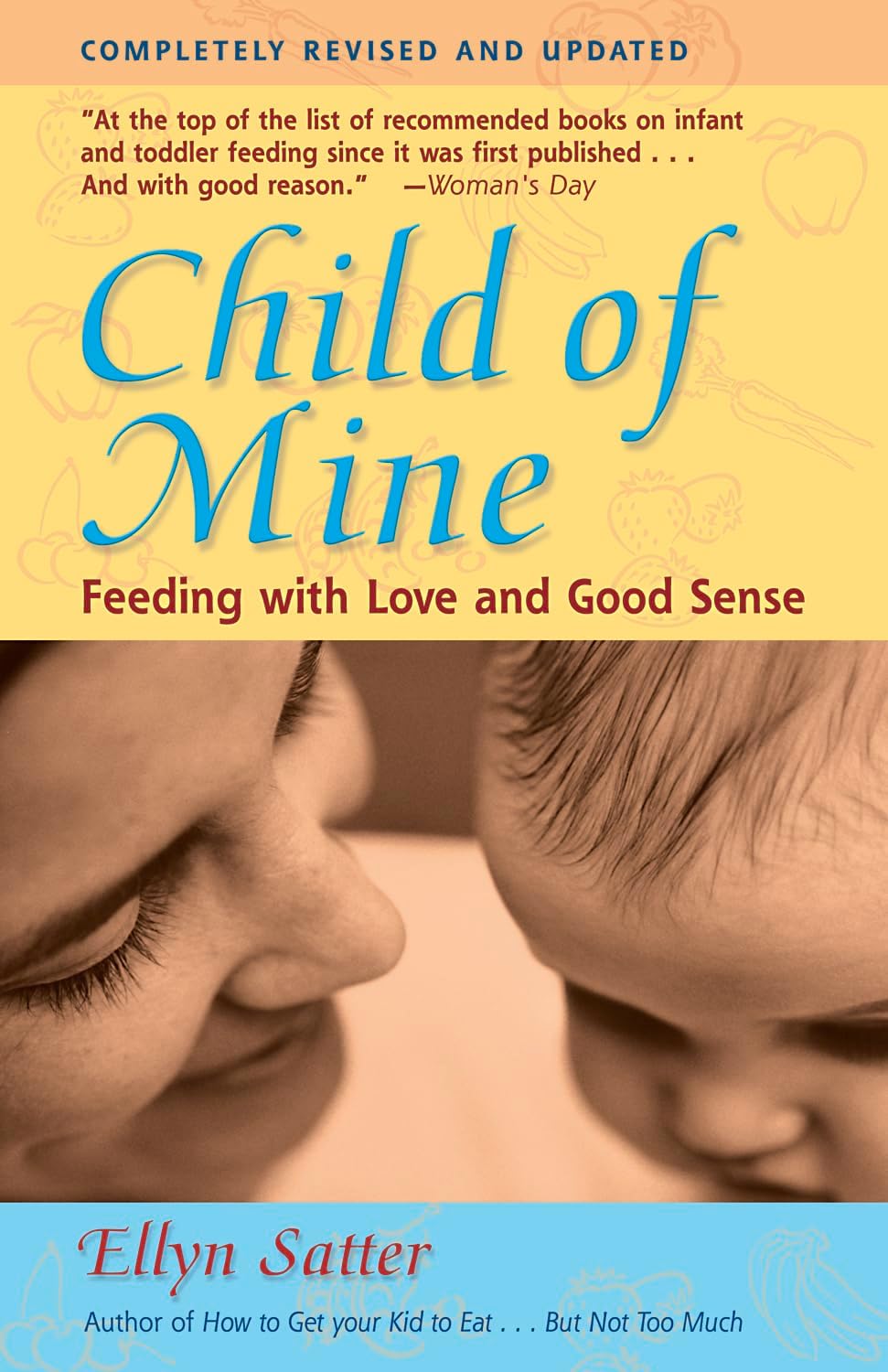
Child of Mine: Feeding with Love and Good Sense, Revised and Updated Edition
Product ID: 8368107
Buy anything from 5,000+ international stores. One checkout price. No surprise fees. Join 2M+ shoppers on Desertcart.
Desertcart purchases this item on your behalf and handles shipping, customs, and support to Iceland.
Widely considered the leading book involving nutrition and feeding infants and children, this revised edition offers practical advice that takes into account the most recent research into such topics as: emotional, cultural, and genetic aspects of eating; proper diet during pregnancy; breast-feeding versus; bottle-feeding; introducing solid food to an infant's diet; feeding the preschooler; and avoiding mealtime battles. An appendix looks at a wide range of disorders including allergies, asthma, and hyperactivity, and how to teach a child who is reluctant to eat. The author also discusses the benefits and drawbacks of giving young children vitamins. Review: Excellent book for all parents and child care providers - Satter's book provides a wonderful foundation for feeding your child over a lifetime. While it is true that you can cherry pick bits out of it which on the face value of individual sound bites might make no sense, when taken as a whole, it is a REALLY great book to read as a parent or child care provider. For instance, she says somewhere in the book, that if your young child wants butter, let them eat it to their hearts content. You might say, "Say what?" Here's the thing, if you do let your kid eat the butter to their heart's content what do you think will happen? I can almost guarantee you that at some point (before the kid is anywhere near developing coronary heart disease), the kid will mentally say, "enough of that" and move on to something else. (Just be prepared that it might take a few days, but it will happen.) Then the butter is no longer some "special" food worthy of being desired among all else. (Think about the last time you truly gorged on something. How do you feel about that food now? I can barely look at shrimp cocktail after one particular incident years ago.) Same goes with dessert or anything else. BUT here's the key things to remember, Ms. Satter is advocating for parents to provide consistent HIGHLY NUTRITIOUS meals that are PALATABLE at consistent and reliable times. When you are serving the OCCASIONAL ice cream, cookies, cake (whatever), you are also serving an ARRAY of vegetables, fruits, whole grains, lean meats, etc. which you allow your child to CHOOSE from -- everything becomes ordinary and welcomed. [BTW: I do agree with one reviewer who said that our culture serves dessert last, so probably that should be held until after the main meal is over. I would just treat it as another course, like appetizers get served first. This isn't to make it special or not, just keep some order to it all, as that's how others in our culture do it. And frankly you want a well adapted, not weird kid.] Junkier foods are held to a smaller proportion of the offering. And you are not offering extremely BLAND tasting foods -- unless that's just how your family likes everything. The non-junk should taste as good (or perhaps better) than the junk. This means, for some, learn some food procurement and cooking techniques to enhance your cooking, if necessary. Vegetables/fruits should be fresh, ripe and attractive. Seasonings, including some oils and butter possibly, should be incorporated in your food. If you don't know how to do these things, try youtube, there are lots of videos out there. She just is stressing that the adult caregiver is reliable one for providing good food at certain times, but you should never FORCE the child to eat it. Otherwise, you set up unhealthy power struggles. Sitting at the table together and eating healthy meals you can all eat together will actually help everyone. Often when food is sitting in front of you, you will eventually eat it, even when you might otherwise not have an interest. Human food acceptance increases with exposure to foods. Sometimes, a person has to be exposed to a food 9-11 times before they start to develop any time acceptance for it -- even adults. So, offering a wide variety of foods (presented in portioned sizes that your child can take) will eventually lead to your child (and perhaps you) to eating more variety and hopefully healthier foods. When she wrote this book, the science was not out to support her theories. This was written after she had spent many years as a parent and dietitian. She went back to school to learn psychology and continued helping people with family eating dynamics. So in many respects she was ahead of the "science" -- as studies are often short-term with a limited amount of participants. She had lived this stuff, lectured and taught it for MANY years BEFORE she wrote the book. So, it seems that science only caught up with her afterwards. Part of me wanted to give this book four stars due to the fact that if you have never tried this method, have no nutrition background or don't have access to her live (or possibly her old videos), on the first reading it may be difficult to understand how or why this works. However, let the words marinate with you (LOL), then read it again if you like. Try it out slowly with an open mind. You might find your pickiest eater will turn around and you and the whole family (or organization) will benefit. Fearless Feeding by Jill Castle is an excellent companion read to this book. It picks up where Ellyn Satter leaves off for older kids. It also goes into some detail about diet that Satter did not delve into with food specifics. (Note: I did not like the Kindle edition, which I purchased in 2014, as there are no real page numbers and scrolling was awkward. This made it difficult to discuss this book with others. I read it as a parent and for a class.) Review: A solid confidence builder! - Children are resilient but this book presents ideas which can make a big positive impact on their relationships with you, other people, and food throughout their lifetime. Admittedly, in my case, she is preaching to the choir, and I am simply thrilled with how she weaves seemingly disparate results of various studies into a comprehensive view of feeding as an activity which is important emotionally and developmentally. She doesn't talk about eating in isolation but rather links it to playtime, sleep and wakefulness etc. She addresses both the average child and children that she describes as vulnerable to well-meaning but misguided parents (e.g. preemies, small babies, fat babies). While many books include growth charts, this book is the only one I've seen which explains in detail how babies normally progress through these charts and how to interpret deviations from the norm. Having glanced at one of Satter's older books, her writing style seems to be more concise now which is good because the book is already hefty enough even though it only elaborates on the more contentious topics. The organizational flow is good and she repeats her main messages often so that it is possible to read the chapters in isolation. Although it is current only to sometime around its print date (2000), the general info relayed is consistent with the more recent changes in the pediatric practices I've experienced and the other books that I've read. She hasn't updated the breastfeeding chapter, preferring instead to refer people to say "The Nursing Mother's Companion". It seems very even-handed about how it presents both breastfeeding and formula-feeding. Making that choice secondary to the feeding relationship itself. To sum it all up, she has done her homework and she is providing a valuable public service in presenting her life's work in this book. I initially had a library copy and am now purchasing multiple copies for myself and as gifts to friends who present concerns to me that are answered by this book! p.s. on a more humorous note, it reminds me of the intent of the book "Good Owners, Great Cats". In this case, if you improve the parenting, the kid will shine!
| Best Sellers Rank | #64,230 in Books ( See Top 100 in Books ) #177 in Baby & Toddler Parenting #222 in Motherhood (Books) #395 in Other Diet Books |
| Customer Reviews | 4.5 out of 5 stars 334 Reviews |
S**K
Excellent book for all parents and child care providers
Satter's book provides a wonderful foundation for feeding your child over a lifetime. While it is true that you can cherry pick bits out of it which on the face value of individual sound bites might make no sense, when taken as a whole, it is a REALLY great book to read as a parent or child care provider. For instance, she says somewhere in the book, that if your young child wants butter, let them eat it to their hearts content. You might say, "Say what?" Here's the thing, if you do let your kid eat the butter to their heart's content what do you think will happen? I can almost guarantee you that at some point (before the kid is anywhere near developing coronary heart disease), the kid will mentally say, "enough of that" and move on to something else. (Just be prepared that it might take a few days, but it will happen.) Then the butter is no longer some "special" food worthy of being desired among all else. (Think about the last time you truly gorged on something. How do you feel about that food now? I can barely look at shrimp cocktail after one particular incident years ago.) Same goes with dessert or anything else. BUT here's the key things to remember, Ms. Satter is advocating for parents to provide consistent HIGHLY NUTRITIOUS meals that are PALATABLE at consistent and reliable times. When you are serving the OCCASIONAL ice cream, cookies, cake (whatever), you are also serving an ARRAY of vegetables, fruits, whole grains, lean meats, etc. which you allow your child to CHOOSE from -- everything becomes ordinary and welcomed. [BTW: I do agree with one reviewer who said that our culture serves dessert last, so probably that should be held until after the main meal is over. I would just treat it as another course, like appetizers get served first. This isn't to make it special or not, just keep some order to it all, as that's how others in our culture do it. And frankly you want a well adapted, not weird kid.] Junkier foods are held to a smaller proportion of the offering. And you are not offering extremely BLAND tasting foods -- unless that's just how your family likes everything. The non-junk should taste as good (or perhaps better) than the junk. This means, for some, learn some food procurement and cooking techniques to enhance your cooking, if necessary. Vegetables/fruits should be fresh, ripe and attractive. Seasonings, including some oils and butter possibly, should be incorporated in your food. If you don't know how to do these things, try youtube, there are lots of videos out there. She just is stressing that the adult caregiver is reliable one for providing good food at certain times, but you should never FORCE the child to eat it. Otherwise, you set up unhealthy power struggles. Sitting at the table together and eating healthy meals you can all eat together will actually help everyone. Often when food is sitting in front of you, you will eventually eat it, even when you might otherwise not have an interest. Human food acceptance increases with exposure to foods. Sometimes, a person has to be exposed to a food 9-11 times before they start to develop any time acceptance for it -- even adults. So, offering a wide variety of foods (presented in portioned sizes that your child can take) will eventually lead to your child (and perhaps you) to eating more variety and hopefully healthier foods. When she wrote this book, the science was not out to support her theories. This was written after she had spent many years as a parent and dietitian. She went back to school to learn psychology and continued helping people with family eating dynamics. So in many respects she was ahead of the "science" -- as studies are often short-term with a limited amount of participants. She had lived this stuff, lectured and taught it for MANY years BEFORE she wrote the book. So, it seems that science only caught up with her afterwards. Part of me wanted to give this book four stars due to the fact that if you have never tried this method, have no nutrition background or don't have access to her live (or possibly her old videos), on the first reading it may be difficult to understand how or why this works. However, let the words marinate with you (LOL), then read it again if you like. Try it out slowly with an open mind. You might find your pickiest eater will turn around and you and the whole family (or organization) will benefit. Fearless Feeding by Jill Castle is an excellent companion read to this book. It picks up where Ellyn Satter leaves off for older kids. It also goes into some detail about diet that Satter did not delve into with food specifics. (Note: I did not like the Kindle edition, which I purchased in 2014, as there are no real page numbers and scrolling was awkward. This made it difficult to discuss this book with others. I read it as a parent and for a class.)
W**W
A solid confidence builder!
Children are resilient but this book presents ideas which can make a big positive impact on their relationships with you, other people, and food throughout their lifetime. Admittedly, in my case, she is preaching to the choir, and I am simply thrilled with how she weaves seemingly disparate results of various studies into a comprehensive view of feeding as an activity which is important emotionally and developmentally. She doesn't talk about eating in isolation but rather links it to playtime, sleep and wakefulness etc. She addresses both the average child and children that she describes as vulnerable to well-meaning but misguided parents (e.g. preemies, small babies, fat babies). While many books include growth charts, this book is the only one I've seen which explains in detail how babies normally progress through these charts and how to interpret deviations from the norm. Having glanced at one of Satter's older books, her writing style seems to be more concise now which is good because the book is already hefty enough even though it only elaborates on the more contentious topics. The organizational flow is good and she repeats her main messages often so that it is possible to read the chapters in isolation. Although it is current only to sometime around its print date (2000), the general info relayed is consistent with the more recent changes in the pediatric practices I've experienced and the other books that I've read. She hasn't updated the breastfeeding chapter, preferring instead to refer people to say "The Nursing Mother's Companion". It seems very even-handed about how it presents both breastfeeding and formula-feeding. Making that choice secondary to the feeding relationship itself. To sum it all up, she has done her homework and she is providing a valuable public service in presenting her life's work in this book. I initially had a library copy and am now purchasing multiple copies for myself and as gifts to friends who present concerns to me that are answered by this book! p.s. on a more humorous note, it reminds me of the intent of the book "Good Owners, Great Cats". In this case, if you improve the parenting, the kid will shine!
E**Y
Pediatrician recommended
This book came recommended by a pediatrician. Helpful read.
B**'
Good, but I'm afraid it's outdated
I’ve given this book a lot of thought since I began reading it about 1.5 years ago. It’s very helpful for understanding a healthy approach to feeding your children in a “traditional” sense. I have considered these guidelines in forming a basic understanding of relationships with food and how to help your children with this. However, after careful thought and observation, I don’t think it adequately addresses eating in our modern culture, which continues to change at a rapid pace. The recommendations in this book are more appropriate for addressing food as a neutral stimulus, when in fact, food is not a neutral stimulus in our culture. It is exciting, enticing, and ever-present. It is also more loaded with junk than ever before. While I have considered overlooking this reality in my approach to feeding my kids, as the author suggests maintaining a neutral stance to foods of all kinds, I have decided not to adopt this approach. The author’s guidance was developed during a time (first publication in 1983) when low-fat foods were all the rage and I can see how this informed her recommendations. However, we have since learned that this dietary approach is not healthy or realistic and that sugars are more readily responsible for current health problems. In addition, the low-fat diet does put people at greater risk for binge eating. I plan to limit my kids’ access to sugars and to educate them about this rather than maintain a neutral stance. I also plan to maintain fairly easy access to healthy foods rather than scheduling snack times, as I believe this is more realistic as they set out on their own in today’s day and age when food is available around every corner. I wish diets in our culture were as simple as they were in the early eighties when this book first came out.
T**Z
Wish I had bought this book sooner
Our 2.5 year old was refusing foods, throwing things from his high chair, and basically making mealtimes a big fight every time. Someone recommended this book, I put just a few things in practice, and voila! The throwing behavior stopped! Over time he started to try new foods and now is a good eater, just 6 months later. I wish I had bought this book when he was born, because I think a lot of bad habits started early during bottle feeding, introducing new solids etc. What a great book, and I like that it is full of scientific evidence and field research, not just "I'm a parent and here are my thoughts on food". What we did with our 2.5 year old was simple. If he threw the food, we took his meal away and let him down from the high chair. Then no food till the next snack/meal. The idea was that he would learn to sit and feed himself, and learn that sitting at dinner with us is a privilege, and if he didn't eat, he'd be a little hungry (but not starving of course, as the next snack/meal was a mere few hours away). Dinner time was hard because bedtime comes next, and we were worried that he'd wake at night hungry. It didn't happen! We offered milk before bed and he drank a lot, and then slept till morning, was hungry for breakfast, and ate well. When I offered new food I put it next to him, didn't press him, and kept offering it to him, and he did exactly the author said. He looked at it, then next time he'd touch it, then he'd put it in his mouth, make a face, and take it out, then next time he'd eat a little, etc. Over time he accepted it. In the past if he wouldn't eat it I'd never offer it again, thinking he didn't like it. He's now almost 3 and a good eater.
K**K
Eating problems with kids or toddlers? Buy this book!!
This book saved my sanity, we dreaded meal time with my toddler, worried about his nutrition, that he wasn't getting enough, picky, would sporadically eat, then barely take a bite the next day. We would do anything to get him to eat. I wish I read this book a long time ago, he eats like a toddler should eat now, I don't have to worry anymore. *Update Just remember that new data comes out all the time on nutrition and breastfeeding, for example the aap no longer recommends solids before 6 Mos old, vit d can pass through the mother's breastmilk if mothers is on a d3 supplement of 6,500 iu or higher and so on (always get baby and your levels tested), but the fundamentals of this book that make it work remain the same, children have natural instincts and are pre-disposed for their genetic body type. As long as you stick to the fundamentals and trust your child and don't be forceful, you will succeed. We are a co-sleeping, extended breastfeeding family. We eat paleo 70%-80% of the time, we rarely consume dairy (butter not included), bread or cereal and this book has helped us wonderfully, we still eat desserts and have lightened up on being so strict but are still able to s live the lifestyle and eating choices that feel right to us while having our child and eating relationship flourish.
C**E
I like the basic premise...
The basic premise of this book is simple: Past a certain age (author says 12 months... I tend to think that's a bit early), you feed your child what you and your family are eating--period. No special meals. No special versions of that meal, save for a few alterations such as cutting up, serving cold and/or eliminating a very strong spice such as cayenne. Serve them at least one thing you know they will eat. They then can have as much or as little of it as they want. No running to the fridge to get yogurt when they claim they don't like what's on their plate. But also, there is no forcing of food. No bartering, no negotiating. Children will explore food at their own pace. I like this premise. Its simple, its what we grew up with (although how many times did I hear "eat your green beans and you can have ice cream"?) But a lot of the details presented are somewhat extreme and rigid. For instance, I don't think offering a different cereal for breakfast is out of the question. And I think, within reason, a child can ask for what kind of snack he wants. A smart parent won't allow chips every day or soda, etc. I think this method can be tweaked to fit your lifestyle and your parenting style. At least that's how I approached it. There were just certain things that rang ridiculous to me when the author gets into the minutae. So, this book was not dogma for me. I took the broad idea and found ways to work it into our family's eating.
G**N
Recommended!
My friend suggested this book as we begin our solid food journey and it is wonderful to have a thoughtful gentle philosophy and steps to follow!
A**.
A diamond
I was soooo anxious about food… my baby had so much difficulty with the transition from boob to food… this book guided me all the way through this challenge and my baby eats beautifully now. This book is a true blessing. It teaches a whole way of approaching your child that really fits with my mentality.
M**S
Every first time parent should read this.
Every first time parent should read this, at least while weaning the child. I got to know about this later than I would have hoped for. Its reassuring, competent and exhaustive explanations are a blessed guide through a natural phase (that of weaning and passing to solid food), that can however become quite challenging. Every parent should read it.
M**I
Five Stars
Amazing book!!!
E**4
Brilliant and an essential read for those with child feeding struggles
Clear, informed and responsible advice on how to feed your children, and the emotional relationship with food. Excellent for weaning and beyond, only wish we had it before our problems arose!
A**R
Five Stars
Excellent book to read if you have picky eaters
Trustpilot
5 days ago
2 days ago