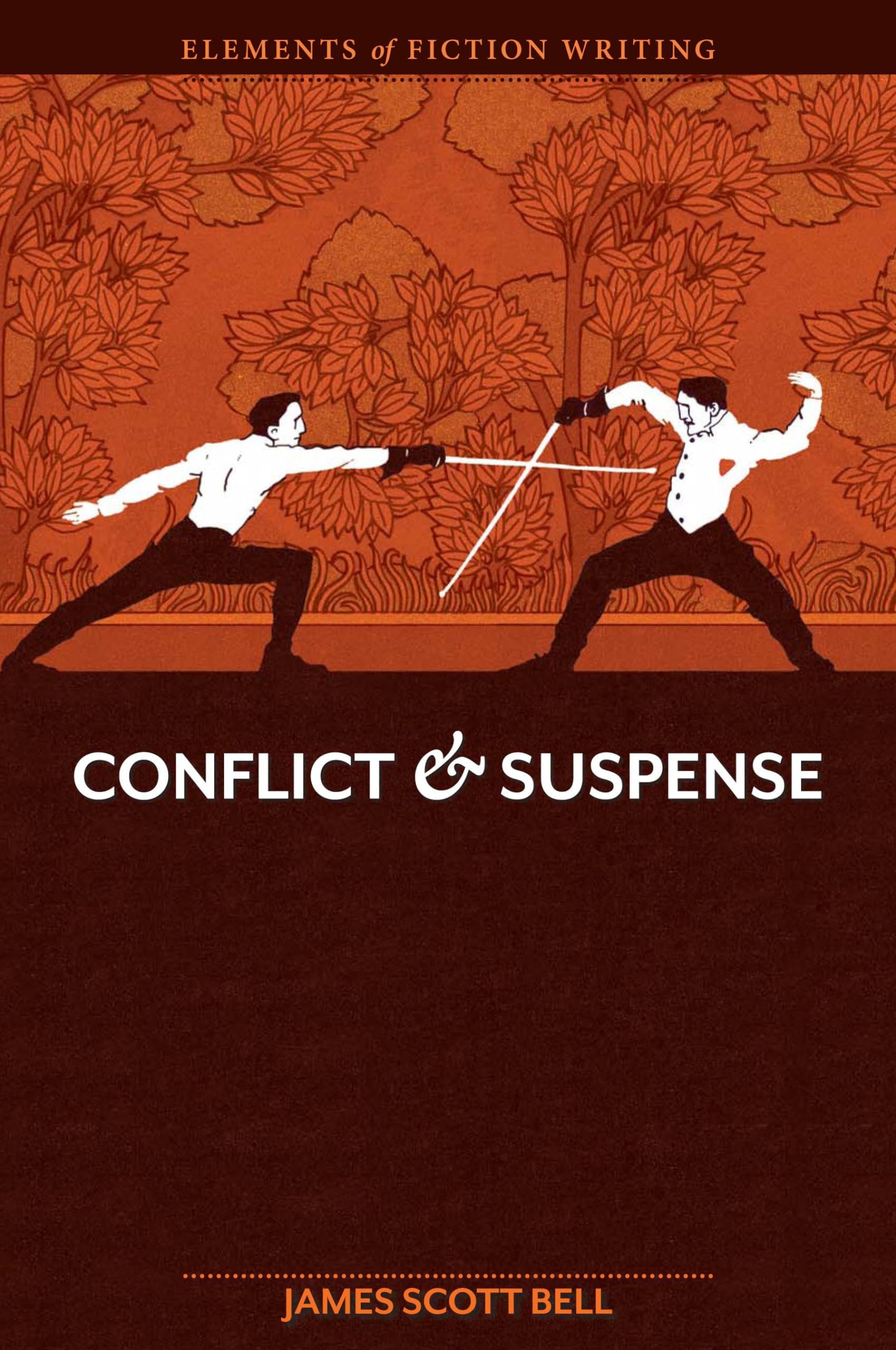
Elements of Fiction Writing: Conflict and Suspense
Product ID: 8336774
Buy anything from 5,000+ international stores. One checkout price. No surprise fees. Join 2M+ shoppers on Desertcart.
Desertcart purchases this item on your behalf and handles shipping, customs, and support to Iceland.
Ramp up the tension and keep your readers hooked! Inside you'll find everything you need to know to spice up your story, move your plot forward, and keep your readers turning pages. Expert thriller author and writing instructor James Scott Bell shows you how to craft scenes, create characters, and develop storylines that harness conflict and suspense to carry your story from the first word to the last. Learn from examples of successful novels and movies as you transform your work from ho-hum to high-tension. • Pack the beginning, middle, and end of your book with the right amount of conflict. • Tap into the suspenseful power of each character's inner conflict. • Build conflict into your story's point of view. • Balance subplots, flashbacks, and backstory to keep your story moving forward. • Maximize the tension in your characters' dialogue. • Amp up the suspense when you revise. Conflict & Suspense offers proven techniques that help you craft fiction your readers won't be able to put down. Review: Another winner from James Scott Bell - James Scott Bell is one of my favorite writers-on-writing. I've read his books on Plot & Structure (2004) and Revision & Self-Editing (2008) and recommend both. When Conflict & Suspense was published earlier this year, I downloaded it to my Kindle--instant gratification. We all know that conflict is essential in fiction. "Boy meets Girl, Girl falls in love with Boy, they marry and live happily ever after" doesn't even make a good short story. Not without conflict and suspense. Bell starts with the premise that a good novel must be emotionally gripping, and that the best tools for building that emotion are conflict and suspense. But he goes on to say that the stakes in an emotionally satisfying novel have to be death. Wait a minute, now--death? I write humor. Nobody dies in my books. Well, hardly anybody. And if they do, they probably deserve it. Think about the last sitcom you watched on TV. If you sat through the show, and laughed, there was definitely plenty of conflict and suspense, but I'll bet nobody died. Does that break Bell's rule? Not at all, because death, thank goodness, need not be literal. It might be, of course (Bell writes thrillers), but it may also be professional (a career or life disaster) or psychological (if Boy can't win Girl, or vice versa, the world might as well come to an end). In comedy the most trivial problem can turn into a towering threat. Just think about Frasier. Most of us do our best to avoid conflict in our day-to-day lives, even when we welcome a little suspense. It isn't always easy to throw metaphorical rocks at our characters, chase them down dark alleys or up comedic trees, but that's just what we need to do to write good fiction, and Bell's book is full of tools for the job. He covers the use of conflict in structure, point of view, subplots, flashbacks and backstory, dialogue, and theme, and then tackles style and revision. Suspense ("what happens next?" or "will it happen again?") is equally well covered, and the book is peppered with examples from novels and films. Bell's clear and down-to-earth discussions will be useful for writers of any genre and at any career stage. Review: Conflict and Suspense is a must-read for any writer - James Scott Bell is well-known among writers for his useful, practical wisdom on improving our writing and story structure. Conflict and Suspense is the fourth writing book of his I've purchased, the third one I've read, and like its predecessors, it's going to be a mainstay in my writing library. I have two bookshelves of writing books. One is the bulk of the collection, and is just high enough to make getting to them difficult. Conflict and Suspense -- if it were a paperback -- would go on the other shelf, the one to the left of my computer so I can reach it without getting up. I got the Kindle edition, which is even better because I can take it anywhere and pull it out for reference while brainstorming, writing or revising. Bell includes tips for adding and improving conflict and suspense at each of these stages. Bell organizes his material in a logical fashion, each chapter building upon the earlier ones. He varies his examples from other works, and includes enough information that even if you haven't read/seen the work, you understand the example. That's something I particularly appreciated since one of the works (it's both a book and a movie) he used a few times is in the horror/suspense field -- something I don't read a lot of because it would give me nightmares. But I didn't have to have read or seen it to grasp the lessons it contained, and that speaks to Bell's skill as a writing teacher. If you think you write a genre that doesn't require conflict and suspense help, think again. Throughout reading the book, my plot bunnies (the equivalent of King's "boys in the basement") were hopping madly, churning up ideas to deepen and improve the novel I'm revising now. That novel has elements of a thriller/suspense novel, but it also has a big literary/coming-of-age thread. So all of you scoffing at the idea of adding conflict and suspense know exactly which thread those plot bunnies were playing with, right? Wrong. It was the literary one. Sure, the sections with the guns and threats and mobsters got some benefit from Bell's wisdom. But the literary thread got the bulk of the development, and it's really making that thread stronger, putting my poor main character through all sorts of hell because every time he's going to be close to addressing his internal conflict, it's going to give the mobsters more ammunition against him. See? Conflict. Don Maass, in his keynote at the Writer's Digest Conference two weeks ago, explained his concept of a 21st Century Novel, a book that marries the best elements of genre fiction with the best approaches of literary fiction to create unforgettable stories. If you want to write that kind of book, I can't think of a better place to start than to read Conflict and Suspense and apply its lessons and exercises to your own work. Your readers will thank you. Your characters might hate you, though. Their lives are about to get much tougher.
| Best Sellers Rank | #395,557 in Books ( See Top 100 in Books ) #52 in Creative Writing Composition #170 in Fiction Writing Reference (Books) #417 in Authorship Reference |
| Customer Reviews | 4.7 out of 5 stars 356 Reviews |
K**N
Another winner from James Scott Bell
James Scott Bell is one of my favorite writers-on-writing. I've read his books on Plot & Structure (2004) and Revision & Self-Editing (2008) and recommend both. When Conflict & Suspense was published earlier this year, I downloaded it to my Kindle--instant gratification. We all know that conflict is essential in fiction. "Boy meets Girl, Girl falls in love with Boy, they marry and live happily ever after" doesn't even make a good short story. Not without conflict and suspense. Bell starts with the premise that a good novel must be emotionally gripping, and that the best tools for building that emotion are conflict and suspense. But he goes on to say that the stakes in an emotionally satisfying novel have to be death. Wait a minute, now--death? I write humor. Nobody dies in my books. Well, hardly anybody. And if they do, they probably deserve it. Think about the last sitcom you watched on TV. If you sat through the show, and laughed, there was definitely plenty of conflict and suspense, but I'll bet nobody died. Does that break Bell's rule? Not at all, because death, thank goodness, need not be literal. It might be, of course (Bell writes thrillers), but it may also be professional (a career or life disaster) or psychological (if Boy can't win Girl, or vice versa, the world might as well come to an end). In comedy the most trivial problem can turn into a towering threat. Just think about Frasier. Most of us do our best to avoid conflict in our day-to-day lives, even when we welcome a little suspense. It isn't always easy to throw metaphorical rocks at our characters, chase them down dark alleys or up comedic trees, but that's just what we need to do to write good fiction, and Bell's book is full of tools for the job. He covers the use of conflict in structure, point of view, subplots, flashbacks and backstory, dialogue, and theme, and then tackles style and revision. Suspense ("what happens next?" or "will it happen again?") is equally well covered, and the book is peppered with examples from novels and films. Bell's clear and down-to-earth discussions will be useful for writers of any genre and at any career stage.
J**N
Conflict and Suspense is a must-read for any writer
James Scott Bell is well-known among writers for his useful, practical wisdom on improving our writing and story structure. Conflict and Suspense is the fourth writing book of his I've purchased, the third one I've read, and like its predecessors, it's going to be a mainstay in my writing library. I have two bookshelves of writing books. One is the bulk of the collection, and is just high enough to make getting to them difficult. Conflict and Suspense -- if it were a paperback -- would go on the other shelf, the one to the left of my computer so I can reach it without getting up. I got the Kindle edition, which is even better because I can take it anywhere and pull it out for reference while brainstorming, writing or revising. Bell includes tips for adding and improving conflict and suspense at each of these stages. Bell organizes his material in a logical fashion, each chapter building upon the earlier ones. He varies his examples from other works, and includes enough information that even if you haven't read/seen the work, you understand the example. That's something I particularly appreciated since one of the works (it's both a book and a movie) he used a few times is in the horror/suspense field -- something I don't read a lot of because it would give me nightmares. But I didn't have to have read or seen it to grasp the lessons it contained, and that speaks to Bell's skill as a writing teacher. If you think you write a genre that doesn't require conflict and suspense help, think again. Throughout reading the book, my plot bunnies (the equivalent of King's "boys in the basement") were hopping madly, churning up ideas to deepen and improve the novel I'm revising now. That novel has elements of a thriller/suspense novel, but it also has a big literary/coming-of-age thread. So all of you scoffing at the idea of adding conflict and suspense know exactly which thread those plot bunnies were playing with, right? Wrong. It was the literary one. Sure, the sections with the guns and threats and mobsters got some benefit from Bell's wisdom. But the literary thread got the bulk of the development, and it's really making that thread stronger, putting my poor main character through all sorts of hell because every time he's going to be close to addressing his internal conflict, it's going to give the mobsters more ammunition against him. See? Conflict. Don Maass, in his keynote at the Writer's Digest Conference two weeks ago, explained his concept of a 21st Century Novel, a book that marries the best elements of genre fiction with the best approaches of literary fiction to create unforgettable stories. If you want to write that kind of book, I can't think of a better place to start than to read Conflict and Suspense and apply its lessons and exercises to your own work. Your readers will thank you. Your characters might hate you, though. Their lives are about to get much tougher.
A**R
A very user-friendly writer's reference for your book shelf
Like any good writer, I enjoy the guilty pleasure of stealing time to read the latest in writer's reference books. While I already have Mr. Bell's "Plot and Structure" and "Revision and Self-Editing", I was eager to read "Conflict & Suspense." This review is for the Kindle version. I have three measuring sticks for writers reference books--1) Do I set it down easily after a few pages or paragraphs, 2) Does my highlighter get a workout, and 3) Do I find myself automatically thinking of my manuscript(s) and how to apply what I'm reading. "Conflict & Suspense" passes the test easily. While I generally use the term "unputdownable" with regard to fiction, I found it applied to this book as well. I finished the book over about 4 days, with a marathon session where I couldn't stop reading on the fourth day. My Kindle highlighting feature was working overtime and the book kept my mind busy thinking about my WIP and how to enhance the conflict and suspense using the techniques I was reading. Not all writers reference books are equal. I may read some and find just one thought in the whole book I can use or worse, they just don't spark my imagination with regard to my WIP. Others, like "Conflict and Suspense" are chock full and probably two thirds of the text are marked up with highlights. While you will see some material in this text that you've seen before in his earlier books (such as the LOCK System), don't discount it. It is still chock full of tons of great advice and practical tips on infusing your book with both conflict and suspense. The book does not employ heavy use of charts or graphs at all, but one of the charts in there, as is usual with e-readers, is very difficult to read even in zoom unless you have x-ray vision. I hope publishers and e-reader makers will find a way to overcome this (as far as I can tell sole) disadvantage to reading non-fiction on e-readers. The Kindle version had no flaws that I noticed. However, I did miss highlighting with a real highlighter so now I will have to go and buy a paper copy too. 8-) As one who has bought numerous writers reference books over the years, I can honestly say you'll get a lot of practical use from this one. Forget the high-brow theory. Mr. Bell puts you straight to work on your masterpiece.
D**.
An Essential for Writers Everywhere
Whether you are thinking of writing a novel or already have and need to spruce it up for submission, this book is a must. James Scott Bell, an author in his own right, is excellent at presenting ways of making anyone a successful author. His formulas are extremely easy to comprehend and carry out and lend depth and readability to your story. His book has many examples from current literature and he throws in examples "off the top of his head" so you see how easy it is to come up with ideas on your own. I found reading it easy and very enjoyable as well as informative and a great learning experience. Whether you need advice on basic outlining of your story or want help to make each scene the most exciting it can be so that the entire work will be a page turner from start to finish, this is the one book you should definitely read. I think I learned more from this single book than all the others I have read on writing. And this works for any genre! So don't hesitate to grab a copy for your own library. You will use it over and over again.
R**H
Probably one of the best writing books I've read. Not just about suspense writing.
Purchased for a class. I've read other writing books (Bird by Bird, On Writing, Etc.) but this one is probably my favorite for now. Its focus is on suspense writing, hence the title, but has good lessons and explanations on how to keep any story going. I would highly recommend this book for anyone interested in writing a story/novel who wants to maintain the story's momentum.
J**E
My “go to” resource for writing conflict and suspense
This book contains vocabulary for writers (such as “doorway of no return”) and numerous suggested exercises to write a page-turning novel. The author provides examples to emphasize points and techniques for conflict and suspense. I found particularly useful the tools to use scenes and dialog better to relay information to the reader without walls of wordy expositions. During the past week of reading this book, I started to read and watch fiction differently. The stories and shows that captivate me are the ones that focus on conflict and suspense. The only area not well explained was point-of-view (POV); I felt it was a little lacking. However even in those few pages was helpful information about how POV and conflict work together.
M**E
An Essential Book for Both Aspiring and Professional Writers
I can trace the success in my own career to James Scott Bell's advice for writers. I was working on a rewrite for my first truly successful novel when I read Plot & Structure and identified both a flaw in my antagonist and the resolution for a major plot weakness. I worked through the revisions with my fingers on fire and landed an agent shortly thereafter. My well-worn copy of Bell's book Revision & Self-Editing has proven equally useful and I recently gobbled up an ebook of the collected wisdom from his writing blog. When I saw that Bell had a new book about the art of writing, I bought it and started reading at once. True to form, as I read Conflict & Suspense I found myself thinking of my current work in progress and kept running to the computer to jot down solutions to my problems or mark potential places to deepen conflict. And even though Bell's work focuses on plot, the character insights I gained from the book will prove equally valuable. If I had any quibble with Conflict & Suspense--and it's a minor one--it's that having written so much about the art of writing, Bell sometimes trods familiar ground in this latest book. Some of his favorite themes--The Big Lie, the LOCK method, and Bell's pet theories about characterization--made predictable appearances. In addition, Bell's books all draw on the same examples from fiction and cinema. However, this material serves both as an important review and as a foundation for other, newer ideas and exercises. I bought this book as an ebook, but will be buying a paper copy as well so that I can mark it up and put it on my shelf next to Bell's other books.
C**E
Very Helpful!
Easy to read and filled with great advice on creating conflict and suspense in your novel. I really like the assignements he gives at the end of each chapter. Yes, he covers some points that were covered in previous books but there is so much more to this book that has really helped me with my writing. He covers all that pertains to conflict: the structure of conflict, point of view in conflict, keeping conflict moving, conflict in subplots, flashbacks and backstory, inner conflict, conflict in dialogue, and the tools that are available to enhance or create conflict. The auther then does the same with Suspense. He talks about cliff-hangers, stretching tension, dialigue, setting, style, and the putting it all together. I highly recommend this book to anyone interested in writing a novel because conflict and suspense are what keep the reader reading.
A**Z
Clearly outlines conflict and suspense.
There are lots of examples. The book is setup so you can create a checklist to go through your writing and implement those parts that are applicable.
F**R
very helpful to me
for beginners this book is a great help, as in J. S. Bell other books, very clear structured and great exercises
P**Z
A must read
I found this book practical and insightful. It helps me to have the information refreshed. This book is written in an optimistic style. A must read.
L**E
Für angehende Autoren und solche mit Erfahrung
Gute Erklärweise mit Beispielen, aber zum Selberdenken und nicht einfach mit vorgekautem Wissen. Für alle, die ein Buch schreiben wollen oder ihre Fähigkeiten weiter verbessern wollen.
A**R
Five Stars
strong like swards
Trustpilot
2 weeks ago
3 days ago