Desert Online General Trading LLC
Dubai, United Arab Emirates
Desert Online General Trading LLC
Dubai, United Arab Emirates







Full description not available


A**Y
Easy to understand and helpful
Helping me on my mental health journey
J**E
Highly recommended and extremely helpful for me
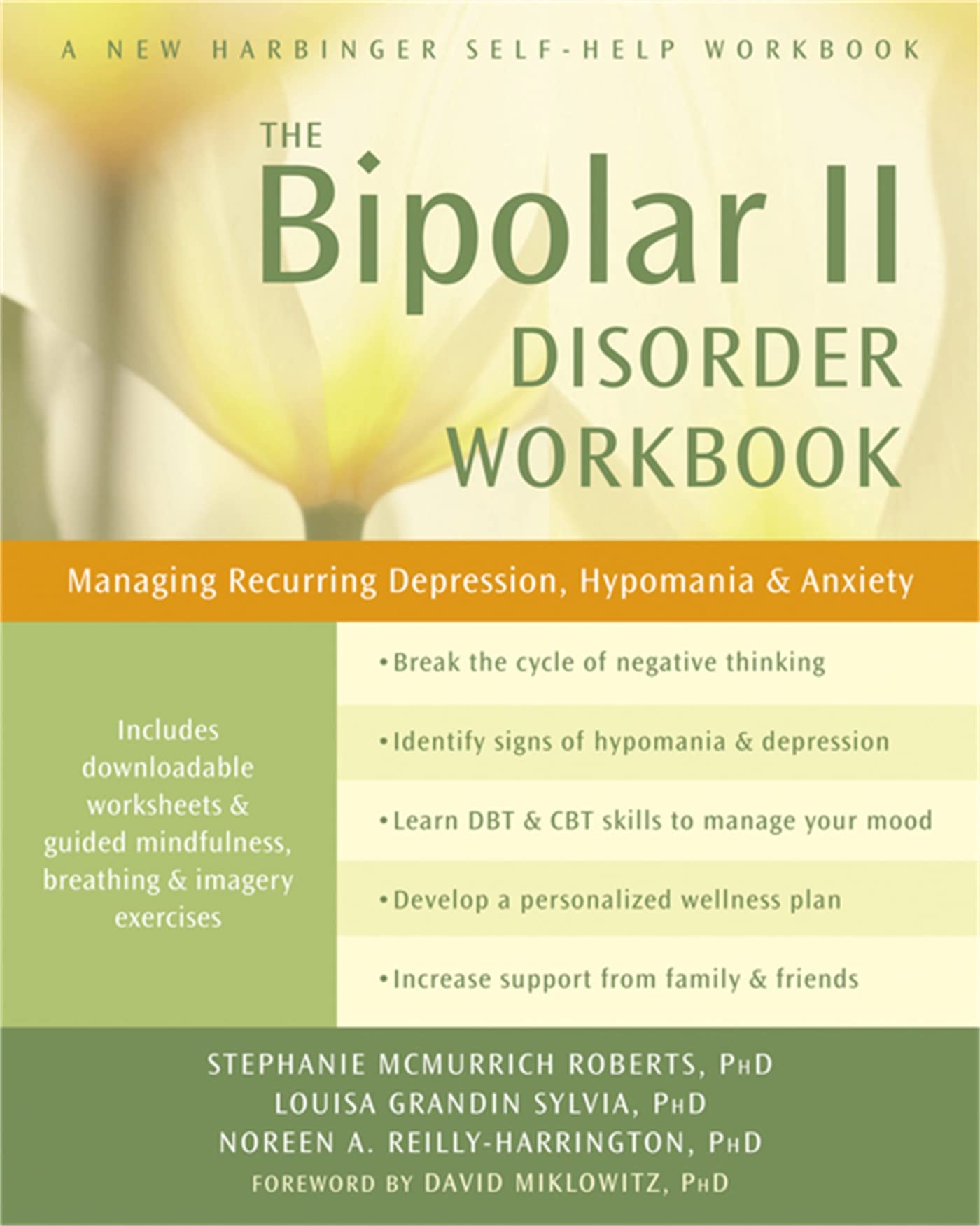
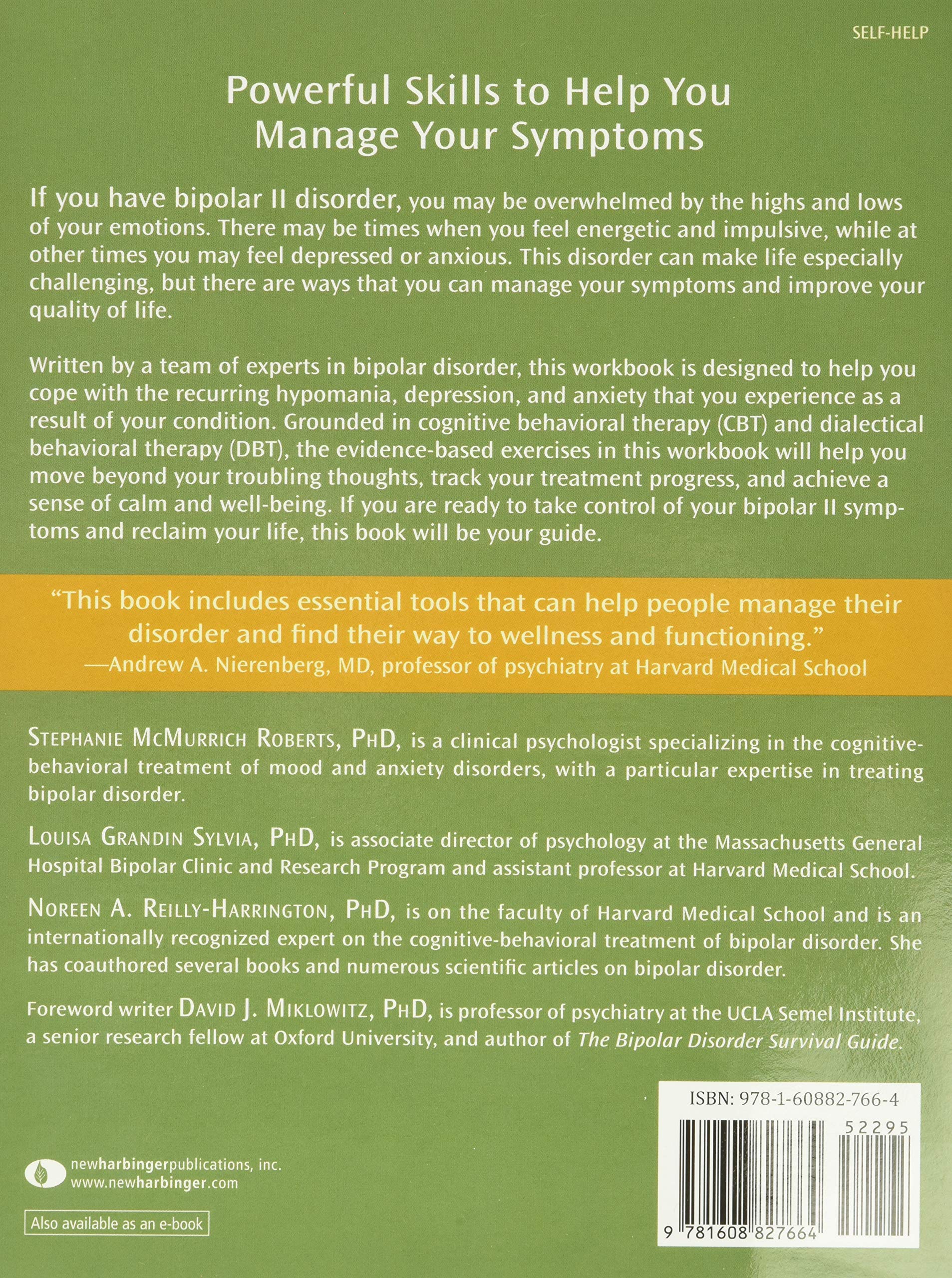
I'm not a reader, never have been. But when I got diagnosed with BP2, I had to learn about my health situation so I could do something about it, beyond taking RX's. This book has been extremely helpful for me. EXTREMELY! I purchased the actual workbook (vs. buying it on the kindle app) and would highly recommend you buy the physical copy of the book so you can go through the exercises on paper - it really helped me to do that. From this book I've learned: what are my early warning signs that spin me into hypomanic episodes, ideas on how to prevent those warning signs from taking over. From this, I've been able to "catch" myself feeling the warning signs and prevent them. I've learned that depression hates activity, and I've spent a lot more time walking outside in order to handle my irritability. I've learned how my hypomania has pushed people away from me, negatively impacted many, many relationships. I've learned and studied about CD's (cognitive disorders) and found I'm guilty of many of them, which is helping me change. I could go on and on, but the bottom line is I would HIGHLY recommend this book to anyone that is recently diagnosed with BP2 so you know what is going on inside your brain and how to fix it.
L**A
Highly recommended
I believe this book can be a tremendous help in recovering from an episode of clinical depression whether or not the "bipolar 2" diagnosis fits. The techniques discussed in this book will can helpidentify when another episode of depression is on the way. With this warning, hopefully the episode can be avoided, or at the minimum, be lessened in severity and duration. If you are serious about doing the work, this book explains several tools to deal with depression. The book presents serviceable tools, you must be willing to use them. I haven't yet studied the mania information.
B**R
I Love This Book!
I just began the book and am starting Chapter 4. I stopped until next week, so I can absorb what I have already learned. I know that the authors rightfully recommend a chapter every week or two, but I already accepted my diagnosis, though I did not when I first got it two weeks ago (though I have had this for over 30 years, I thought it was just depression and PTSD).I am very disorganized with no structure, so learning about Interpersonal and Social Rhythm Therapy was really helpful as was Dialectical Behavior Therapy. Both of these are in Chapter 2. I am going to further research both of these before I move forward in the book.Chapter 1 defines bi-polar 2 with a comparison/contrast to B1.Chapter 3 covers accepting B2, which I had begun to do when I first started reading, but it was still helpful to do the exercises. Like I said, I just started Chapter 4 and will not go further for a week or two, just focusing on what I have already done.I highly recommend this book. Take your time with it, if you want to do more than one chapter, that's okay IMO, but just make sure you don't go too fast so you can get all of the benefits from the information.
Z**R
We need all of the help we can get, and this book will be at least a little helpful for all of us
This is a great book for people who have been recently diagnosed with this disease, as well as for their loved ones. It explains the disorder very well and has lots of good exercises and worksheets tHat might help you learn something about yourself. . In addition to those who just showed up to the party, I suspect that it is also a great book for people who have the most common symptoms - depression and hypomania and little or nothing else.That said, this is a complicated illness that differs greatly from person-to-person - which means that a book about it can't be great for everybody. I didn't get a lot out of it. But I learned some useful things for thinking about my mood and behavior.And that makes it a wonderful value no matter what your Bipolar II looks like.Get it. It costs a small fraction of the meds and doctors you're already spending money on. You might roll your eyes most of the way through - I sure did - but you'll find something relevant to you.And considering how difficult this disease is to live with and to treat, we need to use all of the tools at our disposal.
V**X
Workbooks are perfect for breaking things down!!!
Tho I have had bipolar for decades, I still prefer the simplicity and structure (hitting the nail on the head) of workbooks. I think they are the most practical approach to tackling this complex disease. Includes CBT and DBT approaches. I find docs with their 15 minute sessions, and therapists with their avoiding goal directed approaches to be unbelievably frustrating. So much so that I think the industry needs a complete overhaul with more time for assessments and prescribing doctors, rules and supervision for all professionals. 70% of all bipolars are misdiagnosed at least once. They think we have anxiety or depression alone and make dangerous mistakes in prescribing. Most therapists just sit there. Get to know yourself with workbooks and Psych Central forums in order to guide what you accept from professionals. As a medical advocate, Ive found the same principles apply to complex medical conditions. Doctors are not gods, stay on top of things and work WITH them!!!!
D**.
Lots of good information
I like gaining knowledge about bipolar and the difference between bipolar I and II. The worksheets and various questions help as well. I brought this for a family member but I always want as much information as I can get
J**R
Three Stars
received it promptly but it was mostly exercises and not much else
Trustpilot
1 month ago
2 days ago