We remain fully operational. Our teams are working around the clock to ensure your deliveries continue safely.

DOWNLOAD THE APP


Copyright © 2025 Desertcart Holdings Limited
DOWNLOAD THE APP

Buy anything from 5,000+ international stores. One checkout price. No surprise fees. Join 2M+ shoppers on Desertcart.
Desertcart purchases this item on your behalf and handles shipping, customs, and support to Iceland.
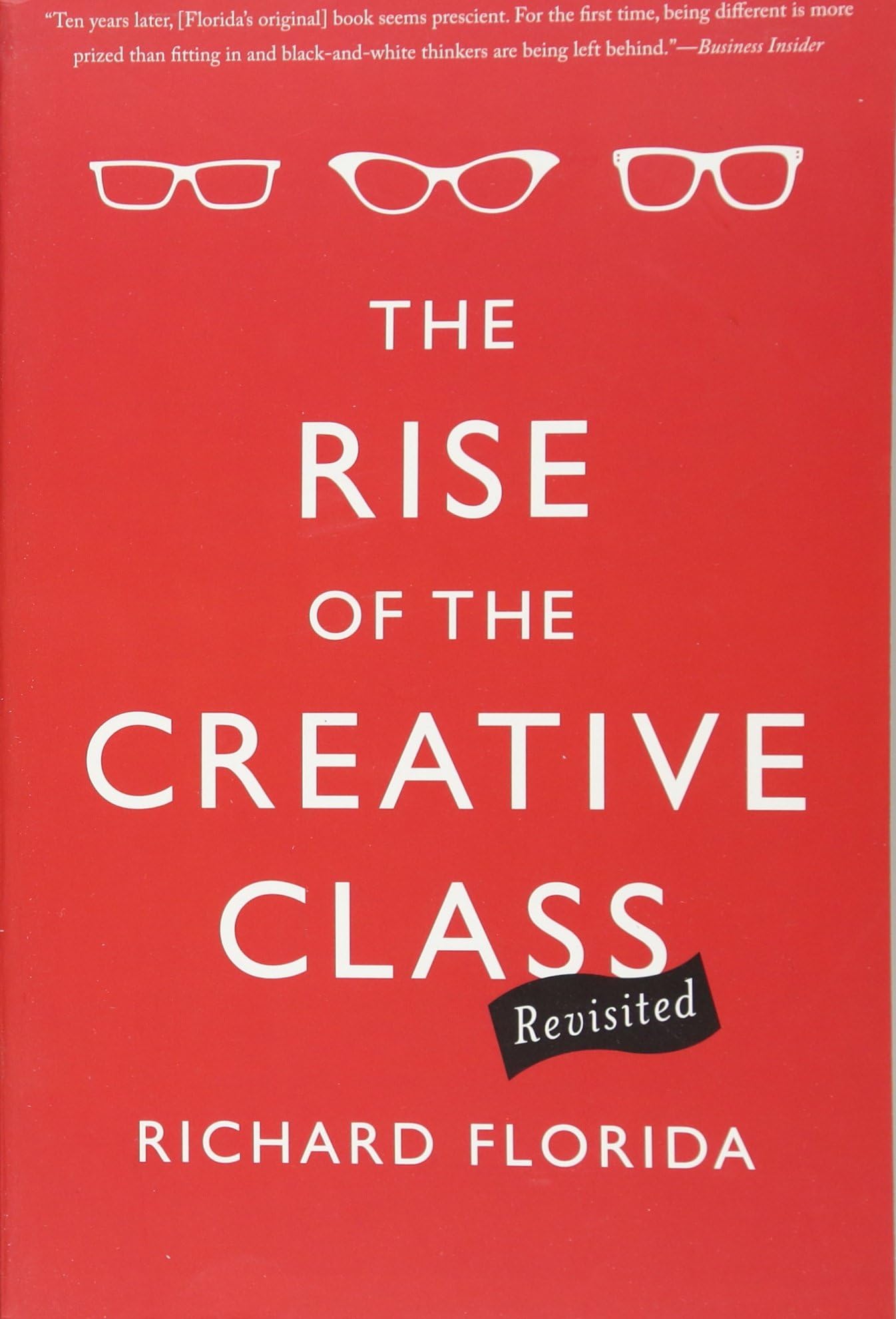
The Rise of the Creative Class-Revisited: Revised and Expanded [Florida, Richard] on desertcart.com. *FREE* shipping on qualifying offers. The Rise of the Creative Class-Revisited: Revised and Expanded Review: The Economics of Creativity: Common-sense, yet novel - Upon a cursory glance, Richard Florida's theories regarding the factors that empower truly dynamic, prosperous cities resonate as highly embellished common sense: open-minded, diverse cities (i.e., New York, Chicago) have always and will always outperform more close-minded, culturally heterogeneous places such as Cincinnati and Pittsburgh. But look deeper, and what you discover is a truly unique view - and in my opinion, a correct analysis - of a fundamental shift in the orientation of our society's workforce and economic structure, transcending even the oft-accepted "intellectual capital" approach to urban success. Essentially, Florida argues that an active fostering of the "3 T's" - technology, talent, tolerance - will be key to cities/urban areas wishing to thrive in the next century; and that a new class of knowledge professionals has emerged, coalescing around work that requires some degree of "creative" thought. This new creative class includes two components: a "super-creative core" consisting of scientists, artists, and engineers, along with more tertiary professionals such as accountants, lawyers, IT professionals, and financial analysts. The creative class, it is quantitatively demonstrated, has led the nation in job creation and income growth, and with the rise of global economic integration (i.e., globalization) and competition from low-wage countries for basic service-level jobs, the creative class will continue to ascend into a role of economic primacy. The cities that thrive in the next century will be the "creative centers"; places like San Francisco, Atlanta, and Denver that actively nurture the 3 T's. These will be the cities that combine a strong technology-empowered economy with highly-educated citizens and a tolerance for immigrants and alternative lifestyles, best exemplified by the presence of "bohemians" (i.e., artists and other "quirky" intellectual types) and gays. The emphasis on the latter two groups has brought Florida's work under attack from many social conservatives, but facts remain facts: as Florida clearly demonstrates, cities that are tolerant of all forms of diversity have fared better and will almost certainly continue to fare better than those who uphold exclusionary, bigoted social agendas. Of course, this is a gross oversimplification of Dr. Florida's theories. Much attention is focused on the social and economic developments that preceded the emergence of this new social model; methods for rating the creativity of cities (an overall "creative index", along with his controversial gay and bohemian indexes); and a discussion of how some cities have succeeded in becoming creative centers, while others have failed. Whether for urban theorists/students of urban theory, leaders in municipal governments, or social scholars, Dr. Florida's work in The Rise of the Creative Class sheds great insight into one of the most important emerging trends in the early 21st Century. Review: Interesting topic but tough to read - This book was recommended to me by an acquaintance a few weeks ago...I'm glad they mentioned it. The Rise of the Creative Class: And How It's Transforming Work, Leisure, Community and Everyday Life (Paperback) by Richard Florida is an informative book that covers A LOT of ground and has A LOT of data....but not as much "information" as I would have expected. Let me explain. The premise of this book is that society today is that a new Creative Class exists and is driving the way we live today. Florida uses this creative class to explain why societal changes and patterns of living as well as why some cities are more attractive than others (e.g., Silicon Valley vs Oklahoma City). The question behind much of the research for the book is: How do we decide where to live and work? What really matters to us in making this kind of life decision? How has this changed - and why? This is an interesting question...and one that Florida tries to answer throughout the book by using statistics, quotes from other authors and a good deal of words. The first 3/4's of the book is dedicated to describing the Creative Class, how they live and work and why they are different from their 'parents'. There is a ton of data and a lot of time is spent by Florida quoting research, arguing against other theorists and using statistics to "make his case" that the Creative Class is the most important class of our time. During this portion of the book, Florida makes the argument that there is a strong correlation between those cities/regions that are more tolerant and the number of creative class works that live and work in the area. One interesting section of the book describes the changing work environment that is making it possible for people to set their own schedules, work from home and be much less constrained by the old '8 to 5' mentality that has been a part of American business for so long. The last quarter of the book describes how cities and regions have developed themselves into a magnet for the creative class. Florida states that in order for a city (or region) to become a 'creative class' magnet, they must have the "3T's of Economic Development"...Technology, Talent and Tolerance. A brief description of each follows. * Technology - a city/region much have the technological infrastructure in place to fuel a creative and entrepreneurial culture. * Talent - A city/region must have a talented and highly educated workforce * Tolerance - A city/region much have a high tolerance level and not try to force people to 'fit in' The topic of the book was interesting to me but the delivery was somewhat confusing and poorly constructed. Many times I got lost in the middle of a paragraph and had to start over...this from a guy who reads many many books a year on various topics. I'm used to reading dry material...but this was worst than most. Chapters 6 through 9 are probably the most interesting and descriptive of the book. These chapters describe the reasons behind why people in my generation (and those younger than me) are looking for more than 'just a job' and why many people are tiring of the '8 to 5' experience. With that said, I would still recommend this book to those folks interested in the topic of economic development, regional development, city planning or just a general review of social science literature. If you pick up this book, take my advice and skim it rather than read every word...there is a lot of "stuff" that isn't relevant to the overall message of the book.
| Best Sellers Rank | #2,710,697 in Books ( See Top 100 in Books ) #586 in Sociology of Urban Areas #897 in Economic Conditions (Books) #3,023 in Human Geography (Books) |
| Customer Reviews | 4.4 4.4 out of 5 stars (255) |
| Dimensions | 6.13 x 1.5 x 9.25 inches |
| Edition | ANV REV EX |
| ISBN-10 | 0465042481 |
| ISBN-13 | 978-0465042487 |
| Item Weight | 1.19 pounds |
| Language | English |
| Print length | 512 pages |
| Publication date | January 7, 2014 |
| Publisher | Basic Books |
A**L
The Economics of Creativity: Common-sense, yet novel
Upon a cursory glance, Richard Florida's theories regarding the factors that empower truly dynamic, prosperous cities resonate as highly embellished common sense: open-minded, diverse cities (i.e., New York, Chicago) have always and will always outperform more close-minded, culturally heterogeneous places such as Cincinnati and Pittsburgh. But look deeper, and what you discover is a truly unique view - and in my opinion, a correct analysis - of a fundamental shift in the orientation of our society's workforce and economic structure, transcending even the oft-accepted "intellectual capital" approach to urban success. Essentially, Florida argues that an active fostering of the "3 T's" - technology, talent, tolerance - will be key to cities/urban areas wishing to thrive in the next century; and that a new class of knowledge professionals has emerged, coalescing around work that requires some degree of "creative" thought. This new creative class includes two components: a "super-creative core" consisting of scientists, artists, and engineers, along with more tertiary professionals such as accountants, lawyers, IT professionals, and financial analysts. The creative class, it is quantitatively demonstrated, has led the nation in job creation and income growth, and with the rise of global economic integration (i.e., globalization) and competition from low-wage countries for basic service-level jobs, the creative class will continue to ascend into a role of economic primacy. The cities that thrive in the next century will be the "creative centers"; places like San Francisco, Atlanta, and Denver that actively nurture the 3 T's. These will be the cities that combine a strong technology-empowered economy with highly-educated citizens and a tolerance for immigrants and alternative lifestyles, best exemplified by the presence of "bohemians" (i.e., artists and other "quirky" intellectual types) and gays. The emphasis on the latter two groups has brought Florida's work under attack from many social conservatives, but facts remain facts: as Florida clearly demonstrates, cities that are tolerant of all forms of diversity have fared better and will almost certainly continue to fare better than those who uphold exclusionary, bigoted social agendas. Of course, this is a gross oversimplification of Dr. Florida's theories. Much attention is focused on the social and economic developments that preceded the emergence of this new social model; methods for rating the creativity of cities (an overall "creative index", along with his controversial gay and bohemian indexes); and a discussion of how some cities have succeeded in becoming creative centers, while others have failed. Whether for urban theorists/students of urban theory, leaders in municipal governments, or social scholars, Dr. Florida's work in The Rise of the Creative Class sheds great insight into one of the most important emerging trends in the early 21st Century.
E**N
Interesting topic but tough to read
This book was recommended to me by an acquaintance a few weeks ago...I'm glad they mentioned it. The Rise of the Creative Class: And How It's Transforming Work, Leisure, Community and Everyday Life (Paperback) by Richard Florida is an informative book that covers A LOT of ground and has A LOT of data....but not as much "information" as I would have expected. Let me explain. The premise of this book is that society today is that a new Creative Class exists and is driving the way we live today. Florida uses this creative class to explain why societal changes and patterns of living as well as why some cities are more attractive than others (e.g., Silicon Valley vs Oklahoma City). The question behind much of the research for the book is: How do we decide where to live and work? What really matters to us in making this kind of life decision? How has this changed - and why? This is an interesting question...and one that Florida tries to answer throughout the book by using statistics, quotes from other authors and a good deal of words. The first 3/4's of the book is dedicated to describing the Creative Class, how they live and work and why they are different from their 'parents'. There is a ton of data and a lot of time is spent by Florida quoting research, arguing against other theorists and using statistics to "make his case" that the Creative Class is the most important class of our time. During this portion of the book, Florida makes the argument that there is a strong correlation between those cities/regions that are more tolerant and the number of creative class works that live and work in the area. One interesting section of the book describes the changing work environment that is making it possible for people to set their own schedules, work from home and be much less constrained by the old '8 to 5' mentality that has been a part of American business for so long. The last quarter of the book describes how cities and regions have developed themselves into a magnet for the creative class. Florida states that in order for a city (or region) to become a 'creative class' magnet, they must have the "3T's of Economic Development"...Technology, Talent and Tolerance. A brief description of each follows. * Technology - a city/region much have the technological infrastructure in place to fuel a creative and entrepreneurial culture. * Talent - A city/region must have a talented and highly educated workforce * Tolerance - A city/region much have a high tolerance level and not try to force people to 'fit in' The topic of the book was interesting to me but the delivery was somewhat confusing and poorly constructed. Many times I got lost in the middle of a paragraph and had to start over...this from a guy who reads many many books a year on various topics. I'm used to reading dry material...but this was worst than most. Chapters 6 through 9 are probably the most interesting and descriptive of the book. These chapters describe the reasons behind why people in my generation (and those younger than me) are looking for more than 'just a job' and why many people are tiring of the '8 to 5' experience. With that said, I would still recommend this book to those folks interested in the topic of economic development, regional development, city planning or just a general review of social science literature. If you pick up this book, take my advice and skim it rather than read every word...there is a lot of "stuff" that isn't relevant to the overall message of the book.
P**S
I received it fine... in excellent condition...
鮭**尾
米国およびグローバルな人材還流の状況がよくわかります。
E**.
Si tratta di un libro impegnativo per la lunghezza, ma penso che valga ogni pagina! Non e una lettura facile e leggera, ma i concetti sono espressi molto chiaramente. Per chi vuole capire meglio la definizione di creative economy e come funziona la creative class e il libro perfetto. Molto soddisfatta dell'acquisto!
J**Z
Buena lectura para entender como ha cambiado el recurso humano y hacia donde vamos, entender la importancia de la fuerza creativa en la sociedad.
A**E
Great book.
Trustpilot
2 days ago
2 weeks ago