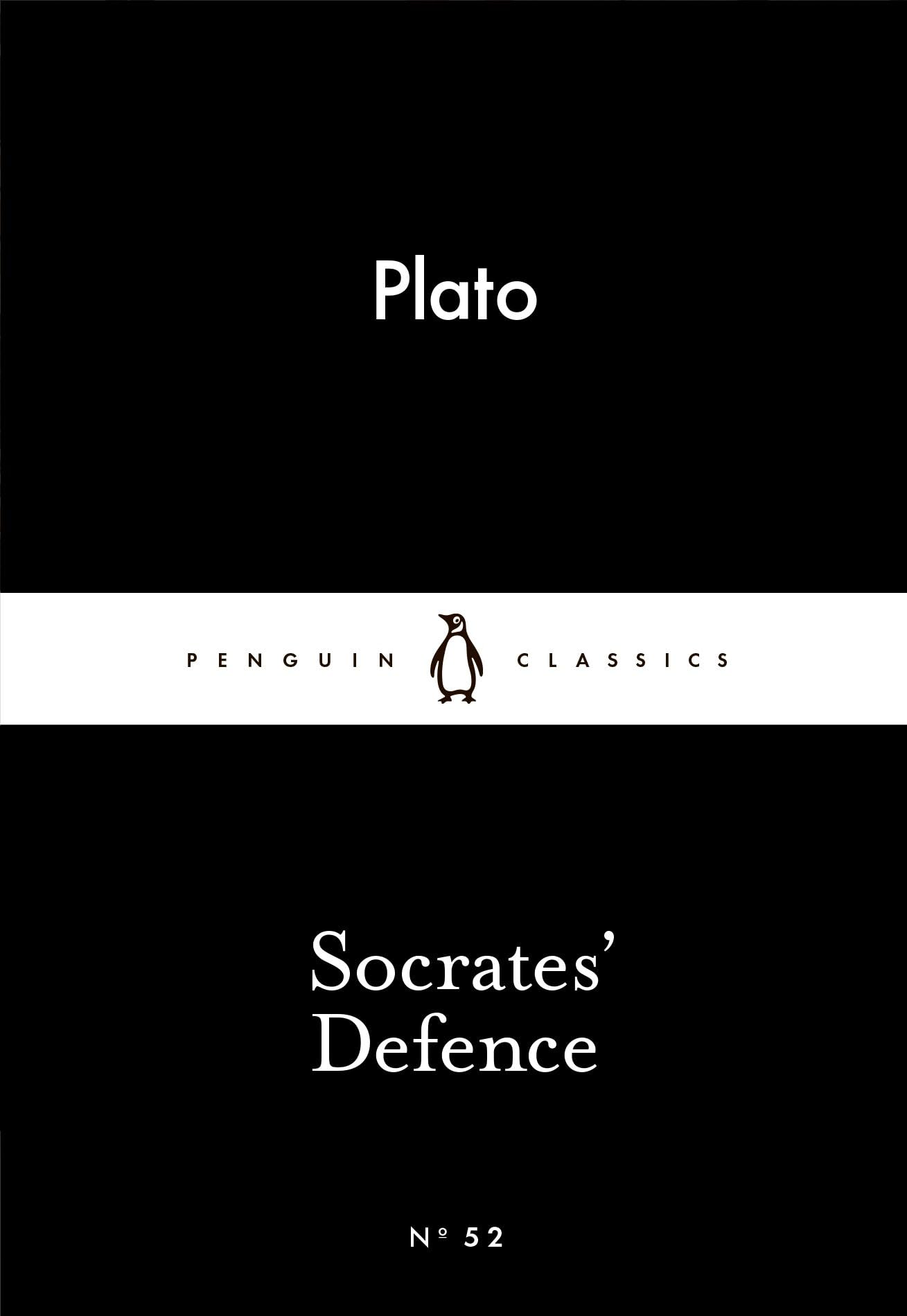
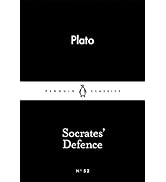
Socrates' Defence
Product ID: 78348846
Explore more Review: Would recommend to followers of philosophy and ancient history. - The text “reproduces” the defense of Socrates in a court of law, before the sentence that would be given for a triple accusation of “impiety,” of corrupting the youth, and of not believing in the gods. Despite knowing how things turned out, the speech caught me with its exciting approaches, and I found it endearing. I think I went through all the states of mind: the beginning confused me, in the middle, I became impatient, and the end caused me sadness. But the result of the reading was great, and that is important. It is well known that Socrates’ attitude during this event triggered the creation of the concept of ‘man’ in the Western world for certain philosophers. What is worth more? Are principles worth dying for? Will the truth be more important than one’s existence? Were the central questions of this dialogue. It is necessary to appreciate the importance of this event in the history of human thought as something essential. Therefore, although Plato’s style is very evident in the development of the dialogue, it is undoubted that he sticks to the truth. From the first to the last moment, Socrates adheres to his principles, refusing to contradict his words, to humble himself and accept the error of acts he did not commit— which could have saved him the death penalty, instead, he countered all the reasons that led him to trial, denying his accusers and thus prioritising the truth, costing him his life. In the end, he accepts his death and affirms that only the gods know who will have the best time: he who is close to death or those who will remain attached to life. “… I’ll stop doing it as soon as I understand what I’m doing.” ‘It’s time to leave, me to die, and you to live.’ With these words, the first Platonic dialogue closes, ‘Socrates’ Defence.’ An Athenian of low social extraction, an old soldier, and a law-abiding citizen, Socrates left a deep impression on the young Plato. The old master did not leave any writings. Still, his imprint was so noticeable among his contemporaries that he became a character in a popular comedy by Aristophanes. One of the phrases that caught my attention; “Fearing death is nothing other than believing that you are wise without being wise since it is believing that you know what you do not know. For no one knows death, not even if he is precisely the greatest of all goods for man.” Words of Wisdom • “... the wisest among you is the one who recognizes, like Socrates, that his wisdom is nothing.” • “... no one knows death, nor does he know if it is the greatest asset for man. Yet, he fears it as if it is known with certainty that he is the greatest of all evils. Ah! Isn’t it shameful ignorance to think you know something you don’t know? “ • “My whole occupation is working to persuade you, young and old, that before taking care of the body and wealth, before any other care, is that of the soul and its improvement; because I never tire of telling you that virtue does not come from riches, but on the contrary, that riches come from virtue and that it is from here that all other public and private goods are born. “ • “This is the reason, my judges, so that you never lose hope even after the grave, founded on this truth; that there is no evil for the good man, neither during his life nor after his death ...” Concluding thoughts It was a work that I liked and would recommend to followers of philosophy and ancient history. This dialogue is full of wisdom and the scope that human speech can have when faced with death. It is the last public breath of Socrates that serves as an advertisement in his peculiar character and the most vital points of his philosophy. In the end, he proposes a resolution to the prison system, suggesting that the person be captured and shown. This is what Socrates does in this dialogue. He apprehends the weak and the intellectual with his speech to teach him the value of truth; he brings to light what is fundamental and discredited. The duty of the intellectual and the speaker is to make his ideologies known since the knowledge is too great to be covered by a single person. Knowledge must come with the requirement and must be imparted equally by society with the same will that underlies its learning. Socrates was an artist in his way and conviction, fueled by divine inspiration, inevitably influenced by his inspiration, handing out knowledge to his rhapsodies. Plato was his greatest rhapsodist and his greatest admirer. At this time in his life, Plato was a carrier of Socratic truth and a true benefactor in posterity. Review: Four Stars - thought-provoking. alway relevant.










| Best Sellers Rank | #118,185 in Books ( See Top 100 in Books ) #69 in History of Ancient Greece #1,273 in Anthologies (Books) #1,619 in Literary Theory, History & Criticism |
| Customer Reviews | 4.6 out of 5 stars 468 Reviews |
R**H
Would recommend to followers of philosophy and ancient history.
The text “reproduces” the defense of Socrates in a court of law, before the sentence that would be given for a triple accusation of “impiety,” of corrupting the youth, and of not believing in the gods. Despite knowing how things turned out, the speech caught me with its exciting approaches, and I found it endearing. I think I went through all the states of mind: the beginning confused me, in the middle, I became impatient, and the end caused me sadness. But the result of the reading was great, and that is important. It is well known that Socrates’ attitude during this event triggered the creation of the concept of ‘man’ in the Western world for certain philosophers. What is worth more? Are principles worth dying for? Will the truth be more important than one’s existence? Were the central questions of this dialogue. It is necessary to appreciate the importance of this event in the history of human thought as something essential. Therefore, although Plato’s style is very evident in the development of the dialogue, it is undoubted that he sticks to the truth. From the first to the last moment, Socrates adheres to his principles, refusing to contradict his words, to humble himself and accept the error of acts he did not commit— which could have saved him the death penalty, instead, he countered all the reasons that led him to trial, denying his accusers and thus prioritising the truth, costing him his life. In the end, he accepts his death and affirms that only the gods know who will have the best time: he who is close to death or those who will remain attached to life. “… I’ll stop doing it as soon as I understand what I’m doing.” ‘It’s time to leave, me to die, and you to live.’ With these words, the first Platonic dialogue closes, ‘Socrates’ Defence.’ An Athenian of low social extraction, an old soldier, and a law-abiding citizen, Socrates left a deep impression on the young Plato. The old master did not leave any writings. Still, his imprint was so noticeable among his contemporaries that he became a character in a popular comedy by Aristophanes. One of the phrases that caught my attention; “Fearing death is nothing other than believing that you are wise without being wise since it is believing that you know what you do not know. For no one knows death, not even if he is precisely the greatest of all goods for man.” Words of Wisdom • “... the wisest among you is the one who recognizes, like Socrates, that his wisdom is nothing.” • “... no one knows death, nor does he know if it is the greatest asset for man. Yet, he fears it as if it is known with certainty that he is the greatest of all evils. Ah! Isn’t it shameful ignorance to think you know something you don’t know? “ • “My whole occupation is working to persuade you, young and old, that before taking care of the body and wealth, before any other care, is that of the soul and its improvement; because I never tire of telling you that virtue does not come from riches, but on the contrary, that riches come from virtue and that it is from here that all other public and private goods are born. “ • “This is the reason, my judges, so that you never lose hope even after the grave, founded on this truth; that there is no evil for the good man, neither during his life nor after his death ...” Concluding thoughts It was a work that I liked and would recommend to followers of philosophy and ancient history. This dialogue is full of wisdom and the scope that human speech can have when faced with death. It is the last public breath of Socrates that serves as an advertisement in his peculiar character and the most vital points of his philosophy. In the end, he proposes a resolution to the prison system, suggesting that the person be captured and shown. This is what Socrates does in this dialogue. He apprehends the weak and the intellectual with his speech to teach him the value of truth; he brings to light what is fundamental and discredited. The duty of the intellectual and the speaker is to make his ideologies known since the knowledge is too great to be covered by a single person. Knowledge must come with the requirement and must be imparted equally by society with the same will that underlies its learning. Socrates was an artist in his way and conviction, fueled by divine inspiration, inevitably influenced by his inspiration, handing out knowledge to his rhapsodies. Plato was his greatest rhapsodist and his greatest admirer. At this time in his life, Plato was a carrier of Socratic truth and a true benefactor in posterity.
I**N
Four Stars
thought-provoking. alway relevant.
F**I
Average
Average print
P**H
Do not pay online...
Bad copy received
Trustpilot
1 month ago
3 weeks ago