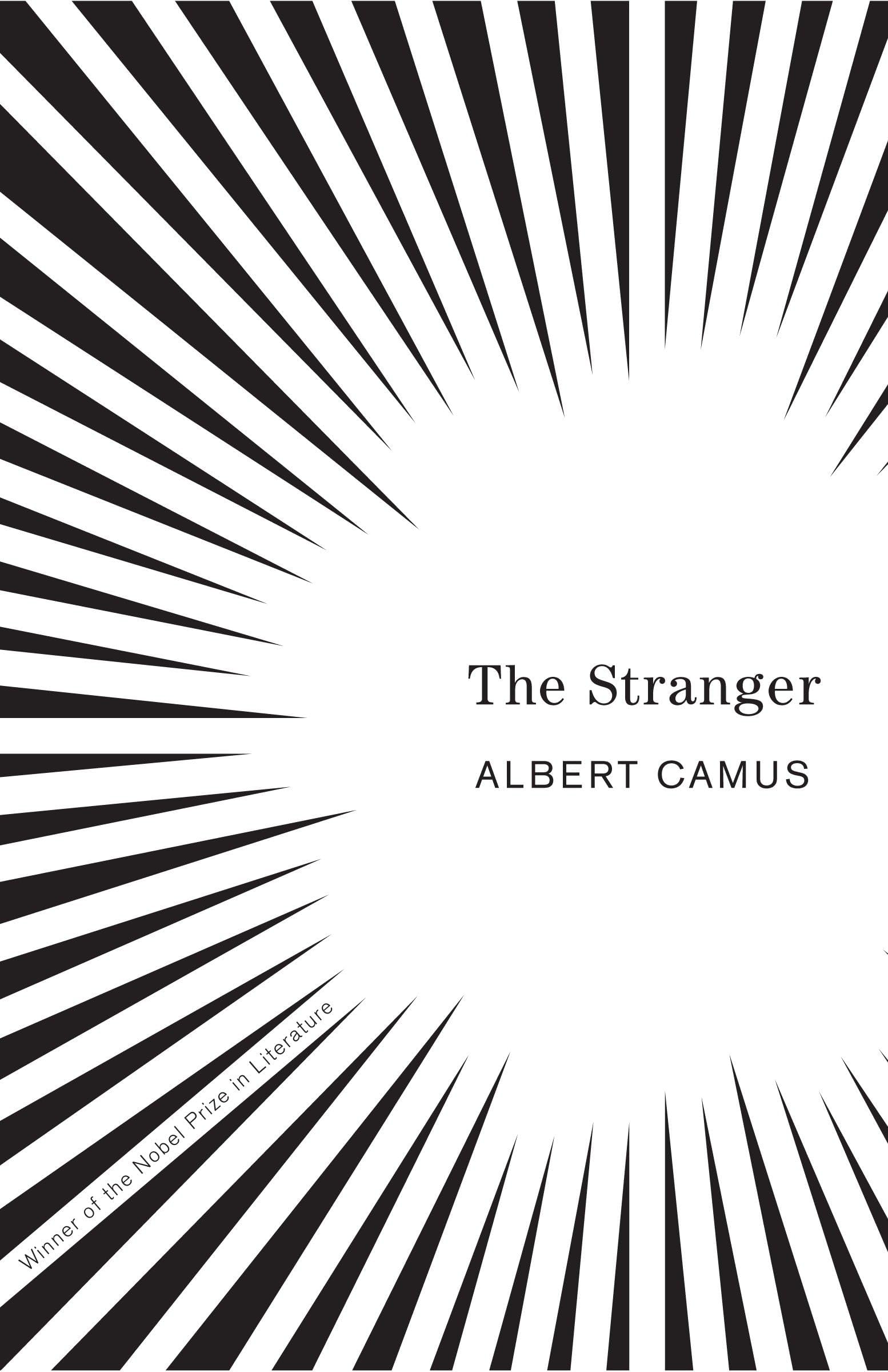
The Stranger
Product ID: 76162136
🎁Premium gift-ready packaging
📚Classic literary masterpiece
🖋️Expertly translated reissue edition
Desertcart purchases this item on your behalf and handles shipping, customs, and support to Iceland.
📖 Own the existential classic that everyone’s talking about!
The Stranger (Vintage International) is a highly acclaimed reissue of Albert Camus’s philosophical novel, translated by Matthew Ward. This paperback edition features premium print quality, smooth pages, and sturdy binding, making it a must-have for serious readers and collectors alike. Ranked in the top 100 books across multiple categories, it’s a perfect gift and a timeless addition to any literary collection.

| Asin | 0679720200 |
| Country Of Origin | India |
| Dimensions | 13.13 x 1.12 x 20.24 cm |
| Edition | Reissue |
| Generic Name | BOOK |
| Importer | Penguin Random House India Pvt Ltd |
| Isbn 10 | 9780679720201 |
| Isbn 13 | 978-0679720201 |
| Item Weight | 1 kg 50 g |
| Language | English |
| Net Quantity | 1.0 Count |
| Packer | Penguin Random House India Pvt Ltd |
| Print Length | 144 pages |
| Publication Date | 13 March 1989 |
| Publisher | Vintage |
| Reading Age | Customer suggested age: 14 years and up |
User
Interesting Reading
Thought provoking and in a way melancholy. The thoughts underlying the protagonist are very logically put forth. It's certainly an interesting reading and the book is unputdownable.
User
Something book lovers will love
I recently purchased The Stranger by Albert Camus and I’m really happy with the overall quality of this edition. The book looks exactly like the images shown simple, clean, and very aesthetically pleasing.The print quality is excellent, and the text size is comfortable to read, making it easy to go through even in longer reading sessions. The pages feel smooth and the binding is sturdy, which adds to the overall reading experience.I also really appreciate the minimal and classic design, which makes it a great addition to any bookshelf. It has that timeless look that book lovers will definitely enjoy.Overall, this is a well-made, high-quality product that combines both readability and aesthetic appeal.Highly recommended definitely a must-buy for readers.
User
Thought provoking, melancholic, and deeply philosophical
It's philosophical kinda unsettling, n melancholic novel. The story is simple n short but.... Writer tried to explore themes meaning of life, morality, freedom n literal absurdity of existence. Rather than telling u what writer think, the novel quietly forces you to question ur own beliefs.The main character, Meursault is unlike most protagonists. He isn't cruel or something heroic ... He is just alivez that's it. just radically honest n emotionally detached. He refuses to pretend to feel things he doesn't, even when society expects him to. His honesty is both his greatest strength and, ultimately well, his downfall... Books make us question like...A)The universe doesn't owe us meaning or fairness.B)Society often judges people more for how they behave n express emotions than for what they actually do.C)Searching endlessly for purpose can stop us from truly experiencing life, but...D)Is society really ready to hear the truth? Or does it only accept truth when it's wrapped in the right emotions? Or they believe what they believe?Most striking aspects of the novel is that Meursault seems condemned not only for murder, but for failing to cry at his mother's funeral. I admired that he never lies to make himself look better, even when doing so could save him. The ending left me wondering whether society truly values honesty or merely the performance of it. A few thoughts provoking it, Was a good read.
User
So peak
This book made me fall in love with albert camus' writings and his books, its totally worth a read
User
The best classic book ✨
The Stranger is a stark, thought-provoking story that explores the absurdity of life through its detached protagonist,Meursault. The writing is simple and almost emotionless, which makes the events feel even more unsettling. it questions society's expectations of grief, morality, and meaning. There's a quiet intensity beneath its calm surface. Cold, philosophical, and leaves you reflecting long after the last page.
User
Good read
The quality of the material is pretty good. The story is also very interesting.
User
A must read for philosophically inclined readers
The Stranger, at its core, is a philosophical novel. It exemplifies Camus' brand of philosophy, known as absurdism. It counts itself among several nihilistic philosophies that assert that there is no inherent meaning in the world, and all the attempts to seek meaning are absurd. It is when a human being understands this core reality of life, he or she receives their salvation. It is difficult to embed any philosophy in an interesting tale, interesting enough that people would read the book and take away the philosophy. In this way, Camus is similar to Ayn Rand, who also attempted to embed the philosophy of Objectivism in her books. He is equally talented but much more understated writer. Their philosophies are poles apart, but they use similar strategies to get them across to their reader and followers.The Stranger is a tale of someone who is absolutely unaffected by most emotional incidents that life throws at him, incidents that would normally upset ordinary people. Death of a grandmother, proposal by a girlfriend or facing death. It is a designed persona, or else, who can imagine someone who faces death not only with indifference, but with glee? Camus seems to be questioning the binary that pervades the common belief - you either have good reasons for your behavior, or you are insane. He seems to be saying through his protagonist's behavior that you are not obliged to provide reasons for your behavior to anybody. In fact, the reasons provided by people are not actual reasons - they are only the pathetic facade that one puts on the inherent vacuum of existence, the absurd nature of things. It is designated meaning by people and it comes across as a logically layered description of reality, or people's behaviors and actions - but is absurd when you peek closely into it.The plot and narrative style is mundane. There is no melodrama and even the most melodramatic scenes are described nonchalantly, as if the protagonist - and since the protagonist narrates the story in first person, the author is looking at things nonchalantly. Things like death of close ones, murder, love, friendship and law. Things that most people hold close to their heart. It is as if Camus is laughing at people who take the meaning of things seriously - the meaning that lies at the fabric of the society itself. It does not go to as much of an extreme as Sartre's "Hell is other people", but treats community and society as inherently vacuous and redundant.The supporting characters are diverse and interesting, and though they are looked at from the perspective of the protagonist, they surprise you at times. Raymond comes across as unlikable but very interesting. Marie lacks depth but probably Camus intended her to.The protagonists internal monologues are not only designed to give a glimpse into Camus's philosophy but are also used as literary devices that give a little ambiguity to the character. They refuse to tell you a lot about the protagonist while giving huge amount of information about his thoughts.Overall, it is a great read for someone who believes in nihilistic line of thought. I find the whole exercise unconvincing, hence I give it 4/5. Worth a read definitely, even if you do not care about Camus' philosophy. It is a must read for the sake of completion of the canon of great books of 20th century.
User
must buy if u wanna get into philosophy or absurdism
its soo good my first ever philosophy book,and even though i dont read books it was fairly easy to read,do recommend buying it
User
Great book!
Great book! Prompt delivery
User
Well written and well made perfect book!!!
If existential dread needed a hardcover edition, this would be it. The Stranger is one of those books that makes you question life, society, and whether the sun is personally attacking you. Somehow, despite all the philosophical heaviness, this edition is built like it plans to survive the apocalypse.The printing is crisp, the binding is rock solid, and the paper quality is surprisingly luxurious for a book whose main character emotionally reacts to things with the enthusiasm of a sleepy potato. Seriously, the pages feel so nice you almost forget you’re reading about existentialism and emotional detachment.I accidentally dropped it once, and I’m pretty sure the floor was more damaged than the book. The cover looks fantastic on a shelf too — perfect for silently telling guests, “Yes, I have complicated thoughts.”Five stars. A beautifully made edition of a classic that will either expand your worldview or make you stare out the window for 45 minutes questioning the meaning of toast.
User
A necessary lack of taste
Too abstract for year 2025. Maybe too French. 4 stars because there is something to be learned from - otherwise, terrible narration.
User
Great
Very good price
User
Jest naprawdę wciągająca i poruszająca.
Niestety, okładka książki jest bardzo cienka i łatwo się zgina, co trochę psuje przyjemność z czytania. Szkoda, bo treść zasługuje na lepszą jakość wydania.
Trustpilot
1 day ago
2 months ago