
Buy anything from 5,000+ international stores. One checkout price. No surprise fees. Join 2M+ shoppers on Desertcart.
Desertcart purchases this item on your behalf and handles shipping, customs, and support to Iceland.
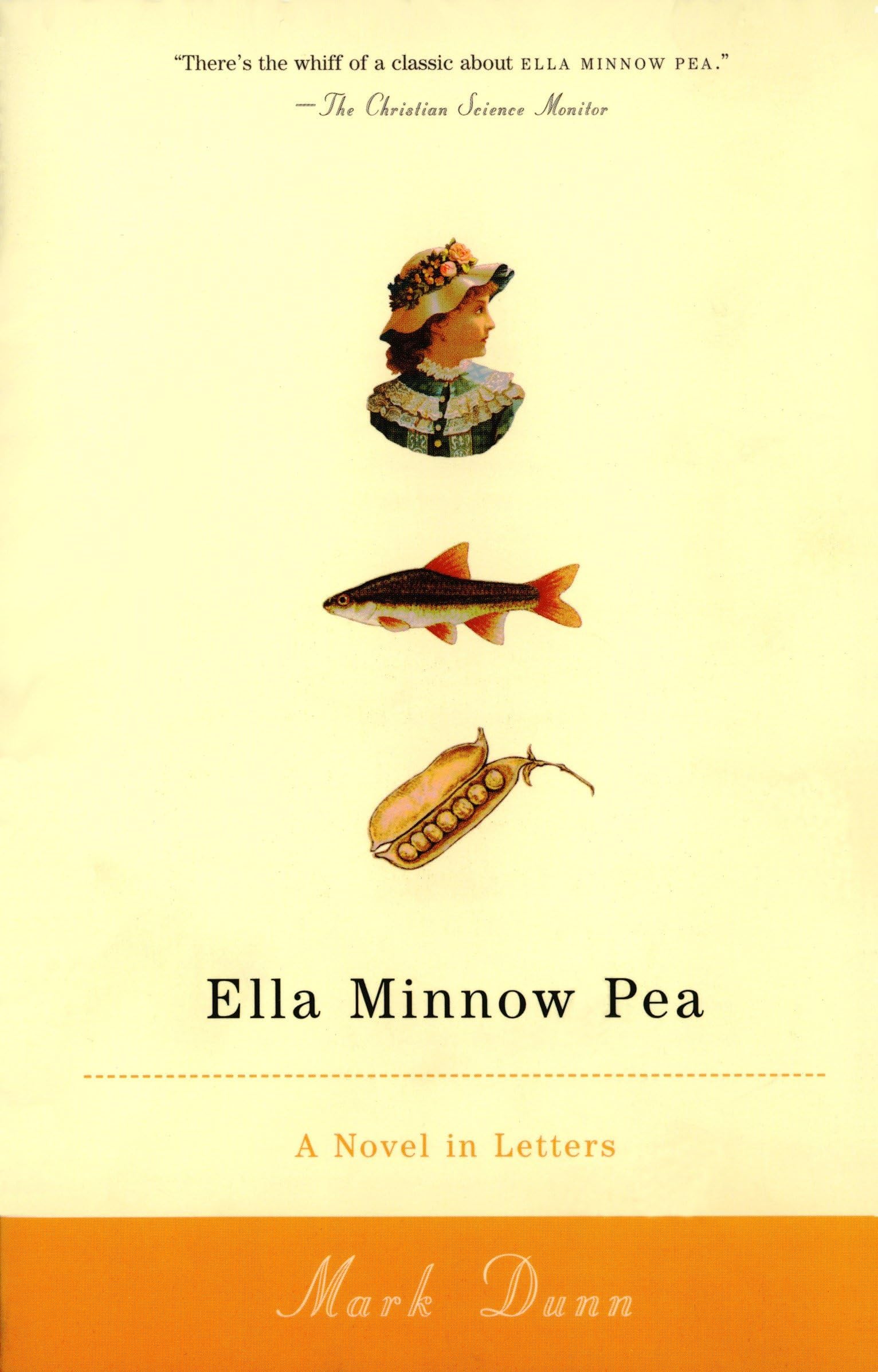
A hilarious and moving story of one girl’s fight for freedom of expression, as well as a linguistic tour de force sure to delight word lovers everywhere Ella Minnow Pea is a girl living happily on the fictional island of Nollop off the coast of South Carolina. Nollop was named after Nevin Nollop, author of the immortal phrase containing all the letters of the alphabet, “The quick brown fox jumps over the lazy dog.” Now Ella finds herself acting to save her friends, family, and fellow citizens from the encroaching totalitarianism of the island’s Council, which has banned the use of certain letters of the alphabet as they fall from a memorial statue of Nevin Nollop. As the letters progressively drop from the statue they also disappear from the novel. The result is "a love letter to alphabetarians and logomaniacs everywhere" (Myla Goldberg, bestselling author of Bee Season ). Review: My new favourite book. - At a mere 208 pages, Ella Minnow Pea is a lexically delicious little book. It’s also a wonderful allegory (or perhaps a satire?) of fascism, censorship, the corruption of absolute power, theocracies, and the apathy (or fear) that allows evil to triumph over good. "We are a nation of letter-writers, who, in the absence of reliable telephone service or the existence of electronic mail, have cultivated our hardship far beyond all expectation." The novel takes the form of letters from the inhabitants of an independent little fictional island called Nollop. It takes its name from the founding father Nevin Nollop, who is credited with discovering the wonderfully succinct sentence, “The quick brown fox jumps over the lazy dog” in which each letter of the alphabet appears. This sentence is Nollop (the island)’s claim to fame, and it is proudly displayed in the town square. However, one night the letter ‘Z’ crashes to the ground. The council takes this as a sign from Nollop himself that the letter Z is unnecessary anyway – well, we hardly use it, after all – and so they decide to ban its use. Anyone caught using the aforementioned forbidden letter will be placed in the stocks, whipped, exiled or executed. This of course means that all the books should be destroyed. As more letters fall, they too are excised, until the task of saving the beloved island of Nollop’s people from incommunicable oblivion falls to Ella. And she is running out of both time and letters. "Not only does it cripple communication between islanders, it builds rock walls between hearts." As a society of letter-writers who leave lengthy essays rather than notes and who will never say in five words what could be said in fifty, the novel can be a bit wordy… But that’s the point. As letters are stricken from the vocabulary of the Nollopians, the letter-writers must find ever more roundabout ways of expressing themselves, leading to some fantastic word-creating and lexical acrobatics. I particularly enjoyed the new words for expressing days of the week in the wake of the loss of ‘D’: Monty, Toes, Wetty, Thurby, Fribs, Satto-gatto and Sunshine. Thus, despite the overly complex and abnormally formal way that the Nollopians speak, the whimsy of it grew on me until I wished that everyone talked like they did, always and forever. And as the letters become more and more scarce, their spectacularly creative ways of expressing themselves are limited more and more, until they cannot speak except through language such that you might find in a teenager’s text messages – the horror! "In the sanctuary of my thoughts, I am a fearless renegade. Yet in the company of the children I cringe and cower in a most depreciating way." While the progressively lipogrammatic form and verbose style of the novel are more than enough to make me fall madly in love with it, the plot itself is effective and complex. The characters are distinct and lovable, as their relationships and the effects of their actions and the loss of their very identities filter out through the letters. From the man who must rename himself Prince Valiant-the-Comely to avoid a forbidden letter in his name, to a woman who decides to cover herself entirely in paint, to a family that march into the council house dressed as ducks and waving Quaker oats over their heads as they quack to protest the loss of the letter Q, the characters make this engrossing. Furthermore, the ever-growing power-madness of the Council is chillingly similar to theocratic/ideocratic dictatorships such as ISIS, Nazi Germany and the second Bush Administration. Neighbours turn on neighbours and any sense of privacy is obliterated by censorship and spying. "Today we queried, questioned, and inquired. Promise me that come tomorrow, we will not stop asking why." The novel, while dazzlingly clever and scrumptiously linguistic is a treat to read. The characters are just mad enough to be utterly realistic and the moral implications are profoundly engaging. It’s a small, whimsical and wonderfully intelligent book, and a pleasure to read. I wish it had been longer, but not a word (or letter) was wasted. Review: Fun spelling story - This was hilarious! A very sad, and funny story. (No idea if the highlight was supposed to be funny, but it made me snort)


| Best Sellers Rank | #12,990 in Books ( See Top 100 in Books ) #8 in Epistolary Fiction (Books) #135 in Fiction Satire #1,239 in Literary Fiction (Books) |
| Customer Reviews | 4.5 out of 5 stars 5,181 Reviews |
K**K
My new favourite book.
At a mere 208 pages, Ella Minnow Pea is a lexically delicious little book. It’s also a wonderful allegory (or perhaps a satire?) of fascism, censorship, the corruption of absolute power, theocracies, and the apathy (or fear) that allows evil to triumph over good. "We are a nation of letter-writers, who, in the absence of reliable telephone service or the existence of electronic mail, have cultivated our hardship far beyond all expectation." The novel takes the form of letters from the inhabitants of an independent little fictional island called Nollop. It takes its name from the founding father Nevin Nollop, who is credited with discovering the wonderfully succinct sentence, “The quick brown fox jumps over the lazy dog” in which each letter of the alphabet appears. This sentence is Nollop (the island)’s claim to fame, and it is proudly displayed in the town square. However, one night the letter ‘Z’ crashes to the ground. The council takes this as a sign from Nollop himself that the letter Z is unnecessary anyway – well, we hardly use it, after all – and so they decide to ban its use. Anyone caught using the aforementioned forbidden letter will be placed in the stocks, whipped, exiled or executed. This of course means that all the books should be destroyed. As more letters fall, they too are excised, until the task of saving the beloved island of Nollop’s people from incommunicable oblivion falls to Ella. And she is running out of both time and letters. "Not only does it cripple communication between islanders, it builds rock walls between hearts." As a society of letter-writers who leave lengthy essays rather than notes and who will never say in five words what could be said in fifty, the novel can be a bit wordy… But that’s the point. As letters are stricken from the vocabulary of the Nollopians, the letter-writers must find ever more roundabout ways of expressing themselves, leading to some fantastic word-creating and lexical acrobatics. I particularly enjoyed the new words for expressing days of the week in the wake of the loss of ‘D’: Monty, Toes, Wetty, Thurby, Fribs, Satto-gatto and Sunshine. Thus, despite the overly complex and abnormally formal way that the Nollopians speak, the whimsy of it grew on me until I wished that everyone talked like they did, always and forever. And as the letters become more and more scarce, their spectacularly creative ways of expressing themselves are limited more and more, until they cannot speak except through language such that you might find in a teenager’s text messages – the horror! "In the sanctuary of my thoughts, I am a fearless renegade. Yet in the company of the children I cringe and cower in a most depreciating way." While the progressively lipogrammatic form and verbose style of the novel are more than enough to make me fall madly in love with it, the plot itself is effective and complex. The characters are distinct and lovable, as their relationships and the effects of their actions and the loss of their very identities filter out through the letters. From the man who must rename himself Prince Valiant-the-Comely to avoid a forbidden letter in his name, to a woman who decides to cover herself entirely in paint, to a family that march into the council house dressed as ducks and waving Quaker oats over their heads as they quack to protest the loss of the letter Q, the characters make this engrossing. Furthermore, the ever-growing power-madness of the Council is chillingly similar to theocratic/ideocratic dictatorships such as ISIS, Nazi Germany and the second Bush Administration. Neighbours turn on neighbours and any sense of privacy is obliterated by censorship and spying. "Today we queried, questioned, and inquired. Promise me that come tomorrow, we will not stop asking why." The novel, while dazzlingly clever and scrumptiously linguistic is a treat to read. The characters are just mad enough to be utterly realistic and the moral implications are profoundly engaging. It’s a small, whimsical and wonderfully intelligent book, and a pleasure to read. I wish it had been longer, but not a word (or letter) was wasted.
Z**.
Fun spelling story
This was hilarious! A very sad, and funny story. (No idea if the highlight was supposed to be funny, but it made me snort)
F**O
Harrowing Fun!
Ella Minnow Pea is a harrowing and cautionary tale about the dangers of taking things a bit too far. In this case, an island "nation's" fondness for one of its founding fathers, Nevin Nollop, the "creator" of the pangram "The quick brown fox jumps over the lazy dog." However, it is really a work outlining important but ignored aspects of language, and English in particular. That the very literate island folk worship Nollop for the esteem he brought them is somewhat belayed by the fact that the above pangram could be two letters shorter just by saying "The quick brown fox jumps over a lazy dog." The islanders hadn't noticed this in 100 years?? Anyway, tragedy strikes and rather than carry on rationally, the islanders proceed to make things worse by discarding the use of letters from the language, fortunately the less used ones at first. This causes much overthinking and a lot of consternation as life on the island proceeds to fall apart about as quickly as Nollop's memorial statue. It gets to the point where we think we might be entering "Lord of the Flies" or "Wicker Man" territory, but fortunately, about the midway point the novella makes a more humorous inflection that points to a soft if zany landing for our characters, though not before a lot of damage has been done. Now, author Dunn took the road of lipograms and removing letters when there was just as good a chance (and this could have been a characteristic of island life before the story begins) that the island folk would have been required that all their sentences contain all 26. As harrowing and confounding as this zany lexographic quirk of island life might have been--it just might have been possible! (Ahem). Maybe a sequel could be dreamed up?? Dunn is pretty good at the human psychology underlying the events that unfold, but doesn't dig too deeply into the backgrounds of the villains, so we don't get a good angle on their causal motivations. There's also something of a red herring about stateside real estate developers that you might think come into play later on but don't. That, said, the novel is fun if a bit too serious at times. I suppose it could be argued that without language we'd all turn into savages, but the mood shifts here are a tad exaggerated.
D**N
A Keeper for Language Lovers
Mark Dunn has written a keeper for language lovers. A playwright with over 20 notches on his gun in that genre, Dunn decided to write his his first novel. I, for one, am glad that he did. This book is set on a 63-square-mile fictional island 21 miles off the Carolina coast, southeast of Charleston, available only by daily ferry. It is named for Nevin Nollop, the man who coined the term all of us old folks know from beginning typing, "The quick brown fox jumps over the lazy dog." There is an aging statue of him in the town square and that statue bears that sentence, not engraved on the base, but on tiles at the top. One of these tiles, the letter 'z', falls one day and shatters. A little girl sweeps up the shards and takes them to the town council, a body that has exceptional power over the island and precious little common sense. They decree that this is an act of Nollop himself and declare that islanders from then on must never use that letter in any correspondence. If one does, the penalty for first offence is public reprimand, for the second, public flogginng, and the third, death. The plot begins to thicken when a second tile falls. Ella Minnow Pea, an 18-year-old girl, is the major letter writer (the novel is epistolary, remember), but there are others. and Dunn takes us on a merry chase as all of the epistles become a challenge for the town as tile after tile begin to fall. It is fun to watch the writers avoid the use of the fallen letters; it is tragic when the consequences begin to get carried out. For vocabulary lovers, new words abound, and new pangrams (sentences, like the one with the lazy canine and the bouncy vulpine,, that use all the letters of the alphabet) pop up throughout the book. (Example: "The wicked peon quivered, then gazed balefully at the judges who examined him.") There is a lesson here for those who follow blindly what a government tells them to do, but the book is a fun romp for those of us who like to have fun with language! The ending is a delight.
G**N
Funny & Pertinent
I read this book when it came out and thoroughly enjoyed the plot and characters. But the word & letter play are very creative and just fun. I recently took short class on the book. So I read it again. The book is about authoritarian control of life and the language. Fascinating read!
H**E
This is my School review,you don’t have to read it
The Fable Ella Minnow Pea by Mark Dunn was a pretty alright book. It has a good plot and fine characters, but it does get a little confusing in the end. In this review, I will go over these points in detail. The story takes place on an island called Nollop which is named after a man who wrote a sentence that contains every word in the alphabet; “The quick brown fox jumps over the lazy dog.” Because of this sentence, a statue of Nollop is built on the island with the sentence glued on it. Ella Minnow Pea, the main character, is also the heroine of the story. The story is written through letters from Ella to her cousin. Through her correspondence, we learn of the many bad things that are happening on the island. It all begins when letters start to fall off of the Nollop statue. As they fall, it becomes criminal to speak and write the fallen letters. The reason for this is that the councilmen of the island think that Nollop is trying to send them a sign that the letter should not be used anymore. As more and more letters fall off of the statue, the councilmen ban the letters, the newspaper closes because they can't write anything without using the banned letters, and people are arrested for using the illegal letters. The council charges people who disbelieve their theory with heresy. Nate, a man from the mainland, comes to the island to see what is happening to all of the letters. He finds out that the reason the letters are falling off is that the glue is old, not something supernatural. Nate tells the council, however, they do not listen. The only way they will allow the island people to use all of the letters again is to make a new sentence. The sentence must be shorter than the original and also include all of the letters in the alphabet. Ella takes it upon herself to create this sentence to finally lift the ban. Overall I thought the book was average. The characters were unexceptional and the plot was interesting but not amazing. The readability was good in the first and middle parts of the book, however, in the end, it got confusing because it was difficult to follow along because the characters could not use some of the letters. The book was short, only being a little under 200 pages so it was a fast read. I would recommend reading this book.
B**S
Curiouser and Curiouser
Ella Minnow Pea is a beautiful adventure in word (nay, letter) creativity. It is filled with one twist after another including finding unexpected Live and momentary parenthood. Must read to believe!
A**E
What would happen in letter are taken away?
Ella Minnow Pea by Mark Dunn REVIEW Twenty years ago this book was published, but it seems like it could take place at any time. This book’s use of language is the most amusing the alphabet has been in a very long time, if not ever. It may not be the most insightful or groundbreaking book I’ve ever read, but it does what it sets out to do. Ella Minnow Pea makes you look at not only how important each letter of the alphabet is, but also when the leaders can have good intentions but not necessarily doing what is best. Ella is a young adult living on a small made up island off the coast of North Carolina. The island is named Nollop, because a resident named Nollop came up with a sentence that uses every letter in the alphabet at least once. He encouraged a culture on the island that was centered on the use of language. Everyone on the island has a diverse vocabulary and is very educated. There is a Nollop monument in the town center with the sentence put on it in tiles. But when the letter ‘z’ comes unglued and crashes to the ground, the council sees it as a sign that Nollop wants that letter banned. As each letter comes down, the letters are removed from the island’s lexicon. Libraries are closed, books removed, and the town descends into crisis. Ella takes the challenge to bring the town together to come up with a way to convince the council that they need the letters back. The book is told exclusively in letters, so the reader watches as the letters are taken one by one from Ella and around her. They change weekday names and people have to choose between changing their name or leaving the only home they have ever known. It is amazing to read pages and realize at the end that certain letters have not appeared at all. The characters are not very well rounded, but the plot makes up the difference. It is a quick read, I read it in one day. As a word nerd, I got very involved in how Dunn managed to completely drop letters in speech and writing. It is much harder than it looks! The lesson in censorship is as important today as it was in 2001. Liberty is in the ability to speak however you need to and read whatever you want to. The government stifling speech begins the loss of liberty for all. The superstition element is important too. The tile tumbling is perceived as a message sent by Nollop, but they have no true evidence. That does not stop the council though. They make this superstition law, as they simply all come to the same conclusion, no matter what the town thinks. The reason a law exists is just as important as the law, and why laws in general exist. This book is not the most deep look at these concepts, but it is a great introduction to these ideas and an awesome conversation starter, especially with younger readers. PS did you notice I left out the letter ‘f’ in this whole review?
M**N
Libro entretenido, rápido de leer
Muy bien pensado, es bonito ver cómo según evoluciona la historia el uso restrictivo de las letras va limitando las comunicaciones
S**A
Me encanto!
Me encanta como evoluciona la historia, pero sobre todo el lenguaje para compensar las letras que se van eliminando.
J**N
Lindo!
Esta edição comemorativa é lindíssima! As ilustrações acompanham perfeitamente o desenrolar da história.
V**A
wonderful
a marvel of a book
T**R
It's strange, but I love it.
The Story… Off the coast of America is an Island called Nollop. Named for the revered Nevin Nollop (deceased), creator of the pangram "The quick brown fox jumps over the lazy dog." Nollop is not an advanced nation - it's not even keeping up with the rest of the world. But what Nollop lacks in technological advancement, it's makes up for with the adoration of language. The Nollopian's adore words - especially Ella. They adore words, and they idolise the aforementioned Nevin Nollop. A monument to his linguistic prowess stands proud for all to see - tiles with individual letters spelling out the famous pangram. One day, a tile falls from the monument - the letter Z. The governing body of Nollop - being so fanatically devoted - declare the falling of the tile to represent an instruction from Nollop himself! The message is interpreted to mean the Nollopians should never used the letter Z again. Not in speech, not in writing...and those who break this divine law are severely punished. The book is written as a series of letters from various Nollopians. As more tiles fall from the aging monument, the Nollopians are forced to abandon the variety of words they adore so much, until they can take no more... What I liked… The book itself is an example - albeit a very strange one - of totalitarian government, fanatical religious leadership and censorship. As the letters fall from the monument, so too are they removed from the book. Dunn writes very cleverly, managing to keep as much variety and love of language in each letter, despite the every increasing pressure caused by the rapidly decrease pool of usable letters. It is clever, not just because it is a physically difficult task, but also because Dunn manages to express so much emotion in so many ways, and when Ella's heart breaks, my heart broke too. The format itself, a series of somewhat connected letters, is a very novel and highly effective form of delivery. It was not just a gimmick - it brought the story to life. It took me a little while to get my head around it, and might have been irritating if the story wasn't so engaging. Finally, I loved the variety of 'authors' for the letters. The letters are written by many different characters; all with different views and ways of dealing with an incredibly difficult situation. Perhaps one of the most difficult, but most rewarding things about this book is that you find yourself questioning which of the characters approaches you think you would follow if you were in their place. Questions like this are what usually make books about totalitarianism very difficult, and often soul crushing to read - but the admittedly bizarre situation allows you to consider these ethical dilemmas, something which I find really important. What I disliked… Nothing. I loved it. Final thoughts... This book seems really strange. The premise is strange, the way it uses an ever decreasing pool of letters is strange. The use of letters instead of 'normal' prose is weird. BUT it is beautiful. It is challenging. It is insightful. It is art. This book may be better suited to those with an appreciation for linguistic acrobatics, and the art of words, rather than the casual reader - but I would still encourage the casual reader to try it and see. It's more than worth the effort.
Trustpilot
5 days ago
2 weeks ago