🏃♂️ Beat Yesterday, Every Run Counts!
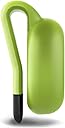
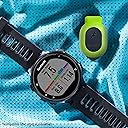
The Garmin Running Dynamics Pod in Force Yellow is a compact, clip-on sensor that provides advanced running metrics like cadence, stride length, ground contact time, and vertical oscillation without the need for chest straps. Compatible with select Garmin watches via ANT+, it features a replaceable battery lasting over a year and is designed for runners seeking precise biomechanical insights to improve performance and prevent injury.


| ASIN | B06XQ4KCVL |
| Batteries | 1 Lithium Metal batteries required. (included) |
| Batteries Included? | Yes |
| Brand | Garmin |
| Color | Force Yellow |
| Compatible with | D2 Charlie, D2 Delta, D2 Delta PX, D2 Delta S, Descent Mk1, fēnix 5, fēnix 5 Plus, fēnix 5S, fēnix 5S Plus, fēnix 5X, fēnix 5X Plus, fēnix 6, fēnix 6 - Pro and Sapphire Editions, fēnix 6 - Pro Solar Edition, fēnix 6S, fēnix 6S - Pro and Sapphire Editions, fēnix 6S - Pro Solar Edition, fēnix 6X - Pro and Sapphire Editions, fēnix 6X - Pro Solar Edition, fēnix Chronos, Forerunner 245, Forerunner 245 … |
| Customer Reviews | 4.4 4.4 out of 5 stars (3,055) |
| Date First Available | 29 March 2017 |
| Department | unisex-adult |
| Display Size | 0.9 |
| Display Type | Resistive Touch |
| Features | Bluetooth |
| Height | 3 centimeters |
| Included Components | manual, running dynamics pod |
| Is Discontinued By Manufacturer | No |
| Item model number | 010-12520-00 |
| Language | English |
| Length | 10 centimeters |
| Manufacturer | Garmin Ltd. |
| Map Type | Road |
| Number of Items | 1 |
| Product Dimensions | 3.81 x 2.03 x 2.29 cm; 45.36 g |
| Size | One Size |
| Sport | Running |
| Width | 10 centimeters |
S**M
This does what it says it will do. It is extremely compact as I had imagined it to be bigger. Even if you don’t care much for such stats, I still recommend it because having technology serve you to gather stats during a time you are incapable of doing so yourself really adds value and worth to each run, and that motivates you to do it again. Connectivity is quick each time. I’ve ran in a freak rainstorm before and it worked just fine.
A**O
Lo utilizzo in abbinamento a un Forerunner 945. Inizio subito con il precisare che il Dynamic Pod NON è bluetooth, bensì ANT+. Può essere inoltre utilizzato in abbinamento solo con determinati modelli di sportwatch Garmin (il mio precedente Vivoactive 4 , ad esempio, non è tra gli sportwatch supportati) e non mi risulta sia compatibile con altri sportwatch di altri marchi. Detto questo, il sensore è incredibilmente piccolo e leggero. Va agganciato ai pantaloni/pantaloncini, avendo cura di posizionarlo quanto più possibile al centro del nostro corpo. è talmente leggero e piccolo che ci si dimentica subito di averlo indossato (tanto è che al termine dell'attività il mio Forerunner mi ricorda di togliere il Dynamic Poc). è impermeabile e con batteria sostituibile. Si attiva da solo quando rileva un movimento (la camminata) e va in stand-by sempre da solo. L'associazione al proprio Garmin è immediata e semplice: basta indossarlo, fare due passi e cercare il dispositivo nel menù Sensori del proprio orologio. Da lì in poi è tutto automatico e non è necessaria alcuna calibrazione, attivazione o disattivazione. I dati che raccoglie durante la corsa (attenzione, solo durante la corsa, NON durante una camminata), sono: Tempo di contatto con il suolo, bilanciamento destro/sinistro, oscillazione verticale (valore assoluto e in %), passo, lunghezza passo, e altre dinamiche di corsa. Sono tutte informazioni complementari ai valori rilevati di default dagli sportwatch Garmin, completamente integrati nelle statistiche di fine attività in Garmin Connect (ma non in Strava...), ma anche in tempo reale durante l'attività (basta impostare i relativi campi dati sul proprio orologio) e con un buon livello di lettura (i.e. colore verde se il dato rilevato è buono, arancione se al limite, rosso se fuori target). Le informazioni servono per chi, come me, è appassionato di dati e statistiche, ma anche utili per capire se ci si sta allenando bene e prevenire magari qualche infortunio. Al prezzo di 60€ (circa 10€ in meno rispetto al listino ufficiale Garmin) è secondo me un buon complemento per un runner anche alle prime esperienze ma che vuole avere informazioni quanto più dettagliate possibili delle proprie uscite.
N**E
Der Pod macht genau was der machen soll- in Verbindung mit Garmin Uhr mit dazugehörigen Laufeffizienzfeldern und Garmin Connect App kann man schon eine deutliche Verbesserung vom Laufstil erreichen und die Laufstilfehler eingrenzen und vermeiden. Ich tendiere z.B. unbewusst zu zu hoher vertikaler Bewegung und genau da geht ja Energie verloren- seit ich den Pod habe und meine Läufe ausgewertet habe, habe ich den Fehler eingegrenzt und im Zuge der Lauf-ABC bewusst vermindert. Auch andere Daten wie Balance, Bodenkontaktzeit usw. sind nützlich wenn man effizient und schnell laufen will. Für einen 5-km-Hobbyläufer ist der Pod aber wahrscheinlich eher sinnlos. Hier muss jeder für sich selbst wissen was er mit dem Sensor anstellen will und was er davon erwartet. Ich verstehe auch nicht manche Rezensionen, die auf den Gedanken kamen den Pod beim Skilanglauf einzusetzen. Es heißt ja auch "Running Pod". Für mich ist das Gadget top. Einziges Nachteil - konstruktionsbedingt keine Winddatenerfassung. Für mich ist das Gadget top.
P**O
Compatible avec les montres Garmin, cela permet d'obtenir toutes les infos complémentaires de foulées en running, fournies habituellement par les ceintures de la marque, sans avoir besoin d'en acheter une. Pour ma part j'utilise quand même une ceinture pectorale car elles sont plus précises que le cardio de la montre... Mais ce sont des ceintures de la marque concurrente (deux Polar H10 et une Polar H7), et il semble en plus qu'elles soient plus confortables que celles de Garmin. Par contre, avec ces modèles concurents (H7/H10), on obtient que le cardio, et rien d'autre. Avec le RDP (Running Dynamics Pod), on obtient toutes les données manquantes, que ce soit avec la montre toute seule, ou avec des ceintures "cardio simples". Le RDP se met dans le dos au niveau du short / cuissard, en face de la colonne vertebrale. Contrairement à ce qui est dit dans la doc, il suffit de commencer à courir pour qu'il se mette en marche, pas besoin de "l'activer" préalablement. Concernant le compteur de foulée, cadence, rapport et oscillations verticales des foulées, etc.. on a une valeur identique aux infos des ceintures Garmin. Par contre, concernant le calcul de l'équilibre contact avec le sol pied gauche / pied droit, il est très sensible du placement du RDP au niveau de la colonne et de manière verticale... Du coup, des fois, on obtient des résultats pas du tout cohérent avec les résultats habituels. Si cette valeur est vraiment importante pour vous, je conseille donc de faire vérifier visuellement le placement du RDP par un de vos proches ou un de vos compagnons de course avant celle-ci. A part cette petite remarque, le produit fait vraiment bien son boulot.
T**V
Garmin’s tiny but entirely capable Running Dynamics Pod is a device worn on the back of your running shorts which then communicates with your Garmin running wearable to provide running dynamics in real time during your workouts. These six combined metrics will help you with your running form and efficiency and are as follows: Cadence - measured in steps per minute (spm), this is how quickly you are moving your feet. The pod overrides your watch’s included cadence sensor. This is more accurate since the pod is far more static on your torso and is therefore closer to the ground than it would be if the data were coming from a constantly moving source (wrists). Ground Contact Time Balance - shows the balance of your left and right feet at the time of impact/strike. This is presented as a numerical value on the watch in real time, showing either a perfect 50-50 balance reading or giving you a value with an arrow showing which side you are favoring. Knowing these metrics in real time or viewing this data after your run can help improve running form. Ground Contact Time - shows the length of your impact when striking the ground and is measured in milliseconds. The lower this number is, the better as there is less strain on the joints with a lower contact time. Stride Length - this measures the length of your stride in meters and is an important metric to monitor when doing speed work and pace training. Vertical Oscillation - this is the height of your bounce measured in centimeters and the lower this value is, the less strain you are putting on your body. Think of this in terms of if you jumped high and landed on your feet, the impact would be far greater on your joints as opposed to if you did a smaller jump. Vertical Oscillation Ratio - this is a combination of the values of your stride length and vertical oscillation to help gauge how much time you are spending off the ground. This metric is expressed as a percentage. The actual pod is encased in a silicone housing from which it can be removed if the batteries need to be changed. Battery life is rated for up to a year and is user replaceable. The pod is waterproof to some degree in the sense that heavy sweat and the occasional downpour during your runs will not affect performance, but one cannot fully immerse it in water for prolonged periods of time. It is only available in a single color and while that may be puzzling at first, it is actually a smart decision on Garmin's part as the unit is highly visible on nearly all colors of clothing. This is a blessing as the pod is slightly larger than a peanut M&M and can easily be forgotten about once you throw your running shorts in the hamper. The unit is so light at 12 grams that the user forgets it's even there during a workout. The silicon layered clip is strong and never once has the pod fallen off during or after a workout. There are no physical buttons on the pod, you simply either wear it, walk to your starting point and initiate a run on your watch or wake the unit by gently giving it a vertical shake or two. Pairing is extremely simple and if your Garmin wearable supports it (check Garmin's website for compatibility), you'll be up and running in under a minute. On supported devices, there will be two visible data pages consisting of the six metrics described above for monitoring dynamics in real time. This data is also saved and logged to your run statistics under your Garmin Connect account for viewing at a later time. Having used the pod for well over a month now, I can say that these metrics update with an alarming rate of frequency during a workout. If you move your feet faster, you'll see your cadence increase and your stride length decrease almost instantaneously. The same goes for all the other metrics. When the workout is over, your watch buzzes to remind you to remove the pod. Garmin's Run, Tri and now Pro chest heart rate monitors will provide these same metrics with the added benefit of giving the user heart rate data over its optical, wrist -based counterpart. But what if you have another, off-brand chest strap or simply don't like wearing heart rate monitors to begin with? That's where this little pod comes in. Bottom line, if your watch supports it and you love data, there's no reason not to have this little device in your arsenal.
Trustpilot
5 days ago
3 days ago