


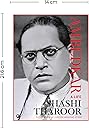


Ambedkar: A Life
Product ID: 663627323
Buy Ambedkar: A Life by Tharoor, Shashi (ISBN: 9789391047504) from desertcart's Book Store. Everyday low prices and free delivery on eligible orders. Review: Ambedkar's A Life by Shashi Tharoor is a well-written biography. For someone who has read fairly about Babasaheb, the book had no startling facts. Except for the fact that he contemplated giving up his life if he lost his vision, because it would mean no longer he could read. Growing up, my father used to emphasize a lot on reading books. I am confident that he got this inspiration from Babasaheb. Shashi Tharoor has woven a good connection between events in the life of Dr. Ambedkar. The book is around 200 pages and is a good introduction to the life of Dr. BR Ambedkar by an equally erudite intellectual. The book is not a hagiography and that is the best part of it. It contains a section on Dr. BR Ambedkar's flaws, one which very few apart from Mr. Tharoor would do. The critical analysis is objective and based on the reasoned perceptions of the author and doesn't get personal or stinging. It was a worthy first read of 2023 for me. My ratings are 5 out of 5 for anyone seeking to know about Babasaheb. Review: Dr Bhimrao Ambedkar was educated as an economist and trained as a barrister, but he went on to become a politician, a social reformer, an author, an educationist and much more. This book is a biography of Dr Ambedkar by Shashi Tharoor, formerly an international civil servant, now better known as a politician and best-selling author. “That the son of an untouchable subedar,” says Dr Tharoor in his introductory Note, “scrabbling in the dust in the cantonment town of Mhow, rose to earn two prestigious doctorates and, by sheer dint of his intellectual worth, courage of conviction, and brilliance of articulation became one of the foremost figures among a generation of giants is drama enough for this author.” The first part of this book titled ‘Life’ consists of a concise biography in five chapters. While the details of Dr Ambedkar’s birth, childhood, early struggles, education, maturity and career are quite well known, the author presents them in his own inimitable way. He describes young Bhim, the fourteenth child of Subedar Ramji Sakpal as a “somewhat rowdy infant, with a taste for a fight and an unwillingness to admit defeat in any situation he found himself in…” but notes “as an untouchable, Bhim was segregated at school from other students and made to sit in a corner of the classroom on a gunny sack…” As a student at Columbia University, at the age of twenty-five, Ambedkar participated in a seminar on Anthropology, in which he compared Hinduism with a “multi-storied building in which each floor is occupied by a caste, but there is no staircase which links the different floors. One lives and dies on the floor on which one is born.” When he returned to India, Dr Ambedkar established the ‘Bahishkrit Hitkarini Sabha’ and coined this famous slogan “Educate, Organize and Agitate.” Later, as the foremost leader of the ‘Depressed Classes’ (now called ‘Dalits’) he participated in all the three Round Table Talks in London. His views often conflicted with those of Mahatma Gandhi, who believed that the Indian National Congress represented all sections of society. He also questioned the Mahatma’s ideal of a village-based economy, by asking rhetorically “What is the village but a sink of localism, a den of ignorance, narrow mindedness and communalism?” In 1935, recounts the author, the Jat Pat Todak Mandal, an organization dedicated to breaking down caste barriers, invited Dr Ambedkar to preside over their Annual Conference to be held in Lahore. However, his views turned out to be far too radical for the Mandal, who finally cancelled the event, when they found that Dr Ambedkar was not willing to make any changes in his speech. The text of his speech (which was never delivered) became the basis of his seminal work ‘The Annihilation of Caste’. In 1947, Dr Ambedkar joined Nehru’s cabinet as law minister; and shortly afterwards he was appointed chairman of the drafting committee in the historic Constituent Assembly. In his speech for unanimous adoption of the draft Constitution, he emphasized the need “to hold fast to constitutional methods for achieving our social and economic objectives, abandoning the ‘bloody methods of revolution’ including ‘civil disobedience, non-cooperation and satyagraha.’” On the same occasion, he also said “Bhakti in religion may be a path to salvation of the soul. But in politics, Bhakti or hero-worship is a sure road to degradation and eventual dictatorship.” The second part of this book, titled ‘Legacy’ explores the themes of Dr Ambedkar’s Constitutionalism and Nationalism, apart from examining his impact on the world and the country today. The author also identifies what he considers the flaws in Dr Ambedkar’s life and records, including “his blind spot about the Adivasis,” his strident critcism of Hinduism and his repeated clashes with Mahatma Gandhi. While there is no dearth of material about Dr Ambedkar, the author has done an excellent job of selection and presentation of information. The book is very well produced and reasonably priced. The only shortcoming, in my opinion, is that it does not contain any photographs.
| Best Sellers Rank | 95,114 in Books ( See Top 100 in Books ) 23,965 in Society, Politics & Philosophy |
| Customer reviews | 4.6 4.6 out of 5 stars (436) |
| Dimensions | 1.48 x 13.97 x 21.59 cm |
| ISBN-10 | 9391047505 |
| ISBN-13 | 978-9391047504 |
| Item weight | 360 g |
| Language | English |
| Print length | 240 pages |
| Publication date | 5 Sept. 2022 |
| Publisher | Aleph Book Company |
A**M
Ambedkar's A Life by Shashi Tharoor is a well-written biography. For someone who has read fairly about Babasaheb, the book had no startling facts. Except for the fact that he contemplated giving up his life if he lost his vision, because it would mean no longer he could read. Growing up, my father used to emphasize a lot on reading books. I am confident that he got this inspiration from Babasaheb. Shashi Tharoor has woven a good connection between events in the life of Dr. Ambedkar. The book is around 200 pages and is a good introduction to the life of Dr. BR Ambedkar by an equally erudite intellectual. The book is not a hagiography and that is the best part of it. It contains a section on Dr. BR Ambedkar's flaws, one which very few apart from Mr. Tharoor would do. The critical analysis is objective and based on the reasoned perceptions of the author and doesn't get personal or stinging. It was a worthy first read of 2023 for me. My ratings are 5 out of 5 for anyone seeking to know about Babasaheb.
A**A
Dr Bhimrao Ambedkar was educated as an economist and trained as a barrister, but he went on to become a politician, a social reformer, an author, an educationist and much more. This book is a biography of Dr Ambedkar by Shashi Tharoor, formerly an international civil servant, now better known as a politician and best-selling author. “That the son of an untouchable subedar,” says Dr Tharoor in his introductory Note, “scrabbling in the dust in the cantonment town of Mhow, rose to earn two prestigious doctorates and, by sheer dint of his intellectual worth, courage of conviction, and brilliance of articulation became one of the foremost figures among a generation of giants is drama enough for this author.” The first part of this book titled ‘Life’ consists of a concise biography in five chapters. While the details of Dr Ambedkar’s birth, childhood, early struggles, education, maturity and career are quite well known, the author presents them in his own inimitable way. He describes young Bhim, the fourteenth child of Subedar Ramji Sakpal as a “somewhat rowdy infant, with a taste for a fight and an unwillingness to admit defeat in any situation he found himself in…” but notes “as an untouchable, Bhim was segregated at school from other students and made to sit in a corner of the classroom on a gunny sack…” As a student at Columbia University, at the age of twenty-five, Ambedkar participated in a seminar on Anthropology, in which he compared Hinduism with a “multi-storied building in which each floor is occupied by a caste, but there is no staircase which links the different floors. One lives and dies on the floor on which one is born.” When he returned to India, Dr Ambedkar established the ‘Bahishkrit Hitkarini Sabha’ and coined this famous slogan “Educate, Organize and Agitate.” Later, as the foremost leader of the ‘Depressed Classes’ (now called ‘Dalits’) he participated in all the three Round Table Talks in London. His views often conflicted with those of Mahatma Gandhi, who believed that the Indian National Congress represented all sections of society. He also questioned the Mahatma’s ideal of a village-based economy, by asking rhetorically “What is the village but a sink of localism, a den of ignorance, narrow mindedness and communalism?” In 1935, recounts the author, the Jat Pat Todak Mandal, an organization dedicated to breaking down caste barriers, invited Dr Ambedkar to preside over their Annual Conference to be held in Lahore. However, his views turned out to be far too radical for the Mandal, who finally cancelled the event, when they found that Dr Ambedkar was not willing to make any changes in his speech. The text of his speech (which was never delivered) became the basis of his seminal work ‘The Annihilation of Caste’. In 1947, Dr Ambedkar joined Nehru’s cabinet as law minister; and shortly afterwards he was appointed chairman of the drafting committee in the historic Constituent Assembly. In his speech for unanimous adoption of the draft Constitution, he emphasized the need “to hold fast to constitutional methods for achieving our social and economic objectives, abandoning the ‘bloody methods of revolution’ including ‘civil disobedience, non-cooperation and satyagraha.’” On the same occasion, he also said “Bhakti in religion may be a path to salvation of the soul. But in politics, Bhakti or hero-worship is a sure road to degradation and eventual dictatorship.” The second part of this book, titled ‘Legacy’ explores the themes of Dr Ambedkar’s Constitutionalism and Nationalism, apart from examining his impact on the world and the country today. The author also identifies what he considers the flaws in Dr Ambedkar’s life and records, including “his blind spot about the Adivasis,” his strident critcism of Hinduism and his repeated clashes with Mahatma Gandhi. While there is no dearth of material about Dr Ambedkar, the author has done an excellent job of selection and presentation of information. The book is very well produced and reasonably priced. The only shortcoming, in my opinion, is that it does not contain any photographs.
M**N
Very good book know a lot about unknown facts about. Dr Ambedkar
R**N
Tharoor deserves full marks for this concise and objective biography ( easily accessible to the lay reader ) of one of India's most popular icons . He focuses rightly on Ambedkar's life and legacy. He starts off with a moving narration of the cruelties and harassment Ambedkar had to undergo in his early years within India , in contrast to the generous treatment he received at the hands of the foreigners while abroad , in spite of the early recognition of his brilliance by notable personalities within India like the Maharajas of Baroda and Kolhapur . The author goes all out to unravel the personality of Ambedkar , even quoting from the great man's own private self assessment ( ' a difficult man ' , ' a man of moods ' , ' no gay person ' etc ) . The intellectual debate between Ambedkar and Gandhi , sometimes bitter on the part of the former , is one of the highlights of this biography. Another fascinating highlight of the book is the manner in which Tharoor traces Ambedkar's gradual disenchantment with his birth religion , Hinduism , and his embracing Buddhism in the final years of his life ( likely to resonate with many Dalits even after decades of Independent India ) . Tharoor quotes with approval Ambedkar's unambiguous condemnation of dictatorship in his speech recommending adoption of the draft Constitution . The final chapter , ' A Life Well Lived ' , is a great example of Tharoor's pithy and eloquent writing. He reckons Ambedkar's role as the principal author of the Indian Constitution as his foremost legacy. One of the many interesting aspects of the biography , which saves it from becoming a hagiography , is the discussion of the sharp criticism of Ambedkar by the well-known intellectual, Arun Shourie. The book is also rich with some interesting anecdotes from those times such as the one in which Martin Luther King is introduced to an audience in a Kerala school for Dalits as ' an untouchable from America ' , much to King's dismay.
R**H
Good illustration
Trustpilot
3 weeks ago
2 months ago