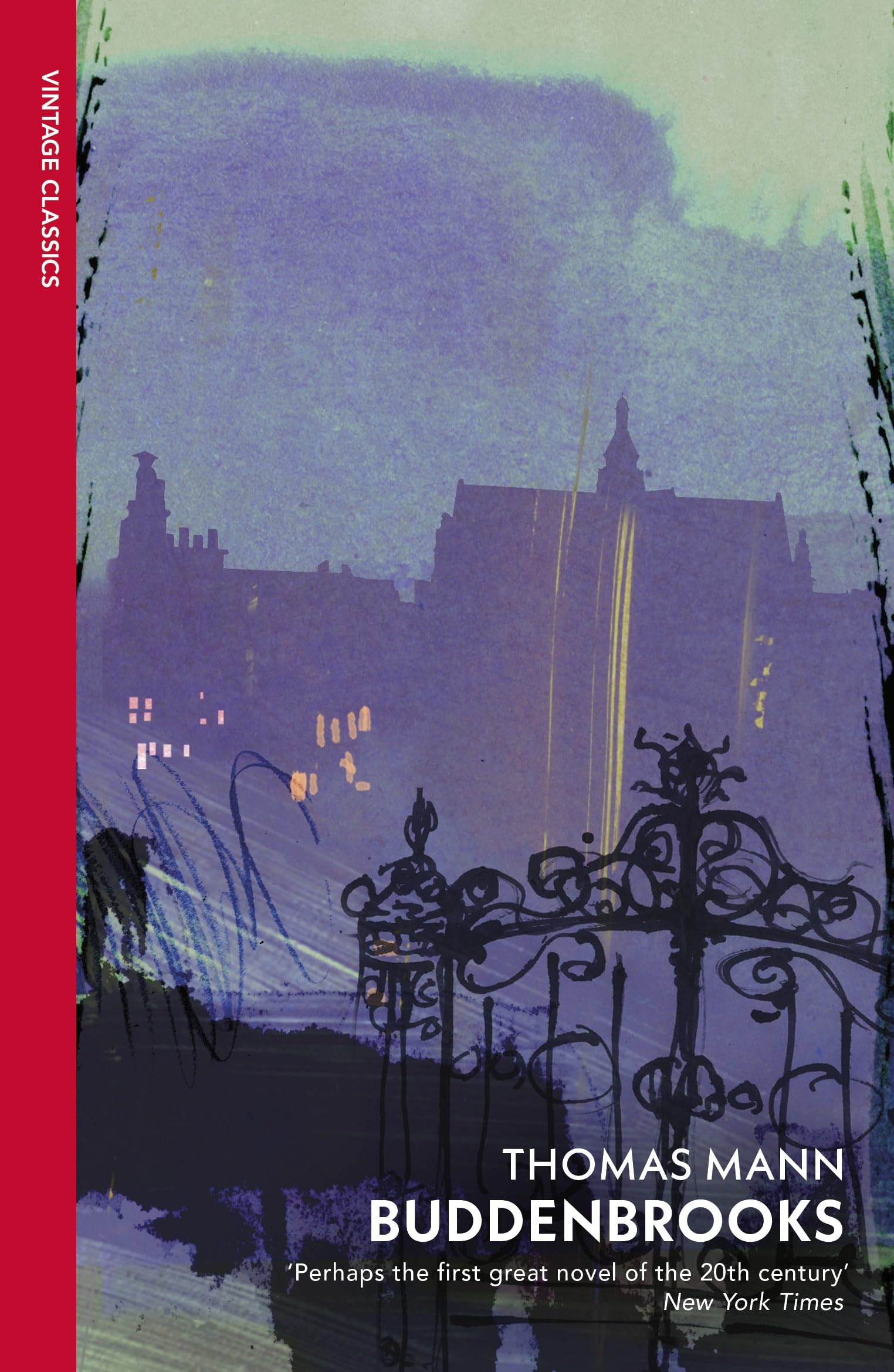
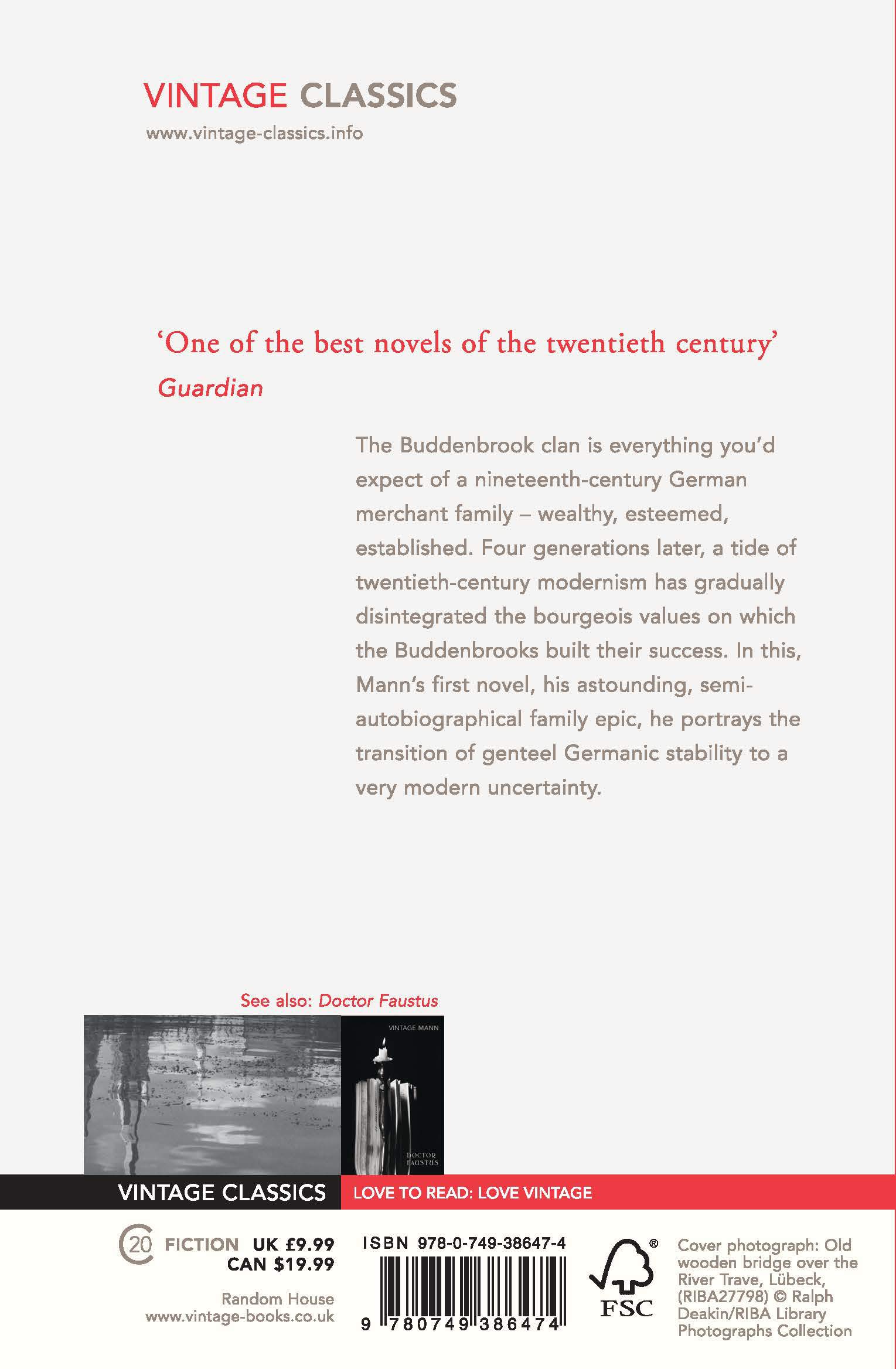
📚 Unlock the Legacy of Literature!
Buddenbrooks: The Decline of a Family is a literary masterpiece that explores the intricate dynamics of a family's rise and fall, presented in new mint condition with guaranteed packaging and hassle-free returns.

A**N
A great classic novel
An exceptional novel. It is a profound meditation on human society, the family business life of 19th century Germany, the challenge of the commercially and aesthetically minded, and the development of a family over generations. This is also a beautiful book and good translation. There is an Audible partner
E**E
OK - four stars for the writing, but it is just a saga about rich folk
I agree with a lot of what has already been said about this book - it is a mesmerising saga of a 19th century North German merchant's family, which definitely has the feel of an autobiography (online tourist sites in Lubbeck say it is exactly as described in the book, down to the internal details of the author's family house). It is vivaciously and dazzlingly written (in this translation which I read, the slightly old fashioned, even sometimes unfathomable turns of phrase just make it more believable). The details of ordinary life - clothes, food, customs, townscape, etc - are just astounding. The physically compelling portraits of all these odd people are brilliantly done, and the great set pieces in the landscape room - house warming, Christmas eve, etc - the deathbed scene, etc are just wondrous. Mann is a writer of genius, of that there is no doubt. However, it is just a saga about rich people trying to stay rich, and not always succeeding.There is very little compassion in the story. The workers, even professionals, are patronised, as are poor relations, while the family members, and their wider circle of competing families tend to be eyed with unease or contempt. I am not sure there is any ground for thinking this contempt is based on some sort of pseudosocialist analysis of bourgeois society (or money making of any sort) - it seems be personal to the author, whose isolation I suppose Hanno represents and explains his coldness to everyone else. Perversely, I feel most sorry for Tom, struggling with his own contempt for those around him. But it remains just a brilliantly written saga, without the bite of Dickens or the sweep of Scott. Well worth reading, but I doubt if there is much beyond the period detail - and the brilliant prose, which is well served by the translation, and without which it would deserve 3 stars only.
M**L
Masterly insights into a period of social change.
Buddenbrooks may look and sound to the prespective reader like a massive challenge, but Thomas Mann's first novel, published when he was 25, is remarkable for many things and not least of these is the ease with which it can be read.Opening in 1835, it charts the lives of the Buddenbrooks through some 40 years, following the decline of this successful Hanseatic family. But Mann's magnum opus - it was cited on his 1929 Nobel Prize for Literature - is more than that: what it presents is a detailed and complex social view of a changing Germany, particularly taking in the turbulence of the revolutionary period around 1848 to the years after unification under Bismarck in 1871.From a position of social and economic authority, the Buddenbrooks' confidence and power is overtaken by events around them until they are, finally, reduced to an insignificant echo of a former age. Their inability to move with the times, even though they are not incapable of seeing the changes around them, renders them impotent in the face of passing history.The only Buddenbrook who survives is Antonie... not because of her flexibility however, but precisely because her childlike petulance and unquestioning faith in the status quo allows her to maintain her arrogant assumptions about the social position of the family and, therefore, her own role within it. And yet this belligerent refusal to move forward is a major factor in the family's decline.Buddenbrooks also works so well because of Mann's dispassionate portrayal of his characters and their disappearing world. His gentle irony, particularly in terms of dealing with religion, provides the reader with a constant intellectual challenge. And, while it was first published in 1901, this is a book that never feels dated.A little knowledge of 19th century German history helps, but is not essential to enjoying this absolutely superb novel.
C**E
Five stars for the novel, one for the publisher
I can't praise this novel highly enough, with its rich cast of characters and astute observations about human nature. From the very first page, it was a pleasure to read.Sadly, the publisher didn't bother proof-reading the ebook text properly and this edition is littered with errors. The worst mistake is a missing chapter, which is replaced with the text of an earlier one. An Amazon reviewer pointed this out several years ago, but Vintage haven't done anything about it, which is shameful.Thankfully, the mistakes don't completely ruin the overall pleasure of reading this masterpiece, but I do wish that I'd bought the print version.
H**N
A monumental classic
As it's in the title it won't be a spoiler to say this is a monumental description of the decline of a powerful family over several decades. With deceptive subtlety Mann captures both the evolving society of nineteenth century Germany and the complexity of the characters themselves. One reviewer pointed out that we don't particularly like them but for me Mann did better than that - he made me like them and despise them and feel sorry and angry and exasperated with them.I put off reading it for a while because it is long and on the heavy side. As classics go it turned out to be not a difficult read and enjoyable though slightly depressing.Someone made an interesting observation that everything feels like contingency, nothing is inevitable. I agree to an extent. I kept wondering how things could go so badly wrong - there was no reason for it. Surely they had resource to prevent disaster? But eventually I saw a bigger picture. It was inevitable. It was in the characters and the fragility of their position which they understood far worse than they thought. The strokes of luck they suffered from were not unusual in those days. If it hadn't been one thing it would have been another. The decline was almost unbelievable but all the more fascinating because in the end it was totally believable.
Trustpilot
2 months ago
4 days ago