

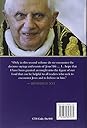


Jesus of Nazareth: From the Entrance into Jerusalem to the Resurrection
Product ID: 62265527
Buy anything from 5,000+ international stores. One checkout price. No surprise fees. Join 2M+ shoppers on Desertcart.
Desertcart purchases this item on your behalf and handles shipping, customs, and support to Iceland.
Buy Jesus of Nazareth: From the Entrance into Jerusalem to the Resurrection New by Benedict XVI, Pope (ISBN: 9781860827075) from desertcart's Book Store. Everyday low prices and free delivery on eligible orders. Review: Truly fantastic. - This is the Pope's second book on Jesus of Nazareth. It is perhaps a fitting book for Easter given that it focuses on the passion narratives. A brief summary of each chapter is as follows: 1. Considers Jesus' entry into Jerusalem and the `temple' incident. Most noticeably it considers how this narrative fits the Davidic prophetic narratives. 2. Jesus' eschatology - i.e. the destruction of the temple, and the new temple in his body. 3. The washing of the feet - i.e. how Jesus becomes the servant of everyone. This is considered in the light of the parable of the suffering servant. 4. Chapter 17 of John's Gospel, i.e. the prayer of forgiveness. This is the moment when Jesus finally says, `my time has come'. This chapter considers what this meant and what Jesus saw his mission as being. 5. Considers the last supper and the Eucharist rite which was given through it. It then considers how this rite has been passed on and has evolved throughout the church's history. 6. Considers the garden of Gethsemane narratives - i.e. that in the garden suffering, God becomes one with man's suffering. This chapter really focuses on the suffering of Jesus, knowing that he was approaching his final hours. In this way he comes to share in everyone's `fear' of dying. 7. The trial of Jesus - i.e. that the crime was not political and therefore Jesus was not just a failed political leader, but rather that the crime was religious, i.e. one of blasphemy. The blasphemy was that Jesus alluded to himself being God and his anti-temple talk. 8. Crucifixion and burial - i.e. the prayers which Jesus offers during his crucifixion. For example, `my God, my god, why have you forsaken me', is psalm 22, which is the prayer for Israel's forgiveness. Even in his final hours he still offers himself as a sacrifice for the sins of the world. 9. Considers resurrection - i.e. if it's just bodily resuscitation then it's not that impressive. This chapter argues that the resurrection was an `evolutionary leap' in which something wholly new occurred. 10. The second coming - is this in the future, or does has it already happened, daily... this chapter is actually truly and wholly heart warmly inspiring. Its focus is on how Jesus indwells in the individual and lights their heart with his presence. In this way he becomes the bridge between God and man. In the intro the Pope specifically says that his book is intended to offer a new historico-theological, rather than strictly historical, look at the passion narratives. The outcome is frankly amazing. I have read a lot of books on theology and actually this book ranks up there in the top brackets. Rarely do I sit back and think: this book makes me think completely different about Jesus, this book has really deepened my understanding - well, this book did it, and more than once. Usually I would offer a word of criticism on a book but in this books case it's positively difficult to do this - it really is that good a book. I terms of the book itself; it's possibly one of the Pope's better written books. The language style is easy to read and the print is nicely spaced not being too small or close together. The cover is a nice white cover with the papal crescent imprinted on the front - obviously it has a dust jacket which goes over this also. In total I couldn't recommend this book enough. It made me think in a new way and deepened my understanding of the last days of Jesus. I can only thank the Pope for actually taking the time to write this book because it truly was a great pleasure and experience to read. Overall, I couldn't recommend it enough. At the time of writing, Easter fast approaches and I would highly recommend this book to deepen your understanding of Easter and what it's deeper meaning is. Review: Encountering the Mystery of Holy Week - The second book in the much acclaimed ‘Jesus of Nazareth’ trilogy continues with the insight and clarity that is anticipated of the writings of Benedict XVI. Whilst written for a non-academic audience, this is an intellectually substantial book, and most readers will finish with a new insight into the familiar Gospel accounts of the sacred events that make up Holy Week. Relying upon the Scriptures, the Church Fathers, and contemporary scholarship, Benedict guides the reader into a deeper awareness of the Passion narrative, beginning at the entrance of Jesus into Jerusalem and through to His crucifixion and resurrection. The approach adopted by Benedict towards the Gospel narratives is conservative but not fundamentalist, agreeing that there are benefits to the historical-critical method of reading Scripture whilst also recognizing its limitations. In contrast to those exegetes who prefer to spiritualize the account, particularly that of the bodily resurrection to the extent of reducing it to mere metaphor, Benedict recognises the historical accuracy of the Biblical narrative, whilst emphasizing the importance of viewing sacred history through the lens of theology. The Gospel writers were not simply presenting an historical account, but were writing to demonstrate the Messianic character of Jesus for the people of Israel and beyond. Details noted by the Evangelists that may seem of little consequence frequently take on an entire new significance when viewed with such perspective. It had never occurred to me, for example, that the seamless garment stripped from Christ had such priestly significance. A minor detail in the narrative, but one that will now be rich with meaning whenever I hear or read the Passion. Benedict’s theology is thoroughly Christocentric, and this radiates from these pages. The significance of Holy Week is the universal redemption of mankind by the outpouring of love from Christ on the Cross. The trend of liberal theologians to downplay the suffering and crucifixion of Jesus as relatively insignificant compared to His ministry is firmly resisted. Related to this is Benedict’s small but important section on who bears the responsibility for the death of Christ, sharply rebuking those who have through the centuries held the Jewish people responsible for the sin of Deicide. It is the sins of humanity which nailed Christ to the cross, and His blood, far from being a curse on any group, is the salvation for all. As noted, a minor section, but one that is significant in countering a particularly ugly form of antisemitism that has found perverse justification in the Holy Week texts. Benedict XVI has described the Jesus of Nazareth trilogy as his own ‘personal search for the face of the Lord’. I have little doubt that these books will be of enormous spiritual help for Christians seeking to do the same for many years to come. I chose to read ‘Holy Week’, appropriately, as part of my own Holy Week reflection and found to be extremely beneficial in entering deeper into the sacred week. It is a book that I intend to come back to in future years, and I have no doubt that I will encounter much more with each reading.
M**D
Truly fantastic.
This is the Pope's second book on Jesus of Nazareth. It is perhaps a fitting book for Easter given that it focuses on the passion narratives. A brief summary of each chapter is as follows: 1. Considers Jesus' entry into Jerusalem and the `temple' incident. Most noticeably it considers how this narrative fits the Davidic prophetic narratives. 2. Jesus' eschatology - i.e. the destruction of the temple, and the new temple in his body. 3. The washing of the feet - i.e. how Jesus becomes the servant of everyone. This is considered in the light of the parable of the suffering servant. 4. Chapter 17 of John's Gospel, i.e. the prayer of forgiveness. This is the moment when Jesus finally says, `my time has come'. This chapter considers what this meant and what Jesus saw his mission as being. 5. Considers the last supper and the Eucharist rite which was given through it. It then considers how this rite has been passed on and has evolved throughout the church's history. 6. Considers the garden of Gethsemane narratives - i.e. that in the garden suffering, God becomes one with man's suffering. This chapter really focuses on the suffering of Jesus, knowing that he was approaching his final hours. In this way he comes to share in everyone's `fear' of dying. 7. The trial of Jesus - i.e. that the crime was not political and therefore Jesus was not just a failed political leader, but rather that the crime was religious, i.e. one of blasphemy. The blasphemy was that Jesus alluded to himself being God and his anti-temple talk. 8. Crucifixion and burial - i.e. the prayers which Jesus offers during his crucifixion. For example, `my God, my god, why have you forsaken me', is psalm 22, which is the prayer for Israel's forgiveness. Even in his final hours he still offers himself as a sacrifice for the sins of the world. 9. Considers resurrection - i.e. if it's just bodily resuscitation then it's not that impressive. This chapter argues that the resurrection was an `evolutionary leap' in which something wholly new occurred. 10. The second coming - is this in the future, or does has it already happened, daily... this chapter is actually truly and wholly heart warmly inspiring. Its focus is on how Jesus indwells in the individual and lights their heart with his presence. In this way he becomes the bridge between God and man. In the intro the Pope specifically says that his book is intended to offer a new historico-theological, rather than strictly historical, look at the passion narratives. The outcome is frankly amazing. I have read a lot of books on theology and actually this book ranks up there in the top brackets. Rarely do I sit back and think: this book makes me think completely different about Jesus, this book has really deepened my understanding - well, this book did it, and more than once. Usually I would offer a word of criticism on a book but in this books case it's positively difficult to do this - it really is that good a book. I terms of the book itself; it's possibly one of the Pope's better written books. The language style is easy to read and the print is nicely spaced not being too small or close together. The cover is a nice white cover with the papal crescent imprinted on the front - obviously it has a dust jacket which goes over this also. In total I couldn't recommend this book enough. It made me think in a new way and deepened my understanding of the last days of Jesus. I can only thank the Pope for actually taking the time to write this book because it truly was a great pleasure and experience to read. Overall, I couldn't recommend it enough. At the time of writing, Easter fast approaches and I would highly recommend this book to deepen your understanding of Easter and what it's deeper meaning is.
G**E
Encountering the Mystery of Holy Week
The second book in the much acclaimed ‘Jesus of Nazareth’ trilogy continues with the insight and clarity that is anticipated of the writings of Benedict XVI. Whilst written for a non-academic audience, this is an intellectually substantial book, and most readers will finish with a new insight into the familiar Gospel accounts of the sacred events that make up Holy Week. Relying upon the Scriptures, the Church Fathers, and contemporary scholarship, Benedict guides the reader into a deeper awareness of the Passion narrative, beginning at the entrance of Jesus into Jerusalem and through to His crucifixion and resurrection. The approach adopted by Benedict towards the Gospel narratives is conservative but not fundamentalist, agreeing that there are benefits to the historical-critical method of reading Scripture whilst also recognizing its limitations. In contrast to those exegetes who prefer to spiritualize the account, particularly that of the bodily resurrection to the extent of reducing it to mere metaphor, Benedict recognises the historical accuracy of the Biblical narrative, whilst emphasizing the importance of viewing sacred history through the lens of theology. The Gospel writers were not simply presenting an historical account, but were writing to demonstrate the Messianic character of Jesus for the people of Israel and beyond. Details noted by the Evangelists that may seem of little consequence frequently take on an entire new significance when viewed with such perspective. It had never occurred to me, for example, that the seamless garment stripped from Christ had such priestly significance. A minor detail in the narrative, but one that will now be rich with meaning whenever I hear or read the Passion. Benedict’s theology is thoroughly Christocentric, and this radiates from these pages. The significance of Holy Week is the universal redemption of mankind by the outpouring of love from Christ on the Cross. The trend of liberal theologians to downplay the suffering and crucifixion of Jesus as relatively insignificant compared to His ministry is firmly resisted. Related to this is Benedict’s small but important section on who bears the responsibility for the death of Christ, sharply rebuking those who have through the centuries held the Jewish people responsible for the sin of Deicide. It is the sins of humanity which nailed Christ to the cross, and His blood, far from being a curse on any group, is the salvation for all. As noted, a minor section, but one that is significant in countering a particularly ugly form of antisemitism that has found perverse justification in the Holy Week texts. Benedict XVI has described the Jesus of Nazareth trilogy as his own ‘personal search for the face of the Lord’. I have little doubt that these books will be of enormous spiritual help for Christians seeking to do the same for many years to come. I chose to read ‘Holy Week’, appropriately, as part of my own Holy Week reflection and found to be extremely beneficial in entering deeper into the sacred week. It is a book that I intend to come back to in future years, and I have no doubt that I will encounter much more with each reading.
D**E
Insightful read
P**S
It is not Pope Benedict's way, to the disappointment of some traditionalists, to issue anathemas denouncing the kind of biblical scholarship that seeks to explain away the Christian story in secular terms - Jesus as a great teacher (only) whose followers built legends around him, and so forth. He gives due recognition to the exegetical fruits yielded by historical-critical method, but also sees the method as limited and essentially exhausted. Instead, he advocates a different approach, one that reads the Bible in the spirit in which it was written and read, as the early Church Fathers read it, with an eye to the future as well as the past, with the eyes of faith as well as with full critical intelligence. Rather than simply calling for a certain kind of approach to biblical scholarship, Benedict leads by example. He has produced a work of stunning scholarship and deep faith, that nevertheless amply repays careful reading and re-reading by Christians of all kinds and levels of scholarly expertise. At the same time, with its careful consideration of the views of (especially) German scholars and exegetes, this is not a quick read. But hang in there, it gets more personally engaging in the second half. I read it right after reading Brant Pitre's stunning book, Jesus and the Jewish Roots of the Eucharist: Unlocking the Secrets of the Last Supper , which turns out to be a great preparation for reading this work. Both books situate the Christian story in its historical Jewish context and show how almost every recorded word and action of Jesus of Nazareth draws on, quotes, or is foreshadowed by Scripture - the Torah, the Psalms, the Prophets - as well as by Jewish custom and tradition. I have also been reading a very different work by another great theologian of whom Benedict has spoken with enormous admiration - Hans Urs von Balthasar's Mysterium Paschale: The Mystery of Easter . The two books could not be more different. Balthasar was not a biblical scholar like Ratzinger and on the other hand he gives great theological weight to Christ's going to the dead ("He descended into hell") between his death and Resurrection - something that the pope, surprisingly, does not mention. In any case, the pope's book is by contrast simply written, historically grounded, and accessible (with a little effort) to Christian readers of all kinds. A reader who has watched how Pope Benedict has come under hostile fire from the media and denunciation from anti-Christians, anti-Catholics, and dissident Catholics for most of his career, cannot but marvel at the tone of this book. As Pope Benedict XVI, Joseph Ratzinger at age 84 now leads a Church of more than a billion members that is undergoing in the West twin crises of secularizing ("beige Catholicism" or "cafeteria Catholicism") and scandal. His field of scholarship, biblical exegesis, has been beset for more than a century by attempts to question and discredit every tenet of Christian faith as taught by the Church. So it seems a small miracle that the book was written at all in the midst of these storms. Even more extraordinary is the serenity and humility that suffuse every page. Even the most outrageous exegesis is discussed calmly and the most dismissive objections to the Christian narrative are fairly stated and discussed. Benedict is a man of intellectual brilliance and deep faith and on both accounts is not easily rattled. He shows by example, not only how biblical scholars should move forward on a sounder basis than in recent centuries, but also how faithful Christians can engage their critics charitably and without defensiveness. The book ends in a way that goes some way to explain how he does it. Its final word is surely at the heart of the New Testament as well as in the hearts of the Church's great saints and martyrs. In that final paragraph, the pope addresses the question of why the disciples are joyful rather than sad at the Risen Lord's leaving them. Discussing Luke's account of the Ascension, which has Jesus stretching out his hands over the disciples in blessing as he departs from them, the pope comments: "In departing, he comes to us, in order to raise us up above ourselves and to open up the world to God. That is why the disciples could return home from Bethany rejoicing. In faith we know that Jesus holds his hands stretched out in blessing over us. That is the lasting motive of Christian joy" (p. 293).
M**A
The best pov of one of the world's most compassionate religions.
M**L
The gospel explained simply by a great Christian thinker. Thank you Benedict XVI for the joy you have brought me, by strengthening my faith in Christ. I hope you will bring as much joy to other readers
A**S
Ratzinger may be was one of the brightest minds among Catholics, but this book is more like smth written by regular sunday school teacher for people who doesn't know anything about christianity. Of course, there are quotes from different theologians which may be were popular in Germany when Ratzinger formed as a theologian, but who cares about Bultmann anymore? I saw praising feedbacks and hoped to find some treasures in this book. I was totally dissapointed. I am sure many are just too busy to idolize pope, that they do not apply critical thinking to his book. Ok, this book is not BAD, but it just repeats what has already said in many other commentaries, and that is not even in inspirational way, but as if crucifiction and resurrection of Jesus are just another events in history of Christianity. This book lacks any excitement. I would recommend to save money on this one, and buy instead some book of N. T. Wright, who has dug really deep in this theme. Even Lee Strobel as a journalist has done better job than authors of this book, signed by pope Ratzinger.
Trustpilot
4 days ago
2 weeks ago