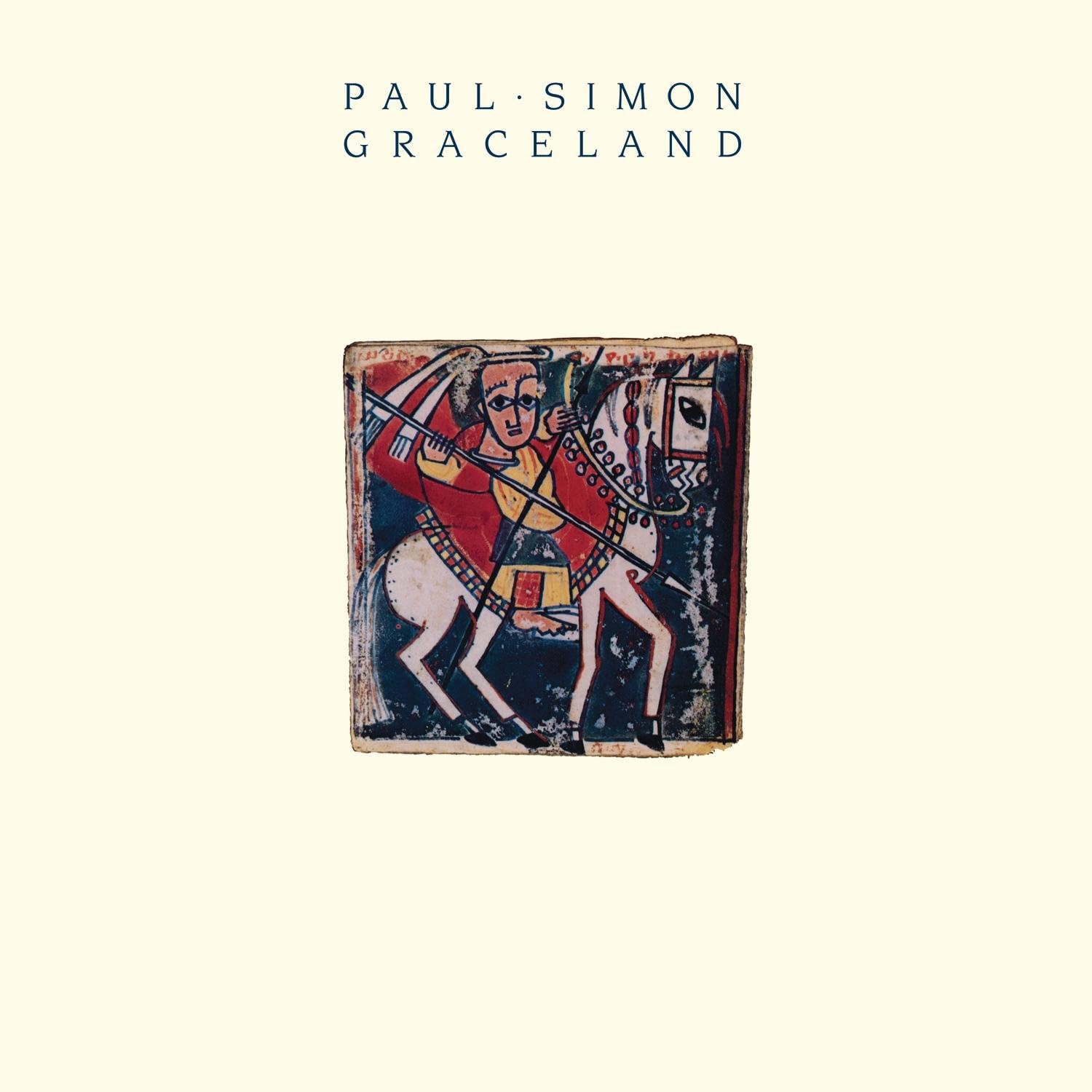
Graceland
Product ID: 5757252
Buy anything from 5,000+ international stores. One checkout price. No surprise fees. Join 2M+ shoppers on Desertcart.
Desertcart purchases this item on your behalf and handles shipping, customs, and support to Iceland.
. Review: Refreshingly appropriate songs and music. - Paul Simon outdid himself in this collection, so beautifully arranged. Crisp, clear voices with well dubbed music. Review: Paul Simon's Seminal Album - 25 years on, an anniversary edition of Graceland has been compiled and includes Joe Berlinger's 2012 Sundance Film Festival-commended documentary 'Under African Skies,' a moving analysis of the political backdrop that both informed the album and was challenged by the very existence of 'Graceland.' The commentary and debate surrounding the creation of the album has never ceased, though, but with hindsight, Berlinger casts light and clarity over the events surrounding its creation. The South African musicians with whom Simon collaborated are given equal voice in the documentary, immediately undermining the accusations of exploitation that are often levelled at Paul Simon. Admittedly, 'Graceland' may well have brought South African music to the attention of the white western world in a manner that watered it down, stylistically. What becomes apparent, though, is that the songwriter's motives for going to South Africa was not to pillage the sound or the culture of the country but was borne of a love for the music that he had once discovered on a cassette tape given to him by a friend. He was given the option of using New York musicians to recreate the sound. He rejected the idea outright and wanted instead, to go to the birthplace of this sound and to collaborate with the musicians responsible for its creation. A testament to the unifying power of music, Joseph Shabalala of Ladysmith Black Mambazo is quick to dismiss any notion of racial hierarchy within those recording sessions. "he's my brother. because of the music," he says to camera in a manner that suggests it would be futile to question him. A thread that runs through the documentary is an uncomfortable - though civil - confrontation between Paul Simon and Dali Tambo of Artists Against Apartheid, filmed for the documentary. Tambo is openly critical of Simon's actions in recording 'Graceland' when he did, with black South African musicians, because of that "inconvenient thing called apartheid." Tambo tells him plainly "it wasn't the ideal form of cultural exchange. they weren't free people." Certainly, the image that Paul Simon found himself portraying, of black South Africa, was problematic in its simplicity. Simon's answers always boil down to one thing; and when he repeats it, the arguments against him all but evaporate: They were artists. Collaborating together. Music knows no hierarchy. "They didn't say 'come here and tell my story," he says. So he didn't. Aside from the debate and enlightenment of the documentary, the 25th anniversary package also works as an insightful refresh on the classic album. There are several piquant moments, such as the revelation that 'Diamonds on the Soles of Her Shoes' - possibly one of the most iconic tracks on the album - was written because the record label had delayed the release of the album for a few months. Paul had all the musicians in New York for a Saturday Night Live performance (a highlight, in itself, for its awkward tenderness), so they decided to make the best of their time together and crack on with another song. Just one of those moments where circumstance plays into the hands of the artist. Elsewhere, the DVD contains some of the music videos from the album, including the simple, yet hilarious 'You Can Call Me Al,' featuring Chevy Chase. The audio CD features demo versions of several of the album tracks. A particular highlight is 'Homeless,' a softer, fuzzier version than the one destined for wider release. Of all the negative commentary leveled at Paul Simon, at the time of Graceland's release, the media contained herein leaves you with a feeling that his biggest crime was one of naivety. Not that he wasn't aware of the political situation - though there were certainly holes in the limited awareness that he did have - but he certainly seemed naïve to the impact that he would have and the anger that would be wrought from his actions. It was the blindness that came with that naivety, though, that caused him to stumble through doors that would otherwise have remained closed to him. 'Graceland' is many different albums, depending on the filter through which you listen to it. When viewed as a collaborative effort between two disparate cultures, the politics fade away momentarily and reveal a masterpiece.



| ASIN | B007P06DJ0 |
| Best Sellers Rank | #793 in CDs & Vinyl ( See Top 100 in CDs & Vinyl ) #17 in Folk (CDs & Vinyl) #28 in Pop Singer-Songwriters |
| Customer Reviews | 4.6 4.6 out of 5 stars (1,584) |
| Date First Available | March 27, 2012 |
| Department | All Ages |
| Is Discontinued By Manufacturer | No |
| Item model number | 28941657 |
| Label | Legacy Recordings |
| Language | English |
| Manufacturer | Legacy Recordings |
| Number of discs | 1 |
| Original Release Date | 2012 |
| Product Dimensions | 12.2 x 0.2 x 12.2 inches; 12.8 ounces |
| Run time | 43 minutes |
C**N
Refreshingly appropriate songs and music.
Paul Simon outdid himself in this collection, so beautifully arranged. Crisp, clear voices with well dubbed music.
C**E
Paul Simon's Seminal Album
25 years on, an anniversary edition of Graceland has been compiled and includes Joe Berlinger's 2012 Sundance Film Festival-commended documentary 'Under African Skies,' a moving analysis of the political backdrop that both informed the album and was challenged by the very existence of 'Graceland.' The commentary and debate surrounding the creation of the album has never ceased, though, but with hindsight, Berlinger casts light and clarity over the events surrounding its creation. The South African musicians with whom Simon collaborated are given equal voice in the documentary, immediately undermining the accusations of exploitation that are often levelled at Paul Simon. Admittedly, 'Graceland' may well have brought South African music to the attention of the white western world in a manner that watered it down, stylistically. What becomes apparent, though, is that the songwriter's motives for going to South Africa was not to pillage the sound or the culture of the country but was borne of a love for the music that he had once discovered on a cassette tape given to him by a friend. He was given the option of using New York musicians to recreate the sound. He rejected the idea outright and wanted instead, to go to the birthplace of this sound and to collaborate with the musicians responsible for its creation. A testament to the unifying power of music, Joseph Shabalala of Ladysmith Black Mambazo is quick to dismiss any notion of racial hierarchy within those recording sessions. "he's my brother. because of the music," he says to camera in a manner that suggests it would be futile to question him. A thread that runs through the documentary is an uncomfortable - though civil - confrontation between Paul Simon and Dali Tambo of Artists Against Apartheid, filmed for the documentary. Tambo is openly critical of Simon's actions in recording 'Graceland' when he did, with black South African musicians, because of that "inconvenient thing called apartheid." Tambo tells him plainly "it wasn't the ideal form of cultural exchange. they weren't free people." Certainly, the image that Paul Simon found himself portraying, of black South Africa, was problematic in its simplicity. Simon's answers always boil down to one thing; and when he repeats it, the arguments against him all but evaporate: They were artists. Collaborating together. Music knows no hierarchy. "They didn't say 'come here and tell my story," he says. So he didn't. Aside from the debate and enlightenment of the documentary, the 25th anniversary package also works as an insightful refresh on the classic album. There are several piquant moments, such as the revelation that 'Diamonds on the Soles of Her Shoes' - possibly one of the most iconic tracks on the album - was written because the record label had delayed the release of the album for a few months. Paul had all the musicians in New York for a Saturday Night Live performance (a highlight, in itself, for its awkward tenderness), so they decided to make the best of their time together and crack on with another song. Just one of those moments where circumstance plays into the hands of the artist. Elsewhere, the DVD contains some of the music videos from the album, including the simple, yet hilarious 'You Can Call Me Al,' featuring Chevy Chase. The audio CD features demo versions of several of the album tracks. A particular highlight is 'Homeless,' a softer, fuzzier version than the one destined for wider release. Of all the negative commentary leveled at Paul Simon, at the time of Graceland's release, the media contained herein leaves you with a feeling that his biggest crime was one of naivety. Not that he wasn't aware of the political situation - though there were certainly holes in the limited awareness that he did have - but he certainly seemed naïve to the impact that he would have and the anger that would be wrought from his actions. It was the blindness that came with that naivety, though, that caused him to stumble through doors that would otherwise have remained closed to him. 'Graceland' is many different albums, depending on the filter through which you listen to it. When viewed as a collaborative effort between two disparate cultures, the politics fade away momentarily and reveal a masterpiece.
T**C
Beautiful packaging, great documentary DVD.
Paul Simon is my absolute favorite musician, and Graceland is probably my favorite album of all time. (Rotates between a few other Paul Simon and Simon/Garfunkle Albums) The packaging is beautifully put together set and will look fantastic on your bookcase or displaying somewhere in your home. I have mine on the piano. The reproduction of the lyrics notepad is very cool. Getting to see the lyrics in Paul's handwriting and get a look at the creative process he went through is a real treat. Between that and the documentary that came with the set, I felt I got an intimate look and better understanding of how one of the greatest albums ever came to fruition. The other booklet with all the history is beautifully designed as well. The whole thing is a gem visually. The documentary that comes with the set is just fantastic. The rave reviews are all very deserved. People have complained that there isn't a lot of music in the documentary? Well, that's not what it was supposed to be about! It found it fascinating to learn all about the politics involved in making this and to hear Paul talk about the process of creating it. I think the negative press he received at the time was ridiculous, and many people now acknowledge that the album was a driving force in ending apartheid because it sparked interest in the country. I also love how people like Hugh Masakela and Miriam Makeba totally supported him. I love how it told the story of finding musicians, how it changed their lives, how it changed Paul's, and how it changed many people's and the world's view on South Africa. I could write all day about how great this documentary is. Couple of other things: The sound quality of the CD seems a little less vibrant than I remember. The bonus CD of the live concert is cool I guess but nothing special. The demo tracks are interesting, but I was a little disappointed. Thought they would have interesting takes, but it's clear that the best versions of these songs are the ones on the finished studio album, and on the Concert in the Park album.
R**A
sounds and plays beautifully
This is concerning the 25th anniversary vinyl version with the hype sticker and download card. First off, my download code worked, did not get an expired message even though I purchased this in 2021. I read some complain about noisy vinyl but I don't hear it. I did run it through my spin disk first to remove any manufacturing debris, but it looked pretty clean and flat before it's wash. Playback: no issues or skips on my gear. Some other reviews mention lots of skipping and noisy vinyl. Not the case for me. Diamonds on the soles of her shoes sounds stunning ! This is a killer pressing, not sure what others are complaining about. The bass playing on Call Me Al is worth the cost of the album, simply incredible and a bargain at it's price. My set up: Fluance reference turntable using a Nagaoka MP-110 cartridge with the tracking force set at 1.9g. No runs, no skips, no errors. Listened through Sennheiser HD650 headphones and the sound of this record rivals my MFSL pressings, no joke. get it and enjoy
D**É
Une merveille
A**R
Die Achtzigerjahre waren überformt von der Auseinandersetzung mit der Apartheid in Südafrika, die 1989 mit der Freilassung Nelson Mandelas und der Zulassung freier Wahlen endete. Auch die populäre Musikkultur blieb davon nicht unbeeinflusst. Viele Künstler setzten sich mit an die Spitze der Aufrufe gegen die Rassentrennung am Kap. Es war in höchstem Maße tabuisiert, Obst aus Südafrika zu kaufen, Mahnwachen vor Bankgebäuden waren keine Seltenheit und hatten reichlich Zulauf. Gelbe Schals drückten Solidarität mit dem ANC aus. Es erschienen CDs, die den Vermerk enthielten, dass sie - "for copyright reasons" - nicht in Südafrika erhältlich seien und es gab sogar einen Sampler unter dem Motto "I Ain't Gonna Go Sun City" (ein südafrikanischer Vergnügungspark und beliebter Veranstaltungsort), obwohl viele der Beteiligten wohl ohnehin nicht auf die Idee gekommen wären, dort aufzutreten. In diesen Zusammenhang gehört auch, dass die Entscheider in den multi-nationalen Konzernen langsam nervös wurden, denn nur mit freien Menschen lassen sich Geschäfte machen. Entgegen einer Sanktion der Vereinten Nationen gegen das Apartheitsregime nahm Paul Simon mit Musikern aus Südafrika das geniale Album "Graceland" auf - und landete damit 1986 einen überragenden, unwiederholbaren Erfolg. "Graceland" knüpft an die Wurzeln der Rockmusik an und bietet sehr lyrische Texte. Gemeinsam mit der südafrikanischen Formation "Ladysmith Black Mambazo" und der mexikanisch-amerikanischen Gruppe "Los Lobos" hat Paul Simon eine unvergessliche, zeitlose Mixtur aus Rock, Ethno, Calypso, Jazz, Folk und Soul zusammengestellt. Bereits in den Sechzigerjahren hatten Simon & Garfunkel die Musikwelt mit "El Condor Pasa" aufhorchen lassen. Doch wenn wir heute von "Weltmusik" sprechen, ist vor allem dieses Album zu nennen. Denn viele Musikfreunde hätten ohne es kaum einen Zugang zur Musik von anderen Kontinenten gefunden. Einzelne Titel daraus werden nach wie vor gern im Radio gespielt: "The Boy In The Bubble", "You Can Call Me Al", "Diamonds On The Soles Of Her Shoes" und natürlich das Titelstück "Graceland" erfreuen sich längst bei denen großer Beliebtheit, deren Eltern sich seinerzeit die LP gekauft haben. Dieses makellos produzierte Album ist ohne Zweifel eines der interessantesten Werke der Gegenwartskultur und wird ganz sicher seinen unstrittigen Platz in der Geschichte der populären Musik behalten. Rückblickend lässt sich sogar sagen, dass diese Veröffentlichung vermutlich sehr viel zur Überwindung der unmenschlichen Rassentrennung beigetragen hat, weil Paul Simon damit die öffentliche Wahrnehmung auf die Zustände am Kap und auf die Schönheit afrikanischer Musik gelenkt hat, statt sich in einer eher hilflosen Boykotthaltung zu ergehen.
S**E
Uno de mis discos de cabecera. A pesar de que dice ser la edición 25 años, no hay ningún extra conmemorativo salvo un póster del disco (que desconozco si estaba en la edición original). De todos modos, el disco es suficientemente bueno como para no necesitar más...
A**.
Maravilhoso
M**M
Con este disco que fue un parteaguas en su momento (y lo sigue siendo), Paul Simon primero se ganó la crítica de mucha gente por visitar Sudáfrica durante el bloqueo 'de la comunidad artística, pero su intención no era tocar para los blancos, sino acercarse a la música tradicional africana y mostrarla al mundo, lo que terminaría valiéndole el reconocimiento de propios y extraños. Esta reedición viene con un dvd que documenta ese viaje musical.
Trustpilot
1 month ago
2 weeks ago