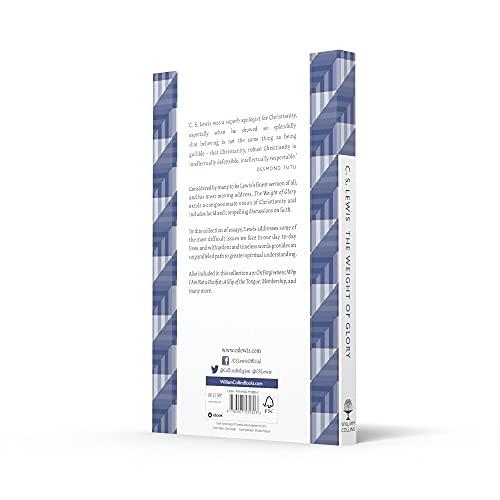
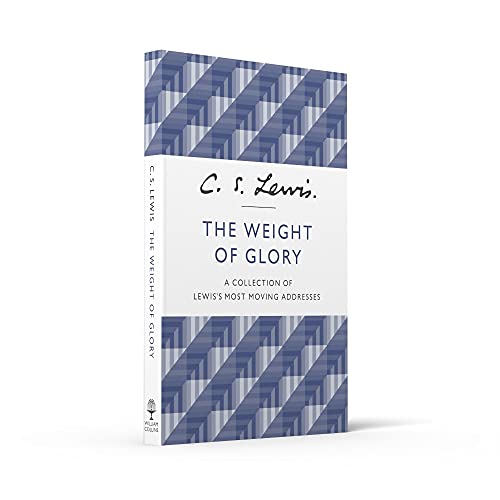
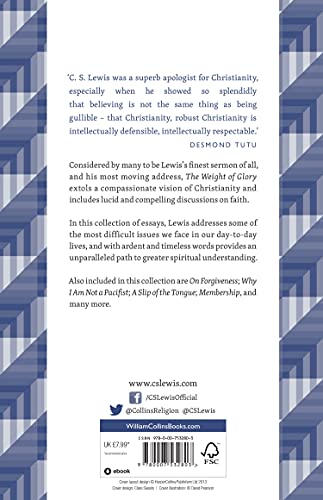
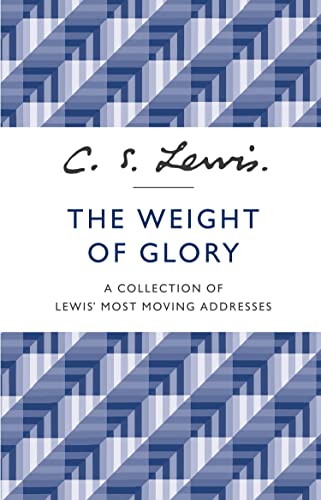
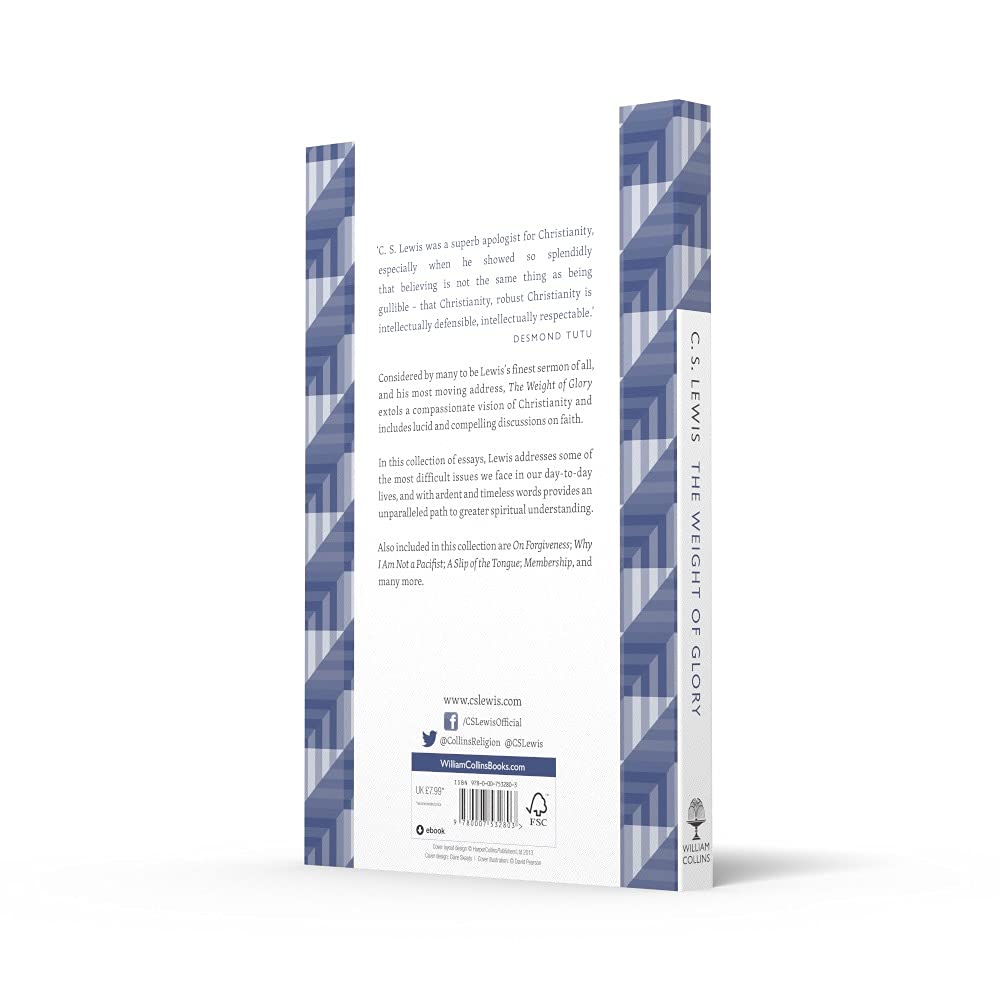
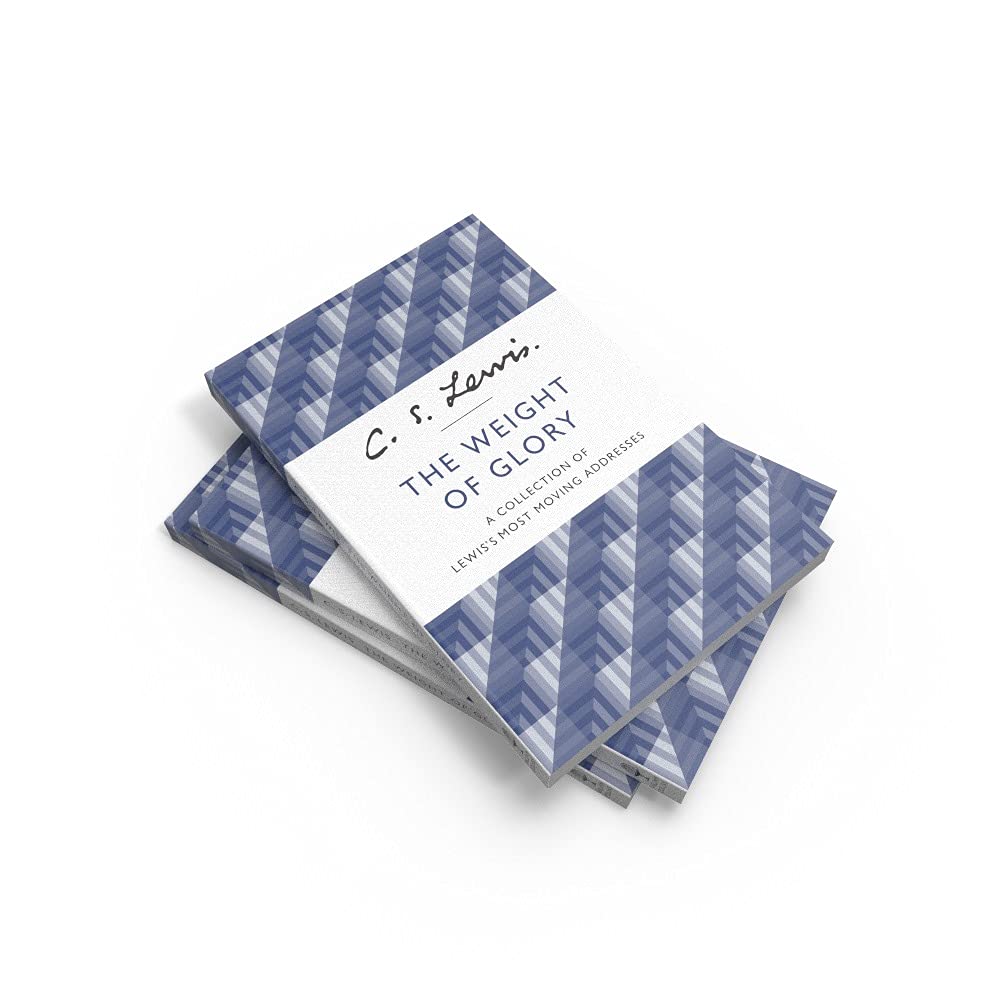
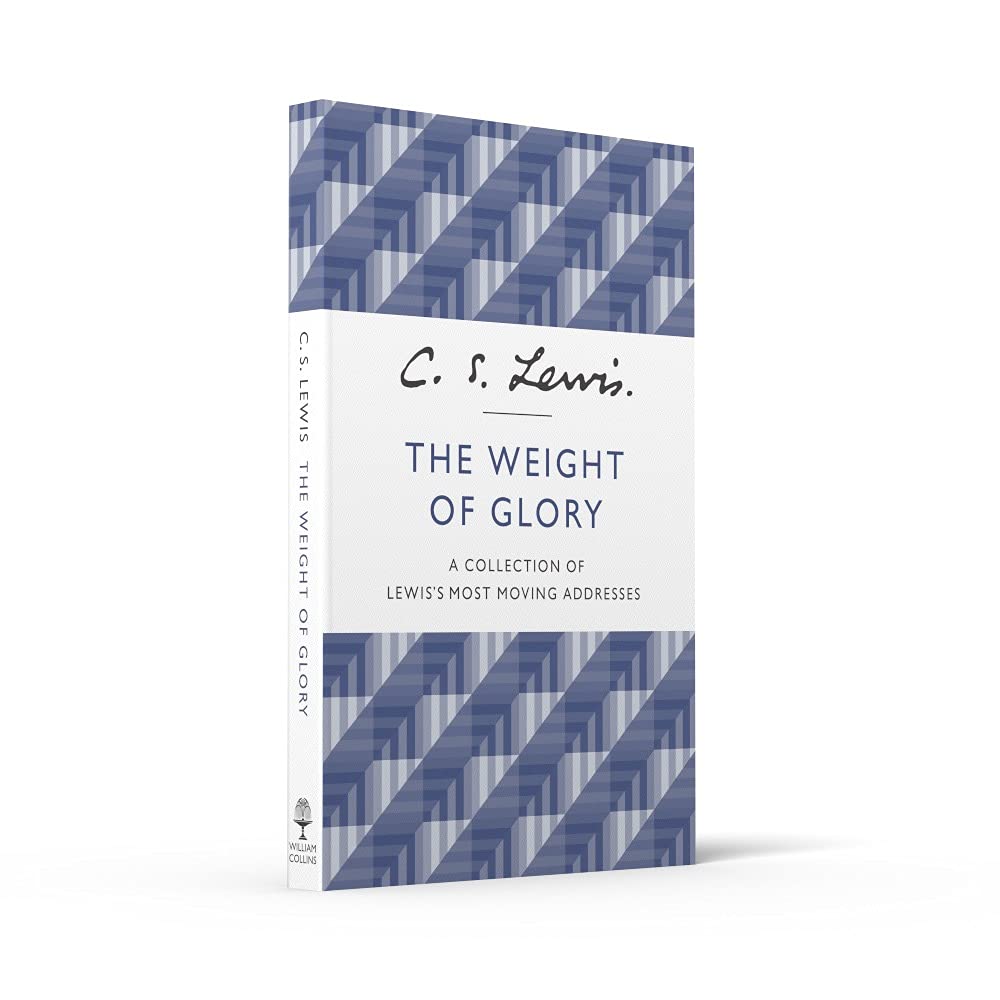
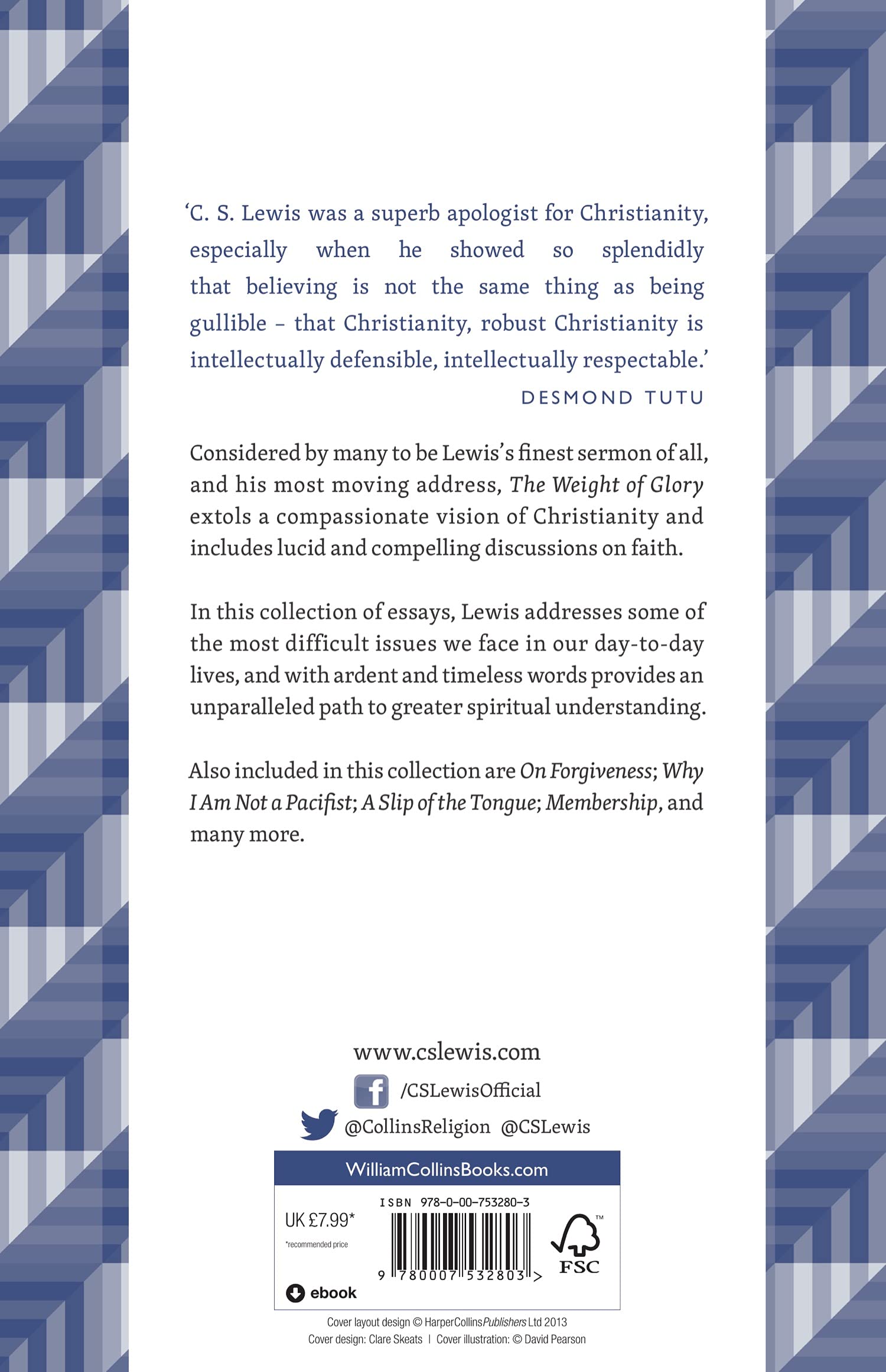
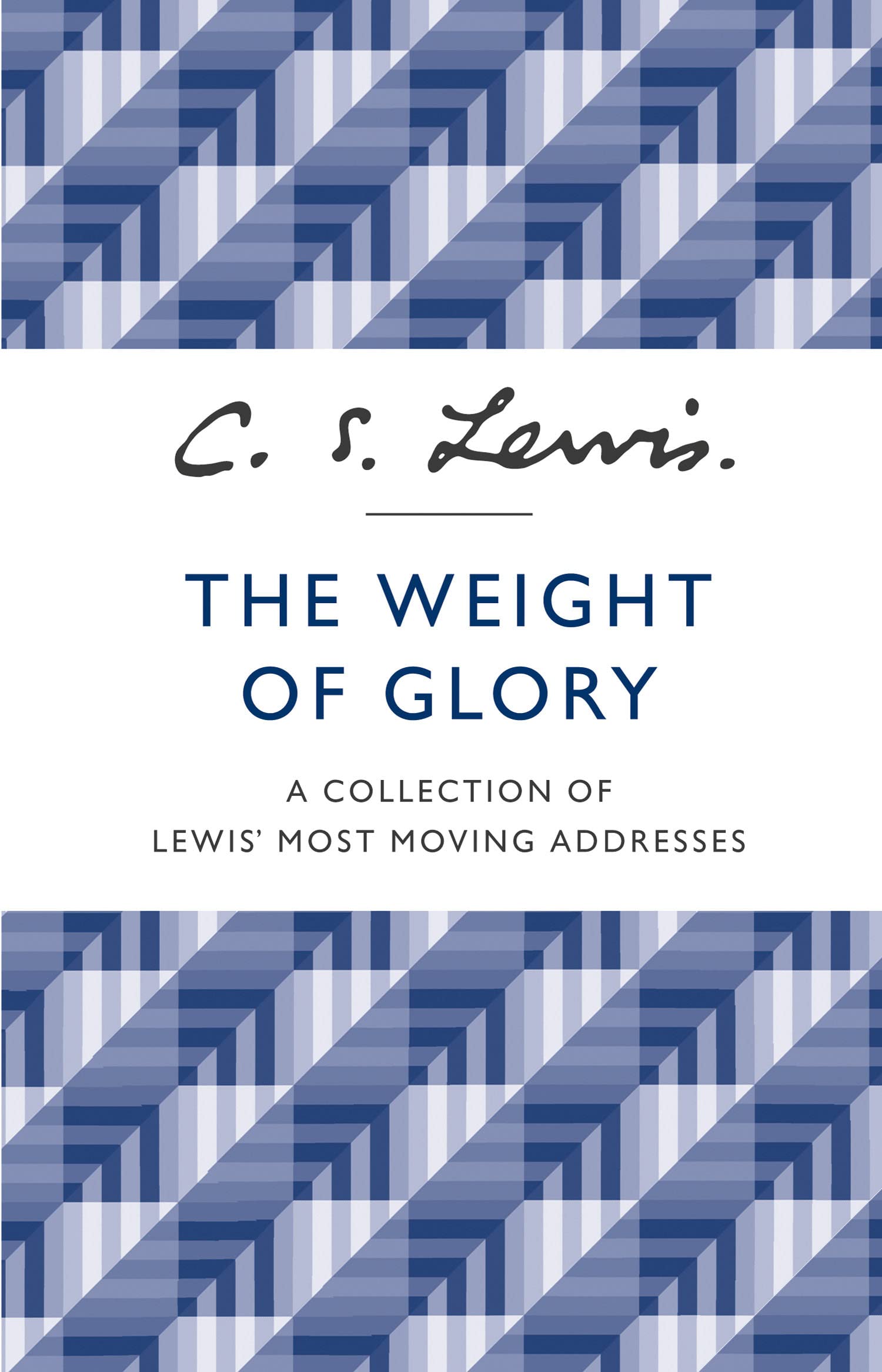
Buy The Weight of Glory: A Collection of Lewis' Most Moving Addresses by Lewis, C. S. (ISBN: 9780007532803) from desertcart's Book Store. Everyday low prices and free delivery on eligible orders. Review: Lucid insights that excite - C. S. Lewis's books often are not an easy read, not because his language is difficult but because it requires concentration and active thinking in order to keep up with his logic and line of arguments. His books often offer refreshing perspectives which are counter-intuitive at first sight, and sink in only upon further mediation. This book is no difference. His observations are sharp and the essays are so well-argued that make the conclusions inevitable. In other words, C S Lewis is persuasive. The way how he writes makes his works very quotable and in turn memorable for us. In this book, Lewis did not shy away from controversies of his time but confronted them head on. His skills rest not only in taking apart and in turn illuminate the questions asked, but also to argue eloquently with conviction from his heart. This is what makes Lewis so compelling to read. In arguing learning in war-time, he says, among other things, "the learned life then, is, for some, a duty." (p.59) Why? "[The learned life] has indirect values which are especially important today... To be ignorant and simple now - not to be able to meet the enemies on their own ground - would be to throw down our weapons, and to betray our uneducated brethren who have, under God, no defence but us against the intellectual attacks of the heathen. Good philosophy must exist, if for no other reason, because bad philosophy needs to be answered. .. Most of all, perhaps, we need intimate knowledge of the past... A man who has lived in many places is not likely to be deceived by the local errors of his native village; the scholar has lived in many times and is therefore in some degree immune from the great cataract of nonsense that pours from the press and the microphone of his own age." (p. 58-59) This sense of mission in learning is broader than personal gain in the labour market, is it not? And in every age, we need someone like Lewis to help us see through the deceptions of the day. Is this not true also? Our world has gotten more confusing , if anything. I find often there is timeliness in Lewis' arguments. I like his directness in addressing issues, for example, on hell and heaven. Rightly said. He makes bold statements that we may not dare to utter these days, but they are truths that we should know. The one essay that has stood out for me from this collection is Membership. What he says about membership is not new if you read the Bible. What is unusual in his skill is in how he crystalises the concept so precisely. The concept of members of a club has been diluted to mean units, which has only quantitative impact on the club. However, the biblical concept of members is that members occupy structural position, such that, 'If you subtract any one member, you have not simply reduced the family in number, you have inflicted an injury on its structure.' (p. 164-165) That's what is wrong in today's society, while in contrast God offers us an identity'in the structure of the eternal cosmos for which we were designed or invented' (p.173)) Isn't that exciting? Let me indulge one more of my highlights from this book: "I believe in political equality. But there are two opposite reasons for being a democrat. You may think all men so good that they deserve a share in the government of the commonwealth, and so wise that the commonwealth needs their advice. That is, in my opinion, the false, romantic doctrine of democracy. On the other hand, you may believe fallen men to be so wicked that not one of them can be trusted with any irresponsible power over this fellows. That I believe to be the true ground of democracy.' (p. 168) Therefore democracy / equality is medicine for its protective function; it is needed because the society is sick. The corollary is that if the society is not sick, we don't need democracy. But the error of the day is that it is pursued as if it is nutritious food intrinsic for our health, rather than being the medicine that perhaps we should loathe the fact that we need it in the first place. If these highlights grip you and excite you, then there are a lot more in this book which you should turn to read and claim them as your own. Review: A glorious work - We are so lucky when we come across that rare book that affects us so deeply it actually makes a difference to how we see life, which in turn affects how we end up living our lives, and 'The Weight Of Glory' is one of those treasures. This collection of essays is a formidable work, the 'Transposition' chapter alone is worthy of the Nobel Prize as it illuminates a human experience that has only recently been confirmed to be the case by psychologists 70 years after CS Lewis described it. In 'Transposition', Lewis persuades us that the spiritual realm, being infinitely richer than the terrestrial, cannot be fully apprehended by human experience which rests on a relatively poor sensual apparatus. Thus complex spiritual events collapse into familiar sense data, joy is felt as a flutter in the stomach, elation as a feeling faint and so on. Thus the mystic’s representation of spiritual things in erotic poetry does not, as Freudians think, demonstrate the sexual root of mysticism, but the inability of our organism to fully represent a transcendent reality and having to rely on the nearest-fit images. Of course, Lewis puts it fantastically well, with beautiful analogies – the widow and her child in a windowless cell – the flat-landers, etc. The book is aimed at Christians, but the chapter 'Transposition' needs to be read by anyone who has a sense of the numinous, and if you lack that sense, Lewis’s words might kindle it into flames for you. The chapter 'Membership' is also a masterpiece where Lewis’s genius shines through.
| Best Sellers Rank | 50,140 in Books ( See Top 100 in Books ) 6 in Christian Sermons 22 in Anglicanism 118 in Inspirational Spirituality (Books) |
| Customer reviews | 4.7 4.7 out of 5 stars (2,139) |
| Dimensions | 12.7 x 1.27 x 19.05 cm |
| ISBN-10 | 0007532806 |
| ISBN-13 | 978-0007532803 |
| Item weight | 294 g |
| Language | English |
| Print length | 208 pages |
| Publication date | 24 Oct. 2013 |
| Publisher | William Collins |
T**E
Lucid insights that excite
C. S. Lewis's books often are not an easy read, not because his language is difficult but because it requires concentration and active thinking in order to keep up with his logic and line of arguments. His books often offer refreshing perspectives which are counter-intuitive at first sight, and sink in only upon further mediation. This book is no difference. His observations are sharp and the essays are so well-argued that make the conclusions inevitable. In other words, C S Lewis is persuasive. The way how he writes makes his works very quotable and in turn memorable for us. In this book, Lewis did not shy away from controversies of his time but confronted them head on. His skills rest not only in taking apart and in turn illuminate the questions asked, but also to argue eloquently with conviction from his heart. This is what makes Lewis so compelling to read. In arguing learning in war-time, he says, among other things, "the learned life then, is, for some, a duty." (p.59) Why? "[The learned life] has indirect values which are especially important today... To be ignorant and simple now - not to be able to meet the enemies on their own ground - would be to throw down our weapons, and to betray our uneducated brethren who have, under God, no defence but us against the intellectual attacks of the heathen. Good philosophy must exist, if for no other reason, because bad philosophy needs to be answered. .. Most of all, perhaps, we need intimate knowledge of the past... A man who has lived in many places is not likely to be deceived by the local errors of his native village; the scholar has lived in many times and is therefore in some degree immune from the great cataract of nonsense that pours from the press and the microphone of his own age." (p. 58-59) This sense of mission in learning is broader than personal gain in the labour market, is it not? And in every age, we need someone like Lewis to help us see through the deceptions of the day. Is this not true also? Our world has gotten more confusing , if anything. I find often there is timeliness in Lewis' arguments. I like his directness in addressing issues, for example, on hell and heaven. Rightly said. He makes bold statements that we may not dare to utter these days, but they are truths that we should know. The one essay that has stood out for me from this collection is Membership. What he says about membership is not new if you read the Bible. What is unusual in his skill is in how he crystalises the concept so precisely. The concept of members of a club has been diluted to mean units, which has only quantitative impact on the club. However, the biblical concept of members is that members occupy structural position, such that, 'If you subtract any one member, you have not simply reduced the family in number, you have inflicted an injury on its structure.' (p. 164-165) That's what is wrong in today's society, while in contrast God offers us an identity'in the structure of the eternal cosmos for which we were designed or invented' (p.173)) Isn't that exciting? Let me indulge one more of my highlights from this book: "I believe in political equality. But there are two opposite reasons for being a democrat. You may think all men so good that they deserve a share in the government of the commonwealth, and so wise that the commonwealth needs their advice. That is, in my opinion, the false, romantic doctrine of democracy. On the other hand, you may believe fallen men to be so wicked that not one of them can be trusted with any irresponsible power over this fellows. That I believe to be the true ground of democracy.' (p. 168) Therefore democracy / equality is medicine for its protective function; it is needed because the society is sick. The corollary is that if the society is not sick, we don't need democracy. But the error of the day is that it is pursued as if it is nutritious food intrinsic for our health, rather than being the medicine that perhaps we should loathe the fact that we need it in the first place. If these highlights grip you and excite you, then there are a lot more in this book which you should turn to read and claim them as your own.
H**G
A glorious work
We are so lucky when we come across that rare book that affects us so deeply it actually makes a difference to how we see life, which in turn affects how we end up living our lives, and 'The Weight Of Glory' is one of those treasures. This collection of essays is a formidable work, the 'Transposition' chapter alone is worthy of the Nobel Prize as it illuminates a human experience that has only recently been confirmed to be the case by psychologists 70 years after CS Lewis described it. In 'Transposition', Lewis persuades us that the spiritual realm, being infinitely richer than the terrestrial, cannot be fully apprehended by human experience which rests on a relatively poor sensual apparatus. Thus complex spiritual events collapse into familiar sense data, joy is felt as a flutter in the stomach, elation as a feeling faint and so on. Thus the mystic’s representation of spiritual things in erotic poetry does not, as Freudians think, demonstrate the sexual root of mysticism, but the inability of our organism to fully represent a transcendent reality and having to rely on the nearest-fit images. Of course, Lewis puts it fantastically well, with beautiful analogies – the widow and her child in a windowless cell – the flat-landers, etc. The book is aimed at Christians, but the chapter 'Transposition' needs to be read by anyone who has a sense of the numinous, and if you lack that sense, Lewis’s words might kindle it into flames for you. The chapter 'Membership' is also a masterpiece where Lewis’s genius shines through.
M**N
Very pleased but confused.
Why have I received an email saying I will be refunded for this book? It is great and brand new. I did not return the book. I have it in my possession and I very pleased with it. Do not give me a refund. I did not request one. The email to me states you have the book. Impossible!! I still have it. Must be some mistake.
J**Y
A very informative book
A good book to read,some may find it helpful to read several times to sense the meaning of what Lewis is saying.
M**K
required reading....
The essays Weight of Glory, The Inner Ring, and Membership should be required reading for all Christians. Lewis is so clear, so articulate, and so convincing in his approach that you are forced to be nodding your head as you read, and even when you break away and examine your own situation in light of his premises, you return agreeing with him even more. These are essays to cherish.
L**6
Enchanting book
If you are a CS Lewis fan I suggest that you buy and read this book.
T**S
Wonderful
Wonderful as C S LEWIS ALWAYS IS. Wonderful, as C S Lewis always is. Deals with deep spiritual things in a very simple and open way. Highly recommended.
C**T
glad I bought this
C.S. Lewis is one of the Greats in Christian writing; glad I bought this.
S**N
Excellent series of talks from this mastermind. The author never stops to consider my personal preferences but rather how to live a radical Christian life of no compromise. Dangerous inspiring reading.
C**P
This book is like poetry and theology fused together. I really enjoyed the book.
C**J
Que pena colocar o texto de c.s.lewis em uma encadernação tão pobre e mal feita. Sem contar o valor alto do livro.
S**N
Each sermon in this collection is worth the price of the book. "The Weight of Glory" is a true masterpiece. "Why I am not a Pacifist" is actually a practical guide for learning how to approach any decision that has moral consequences. That is to say, any decision at all. The author is a Christian, but I believe his thoughts would be beneficial to sincere people of any faith. Also highly reccommended is The Screwtape Letters, by the same author.
C**Y
The book is simply brilliant, the foreword presents C.S.Lewis through the eyes of a journalist who had been his friend during the last period of his life. It collects some of his best sermons. It makes you think very deeply about things we usually consider to be simple in life.
Trustpilot
4 days ago
2 weeks ago