
Desertcart purchases this item on your behalf and handles shipping, customs, and support to Iceland.
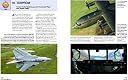
This exciting manual showcases 100 incredible inventions and innovations that have kept the service at the forefront of technology for over 100 years and some of which, perhaps surprisingly, have found their way into our everyday lives. From the jet engine to radar, from the ejector seat to the bouncing bomb, the Haynes Royal Air Force 100 Technical Innovations Manual contains a double-page spread on each innovation or technological advancement, detailing its development, history and its use. Over 300 photographs and drawings help bring each one to life. Review: Interesting book. - Interesting book for an ex RAF person. Review: Great book for any RAF enthusiast - This book was bought as a christmas present for a budding pilot and it was a success! As a teenager there isn't many books he reads but he's found this boom very informative and enjoyed reading through it.
| Best Sellers Rank | 460,908 in Books ( See Top 100 in Books ) 2,184 in Aviation References |
| Customer reviews | 4.8 4.8 out of 5 stars (120) |
| Dimensions | 21.91 x 1.91 x 27.94 cm |
| ISBN-10 | 178521084X |
| ISBN-13 | 978-1785210846 |
| Item weight | 934 g |
| Language | English |
| Print length | 224 pages |
| Publication date | 10 Aug. 2017 |
| Publisher | J H Haynes & Co Ltd |
K**2
Interesting book.
Interesting book for an ex RAF person.
P**Y
Great book for any RAF enthusiast
This book was bought as a christmas present for a budding pilot and it was a success! As a teenager there isn't many books he reads but he's found this boom very informative and enjoyed reading through it.
G**S
Interesting read
Thereโs a few books going round to celebrate the RAF 100, this is the best for a technical mind. Iโm an ex RAF aircraft technician and I was amazed tgat some of our every day items were RAF innovations. My dad is an engineer and he enjoyed it too.
T**D
RAF Engineering Greats!
Better than most of the aircrew-centric drivel thatโs been pumped out for the RAF100 centenary celebrations. This book is one for the Engineers and Technicians of the Service, past and present. ยฃ6 is an absolute steal!
T**6
Four Stars
Concise and interesting descriptions.
M**L
An excellent book !
This is an excellent book with acres of information on how and why certain inventions were invented and how aircraft and their systems have progressed through the years with the RAF.
M**N
It was just what I expected.
I gave this product to my dad.
R**R
Excellent read.
Superb - some unusual items some familiar. I was most taken by item 100! If you find an item you like I recommend further research as this book has just two pages per subject. Well worth a read.
J**F
Interesting celebration of the RAF's centennial
An interesting concept on the eve of the RAF's centennial. I was worried that the book would over-exaggerate British accomplishments, even to the point of claiming innovations that they really didn't invent, but that is not the case. Some of the innovations were indeed invented elsewhere, like the Link Trainer (U.S.) or the braking parachute (U.S.S.R.), but they were adopted by the RAF and the book explains how. Each one of the 100 is uniformly covered in two pages, with some drawings added in some cases to show how they worked. I wonder about some the inclusions, such as entire aircraft like the Spitfire, whose engine, gunsight and guns are already included separately, but any book like this will have questions about what is included and what isn't. Regardless of that, it's a fun read, whether you're British or not. (Now I wish they'd do a companion volume called "USAF 70"!)
A**E
Everything in that book is interesting :)
Interesting book about RAF 100 Years of aviation
D**R
Bite-sized Haynes
One of my favorite aspects of Haynes' "workshop manuals" are the little one or two-page articles, set aside from the main text, where the author spends a moment explaining a system or technical concept in greater detail. Although Haynes has been cutting back on these asides recently, "RAF 100" is essentially 100 of them arranged in chronological order, each one focusing on one of what the author considers as one of the most important innovations that have benefited the Royal Air Force since 1918. Each two-page spread includes a few paragraphs of text explaining the history, development, and importance of each development, along with an average of three illustrations accompanied by detailed captions. These range from historic photographs in color and black & white, to period advertisements, annotated images of museum artifacts, original schematics, and new diagrams created by Josh Hodgson and Dominic Stickland. Interestingly enough, not all of the innovations described here are necessarily British, and not all of them were 100% successful. Some would go on to revolutionize aerial warfare, enhance crew comfort and survivability, or save the lives of thousands of pilots and aircrew. Some of them would later find extensive use in civilian applications, such as the Perspex canopy glass which evolved into acrylic corneal implants. Although there isn't much room to describe each innovation in great detail, Jonathan Falconer does an excellent job explaining how each worked. The book leans rather heavily on previously published Haynes manuals, which probably explains the fixation on aircraft such as the Spitfire, Lancaster, Harrier, Vulcan, etc. at the expense of other famous British warplanes. That aside, this is an enjoyable read; obviously not as richly detailed as some of Haynes' single-vehicle "manuals," but still fun to dip into from time to time. There's also a great close-up on page 146 of a certain piece of pilot equipment that was later re-purposed for a scene in "2001: A Space Odyssey."
Trustpilot
2 weeks ago
1 month ago