Jane Austen at Home: A Biography
Product ID: 49387506
Desertcart purchases this item on your behalf and handles shipping, customs, and support to Iceland.
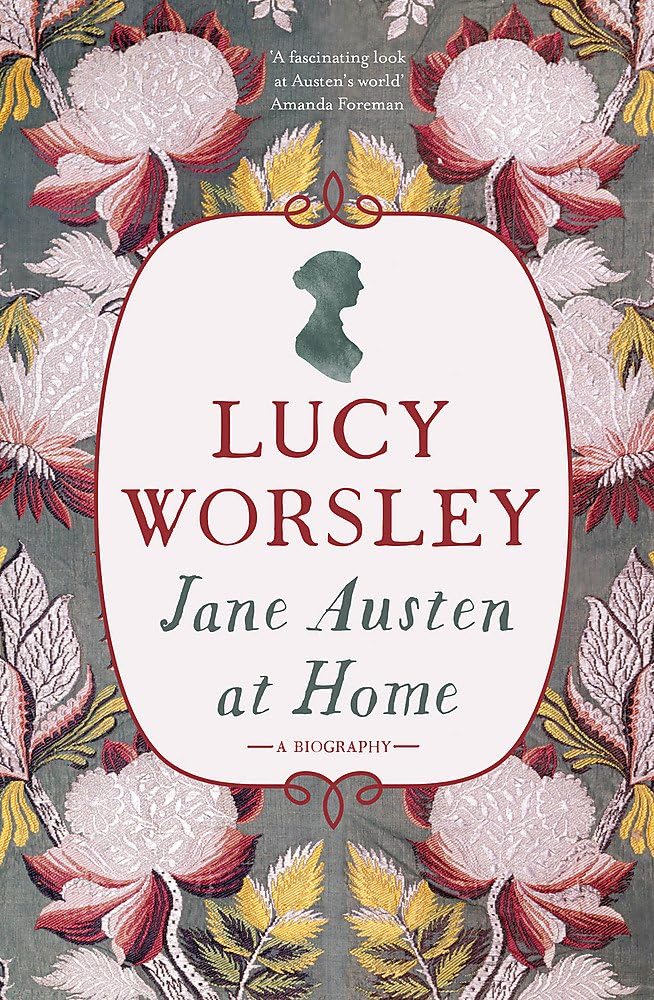
THE SUNDAY TIMES BESTSELLER 'This is my kind of history: carefully researched but so vivid that you are convinced Lucy Worsley was actually there at the party - or the parsonage.' Antonia Fraser 'A refreshingly unique perspective on Austen and her work and a beautifully nuanced exploration of gender, creativity, and domesticity.' Amanda Foreman 'Brilliant and very moving, this book is a fascinating and original exploration of Jane Austen with lots of new material - Worsley brings Austen to life superbly, through her pages she is a flesh and blood woman, intelligent, powerful, contradictory, loving, loved. A magnificent book.' Kate Williams On the 200th anniversary of Jane Austen's death, historian Lucy Worsley leads us into the rooms from which our best-loved novelist quietly changed the world. This new telling of the story of Jane's life shows us how and why she lived as she did, examining the places and spaces that mattered to her. It wasn't all country houses and ballrooms, but a life that was often a painful struggle. Jane famously lived a 'life without incident', but with new research and insights Lucy Worsley reveals a passionate woman who fought for her freedom. A woman who far from being a lonely spinster in fact had at least five marriage prospects, but who in the end refused to settle for anything less than Mr Darcy.
| Best Sellers Rank | 1,064 in Biographies & Memoirs (Books) |
| Dimensions | 16.3 x 4.3 x 23.8 cm |
| Isbn 10 | 1473632188 |
| Isbn 13 | 978-1473632189 |
| Item Weight | 660 g |
| Language | English |
| Print Length | 400 pages |
| Publication Date | 18 May 2017 |
| Publisher | Hodder & Stoughton Ltd |
User
Jane Austen’s life revealed - in detail.
WORSLEY, Lucy, “Jane Austen at Home - a biography”, Hodder, 2017, ISBN: 978-1-473-63220-2, paperback, 483 pages.Living near Winchester, the Austen home, Steventon, Jane’s house at Chawton, the flat (in which she died aged forty-one) in Winchester, Bath and many other “Austen” places, 2025 is the year of Jane Austen. There are regency fashion shows, dances, open days, many new books and a host of “Austen themed” events.Having written this in 2017, Worsley - a careful and thorough researcher and historian - stole a march on all of them; currently (May, 20250) she is touring a lecture, based on this book (and others) in which she shows mastery of her subject, as well as being entertaining and fun.Worsley expands on the Jane Austen many think they know, i.e. the main places and ideas extrapolated from Austen’s books and films; she depicts an everyday life which is far from the grand balls and mansions, one in which struggles of various kinds were her life - financial, being a female author, dependence on others, flirtations and life at the time - in other words a human being.In 1806, Mrs Austen and daughters travel to Hamstall Ridware, Staffordshire (leaving a flirtation behind) to meet Jane’s cousin, Edward, a clergyman who had just had a book or sermons published.“She certainly did not enjoy the sermons themselves, describing them as getting ‘fuller of Regeneration & Conversion than ever’ and later volumes appeared. Edward’s son was an irritating mini-version of the author himself, a ‘second pompous Sermon-Writer’.“Jane certainly turned against her brimstone-y cousin on this visit, hoping on future occasions that he would leave the bereaved alone and ‘not send one of his Letters of cruel comfort’ to a widower. To add injury to insult, Edward Cooper’s eight children all got the whooping cough, and passed it on to Jane too.“As they left Staffordshire, though Jane and Cassandra and their mother all kept a live a desire they might benefit from the will of the Honourable Mary.” (P 269)Benefits from wills did not materialise as Jane and family had hoped but this short extract raises a few issues clearly, e.g. how far the Austens travelled (by uncomfortable carriage), dependence of her family for money, publishing “ease” for males, sources of characters for Jane and her freely expressed point of view. (It seems Cassandra burned many of Jane’s papers and letters in which her views were expressed in blunt terms.An aspect of her life in which I am interested is the relationship and inter-action with her publishers, the business side not only because it reveals so much about women’s lives at the time but because it would shed light on why the Austens always appeared to be “short of money”. Given Austen’s later international success, it seems surprising (bot no more than Van Gogh, Mozart, Beethoven and many other artists whose “overnight success” was “wrought by a lifetime of gruelling, not well-paid or recognised effort. (In Kathryn Sutherland’s 2025 “Jane Austen in 41 Objects”, she chose the front door of 50, Albermarle Street, London, the renowned publishing house of John Murray, publisher of Byron, Walter Scott, Robert Southey, Tom Moore and many others. She gives little insights. Worsley also open a couple of commercial doors, beginning on page 347. Austen had been published by Thomas Egerton, a specialist military publisher.“‘We [various other publishers] are particularly interested in the success of Austen’, wrote a rival publisher at Longman, ‘and we sincerely regret that her works have not met with the encouragement we would wish.’” (P 347)Worsley comments Jane had “fallen into the hands of Thomas Egerton”, the military publisher. Jane’s attempts to publish “Emma” with Egerton met with “success”; “He liked it, and again wanted to buy the copyright. But he did not offer her quite enough money.” It seems her undoubted skill as an author was recognised by many (including Jane herself who seemed to know her worth) but the commercial world was tough, even then.Worsley opens Murray’s, 50 Albermarle Street front door slightly, to reveal Murray’s trusted reader’s good opinion of “Emma” (and Austen’s writing). “John Murray made a bold offer of £450 for “Emma”. But, to Jane, it looked far less attractive, especially when it became clear he also wanted the copyright of “Mansfield Park” and “Sense and Sensibility” thrown in as well.” (P 348). Jane, it seems, could drive a hard bargain too.From the page above, Worsley focuses on Jane’s visits to London (1811, 1813, 1814, 1815), her publishing decisions; although not much commercial information is available, Worsley utilities the details well. My journey to central London now from Austen territory is around ninety minutes “on today’s roads” in a fast car but, for Austen, it must have been so much longer, more challenging and uncomfortable. However, in an aside, Worsley mentions that Louis Simond, a French visitor of her time pointed out that for such a journey “In France, the people of the provinces used to make their wills before they undertook such an expedition” not, as in Jane’s case, “on a whim”.This, and other asides from the main point, make Worsley’s biography of Jane Austen a must for every bookshelf, especially in this important year - 2025.For anyone interested in or studying Jane Austen’s life, time and literature, this is an ideal source written in a very accessible style by a thorough historian. For students, the book ends with a lengthy list of sources, a bibliography, notes and acknowledgements.Recommended.
User
an excellent and very readable book
Lucy Worsley has written an excellent and very readable book about the life and homes of Jane Austen.She has researched the details of Jane’s life from the contemporary evidence still available and backed this up with her own belief and understanding of Jane Austen’s importance in the development of the novel as an art form and mirror to the world of the Georgians.I can thoroughly recommend this book to anyone who wants to understand the author of Pride and Prejudice, Sense and Sensibility, Emma and the other books in the canon of works by this great author.You will be both surprised and delighted by the level of personal detail concerning Jane’s daily life that Lucy Worsley has included as well as saddened by the plight of Jane and her female relatives at the manner in which their lives played out in the largely masculine world of the time.This is a ‘tour de force’ which should be in the reading list of anyone who has either read the books or watched the film adaptations.
User
A wonderful well researched and interesting book
Jane Austen at Home by Lucy Worsley is another book for my book club but also a book which was on my to be read shelf. I absolutely love Jane Austen and have read all her work, however I do not recall ever reading a biography about her, although I do know a little of her history.Worsley focuses on Jane’s homes throughout her life and details her life and experiences, house by house and how she details homes in her novels. I found it very well researched, well structured and well written. I was aware that much of Jane’s personal correspondence was destroyed or ‘vetted’ by her sister Cassandra but was not aware that she was not more successful or financially successful in her own lifetime. I found the details of Jane’s life very interesting and also that of the houses she lived in and of her family too.It is obvious that Worsley writes with such interest and knowledge of Jane's life. I may go back and reread her work with a little more knowledge about the author herself.
User
Great biography
It’s a great biography! Lots to thinks about, from the lack of sanitary equipment to the love for Jane’s family
User
brilliant and engaging
Such a well written book, really gives a depth to Jane Austen that has never been seen before. Would highly recommend to any avid reader of Jane Austen or even just fans of history 5*
User
Absorbing, compelling & compassionate
I devoured this. Jane’s back story is told by Lucy Worsley in vivid prose and a compassionate manner. We meet not only Jane but her family, extended relations and the connections she made throughout her (too short) life that helped to shape her novels.Jane's frustrations with her situation, the displacement she felt from being kicked out of her home and her unfailing sense of humour about the whole 'Vile' business of life make for a compelling read.There are also lots of interesting snippets. Such as how Jane and her sister wore pattens to protect their shoes from the mud (wooden overshoes held on with an iron ring). How much Jane received for her first published novel £10 (which equates to £900 today). How her father actively encouraged her writing, bought her a writing desk, created a room for her to write and approached publishers for her.I liked Worsley's personal involvement in the story too, like she was discovering interesting things about Jane as she researched, and her enthusiastic interjections give an immediacy to the narrative.I highly recommend this book for anyone who loves Jane Austen and her novels and wants to learn more about her life.
User
Informative and engaging biography of Jane Austen
Written in Lucy Worsley's engaging style this biography gives an insight not just into the life of Jane Austen but into the condition of her female contemporaries. Good read
User
Some good insights
Worsley writes well and knows how to make a story out of her material. She is strong on the fact that Jane, her mother and sister all lived on the breadline quite a lot. The brothers could have helped more but didn't and then later they papered over the cracks and made it all a lot more genteel than it was. Worsley winkles this out.
User
Great buy
I love Lucy Worsley - her documentaries and books. They are always very informative and entertaining. This book is no exception. It flows well and gives us a lot of information about Jane Austen, her life, family and friends. I was totally engrossed by the book.
User
Wow! So entstaubt man Geschichte
Tolles Buch, die Autorin erzählt über das Privatleben der berühmten Jane Austen, der literarischen Nationalheiligen der Briten. Nach unzähligen Biographien und vielen, vielen TV-Dokus kann man zwar fragen: Warum schon wieder eine Biographie. Aber diese hier ist wirklich anders: witzig, geschrieben, bürstet viele Geschichten, viele vermeintliche Wahrheiten gegen den Strich und stellte eine neue These auf: Jane Austen mag zwar gewusst haben, wie die upperclass gelebt hat, sie selbst jedoch wusste, wie hart Leben ohne großem Einkommen sein kann.Das Buch empfehle ich:- Lesern, die gerne flüssige Texte haben, die dennoch viel Tiefe bieten- Schülern die sich aufs Abi vorbereiten, wer dieses Buch lesen kann, schafft jede Klausur-allen, die sich für Frauenleben im 18. und 19. Jahrhundert interessierten- und, natürlich allen Jane Austen Fans!
User
Homage not just to Jane but the period in which she wrote.
Recommended reading for any students or fans wanting deep understanding of the era. Who knew a stage coach was so enthralling the public queued up to see one go by? A well written easy read full of interest. From the worth of money to the value of money in Jane’s time this book has it all. Once finished I read Jane’s first three novels in a row. Enjoying them greatly with this additional depth of knowledge.
User
Best - and most realistic/accurate - bio of JA
First off. I adore Lucy Worlsey. I love how she gets into the minutia of the eras she has studied to give a more reasonable and interesting assessment of the time and the persons. I loved this bio of Jane Austen as it made Austin much more real - not some candy-coated Miss Priss. It made me appreciate her writing even more knowing the circumstances and struggles that had her writing in spite of circumstances. She was a keen observer of psychology and motives that drove the people around her, and her characters. I was sad when the book ended.
User
This is a clearly novelistic approach to her life — And I'm here for it.
While keeping it mostly objective, this biography is basically a love letter to Jane Austen herself. A precise work on which you can see the care and attention the author herself has put into it, this biography reads just as easily as the novels of the author it is about. By far, a great investment! Regarding covers and quality, it's a 10/10! The paper quality is great, the hardcovers are lovely and the jackets do place you in the mood of those romantic landscapes we all think of when we are first presented to any of Jane Austen's works.
Trustpilot
3 weeks ago
2 weeks ago