We remain fully operational. Our teams are working around the clock to ensure your deliveries continue safely.

DOWNLOAD THE APP


Customer Services
Copyright © 2025 Desertcart Holdings Limited
DOWNLOAD THE APP
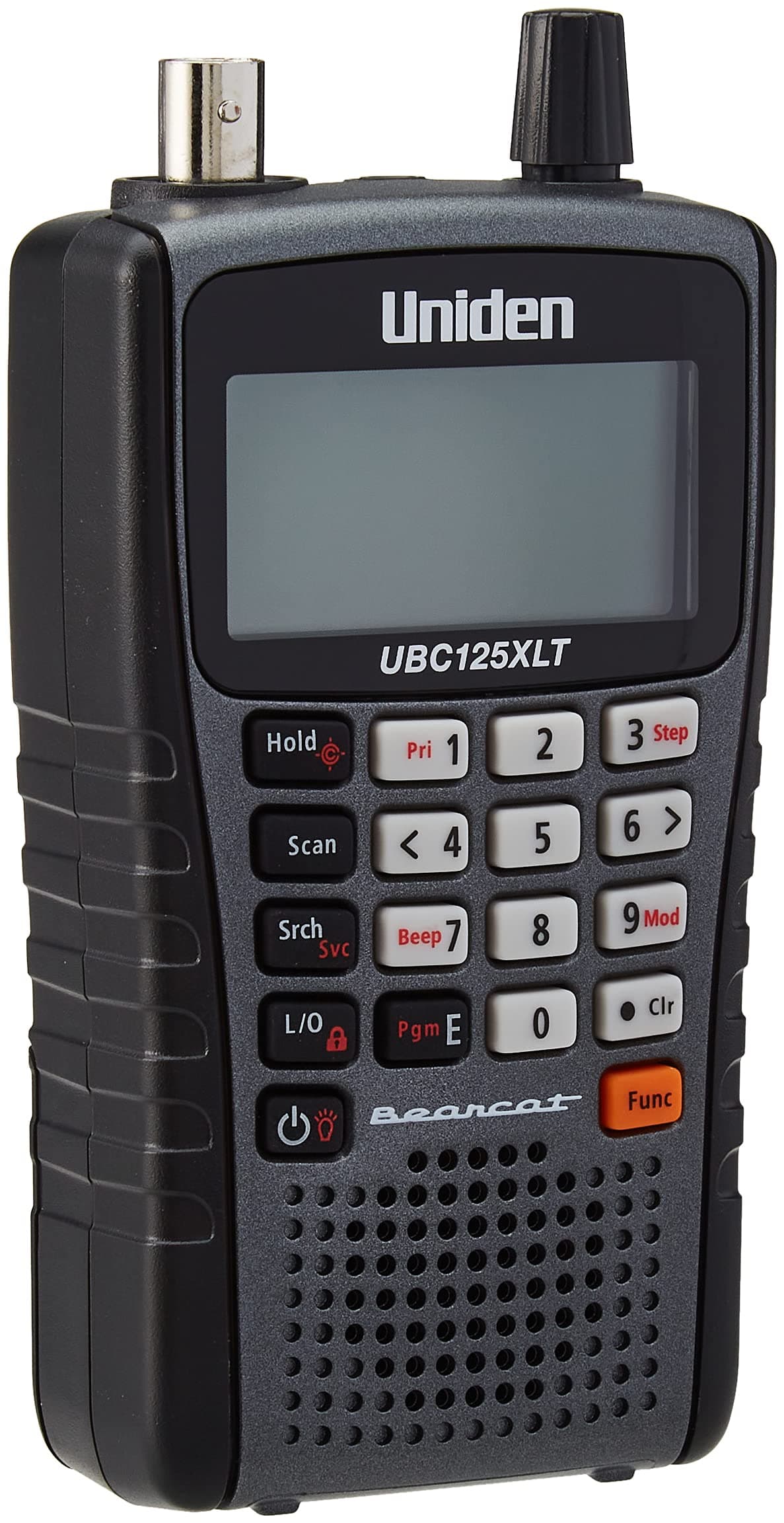
📡 Unlock the airwaves—never miss a signal, never miss out!
The Uniden UBC-125XLT is a compact, handheld radio scanner featuring 500 programmable channels spanning 25-960 MHz. Designed for professionals and enthusiasts, it offers flexible power options with AA batteries, superior reception with 80 dB IF rejection, and seamless PC programming via USB. Its lightweight build and broad frequency coverage make it an essential tool for staying connected to critical communications anytime, anywhere.
| ASIN | B00HQCUXI4 |
| Best Sellers Rank | 6,550 in Electronics & Photo ( See Top 100 in Electronics & Photo ) 75 in Radio Communication |
| Box Contents | Radio, Antenna, Instructions, Batteries , USB Jack |
| Brand Name | Uniden |
| Customer Reviews | 4.6 4.6 out of 5 stars (1,641) |
| Global Trade Identification Number | 04954355102819 |
| Item Weight | 0.17 Kilograms |
| Light Source Type | LED |
| Manufacturer | Uniden |
| Media Type | USB |
| Minimum System Requirements | Windows 7 |
| Model Name | UBC-125XLT |
| Network Connectivity Technology | USB |
| Optical Sensor Technology | CCD |
| Paper Size | A4, Letter |
| Product Warranty | 1 year manufacturer |
| Resolution | 1050 |
| Scanner Type | Radio |
M**N
Great little scanner once you get the hang of it
Solid build and surprisingly good reception for a handheld. Runs on standard or rechargeable AA batteries, so you can quickly swap in spares if you don’t have time to recharge, has a clear display, and the audio quality is excellent. The seller even pre-programmed some channels for me, which was a nice touch and made it easier to get started. It took a short while to learn how to use, but once I got the hang of it it’s straightforward and very reliable. Great value for money — highly recommended for anyone wanting a capable, portable receiver.
F**N
Brilliant receiver for airband etc
I cannot think of anything to dislike. Programming it is a doddle when you get used to using the freeware Scan125 and Scan125convert, and with the 125XLT connected to your PC most of the controls can be changed from the screen rather than finding where to do it via the radio buttons. I pay for RRUK so I get a csv file of the frequencies I want from RRUK, convert it using Scan125convert, then load it onto the radio using nScan125, you can say exactly where you want them to go in a particular bank or bank number, then check the banks on your PC screen. I use mine at home and do not go out much, so rather than the standard antenna I have a Broadsword (search on Facebook for his shop) dipole in the loft with the connector in the upstairs study, and if I am downstairs by the garden I put another Broadsword antenna, an airband slim jim, about 20ft up on an extending fishing pole (on a cane pushed into the top section, some poles are carbon fibre). I have also ordered a bluetooth transmitter to send the audio to a bluetooth speaker, apparently connecting a wired speaker to the radio does not work very well, the speaker needs to be powered, like my rechargeable speaker. Apart from civil and military airband the only other of the frequency banks I scan is ham, there are other banks but I set them to not be scanned, and when I did scan them not much was on, perhaps you need a dedicated antenna for them? I am in my mid 60's and if I can understand it and enjoy it then anyone can, an outside antenna like an airband slim jim is easy to put up in the loft, or on a pole, or just hung up as high as you can get, and IMO is much more effective than the standard rubber duck. A must is to download Scan125 and Scan125 convert, there is a bit of a learning curve but it is worth it for the convenience of running the radio via your PC. At this price you are not going to get a scanner with all the bells and whistles, others can cost many times what this does, in my opinion the 125XLT is brilliant, incredible value, and is great fun to use. Update - I got the bluetooth transmitter/receiver (from ebay!) plus a cheap pair of headphones and they all work great together. https://www.amazon.co.uk/gp/product/B07WT9GV2D/ref=ppx_yo_dt_b_asin_title_o05_s00?ie=UTF8&psc=1
J**E
Uniden UBC 125XLT
Comparing it against my Grecom PSR295 scanner, the 125XLT is a much better size, the Grecom is like a brick and not that easy to carry around. The Bearcat is quite dinky and will go in a large pocket. The display is large compared with the Grecom and has fewer buttons to fiddle with. It may give the impression of far fewer functions but these are accessed by fewer buttons instead of having buttons specifically assigned to them. Using the manual, it took me a couple of hours to figure out how it works and not much longer to punch in my frequencies. I didn't by the software so I've gone the laborious route. Once mastered, it's easy to use. It picks up everything I've been picking up with the Grecom and doesn't seem to have any reception problems. I tested it against the Grecom on a sub-squelch transmission (an airport ATIS channel) and the Bearcat seems to pull in a bit more background noise than the Grecom but it's nothing major. The supplied antenna is actually quite good - although the above-mentioned ATIS transmission was barely audible, it does very well on above-squelch signals and I've been happily pulling in aircraft up to 80 miles away (if the reporting points are anything to go by). It is not as good as my MRW100 antenna but you won't be slapping your forehead in frustration as you might with most manufacturer-supplied rubber ducks. I've not used close call because i live in the sticks and am trying for distant signals. One plus is that unlike the Grecom (which has a glitch), I can pick up PMR446 transmissions. You have to press the function button then the rotary knob to access the squelch but I count it as a good thing - it means that I can't knock it too high by fumbling. Unless I've not found it yet, the Bearcat seems to lack an attenuation function, which the Grecom has. Airband freq 133.8 tends to need attenuating where I live or I have to lock it out so attenuation would be a handy feature. It ate the supplied alkaline batteries but does better with NiMH rechargeables (2500ma) so it's best to carry spares if you're going to be out with it for a while. I used a trickle or fast charger rather than charging them in the scanner. But in summary, I'm very pleased with the Bearcat, which is a great out-and-about scanner that works very well out of the box with the supplied rubber duck and I heartily recommend it.
C**N
El scaner se siente sólido y de calidad. Es muy rápido. No es tan complicado de manejar, yo desde 0 lo entendí rápido. Puedes escanear un amplio rango de frecuencias, están dividas bloques. Esos bloques los puedes acultar solo pulsando los números relacionados con los bloques y volver a mostrarlos pulsando otra vez el número. Así escaneas solo las frecuencias que te interesan. Una vez que escuchas una frecuencia de tu interés y la quieres almacenar es muy sencillo . Todas las frecuencias guardadas se almacenan en varios bloques y puedes escanear luego ese almacenamiento de frecuencia guardadas y escucharlas . Silenciar las que no te interesen, fijar una para no escuchar las demás ect. El sonido es muy bueno Las baterías puedes cambiarlas por otras de mayor capacidad o poner pilas. Puedes conectar auriculares. Tiene todo lo que tiene que tener un scaner portátil analógico. La antena no es mala... pero si quieres sacar el máximo partido al scaner necesitas una antena base , yo tengo una bibanda x30 cuando estoy en casa . Cuando salgo con el scaner utilizo la de origen y otra telescópica. Si sales por la montaña puedes escanear rápidamente las frecuencias activas y con un walkie talkie comunicarte. Es entretenido y un pasatiempos. Tenía dudas en si comprar el escaner portátil o de base... me gusta salir y viajar . Ha sido la mejor elección para mi. Bien producto y de calidad. Recomendado. La entrega en 24 horas así que a sido todo perfecto.
J**S
Snel geleverd. Wel bijkomende software nodig om goed te kunnen programmeren.
Q**G
Svårt använd, fungera som det ska!
T**R
Der UBC125XLT ist nicht umsonst einer der bekanntesten und verbreitetsten Handscanner auf dem Markt. Der Scanner verfügt über 500 Speicherplätze in 10 Bänken, die entweder am Gerät selbst, oder per Software benannt werden können. Mit einer Range von 25-960 MHz (mit Lücken) ist das Gerät ein wahres Multitalent und deckt alles ab, was im Funkverkehr interessant werden könnte. Zur einfacheren Nutzung sind 7 Servicebänder vorprogrammiert, so dass auch Einsteiger ein rasches Ergebnis im gewünschen Anwendungsbereich erzielen können. Darunter sind Flugfunk, Marinefunk, CB und mehr. Die Bedienung setzt ein kleines Grundverständnis voraus, geht aber einfach von der Hand und ist schon nach kurzer Eingewöhnung intuitiv. Die Bedieungsanleitung liegt nur in Englisch bei, wer dies nicht versteht, findet allerdings zahlreiche Tutorials auf YouTube. Betrieben wird der Scanner mit 2 AA Batterien. Es liegen Akkus bei, die auch intern via USB geladen werden können. Ein Wechsel auf Einwegbatterien ist jederzeit möglich. Erfahrungsgemäß halten frische Batterien bei ausgeschalteter Displaybeleuchtung problemlos 8 Stunden. Der Scanner hat einen 3,5mm Klinkenausgang für Kopfhörer, sowie einen BNC Anschluss für die Antenne. Die beiligende Antenne habe ich zur Empfangsverbesserung mit einer Comet AB 1230H ersetzt. Der Vollständigkeit halber weise ich darauf hin, dass die Gesetzeslage zum Abhören verschiedener Frequenzen abhängig ist, vom Land in dem man sich befindet. Der bloße Besitz eines solchen Geräts ist in jedem Fall legal!
C**O
866.700 Cominciamo con le dolenti note: --- il manuale è solo in inglese. --- Le batterie ricaricabli sono di infimo valore: non si ricaricano (il display si blocca su 'Charge Off'): le ho sostituite con due batterie Amazon, notoriamente perfette, ed il display diceva 'Charging'. Imaparare ad usare questo scanner, con il manuale in inglese per giunta, agli inizi è dura, ma io sono un tipo che non si scoraggia: abituati troppo bene con i cinesini e gli apparati amatoriali, questo scanner Uniden è quel che dichiara, una macchina da guerra per le scansioni. Di intuitivo non c'è molto, c'è da leggere e rileggere, ma una volta capìte le funzioni si ha un'apparato davvero potente, ad un prezzo relativamente basso. I ricetrasmettitori cinesi portatili bibanda, con poche decine di euro, fanno cose egregie, ma ad esempio non hanno la banda 25-70 MHz. nè tantomeno quella 800-950 MHz., e soprattutto non hanno la banda aerea in AM. Invece questo Uniden ha la Banda Aerea e và davvero bene, specie con una antenna esterna. Se poi potete montare una antenna aeronautica sul tetto sarete al top. Io ascolto molti aviogetti in volo con una antenna bibanda amatoriale (VHF-UHF), quindi non tarata per questa banda, ma non me accorgo neanche... Utile sempre, ed in certi casi indispensabile, un filtro attenuatore di 88-108 (le radio in FM) che rientrano con spurie anche in ricevitori ben più prestigiosi (e costosi) di questo: io uso da molto tempo, i filtri-Veniani, che a fronte di minime perdite di inserzione offrono attenuazioni eccellenti. Ad esempio, nella mia località, attorno ai 134 MHz. non si poteva ascoltare nulla in FM stretta poichè rientrava una radio FM con musica sparata a tutto gas in FM larga. Con il fitro attenuatore, posto tra ricevitore ed antenna, le cose cambiano decisamente. Un buon filtro soppressore rende spesso ascoltabili segnali altrimenti inaudibili per colpa delle spurie delle radio in FM, inoltre 'ripuliscono' bene le frequenze in generale, rendendo più facile l'ascolto di parecchie stazioni prima mai ricevute. Detto questo, passo ai molti pregi di questo Uniden: innanzitutto la luce del display, che potete accendere o spegnere a piacimento: non c'è cosa più noiosa, infatti, di star sempre lì a riaccendere la lucetta temporizzata di certi portatili... Non solo, potete anche personalizzare l'accensione: se volete che si accende solo quando il ricevitore trova un segnale, ma anche con altre opzioni. Poi abbiamo il TAG, ossia possiamo mettere un nome alle nostre memorie, di ben 16 caratteri alfanumerici e diversi simboli. Il display è ampio, i caratteri sufficientemente grandi e cosa molto comoda, il contrasto dei caratteri è ampiamente regolabile. Questi Uniden sono decenni che li vedo sulle riviste e su Internet, ma non mi ero mai fidato, li ho sempre visti come 'giocattolini', proprio come vedevo i ricevitori AoR: con questo UBC-125-XLT, invece scopro un mondo nuovo, apparati in fondo relativamente poco costosi e dalle prestazioni entusiasmanti. Purtroppo, come dicevo all'inizio, non è una radio molto amichevole: nasce come scanner puro, con funzioni molto interessanti (ad esempio la scansione superveloce), quindi non è fatto per chi vuole fare una semplice ricerca di frequenze e una semplice memorizzazione. C'è tutta una serie di procedure da fare anche solo per ricercare una singola frequenza, ma credetemi, ne vale la pena: in fondo basta avere un pò di pazienza e si potrà padroneggiare questo ricevitore-scanner con sommo piacere. L'antennino in dotazione ovviamente non permette grandi cose: io non l'ho nemmeno montato, avendo gli eccellenti e lunghissimi stilo in dotazione agli scanner Aor: le prestazioni sono, anche in interni, soddisfacenti; ovio che all'aperto, è tutta un'altra cosa... Il supporto per l'ancoraggio ai pantaloni è molto solido e lo troviamo già avvitato sul retro dell'apparato, mentre il cinghiello dovrete allacciarlo da soli, in un occhiello dello stesso supporto-pantaloni. L'audio è piuttosto potente e chiaro. Sulla sommità della radio c'è la presa per le cuffie, tipica da 3,5. Per regolare il volume, si deve premere la manopola di sintonia, per regolare lo squelch, prima si deve pigiare il tasto funzione, quindi premere la manopola di sintonia. In entrambi i casi compare sul display una slide che vi indica il livello da voi prescelto. Quando si preme la manopola di sintonia, il display visualizza anche lo stato di carica degli accumulatori espresso in tensione (Volt). Premendo il tasto funzione, potete scegliere, a seconda dei tasti numerici scelti, il passo di sintonia (step) ed il modo di ricezione (AM o FM). ADDENDA DEL 12 AGOSTO 2021 Sono passati tre anni e mezzo dall'acquisto di questo splendido ricevitore, e ne sono sempre innamorato! Penso che ne comprerò un'altro a breve, e poi anche altri modelli della stessa marca, Uniden. Centinaia di ore in ascolto delle frequenze tra 25 e 900 MHz. in modalità Scansione Memorie, con le solide prestazioni offerte già con la sola antennina-base in dotazione. Con antenna esterna le prestazioni migliorano sensibilmente e senza traccia di intermodulazioni-FM tra i 70 ed i 174 MHz. Compratelo ad occhi chiusi se siete appassionati di radioascolto in genere, radioamatori o ascoltatori di aeroporti e aerei in volo. Bene anche per la banda CB anche se non potrete ascoltare i DX a 27.555 KHz poichè non ha la SSB (ma questo ricevitore non nasce per la ricezione delle bande laterali).
Trustpilot
5 days ago
2 weeks ago