Some deliveries may take a little longer than usual due to regional shipping conditions.

DOWNLOAD THE APP


Customer Services
Copyright © 2025 Desertcart Holdings Limited
DOWNLOAD THE APP
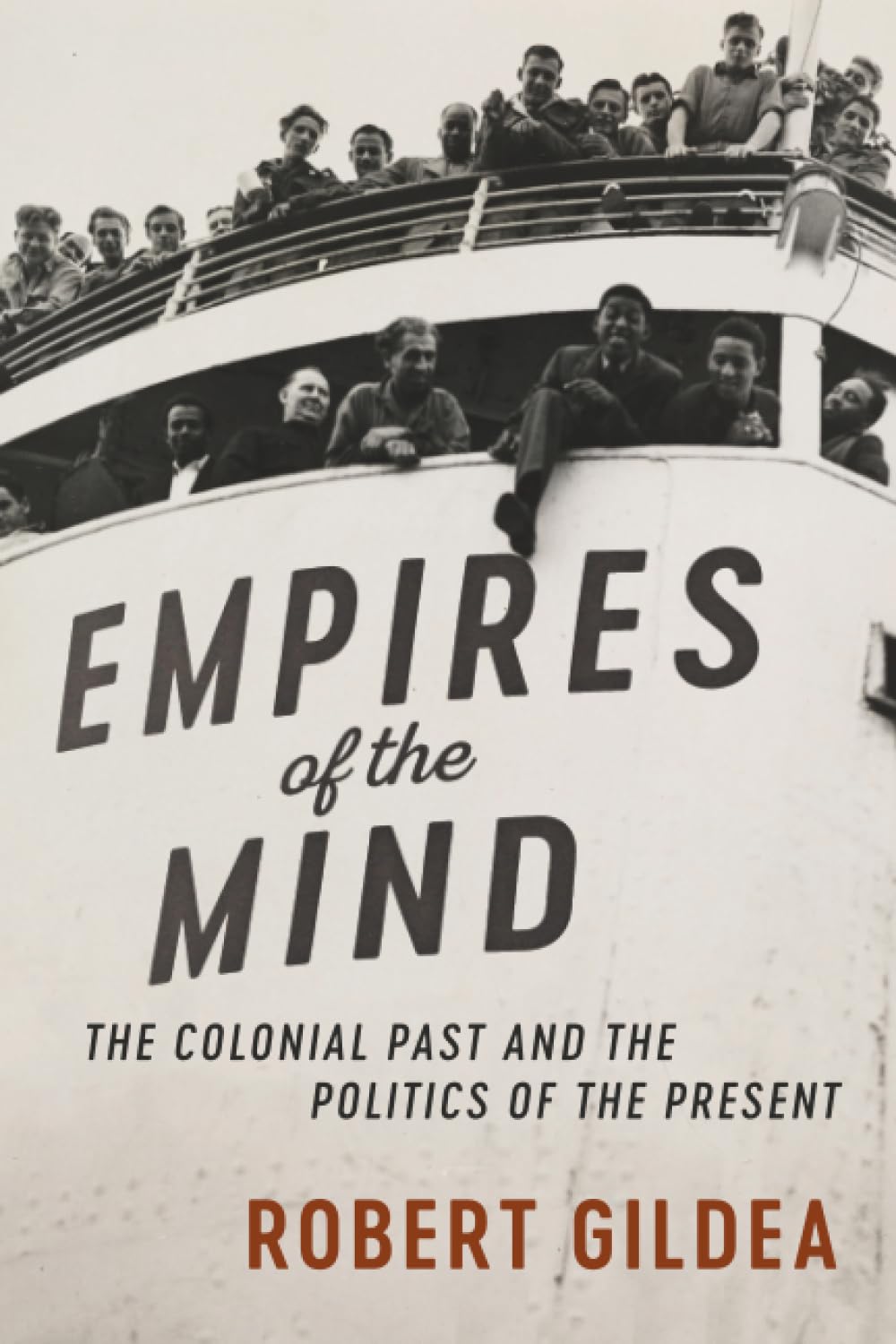
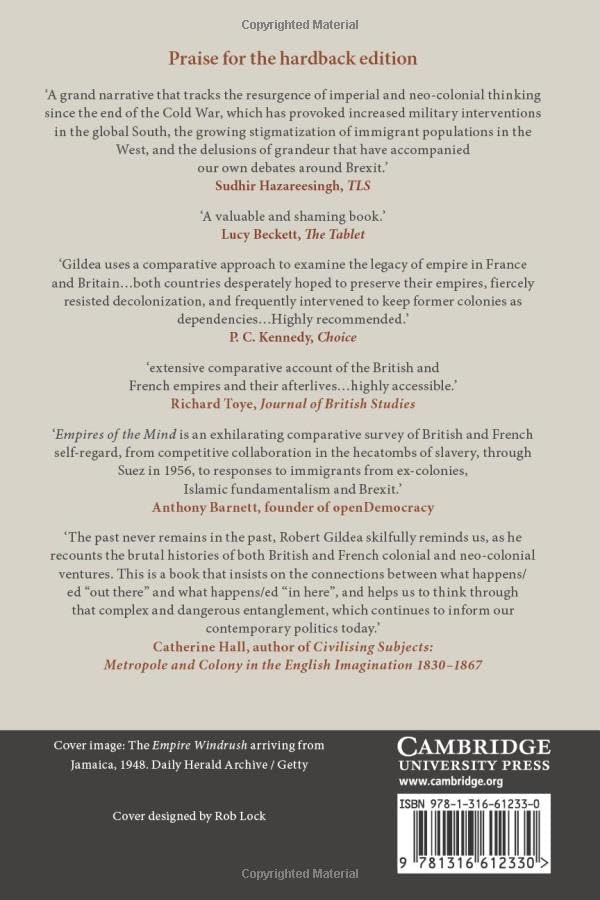
desertcart.com: Empires of the Mind (The Wiles Lectures): 9781316612330: Gildea, Robert: Books Review: Colonialism Through Time - Empires of the Mind by Robert Gilea takes on a big task in illustrating that colonialism shaped European powers and still has an influence over them in 2020. It is commonly held belief that colonialism ended rapidly in the 1950s-60s as the British and French seemingly rushed to shore up their own countries. This belief has proven shallow as colonial powers have exerted an indirect economic and military control over their former colonies as well as launching new ventures, even as domestic politics in Europe grow more uncertain. I thought Empires of the Mind was a really solid study of how colonialism both as an idea and in actions has evolved over the last few centuries from trading and getting resources to exerting control over individuals and attempting to civilize them because they are beneath white Europeans. Even today’s indirect colonialism suggests a better Europe acting against an other, even if they aren’t directly ruling over these people. Empires of the Mind illustrates that ideas so long held within the human mind do not rest so easily. Review: Informative
| Best Sellers Rank | #2,919,903 in Books ( See Top 100 in Books ) #2,673 in European History (Books) |
| Customer Reviews | 4.4 4.4 out of 5 stars (57) |
| Dimensions | 6 x 0.92 x 9 inches |
| ISBN-10 | 1316612333 |
| ISBN-13 | 978-1316612330 |
| Item Weight | 2.31 pounds |
| Language | English |
| Print length | 368 pages |
| Publication date | February 4, 2021 |
| Publisher | Cambridge University Press |
M**D
Colonialism Through Time
Empires of the Mind by Robert Gilea takes on a big task in illustrating that colonialism shaped European powers and still has an influence over them in 2020. It is commonly held belief that colonialism ended rapidly in the 1950s-60s as the British and French seemingly rushed to shore up their own countries. This belief has proven shallow as colonial powers have exerted an indirect economic and military control over their former colonies as well as launching new ventures, even as domestic politics in Europe grow more uncertain. I thought Empires of the Mind was a really solid study of how colonialism both as an idea and in actions has evolved over the last few centuries from trading and getting resources to exerting control over individuals and attempting to civilize them because they are beneath white Europeans. Even today’s indirect colonialism suggests a better Europe acting against an other, even if they aren’t directly ruling over these people. Empires of the Mind illustrates that ideas so long held within the human mind do not rest so easily.
L**O
Informative
D**D
According to the author France and Britain are still fixated on the bygone era of Empire, even after decades of decolonisation and cohabitation with ex colonial immigrants and their descendants at home. This delusional state shared by their elites and most of their populations, is induced by anxious and angry nostalgia. It is manifested by a powerful memory of grandeur and racial conceit , sustained by a fantasy of overweening superiority in the modern world, beyond any political or economic reality. Ever since the Suez crisis in 1956, Britain has struggled in assuming its place in the modern world, being pulled in three directions, first as a junior policing partner of the US in various post colonial adventures in Afghanistan and the Middle East, second as the avuncular Uncle overseeing a medley of ex colonies in the shape of the Commonwealth and third as major player in a dynamic and evolving European project. Britain has lived on its reputation with a great sense of entitlement and precious little self awareness. Lately it has jettisoned prosperity for sovereignty, by breaking its strong bonds with Europe as a go it alone Global Britain or as the author says Empire 2. France has also suffered from a diminished status after it gave up its most important settler colony, Algeria, in the early 60’s, following a brutal long war. But it immediately embraced the European Gaullist project to contain Germany, to enhance its leading position in Europe and to mark its independence from American tutelage. It managed at the same time to retain its post Imperial privileges and economic clout in “Francafrique” with recurrent political and military interference in the fate of its ex African colonies, by exploiting their indebtedness and colluding with corrupt dictators while importing cheap raw material. As the author points out this post Imperial delusional thinking has led to dangerous military adventures by these two powers outside Europe; Libya and Syria being the latest examples. Most importantly it has encouraged the rough treatment of their large ethnic immigrant minorities, who tend to live in poor ghettos, rife with criminality and drug problems. The younger generations lacking educational and job opportunities are discriminated against and harassed by the authorities , who continue to exhibit racialist attitudes unchanged from the colonial days. While it is credible that post imperial posturing could have contributed to many ill fated political decisions, its importance is somewhat exaggerated, as a number of other factors come into play, too complex to cover in a short review. The same applies to the fraught relationship with the immigration from ex colonies. Cultural xenophobia and religious hostility rather than racial arrogance may explain it, other factors could be anxiety about competition for jobs, housing, schools etc. as demonstrated by opposition to recent East European immigration. Moreover these anti immigration attitudes particularly towards Muslims, are not unique to ex Colonial powers, they are prevalent in countries with no Imperial past as diverse as Finland, Hungary, Greece or even Ireland as recent surveys indicate. In fact there has been steady improvement in community relationships at least in Britain whereas France has been plagued with intermittent post colonial conflict with home grown militant Islam. Finally how many multi racial Western countries can claim to have politicians from ethnic minorities holding two of the three highest cabinet positions in the country? It is an interesting comparative survey that raises pertinent questions about the post colonial era, but unfortunately as a mono causal descriptive work it oversimplifies and lacks nuance.
S**4
I enjoyed reading this book right to the end though this was as much to do with the literary style and historical detail as much as the plot. Herein lies the problem, why change the singularity of the title to a discourse on both the British and French empires without explanation or comparison except in passing. This was a missed opportunity if indeed this was the book’s raison d'être - if it wasn’t then why bother. This is a very polarised view of empires in absolute terms. They killed therefore they are bad. I would have preferred a more comparative analysis after all the British usually, but not always, took over from an imperialist/colonialist power. Rather than presentism, it would have been more measured had the contemporary alternatives been explored eg a fractured Indian largely Mughal continent. If this was a detective novel I say the author started with a preconceived conclusion and having lost the plot on a number of occasions ended up with the obvious but wrong culprit.
Trustpilot
3 weeks ago
1 month ago