
Buy anything from 5,000+ international stores. One checkout price. No surprise fees. Join 2M+ shoppers on Desertcart.
Desertcart purchases this item on your behalf and handles shipping, customs, and support to Iceland.
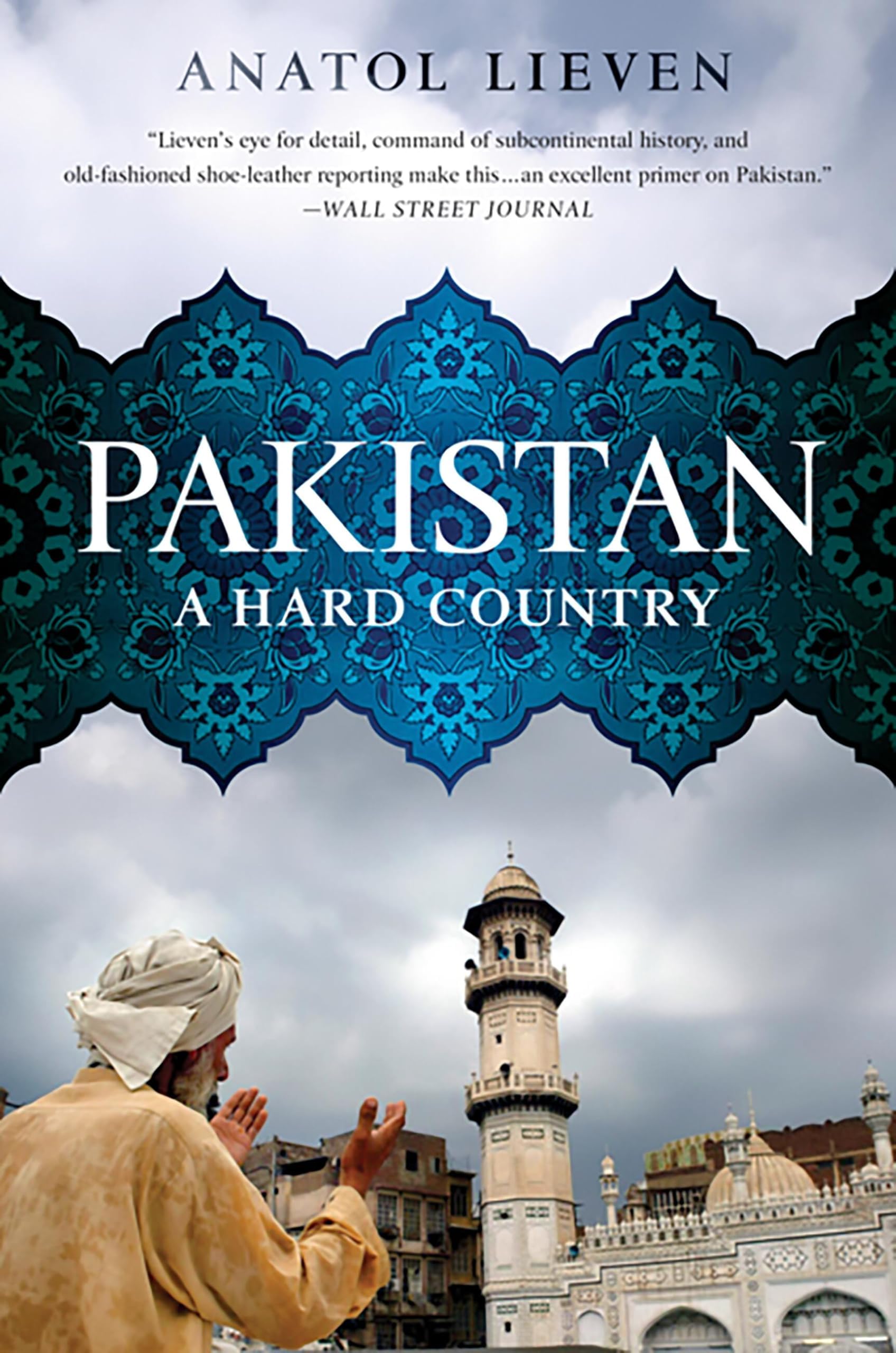
A sophisticated look at Pakistan—one of the most overlooked, yet vastly consequential, countries of modern times “Lieven’s eye for detail, command of subcontinental history and old-fashioned shoe-leather reporting make this in many ways an excellent primer on Pakistan.” — Wall Street Journal Named a Best Book of the Year by The Daily Telegraph and The Independent Since Pakistan’s formation as a modern nation state, onlookers have doubted its stability and longevity. Yet despite deep-rooted inequalities, corruption, vulnerability to floods and other ecological disasters, and the dangers brought on by extremist militant movements, Pakistan has managed to endure. It is more than the fragile and failed state so often portrayed by the media—but understanding its success requires looking at the country on its own terms, rather than measuring it by Western standards. Weaving together history and reportage from Lieven’s extensive travels as a journalist and academic, Pakistan is a magisterial investigation of this highly complex and profoundly misunderstood country. Review: Insightful Guide To A Country The U.S. Should Understand Better - This book is a truly illuminating study of modern Pakistan, a very large country about which far too little seems to be generally understood by U.S. analysts and policymakers. Pakistan is too often dismissed as a "failed state", and/or analyzed purely in terms of its value (or lack of value) to the U.S. as an ally in the "War on Terror". Instead, it is a highly complex amalgam of many different societies, where strong divisive pressures strain against powerful unifying forces. One of those is a broad anti-Americanism among the Pakistani people, due in large part to U.S. policies since 2001. In regard to Pakistan, Lieven argues, those policies should be reconsidered, given the long-term risks of increasing Pakistani instability. Anatol Lieven is admirably qualified to deal with the topic: he is both a journalist (reporting on Pakistan and Afghanistan for the London Times) and an academic/thinktank scholar. His book combines the readability and color of good journalism with the thorough research of scholarly work. It is also based on extensive interviews with many Pakistanis from all walks of life, and all regions of the country, which gives it an engrossing human dimension. The book starts off with an overview of the Pakistani system, which he describes as "weak state, stong societies". He examines the critical role of kinship and patronage relationships, from an anthropological as well as a political view. And he briefly reviews Pakistan's history since Partition. Here, I found myself turning to Wikipedia etc. to fill in missing links, since the author's review assumed more knowledge than I had -- possibly because I'm an American, a British reader would probably be more familiar with this material. Next, he turns to the basic structures of modern Pakistan -- justice, religion, politics, and above all the military -- devoting a chapter to each. Then, in a section which I found most useful, he devotes a chapter to each of Pakistan's provinces -- the Punjab, Sindh (and Karachi), Balochistan, and the Pathans (that is, the North West Frontier and the Federally Administered Tribal Areas). In each, he looks at the social and ethnic differences within and between regions, and at how that is reflected politically. The final section is on the Taleban -- the Afghani Taleban, the Pakistani Taleban, and the attitude of Pakistan's people and government to both. In his conclusion, Lieven says that "it has been above all the US-led campaign in Afghanistan which has been responsible for increasing Islamist insurgency and terrorism in Pakistan since 2001". Earlier, he has established that insurgency as perhaps the most critical problem facing Pakistan's government. U.S. policy with affect the way in which this plays out. All in all, I found this a very informative, interesting, and readable book, which I would strongly recommend to anyone interested in South Asia, or, indeed, in US policy. Review: Deep insights - This is a superb profile of Pakistan by a Westerner who has spent years living in and traveling around the country. The insights are deep, and they convey the complexity of Pakistani society with just the right balance of conceptual framework and revealing stories. This book should be required reading for every member of the U.S. government who has influence over America's relationship with Pakistan. The book has changed my own formerly simplistic view of Pakistan: I now see it as a critically important country that is struggling with very complex legacy issues - many of its own making, some resulting from its colonial past, and some caused by U.S. policy. Anyone wanting a more informed, insightful understanding of Pakistan should read this book.
| Best Sellers Rank | #228,519 in Books ( See Top 100 in Books ) #9 in Pakistan History #81 in India History #148 in Asian Politics |
| Customer Reviews | 4.4 out of 5 stars 328 Reviews |
A**S
Insightful Guide To A Country The U.S. Should Understand Better
This book is a truly illuminating study of modern Pakistan, a very large country about which far too little seems to be generally understood by U.S. analysts and policymakers. Pakistan is too often dismissed as a "failed state", and/or analyzed purely in terms of its value (or lack of value) to the U.S. as an ally in the "War on Terror". Instead, it is a highly complex amalgam of many different societies, where strong divisive pressures strain against powerful unifying forces. One of those is a broad anti-Americanism among the Pakistani people, due in large part to U.S. policies since 2001. In regard to Pakistan, Lieven argues, those policies should be reconsidered, given the long-term risks of increasing Pakistani instability. Anatol Lieven is admirably qualified to deal with the topic: he is both a journalist (reporting on Pakistan and Afghanistan for the London Times) and an academic/thinktank scholar. His book combines the readability and color of good journalism with the thorough research of scholarly work. It is also based on extensive interviews with many Pakistanis from all walks of life, and all regions of the country, which gives it an engrossing human dimension. The book starts off with an overview of the Pakistani system, which he describes as "weak state, stong societies". He examines the critical role of kinship and patronage relationships, from an anthropological as well as a political view. And he briefly reviews Pakistan's history since Partition. Here, I found myself turning to Wikipedia etc. to fill in missing links, since the author's review assumed more knowledge than I had -- possibly because I'm an American, a British reader would probably be more familiar with this material. Next, he turns to the basic structures of modern Pakistan -- justice, religion, politics, and above all the military -- devoting a chapter to each. Then, in a section which I found most useful, he devotes a chapter to each of Pakistan's provinces -- the Punjab, Sindh (and Karachi), Balochistan, and the Pathans (that is, the North West Frontier and the Federally Administered Tribal Areas). In each, he looks at the social and ethnic differences within and between regions, and at how that is reflected politically. The final section is on the Taleban -- the Afghani Taleban, the Pakistani Taleban, and the attitude of Pakistan's people and government to both. In his conclusion, Lieven says that "it has been above all the US-led campaign in Afghanistan which has been responsible for increasing Islamist insurgency and terrorism in Pakistan since 2001". Earlier, he has established that insurgency as perhaps the most critical problem facing Pakistan's government. U.S. policy with affect the way in which this plays out. All in all, I found this a very informative, interesting, and readable book, which I would strongly recommend to anyone interested in South Asia, or, indeed, in US policy.
T**S
Deep insights
This is a superb profile of Pakistan by a Westerner who has spent years living in and traveling around the country. The insights are deep, and they convey the complexity of Pakistani society with just the right balance of conceptual framework and revealing stories. This book should be required reading for every member of the U.S. government who has influence over America's relationship with Pakistan. The book has changed my own formerly simplistic view of Pakistan: I now see it as a critically important country that is struggling with very complex legacy issues - many of its own making, some resulting from its colonial past, and some caused by U.S. policy. Anyone wanting a more informed, insightful understanding of Pakistan should read this book.
D**C
Highly recommended as a first time reading on Pakistan
This is an excellent book for readers who don't know much about Pakistan. Through his dead-accurate insight into how things work(or don't work)in the country, Levin gives readers the right contextual framework to assess play by play developments in Pakistan today. The easy to read book is the best primer on Pakistan to date in my view. Informed readers on the other hand may find this book thin. If you understand Pakistan, the book might provide some interesting gossip at best, nothing more. But then again, if you truly understand Pakistan, you wouldn't need books to know what's going on.
S**A
How it works, if it does...
Personally, reading this book left me feeling that I know so much more about Pakistan than I did before, & that I understand so much more than I did before, & yet, because of the spiral, inter-connecting, complexities of its society, history, culture & the sheer inundation of all kinds of -isms at play, it left me feeling that I still cannot construct a cogent mental summary of what I had read. But that's me. And, I reckon that that's true of Lieven too. Meticulous in his research, & frank in his commentary - Lieven himself seems to find these rich connections, document-able, & still somehow nor summable into a whole. But that's not to take anything away from the great work that this book is. It is neatly, to the extent possible, divided in themes - introductory, evolution of Pakistan as a nation state; societal structures: justice, religion, military, politics, & then the states ending with a chapter on the Taleban. Note that economics is a glaring miss- except as a chapter in the introduction - but as you'll realize, this grouping is probably right from the point of view of what really are the defining structures in Pakistan, & economics, sadly, is not one of them. In chapter after chapter, Lieven weaves - for writes seems terribly limiting - the Pakistani experiences together. The concepts of justice are twisted by ideas of honor, religion divides;India unites & patronages mean a more equitable income distribution at the cost of a weaker state. Radicalism & progress are both thwarted by many plural & strong identities & the commentaries of many Pakistanis - diligently documented by Lieven - either add to this complexity or illuminate depending on your own ability to connect the deluge of dots together. There are certain attempts at humour in a largely serious work just as there is a certain amount of sympathy & empathy that emanates from Lieven about Pakistan where he seems to have spent a lot of time. This is particularly apparent to me, as an Indian, when Lieven, with some degree of regularity, compares the "negatives" in Pakistan with India, & finds them no worse than the Indian experience - & does not cite anything where India is perhaps comparatively better. I recommend this book highly because of its nuances & details & the insights its brings. The fact that stitching these isolated insights into a coherent model of a country remains a painstaking task says more about the country than about the book. And I would have loved to have seen more on Pakistani food, music & cricket. @souvikstweets
B**.
Thorough and Revealing
Anatol Lieven wrote an all encompassing and fascinating book about politics, family dynasties and provincial kinship corporations that defines the mysteries of Pakistan. I was intrigued to read about the lawlessness, the shady and corrupted officials and wondered why this country is not listed as a "failed state" since it has a weak and unresponsive government incapable of controlling the country at large. It somehow manages to survive amid the lack of civility, self-control and internecine violence between the multi-layered tribes, but it does not speak well for the largest Muslim country in the Arab world. The name Pakistan is an acronym, born in the mindset of students at Cambridge University in the early 20th century. The partitioning would give Muslims a home where they could escape the hardships of Hindu hegemony. However, as they sought religious freedom, it turns out that tribalism, corrupt government officials, recalcitrant and entrenched-rival family ties trumped a meaningful religious life based on the Koran and the reverence of Islamic sages. The British government, of 19th century India, played a role in the present day animosities over border disputes between India, Pakistan, Afghanistan and Iran. They may have erred in assigning administrative control of Kashmir to India since most of these sacred grounds are located in Pakistan. As Muslims departed from India and Hindus left Pakistan, pogroms ensued as they crisscrossed. The vision of Muhammad Ali Jinnah, founder of Pakistan, was to build an entirely new country that never before existed. Now, after more than six decades, it is apparent that the major focus of Pakistan is to have a military that is capable of defeating the Indian army. This option is preferred rather than policies geared to provide a competent and stable government that will broaden and strengthen the infrastructure to support the citizenry. This is a book worthy of reading and digesting because Pakistan plays a pivotal role in the quest for tolerance and peace in the region involving the Pashtuns, the Taliban, the Balochs and their interrelationship. Pakistan is indeed a hard country.
K**O
worth a read, but read alongside some other, better books on the region
Gets some stuff right, a lot right, but the whole book is written from the point of view of a academic journalist pontificating to government types as to whether Pakistan is going to become a islamist terrorist case. So many things are approached from that point of view. It gets annoying and stays annoying. It's worth a read, and if Anatol could bring up topics which went beyond "oh lets look at this aspect of Pakistan and it's contribution or lack of to breeding islamic terrorists" it would have been a great book. But repeatedly he fails to just look at the country or the people. He also fails to appreciate or look into the staggeringly huge impact other countries besides India have had on Pakistan's development - whether the USSR, America, China or Saudi Arabia outside of just funding terrorists, or the sheer extent of American money spent on influencing the Pakistan army and hence the very state itself. Edit: He does suggest that the only way to move forward for the country is for the outside world to do better with engaging and influencing Pakistan, the country and it's people, and not just the military. A few billion dollars goes a very, very long way in a poor country, something which Anatol glosses over to airbrush the many very negative effects of practically all American engagement with Pakistan so far. If you just read this book, without reading any of the other histories out there, you would walk away thinking that Pakistan pretty much ran the jihad against Russia and America and Saudi Arabia were just sparring buddies helping out Pakistan. Heck, even the movie Charlie Wilson's War will give you a better idea of that era than this book. It fulfills it's purpose at the end - to justify to western politicians the need to continue engaging Pakistan and to stop thinking about it solely in terms of terrorism, but it would have been nice if Anatol could have managed to that too. He could have had a great book if he could have taken off his islamic terrorist glasses. Still gets three stars because it's worth a read and Anatol has great insights into Pakistani politicians and how society is structured. And of course as the current hot Pakistan expert Anatol's viewpoints are important, more important than what may or may not be actually happening.
M**D
A terrific Update On Pakistan
Anatol Lieven's "Pakistan" is an amazingly informative and well written book. Part One introduces the nation and its modern history. Those who follow the shallow coverage of the western media will realize how much we have been misinformed. Part Two details the political, justice, religious and military aspects of Pakistani society. Part Three takes us through the large and varied regions of Punjab, Sindh, Balochistan and the Pathans. Lieven's descriptions of the great cities of Lahore and Karachi are sufficiently fascinating that they may reshape the views of persons not intimately familiar with the nation. Throughout the volume the author carefully distinguishes between the Afghan and Pakistan Taleban and this discussion is wrapped up in Part Four. This knowledge is critical to any understaanding of how the Pakistani government makes decisions regarding its own longtrm interests which sometimes may be in conflict with current and temporary interests of the United States. Lieven's prose brings the area and its issues into full focus.
C**O
Best book about Pakistan
Hands down the best book about Pakistan I have read.
K**I
Eye Opening And Entertaining
Most of what I have read about this complex nation dated back to the partition and more recently numerous newspaper and magazine articles. I knew that more in-depth knowledge was needed to evaluate current events affecting a nuclear power that has been increasingly called a "failed nation state". Fortunately, my first stab at this Anatol Lieven's Pakistan: A Hard Country. With a moniker like that I almost passed (looking for a Pakistani name) but downloaded a sample and knew this guy was not only knowledgeable but easy to read with a wry sense of humour. Events move fast in this area of the world and the timeline for this book ends mid-2010 yet everything the author predicted after that time has come to pass. If you have questions like: * is Pakistan now or in the future a "failed nation state"? * are drone strikes in Pakistan a good strategy"? *what happens when the west leaves Afghanistan? then this book is for you
M**N
A good and enlightening overview of Pakistan
Although a bit dated but nevertheless a fair and all encompassing overview of the state of Pakistan and it's myriad problems and how they affect its stability. Also looking at things from the Army's point of view and how they are justified in thei behaviour to a large extent. A good and enjoyable read.
F**N
Pakistan verstehen
Ein hervorragendes und lesenswertes Buch. Mit den Werten der westlichen Demokratien im Kopf ist es leicht, den Urteilen der (westlichen) Medien zu folgen und Pakistan zu verurteilen, nicht nur die Politiker sondern auch die pakistanische Bevölkerung. Lieven hat Pakistan oft besucht, hat reserchiert und Interviews mit Menschen mit verschiedensten backgrounds in allen Gegenden Pakistans durchgeführt. Er macht nicht nur verständlich, wie die Menschen denken, fühlen, urteilen sondern auch warum sie es so tun. Es zeigt, wie fragwürdig es ist, das Modell der westlichen Demokratie auf Pakistan anwenden zu wollen, (und während ich das gelesen habe, habe ich mich gefragt, ob das nicht auch für andere Länder in Asien und dem vorderen Orient zutrifft). Er geht auf die Bedeutung des Islams ein, wie Recht, Religion das Militär, die Politik funktioniert und auf die verschiedenen Provinzen, welch eine Reichhaltigkeit an geschichtlichen Entwicklungen und kulturellen Hintergründen. Abschließend ist eine ausführliche Analyse und Einschätzung des Taliban und Überlegungen, wie damit umgegangen werden sollte/könnte. Das Buch ist sehr gut reserchiert mit detaillierten Quellenangaben und reichhaltigen Literaturhinweisen. Es ist interessant geschrieben und durch die vielen Interviews lebendig und anschaulich. Sehr empfehlenswert.
M**N
Veramente ottimo
L'ho comprato in vista di un viaggio in Pakistan. E' estremamente interessante e ben scritto. Affronta tutti i temi per riuscire a capire un paese tanto diverso e mi ha molto aiutato anche durante il viaggio. Lo consiglio assolutamente.
D**A
MY ENEMY'S ENEMY'S ENEMY IS .... MY ENEMY!
This book is excellent as well as timely. It is full of clear thinking, colorful detail and rich anecdotes about a country whose fate is critical to the West. Anatole Lieven is a former Times journalist and a professor at Kings College. He has lived and travelled extensively in Pakistan over twenty years and interviewed hundreds of Pakistanis from all walks of life including many current and former military and intelligence personnel. He writes more like a journalist than an academic, in what might be termed a literate, colloquial style. ("The Pathans...(are like)... eighteenth century Scots without the alcohol'). "Pakistan: A Hard Country" is teeming with voices and vignettes, a mini metaphor for the country itself. Thus, for example, we witness a traditional pig hunt hosted by Sardar Mumtaz, scion of the Bhutto clan (the unspeakable in hot pursuit of the unhalalable?) and join an Anglican service in St Johns Cathedral in Peshawar where a few beleaguered Christians sing hymns beneath plaques commemorating Scottish and English soldiers killed by tribal insurgents one hundred and fifty years before. We meet such people as the moderate Islamist Colonel Abdul Qayyum ("The Pakistani army has been a nationalist army with an Islamic look"), Dr Shamim Gul, a grandmotherly police surgeon who takes a futile stand against honour killings ("sometimes the bodies fall to pieces and I have to put them back together') and Shehzad, a "Chekhovian steward" who almost drives his mistress mad ("What can I do? He harasses me unmercilessly but he has been with my father for ever."), Afzad Khan, an ANP politician whose nose seems "to be growing in...emulation of the epic, hereditary protuberances of (the ANP) ruling dynasty," and many others, including tribal chieftains and an anonymous member of a police "encounter" team charged with extra-judicial executions. Lieven's framing view is that Pakistan is a "negotiated state." It is a complex weave of local, regional, ethnic, religious, tribal and feudal interests held together by a perpetual cycle of "patronage "(which dissipates most of the country's tax revenues but unlike in, say Nigeria, where misappropriated funds end up in Western bank accounts, most trickles back down to the local economies). National governments, whether military such as those of Zia or Musharraf (for whom Lieven seems to have considerable respect), or civilian like those of the Bhuttos or the Sharifs, have only limited powers to control this patchwork. Equally, its fragmentation makes it unlikely, in Lieven's view, to succumb to an Islamist revolution. It will face terrorism and local insurrections, for sure, he asserts, but will not support a national rebellion. Despite its chaos, Pakistan is not a failed state like Somalia. Indeed, it works to a remarkable degree. While most Pakistani institutions are weak - to the extent that many Pakistanis turn to the harsh justice of tribal and Islamic, even Taliban, tribunals rather than waste time and bribes on the police and official courts- the army stands out as an exception. The Pakistani army is disciplined, proud, relatively well equipped and respected. It is a direct descendant of the colonial military, with its neat cantonments, comradely officers' messes, codes of honour and disportionate recruitment from the Punjab. Within the army, all local fealties are subsumed into a greater loyalty. Even General Zia's moves towards Islamification could not change its essential character. And yet, it is this very institution that alliance with the west is undermining. Most Pakistanis, including many soldiers, view the army as being forced into the position of fighting the West's unpopular war against fellow Muslims. The hair trigger pride of the generals is constantly being provoked by face-losing humiliation at the hands of its allies - this book was written prior to Abbottabad - and the sympathies of the more junior officer corps may be shifting as they are recruited from the more pious, lower middle classes rather than from the old, whisky-swilling elites. Much is currently being made of the duplicity of Pakistan and in particular its shadowy Inter-Services Intelligence agency in its relations with the US and its Western allies. Lieven notes that Pakistan's behavior is fully understandable. Its interests are only partially aligned with the West; its main security obsession is with India and the fear of "encirclement" by an India-friendly Afghanistan on its opposite flank. Thus it has been Pakistan's strategy to maintain links through the ISI with terrorist groups that could destabilize India and to keep its options open with the Afghan Taliban (the Pakistani Taliban are another matter). Lieven's advice to the US and its allies is essentially to back off - avoid forcing the army into a corner and allow Pakistan to sort out a peace in Afghanistan. The opposite strategy of further intervention could push Pakistan over the brink with almost unimaginable consequences for the West. Whether this is a workable strategy -given the nuclear stakes in the game -or not, Western policy-makers, from the President down, could do worse than to begin by reading this splendid and provocative book. P.S. One quibble: there is no map in the book - quite a shortcoming given its nature.
Trustpilot
2 weeks ago
3 weeks ago