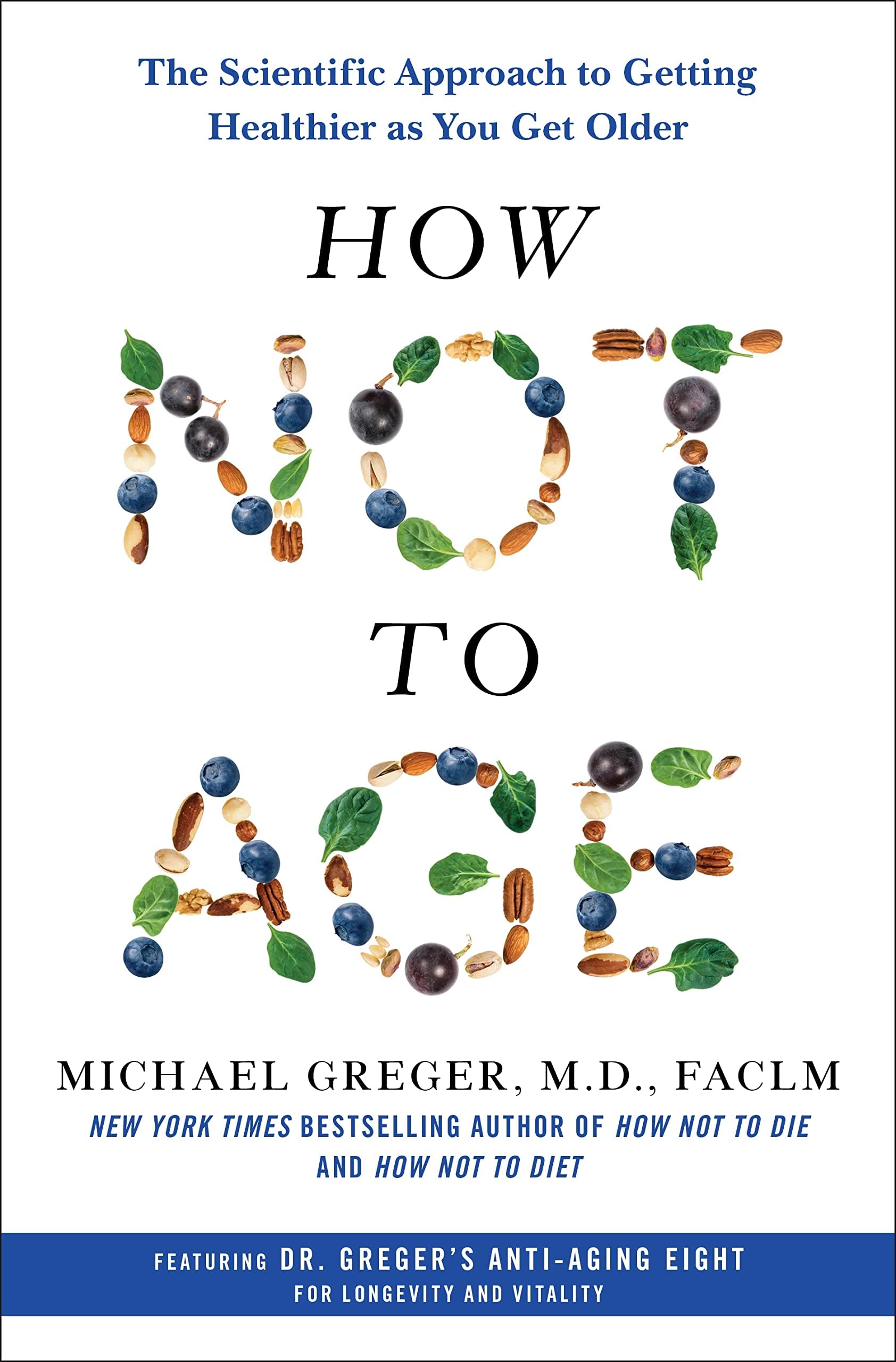
How Not to Age: The Scientific Approach to Getting Healthier as You Get Older
Product ID: 421951224
Buy anything from 5,000+ international stores. One checkout price. No surprise fees. Join 2M+ shoppers on Desertcart.
Desertcart purchases this item on your behalf and handles shipping, customs, and support to Iceland.
Instant New York Times Bestseller Uncover the evidence-based science to slowing the effects of aging, from the New York Times bestselling author of the How Not to Die series When Dr. Michael Greger, founder of NutritionFacts.org, dove into the top peer-reviewed anti-aging medical research, he realized that diet could regulate every one of the most promising strategies for combating the effects of aging. We don’t need Big Pharma to keep us feeling young―we already have the tools. In How Not to Age , the internationally renowned physician and nutritionist breaks down the science of aging and chronic illness and explains how to help avoid the diseases most commonly encountered in our journeys through life. Physicians have long treated aging as a malady, but getting older does not have to mean getting sicker. There are eleven pathways for aging in our bodies’ cells and we can disrupt each of them. Processes like autophagy, the upcycling of unusable junk, can be boosted with spermidine, a compound found in tempeh, mushrooms, and wheat germ. Senescent “zombie” cells that spew inflammation and are linked to many age-related diseases may be cleared in part with quercetin-rich foods like onions, apples, and kale. And we can combat effects of aging without breaking the bank. Why spend a small fortune on vitamin C and nicotinamide facial serums when you can make your own for up to 2,000 times cheaper? Inspired by the dietary and lifestyle patterns of centenarians and residents of “blue zone” regions where people live the longest, Dr. Greger presents simple, accessible, and evidence-based methods to preserve the body functions that keep you feeling youthful, both physically and mentally. Brimming with expertise and actionable takeaways, How Not to Age lays out practical strategies for achieving ultimate longevity. Review: Highly informative, evidence-based approach to health and longevity - In today's information age, discerning reliable health advice can feel like navigating a minefield. Powerful industries manipulate public opinion, while self-proclaimed "experts" peddle misinformation for personal gain. In this cacophony, Dr. Michael Greger emerges as a rare beacon of clarity and honesty, a modern-day saint battling a tide of myths, lies, and misleading information. Dr. Greger, a medical doctor and renowned nutrition researcher, champions an evidence-based approach to health and longevity. He cuts through the noise and focuses on what the science truly reveals. His book, "How Not to Age," is a treasure trove for anyone seeking to stay healthy and active into old age, prevent chronic illnesses, or simply access truthful, science-backed health information. Too often, we base our dietary choices on habit, emotion, or outdated traditions. Dr. Greger empowers us to understand what's optimal for our health and well-being, allowing us to make informed decisions. His factual and evidence-driven approach is precisely what I admire. This book is not only one of the best health and longevity books ever published, but also one of the best books of the year across all categories. If you're unsure about optimizing your diet or are seeking practical tips to elevate your nutrition, I wholeheartedly recommend "How Not to Age." Addressing some recent reviews, I find concerns about the font size and darkness unfounded. The book uses a standard, easily readable font size (approx. 10.5pt) and ink density, unlike the smaller fonts (~9pt) found in many mass-market paperbacks. While thinner stock paper is used to reduce weight and ensure the book's manageable size (over 600 pages), it doesn't compromise readability -- it actually makes the book easier to hold. For readers with vision limitations, the Kindle version offers adjustable font size. Anyone comfortable reading a typical book will have no issues with the hardcover. By highlighting Dr. Greger's work and addressing unfounded criticism, I hope to encourage readers to explore this invaluable resource and take their health into their own hands. Review: Wonderfully written, robustly science based nutrition - The best thing about Dr Greger's books is that he uses a huge number of scientific studies to help you decide the best nutrition and lifestyle choices for you, complete with plenty of Dad-joke style wordplay along the way. He teaches his readers why some studies are so trustworthy, while others fall short. You'll feel empowered to read some of the source studies yourself. And if you're not a details person, his book summarizes the findings of these studies, giving you solid evidence to help you make smart dietary choices. This book is an amazing resource for those of us hoping to live long, full, healthy lives. The foundation is what we've always known... healthy diet and exercise. Dr Greger recommends a diet of whole, minimally processed, plant foods. But this book goes far beyond that, giving you suggestions for the richest sources of the nutrients for longevity and dozens of life-promoting behaviors. He even goes into skin care! All of his suggestions are inexpensive and easy. Dr Gregor has transformed the way I live my life. If this is his first book you will read, order How Not to Die and How Not to Diet for the full journey. I really hope you enjoy them as much as I did.

| Best Sellers Rank | #15,652 in Books ( See Top 100 in Books ) #2 in Aging Nutrition & Diets #21 in Aging & Longevity (Books) #22 in Dementia |
| Customer Reviews | 4.7 out of 5 stars 2,063 Reviews |
M**.
Highly informative, evidence-based approach to health and longevity
In today's information age, discerning reliable health advice can feel like navigating a minefield. Powerful industries manipulate public opinion, while self-proclaimed "experts" peddle misinformation for personal gain. In this cacophony, Dr. Michael Greger emerges as a rare beacon of clarity and honesty, a modern-day saint battling a tide of myths, lies, and misleading information. Dr. Greger, a medical doctor and renowned nutrition researcher, champions an evidence-based approach to health and longevity. He cuts through the noise and focuses on what the science truly reveals. His book, "How Not to Age," is a treasure trove for anyone seeking to stay healthy and active into old age, prevent chronic illnesses, or simply access truthful, science-backed health information. Too often, we base our dietary choices on habit, emotion, or outdated traditions. Dr. Greger empowers us to understand what's optimal for our health and well-being, allowing us to make informed decisions. His factual and evidence-driven approach is precisely what I admire. This book is not only one of the best health and longevity books ever published, but also one of the best books of the year across all categories. If you're unsure about optimizing your diet or are seeking practical tips to elevate your nutrition, I wholeheartedly recommend "How Not to Age." Addressing some recent reviews, I find concerns about the font size and darkness unfounded. The book uses a standard, easily readable font size (approx. 10.5pt) and ink density, unlike the smaller fonts (~9pt) found in many mass-market paperbacks. While thinner stock paper is used to reduce weight and ensure the book's manageable size (over 600 pages), it doesn't compromise readability -- it actually makes the book easier to hold. For readers with vision limitations, the Kindle version offers adjustable font size. Anyone comfortable reading a typical book will have no issues with the hardcover. By highlighting Dr. Greger's work and addressing unfounded criticism, I hope to encourage readers to explore this invaluable resource and take their health into their own hands.
S**A
Wonderfully written, robustly science based nutrition
The best thing about Dr Greger's books is that he uses a huge number of scientific studies to help you decide the best nutrition and lifestyle choices for you, complete with plenty of Dad-joke style wordplay along the way. He teaches his readers why some studies are so trustworthy, while others fall short. You'll feel empowered to read some of the source studies yourself. And if you're not a details person, his book summarizes the findings of these studies, giving you solid evidence to help you make smart dietary choices. This book is an amazing resource for those of us hoping to live long, full, healthy lives. The foundation is what we've always known... healthy diet and exercise. Dr Greger recommends a diet of whole, minimally processed, plant foods. But this book goes far beyond that, giving you suggestions for the richest sources of the nutrients for longevity and dozens of life-promoting behaviors. He even goes into skin care! All of his suggestions are inexpensive and easy. Dr Gregor has transformed the way I live my life. If this is his first book you will read, order How Not to Die and How Not to Diet for the full journey. I really hope you enjoy them as much as I did.
C**L
A font of wisdom
There is a colossal amount of information here and is straightforward way through the morass of unsubstantiated or just plain incorrect nutritional advice floating around on the internet. The presentation is in a form that you can easily fact check, apply or disregard, possibly to your own detriment. There are a lot of practical suggestions in the text and I was completely shocked with revelations about what I had been assuming was my 'healthy' current diet. This book, along with "Game Changers" documentary have turned my head around about the nutritional value of meat/chicken/fish, diary, and eggs. It corrects a lot of bad media reporting on many nutrition issues and helps sort out fact from marketing or lobby influences related to common staple foods as well as some apparently useless supplements. Since reading the book, I have started re-reading and will probably have to plow through it several more times to grasp the nuances. I bought a hard copy as a desk reference however the Kindle version is great for searching topics and the 13,000 footnotes. I wish I had read a book like this 20 years ago but as Dr. Greger points out, it is never too late to consider dietary improvement. Since reading I have felt like an evangelist since I want to buy a copy for all the people I care about. The author has very little direct 'skin in the game' in the form of profit which helps the credibility of this text considerably. The facts summarized are backed by conventional science and I am relying on this book as some the best current information in summary form for anyone wanting a few more years of quality time!
W**N
Wonderful book, learn to help yourself feel better--all the way to the end.
Just love it. I found Dr. Greger about ten years ago, now I know dozens of evidence-based, nutrition-oriented physicians who help their patients HEAL themselves and live better lives. It's a TRUE SHAME that this is not how all physicians operate. It took me a lot of research to even consider going WFPB, but eventually I did. That was nine years ago and I still eat that way MOST of the time. What we poke into our faces has the power to cause us early breakdown, disease, and dimentia. And that's GREAT because what we poke into our faces ALSO has the power to heal us, sustain us wonderfully, and retain our mental clarity better than most everyone around us. WARNING! If you endeavor to learn to eat WFPB, go out of your way to make younger friends. You will outlive everyone your own age in most cases. I'm now 57 and take zero medications-Rx or otherwise, also I don't feel all crappy with random aches and pains and tireness like I did when I was in my 40's. Whole plant foods are that powerful if you give them the chance. It won't be easy, but it was much easier than I thought and the "return on investment" is WELL worth it. I felt better inside of a week and lost weight steadily for three months before stabilizing at my current weight. I'm still doing it nine years later because it certainly works for me. If I backslide, I suffer--so I don't do that much. Cheers
A**A
Life-Changing Insights for Health and Longevity
Dr. Michael Greger’s How Not to Age is a fantastic book that has truly transformed my life. By following the principles outlined in this book, I feel incredible, look younger, and have as much energy as I did in my 30s. As someone passionate about biohacking and tracking health metrics, I’ve found that Dr. Greger’s advice not only supports overall health and wellness but also promotes longevity. Using tools like an Oura Ring, Apple Watch, and blood marker analysis, I’ve seen measurable improvements in my health. According to these metrics, I’m now biologically younger—a true testament to the effectiveness of the strategies in this book. What’s more, simply having this knowledge has made a profound difference. As they say, knowledge is power, and understanding these principles naturally shifts your behaviors for the better. Yes, Dr. Greger strongly advocates for a plant-based diet, which some may see as a recurring theme in his work. However, there’s a good reason for this: a plant-based diet addresses many of the modern world’s health challenges, including obesity and, perhaps most importantly, aging itself. If you’re ready to take control of your health and make a lasting, positive change in your life, I highly recommend this book. Read it, apply its principles, and see the difference for yourself. You won’t regret it!
K**Y
A Data-Packed Manual for Longevity : A Type 2 Diabetic's perspective
Dr. Michael Greger’s How Not to Age is a monster of a book — meticulously researched, bursting at the seams with scientific studies, and laser-focused on the biology of aging. The core message is simple enough: eat plants, move your body, and steer clear of ultra-processed junk. But what makes this book stand out is the sheer depth of actionable insights, all backed by a mountain of data (not kidding, literally half of the book is dedicated to quoting references and studies). The Science of Aging — And How to Hack It Greger breaks aging down into eleven biological pathways — things like inflammation, oxidative stress, and glycation — then offers concrete ways to slow their roll. A few standout takeaways: 🧹 Activating Autophagy: Exercise (especially moderate-to-vigorous aerobic activity) helps the body clean out damaged cells. Certain foods, like wheat germ, mushrooms, and tempeh, also support this process. Intense fasting activates it as well, but if you and I have to choose between fasting on water only for 5 days straight vs exercising, I think the choice is clear. 🥔 Managing Glycation (Blood Sugar Spikes): Ever heard of the “nip-and-nuke” method? Apparently, chilling and reheating potatoes cuts their glycemic impact by 40%. Spices like turmeric and cinnamon also help stabilize blood sugar. This is a great hack because you can chill your potato, and eat it too (haha). 🔥 Fighting Inflammation: Turmeric, ginger, and garlic top the anti-inflammatory food list, with green and black tea taking the crown for beverages. Fiber — especially from legumes and whole grains — plays a massive role in keeping chronic inflammation in check. Apparently, our ancestors, the earliest humans used to get around 80 grams of fiber a day. I can bet that you barely get 30 grams. What I personally do, but something the good Doctor doesn’t recommend, is drink psyllium husk. 🔋 Boosting Mitochondrial Health: Eating less methionine (mostly found in animal products) and exercising regularly makes mitochondria more efficient, reducing cellular stress. Mitochon-what? It is the power generator of your cell. The more efficient it is, the better for you. 🌱 The Power of Hormesis: Stress, in the right doses, makes us stronger. Turns out, this applies to plants too. Wild strawberries, drought-stressed grapes, and other “stressed” plants contain more antioxidants and phytonutrients than their pampered, conventionally grown counterparts. We have been told, time and again, that what doesn’t kill you makes you stronger, right? A Realistic Look at Diet and Longevity Greger is firmly in the plant-based camp, arguing that a predominantly plant-based diet is the key to slowing aging. The science is solid, but as someone managing Type 2 diabetes, I know that a fully plant-based diet can be tricky because of its higher carb content — even from “healthy” sources like legumes and whole grains. My assertion is backed by real data, albeit just my own. I joined a group of my colleagues for a one month vegan challenge, and I was wearing a continuous glucose monitor during the challenge. Not only did I notice a lot of blood spikes after meals, my A1C level also went up. I am back to eating dairy and eggs, but I am trying really hard to limit my animal food intake to 20% or less of my total calories. That said, his advice is totally doable with a few tweaks, like prioritizing low-glycemic plant foods and syncing exercise with meals to help regulate blood sugar. His approach aligns closely with the Blue Zones way of eating — mostly plants, daily beans, minimal processed food, and a cutback on animal products. Some of his recommendations, like ditching eggs and dairy entirely, might feel extreme, but the core principle — eat real food, mostly plants, and not too much — is solid and adaptable for most people (Michael Pollen’s famous 3 rules for eating). Final Verdict How Not to Age is an invaluable guide for anyone looking to extend their healthspan. You don’t need to follow every single recommendation to benefit — just implementing a few of Greger’s strategies can make a real difference. Aging is inevitable, but how fast (and how well) we age, is something we have a lot more control over than we think. Moreover, I beg you, to eat real food, mostly plants and not too much. Not for the planet, not for PETA, but for YOU (would be great if you did it for the planet and for the love of animals)!
R**T
Michael Greger's How Not to Age book
Packed with information, includes links to videos and more information that couldn't fit in the book, easy to read. Dr. Greger also has links on his website that point you to the studies sited in his book.
C**R
Gift to the world
Applying Dr. Gregor’s recommendations from his earlier book “How Not to Die” took me from one illness (including cancer) to another to being vibrantly healthy, energetic and astonishing my doctors that I’m so healthy and youthful “at my age.” My cardiologist told me I didn’t need to come back. My dermatologist told me I didn’t need to come back. Even my eye doctor told me I didn’t need to come back, despite my family history of macular degeneration. I’m going back to the eye doctor anyway because I’m overly cautious. I aced my cancer checks and no longer need to go back there either. Yea! (Gregor doesn’t claim to cure cancer-or anything else-but diet changes can substantially reduce risk.) This book updates his earlier book and takes it to a whole new level. Read a little every day and it will probably be the highest paying job you ever have in terms of the medical, prescription drug and eventual nursing home bills you’ll save. I’ve already cut out one supplement, after learning from this book it might be harmful, both protecting me from the supplement marketers and saving me some cash. And you’ll look better! Think about it-do sick people look good? Plus learning to fix delicious, healthy food is way more fun than sickness, surgery and nursing homes. (I like Dr Fuhrman’s “Eat to Live Quick and Easy Cookbook” TOO for that.) Part IV of this book sums up the big eight things that make the most difference, so some people will probably start there. It seems okay to skip around in this book, but, I’m not exaggerating, every word in this book will pay off for you. I’m also listening to it on Audible, which is helping me get through it because I can listen to it while driving, cooking, etc. I’m finding I listen on Audible and go back to the book for details I forgot and to use the index to find something I’ve wondered about. The index is detailed and very useful to me. I agree with another reviewer that this is a book to be read slowly. It’s too much to incorporate the information all at once, but each piece of it life enhancing. Please invest in yourself and read this book. You can probably find it at your local library, including an audio version, if you want to check it out before buying it. His free podcasts and videos are excellent too, but this book gives the big picture. I think it’s worth a free audible trial, if you don’t have Audible, to listen to it. I set Audible at 75% speed with parts of this book, to slow down the information that’s new to me and more difficult to take in. I’ve been sick and I’ve been healthy- and healthy was way better, and worth the time and effort of reading Dr. Gregor’s books. Update after 6 months: 1. Some of my changes since reading this book include putting coffee back on my menu, and even decaf and instant is great. But not dark roast! I guess the higher heat destroys some of the beneficial stuff. And paper filtered is way better. 2. I’ve tweaked some foods to increase my spermidine intake, such as eating more tempeh and opting for green peas and lentils more often. And, no, spermidine is not what it sounds like, but it’s very beneficial. 3. I eat at least a half cup of strawberries every day because they are for now the highest known source of fisetin. Fisetin helps prevent DNA damage beyond repair. Blueberries and blackberries are still on the menu, of course, but not for fisetin.
B**A
An Insightful Guide to Aging Well
How Not to Age: The Scientific Approach to Getting Healthier as You Get Older is an outstanding read that offers a refreshing and practical approach to the science of aging. The author provides a well-researched and accessible guide to understanding how we can maintain our health and vitality as we age. What I particularly appreciate about this book is its evidence-based approach. The author presents complex scientific concepts in a way that is easy to understand and apply to everyday life. The strategies and tips offered are grounded in solid research, making the advice not only credible but also actionable. The book covers a wide range of topics, from diet and exercise to mental health and lifestyle choices, offering a comprehensive view of how various factors contribute to healthy aging. Each chapter is filled with practical recommendations that are both realistic and achievable, allowing readers to make gradual but impactful changes in their lives. Moreover, the writing is engaging and motivating, which makes the book not just informative but also enjoyable to read. It provides a sense of empowerment, encouraging readers to take control of their health and well-being with confidence. In summary, How Not to Age is a valuable resource for anyone looking to improve their health and quality of life as they age. Its scientific approach, combined with practical advice and a positive tone, makes it a must-read for those who want to embrace aging with a proactive mindset. Highly recommended for anyone interested in maintaining their vitality and health over the years.
T**R
Big fan of Greger
Do you know all the proceeds of the book go to charity! I love Greger's altruistic approach to health and his obsession of poring over 1000s of publications regularly. Coming to the content most of it I'm already familiar from the talks by Greger on YouTube. But this gives a detailed overview of the same breaking it down for each and every organ and disease.
B**Y
Health
Highly recommend Dr. Greger’s book. A must read for all of you conscious people.
T**N
Best Dr. Greger book so far.
If you want to sprinkle your vegan lifestyle with (real) science, this is the perfect tool. Easy read. The trademark Dr. Greger humor also helps.
G**L
Science and facts only.
Great book by a series of accredited physicians and research scientists. No hype. Just scientifically proven facts.
Trustpilot
2 days ago
3 weeks ago