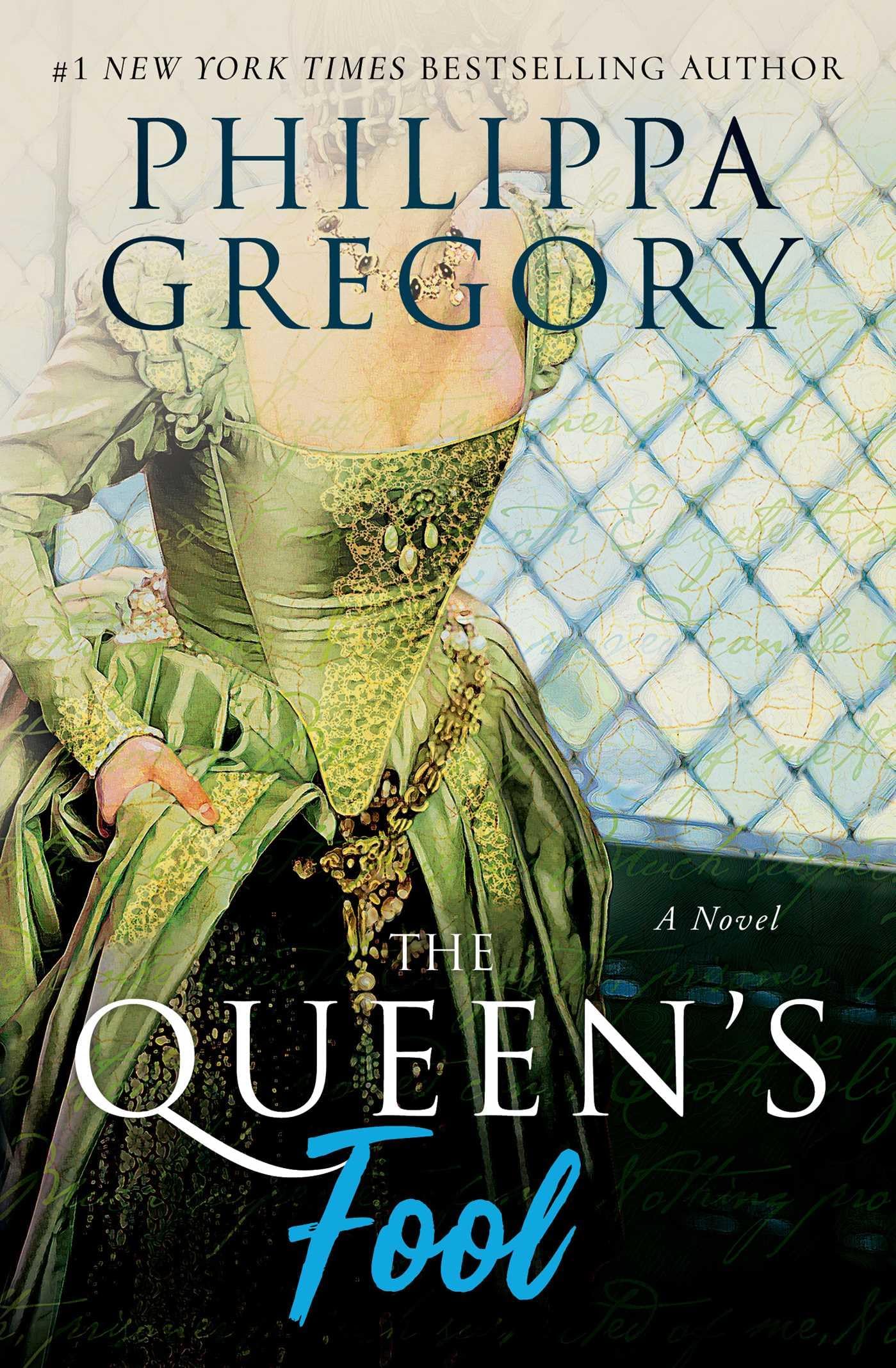
The Queen's Fool
Product ID: 4098046
Buy anything from 5,000+ international stores. One checkout price. No surprise fees. Join 2M+ shoppers on Desertcart.
Desertcart purchases this item on your behalf and handles shipping, customs, and support to Iceland.
#1 New York Times bestselling author and “queen of royal fiction” ( USA TODAY ) Philippa Gregory weaves a spellbinding tale of a young woman with the ability to see the future in an era when destiny was anything but clear. Winter, 1553. Pursued by the Inquisition, Hannah Green, a fourteen-year-old Jewish girl, is forced to flee with her father from their home in Spain. But Hannah is no ordinary refugee; she has the gift of “Sight,” the ability to foresee the future, priceless in the troubled times of the Tudor court. Hannah is adopted by the glamorous Robert Dudley, the charismatic son of King Edward’s protector, who brings her to court as a “holy fool” for Queen Mary and, ultimately, Queen Elizabeth. Hired as a fool but working as a spy; promised in wedlock but in love with her master; endangered by the laws against heresy, treason, and witchcraft, Hannah must choose between the safe life of a commoner and the dangerous intrigues of the royal family that are inextricably bound up with her own yearnings and desires. Teeming with vibrant period detail and peopled by characters seamlessly woven into the sweeping tapestry of history, The Queen’s Fool is a rich and emotionally resonant gem from a masterful storyteller. Review: Excellent historical fiction - I remember being extremely impressed by Ms. Gregory's first novel, Wideacre, a sprawling family saga whose protagonist made Scarlett O'Hara look like a Girl Scout. Although she has been writing historical novels for a few years, this is the first one I have read, and I enjoyed it immensely. Hannah Green (nee Verde) and her father are secret Jews (at least to the extent that Judaism has been passed down to them) who have fled from Spain after the arrest and burning of Hannah's mother, and Hannah, who has "the Sight," is brought by John Dudley, the Protector of the young Edward VI, to the king's court as a "holy fool" and spy. Dazzled by Dudley's son, Robert (the future favorite of Queen Elizabeth I) and caught up in the intrigues of court life, Hannah lives through the turbulent final months of Edward's reign, the short-lived attempt to place Lady Jane Grey upon the English throne, and the five-year reign of "Bloody Mary." Torn between conflicting loyalties to those she serves and to her family, including her betrothed, later her husband, she moves back and forth between the public and private spheres, giving a unique perspective on both the historical events and on the lives of "the People," as she calls the Jews. She moves from resentment to acceptance and finally to embrace of her responsibilities to both family and faith. To me, this book is unusual in that it offers a rare sympathetic and primary view of Queen Mary. Although those that focus on Elizabeth usually do portray Mary with some understanding, she is always subordinate to her younger sister, who outshines her in fiction as she did in life. Hannah's view of Elizabeth, on the other hand, while sometimes admiring, sometimes censorious, is much more objective than her warm regard for Mary. Perhaps it is her status as a Jew, but she seems able to look upon both as living, breathing women rather than as the symbols of religious and political power that they can often be to other characters. Other historical personages also have depth and ambiguity, including Lord Robert, who is ambitious and a practiced seducer but ends up having a real regard and respect for Hannah. I thought she was a little hard on Robert's wife Amy, portraying her as not only virtually illiterate and incurious but also mentally unbalanced. Hannah and her family, particularly her faithful husband and her scholarly father, also feel like real, vibrant people, although her disapproving in-laws may hew a bit too closely to stereotypes. I would like to have seen more exploration of the motivations and background of Daniel's mother. I don't know if Ms. Gregory has any real-life connection to Judaism, but the thing that I found most powerful about The Queen's Fool, apart from the scene where Hannah finds herself unable to burn her father's "heretical" books, even to protect herself, is the haunting sadness of a culture that is being lost generation by generation, as her father and mother-in-law struggle to remember the prayers and practices that have been passed down to them, and to pass them on to their children. Review: A fool in every sense of the word... - The Queen's Fool is the coming of age story of Hannah Green, a 14 year old Jewish girl, who lived during the time of the Inquisition. Hannah and her Father must flee Spain in order to avoid persecution, and wind up living in England. Hannah has the unique gift of "Sight", the ability to predict the future. When her talent is discovered by Robert Dudley, of the powerful Dudley family, Hannah finds herself "Begged as a Holy Fool" to the court of King Edward, and then his successor, Queen Mary. Hannah cares deeply for the Catholic Queen, but also admires the Queen's sister, the Protestant Princess Elizabeth. The two sisters are at odds with one another, for both political and religious reasons. Hannah is asked to spy for both sisters on different occasions, and her loyalties are divided. She makes some questionable decisions at times, and consequently, puts her Father, and the family of her betrothed, Daniel, at risk. There are situations in this novel that are far-fetched at times, but somehow it all works. (It is fiction, after all!) It is very interesting to view the relationship of Queen Mary and Princess Elizabeth through the eyes of someone who cares for them both. Hannah's story is very intriguing as well. She is a young girl in search of a Mother figure, a home, love, and religious acceptance. In the beginning of the story, she seems lost, but through her experiences, and those of the royal sisters, Hannah discovers who she is, and the woman she wants to become. Overall, this book was very touching, and I found myself thinking about it for some time. Highly readable and recommended!!
| Best Sellers Rank | #249,418 in Books ( See Top 100 in Books ) #52 in Renaissance Historical Fiction (Books) #1,954 in Historical British & Irish Literature #2,518 in Literary Fiction (Books) |
| Customer Reviews | 4.4 out of 5 stars 6,193 Reviews |
L**K
Excellent historical fiction
I remember being extremely impressed by Ms. Gregory's first novel, Wideacre, a sprawling family saga whose protagonist made Scarlett O'Hara look like a Girl Scout. Although she has been writing historical novels for a few years, this is the first one I have read, and I enjoyed it immensely. Hannah Green (nee Verde) and her father are secret Jews (at least to the extent that Judaism has been passed down to them) who have fled from Spain after the arrest and burning of Hannah's mother, and Hannah, who has "the Sight," is brought by John Dudley, the Protector of the young Edward VI, to the king's court as a "holy fool" and spy. Dazzled by Dudley's son, Robert (the future favorite of Queen Elizabeth I) and caught up in the intrigues of court life, Hannah lives through the turbulent final months of Edward's reign, the short-lived attempt to place Lady Jane Grey upon the English throne, and the five-year reign of "Bloody Mary." Torn between conflicting loyalties to those she serves and to her family, including her betrothed, later her husband, she moves back and forth between the public and private spheres, giving a unique perspective on both the historical events and on the lives of "the People," as she calls the Jews. She moves from resentment to acceptance and finally to embrace of her responsibilities to both family and faith. To me, this book is unusual in that it offers a rare sympathetic and primary view of Queen Mary. Although those that focus on Elizabeth usually do portray Mary with some understanding, she is always subordinate to her younger sister, who outshines her in fiction as she did in life. Hannah's view of Elizabeth, on the other hand, while sometimes admiring, sometimes censorious, is much more objective than her warm regard for Mary. Perhaps it is her status as a Jew, but she seems able to look upon both as living, breathing women rather than as the symbols of religious and political power that they can often be to other characters. Other historical personages also have depth and ambiguity, including Lord Robert, who is ambitious and a practiced seducer but ends up having a real regard and respect for Hannah. I thought she was a little hard on Robert's wife Amy, portraying her as not only virtually illiterate and incurious but also mentally unbalanced. Hannah and her family, particularly her faithful husband and her scholarly father, also feel like real, vibrant people, although her disapproving in-laws may hew a bit too closely to stereotypes. I would like to have seen more exploration of the motivations and background of Daniel's mother. I don't know if Ms. Gregory has any real-life connection to Judaism, but the thing that I found most powerful about The Queen's Fool, apart from the scene where Hannah finds herself unable to burn her father's "heretical" books, even to protect herself, is the haunting sadness of a culture that is being lost generation by generation, as her father and mother-in-law struggle to remember the prayers and practices that have been passed down to them, and to pass them on to their children.
M**R
A fool in every sense of the word...
The Queen's Fool is the coming of age story of Hannah Green, a 14 year old Jewish girl, who lived during the time of the Inquisition. Hannah and her Father must flee Spain in order to avoid persecution, and wind up living in England. Hannah has the unique gift of "Sight", the ability to predict the future. When her talent is discovered by Robert Dudley, of the powerful Dudley family, Hannah finds herself "Begged as a Holy Fool" to the court of King Edward, and then his successor, Queen Mary. Hannah cares deeply for the Catholic Queen, but also admires the Queen's sister, the Protestant Princess Elizabeth. The two sisters are at odds with one another, for both political and religious reasons. Hannah is asked to spy for both sisters on different occasions, and her loyalties are divided. She makes some questionable decisions at times, and consequently, puts her Father, and the family of her betrothed, Daniel, at risk. There are situations in this novel that are far-fetched at times, but somehow it all works. (It is fiction, after all!) It is very interesting to view the relationship of Queen Mary and Princess Elizabeth through the eyes of someone who cares for them both. Hannah's story is very intriguing as well. She is a young girl in search of a Mother figure, a home, love, and religious acceptance. In the beginning of the story, she seems lost, but through her experiences, and those of the royal sisters, Hannah discovers who she is, and the woman she wants to become. Overall, this book was very touching, and I found myself thinking about it for some time. Highly readable and recommended!!
P**O
Wonderful and hard to put down!
Great character development, beautiful descriptions. The story makes you feel like you are part of it, anxiously waiting for the next chapter. I read into the wee hours several nights!
S**8
Queen Mary, Princess Elizabeth, and Hannah
It is the middle 1500s. Religious dissent and religious persecution rage across Europe. The Hugenots are persecuted in France. The Grand Inquisitor of Spain has Jewish people burned at the stake. The charge of heresy is rampant. In the context of the times, heresy means any speech, any body language (such as looking away during Mass or reading the Bible in English), can bring a charge of heresy with burning at the stake to follow. Any speech or action whatsoever, however innocent, is suspect as the Protestant factions grow and threaten the power of the Roman Catholic Church. In England, there is the problem of heresy as religious persuasions continue back and forth, setting the Crown itself swaying precariously between supposed heirs. Many of the Lords support one religious faction and when that trend is persecuted, the same Lords follow the new trends of the latest "in" religious group. Some don't make the change quick enough, not reading the changing wind well enough or actually and rarely having a religious conviction. They are beheaded, en masse. All this brings us to Gregory's brilliant narrative structure chosen for "The Queen's Fool." The narrator's name is Hannah Verde (in England, changed to Hannah Green). She lived in Aragon, Spain, with her mother and father. As a child, she saw her mother burned at the stake as a heretic. Her mother and father are Marranos, who are Jews who converted to Christianity but in the privacy of darkened homes, practice Judaism. Her mother was somehow found out and after her burning, the father escapes with Hannah, dressed as a boy (much safer for a young girl at that time), and they live temporarily in many European countries. Finally, some members in the Netherlands arrange documents for their flight to England. No European country wanted Jews at that time, so their lives in England are lived on the sword edge of survival. Her father is a rare book seller and has hundreds of manuscripts for sale and perusal which are outlawed as heresy by the current religious faction in England. Hannah's great adventure as observer of the English Court begins inadvertently, when she is standing outside her father's bookstore talking passersby into the shop. She sees three Lords approaching. In the bookstore, she asks two of them where the third one is. There have only been two of them and they question her about the third one she has seen. Hannah has a gift. She has Second Sight, which comes and goes at its own volition. It cannot be forced. Other people saw two Lords. She saw three. One of the two is Lord Robert Dudley, of the House of Northumberland, which house is in the ascent in the Royal hierarchy. He is excited about her second sight and dressed as a boy, she ultimately enters the service of Queen Mary and Princess Elizabeth as a "fool" but actually as his spy. The further machinations of the grasping of the Throne are narrated by Hannah, as she goes back and forth between the two heirs, Mary and Elizabeth, and spies for Robert Dudley. She becomes the Queen's Fool and in the background, is used for her second sight and her spying abilities. Now, what is a Queen's Fool? A Fool was dressed in a special costume of differing colours on the arms, the legs, and wore funny hats. If you've read Shakespeare, you will know that a Fool was not only to lighten the load of the Crown and make the Monarch laugh, but he was also a trusted companion, someone the Monarch could be himself with, someone there who wanted no political gain, someone there to show him he was not alone. The fool was loyal because his livelihood - and his head - depended on it. The Fool was no fool. Hannah is used to hiding her real identity and feelings, from having been persecuted and dashing through one country after another to find sanctuary, and the horrifying memory of seeing her mother burned in front of her. She is used to dancing over the flames and manages to satisfy all parties without damaging herself. The narrative is brilliant, since we see the events unfold through the eyes of an outsider, as we are outsiders, reading about it all. It gives a sense of immediacy and the pages fly by while the reader cannot seem to separate herself from the narrative. It also straightens out a lot of confusion about these events. I remember taking this history in school. I was bored, confused and really didn't care. I memorized enough to pass the test and thought - Ho Hum! about it all. But reading Gregory, I am not only fascinated by the historical facts, but understanding them and can hardly wait to turn the page to see how it all turns out, as she also explores other important historical events, such as the battle for Calais, in which the English lost their French stronghold. Of course, Hannah is also witness to this. The author must be commended for inserting "the people" in the events and showing their reactions. History often is just a story of wars with dates and the upper-upper class. Memorize it all and one can pass the test. But I used to think - what of the people? What did they think? Did they react? How did they react? With all of Gregory's books, there is no need to wonder. The people have pride of place in this history and Gregory documents it. One note of caution. Hannah, unlike historical figures in the book, is fictional. But the events that shape her life are historically accurate. I bought the pocket book editions of the books of the Tudor era at Amazon. It was actually a mistake. I was looking for something else and found these gems. So I bought the whole series and have not enjoyed reading about history this much for many decades. Don't make my mistake. Go purposely to find them. Buy them. Turn off the tv. Forget the housework (it will still be there when you're not). Simply enjoy,
S**Y
Good background, "cover" story a little thin
Philippa Gregory does a really good job with the nuanced picture of Queen Mary whose life was so uneven and dysfunctional. She also does a very good job describing the fear in the general population during the years of Queen Mary's reign. As described, there were regular, frequent burning of heretics ("heretics" according to Queen Mary and her advisers) and it has been described by historians as a reign of terror. It was especially dangerous for Jews as described by the book's protagonist. So those aspects of the book create an important and realistic backdrop for the book. However, there are two things wrong with the book - first, the "cover" story about the young girl who plays the Queen's fool is fairly unbelievable. Secondly, the book lacks character depth - in a good book you should know how the characters feel because of what they say and do, not because the narrator has to continually tell you. I felt like Hannah was inconsistent. But, I loved her spunk! After reading this book (which we read for our book club) I read a non-fiction history, "The Wives of Henry the Eighth" by Martin Hume. This book provides the background to significantly help understand the deeply unstable environment in which Queen Mary was raised. It vividly evoked the terror and horror of Henry VIII's reign as well as the egocentric, un-motherly behavior of Katherine of Aragon, Queen Mary's mother. If you want to enjoy The Queen's Fool more, first read "The Wives of Henry the Eighth".
P**S
Great author.
Such a fun read thrown together with some fact.
K**R
The Best in the Tudor Series
Hannah is no fool but I wondered why she would return to Bloody Mary after Mary told her even she, Hannah, would name names to root out heresy. The main character of Hannah Verde ne Green Carpenter is fictional and the most entertaining in the series. Hannah is a long disguised Jew who at first, doubted her faith. I found the background of her exile from Spain during the Inquisition to be thoughtfully portrayed. Her mother was burned at the stake. Hannah and her father, a printer, scholar and book seller made it to England where they believed they were safe from the fires. She ended up begged as a Holy Fool to young King Edward by Robert Dudley. Her time disguised as a boy was a fun insertion and her dislike of gowns and ridiculous high heels something women can identify with today. Of course she has a love interest and exciting times when she and her family flee England to Calais, the last English land on French soil. I hope we will have a follow up book to continue Hannah's story...as the ending makes a fine point to begin the next story. I also like the royalty in the background as seen through Hannah...a needed change. Overall, my favorite Tudor book.
J**Q
One of my favorites
I loved this book. My favorite Gregory novel is The Other Boleyn Girl, and this comes a close second. Other reviewers have criticized the author for her portrayals of Mary and Elizabeth in this book, but everyone needs to keep in mind that we are viewing these women through Hannah's eyes, and this is fiction, not a historical textbook. Hannah is a very likeable character, who struggles throughout the book to come to terms with her gift of sight, her religious faith and her place in the world as a woman. In this book, as in The Other Boleyn Girl, it's the slow-building, passionate love story that touches me the most. The love story of Hannah and Daniel is very well-written and is my favorite part of the book. It is easy to see what draws them to each other and what keeps them apart. Though the road is bumpy, I was very pleased with the ending. My only complaint would be that I thought the book ended a few pages too soon. (In fact, I would love to see a sequel about the next chapter in Hannah's life.) After everything Hannah went through to discover what she truly wanted, and after everything she went through to get it, I would have liked to see a more passionate ending and a little more assurance that Hannah's future would be as happy as I wanted it to be.
U**N
this is one of the most moving ,exciting books I’ve read
This book was one of the most exciting and moving books I’ve read in a long time. I’ve read a few other written by the author.
L**A
The queen's fool
Gosto muito dos livros dessa autora, seus leves, apesar de históricos, são romanceados, ideais para serem lidos ou fazendo esteira, ou antes de dormir.
K**L
Belle histoire
Belle histoire touchante. On tremble pour Anna Green, mais ce personnage intéressant permet aussi au lecteur de découvrir Mary Ière d'Angleterre, personnage historique franchement flippant. Excellent livre.
T**K
Really good book.
This book had a lot more fiction then most of her other books, so that too me was disappointing. But it was still a very good book! I know her books are fiction but there are a lot of historical accuracies in them.
S**E
Grossartig !
the queens fool von philippa gregory habe ich inhaliert ! die schriftstellerin ist world class ! perfekte leselektüre für frauen ... für den urlaub. fesselnd - authent - weise.
Trustpilot
1 week ago
1 day ago