We remain fully operational. Our teams are working around the clock to ensure your deliveries continue safely.

DOWNLOAD THE APP


Customer Services
Copyright © 2025 Desertcart Holdings Limited
DOWNLOAD THE APP
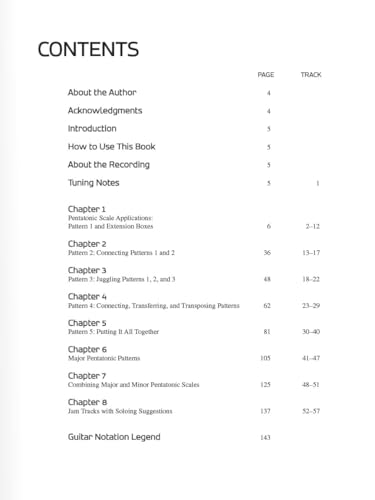
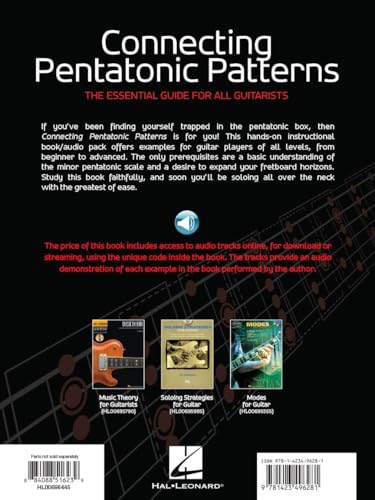
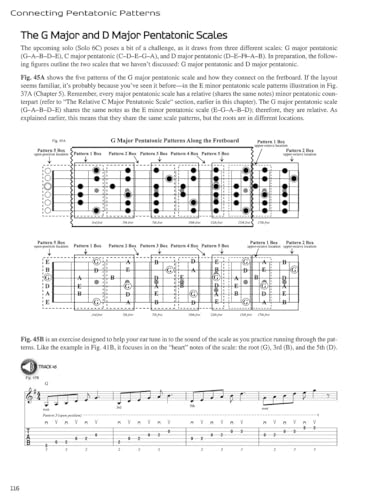
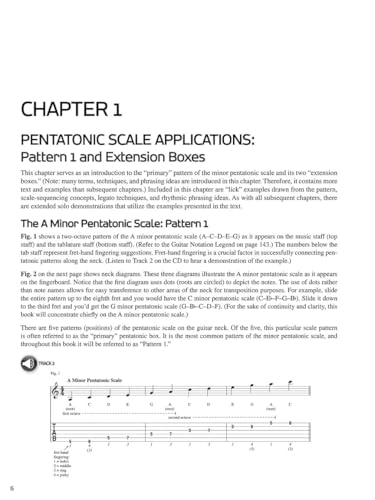
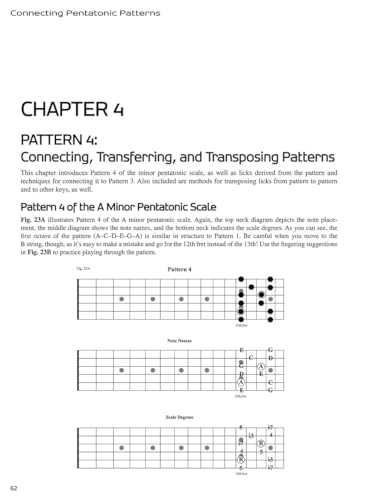
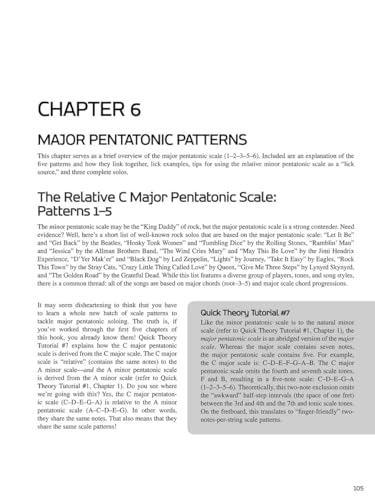
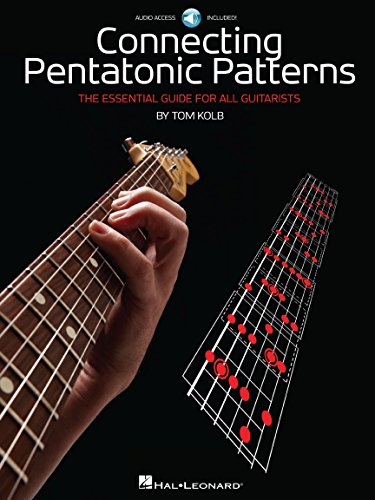

Connecting Pentatonic Patterns – The Essential Guide for All Guitarists | Guitar Sheet Music Songbook with Online Audio | Hal Leonard Guitar Tablature and Music Theory Instruction | By Tom Kolb [Kolb, Tom] on desertcart.com. *FREE* shipping on qualifying offers. Connecting Pentatonic Patterns – The Essential Guide for All Guitarists | Guitar Sheet Music Songbook with Online Audio | Hal Leonard Guitar Tablature and Music Theory Instruction | By Tom Kolb Review: Core Knowledge for Blues, Rock and Jazz Guitarists - This book provides a logical approach to expanding the basic minor pentatonic scale. You will learn the five shapes of the minor pentatonic and how to connect them in digestible steps, greatly increasing your fret board knowledge in the process. Each chapter explains a pattern and how it is connected to the previously learned patterns. Then provides numerous licks to help you understand how to incorporate it into your playing. The chapters end with 2 full solos, one for beginner/intermediate players and another for more advance players, to put the knowledge into a larger musical context. The solos also have measure by measure breakdowns explaining how the concepts are applied. Most of the examples are in a blues/rock vein but the material is very translatable to other styles. The patterns are tackled in the form of minor pentatonics but later chapters discuss major pentatonics and how the same patterns can be used in that context. The patterns and solos are presented in standard notation and tablature and are meticulously annotated with fingerings, pick direction, palm mutes etc. Very few guitar books are notated this well and NONE give you tips on how to reproduce the tone you are hearing in the examples. Each lick gives you a notation like (bridge humbucker; medium/light overdrive) and the full solos at the end of the chapter offer additional tone tips such as gain, EQ and effect settings.This is invaluable information for beginning/intermediate players who are struggling with how to reproduce the sound that they hear on other people recordings. This is a great resource to get you proficient at playing major and minor pentatonics. If you want to take it further I suggest Pentatonic Khancepts: Book & CD Review: I love the book. Only through chapter one, but I love it. - I first picked up a guitar 22 years ago and have been in bands ever since. I never had a guitar lesson in all that time but I did learn how to read music in band back in high school and I figured out guitar tab a while ago. I bought this book to help break me out of a rut. Over the years, I've amassed a few dozen riffs that I slice up and rearrange here and there but I was tired of using and reusing them. After I recently joined a band with a highly prolific songwriter I could no longer ignore the rut. His songs used up all my tricks! It was time to get some new inspiration. It was time to learn how to properly use the fretboard instead of relying on gimmicks. The first chapter is dedicated to the first pentatonic pattern, then each of the next four chapters bolts another pentatonic pattern on to what you previously learned. By the end of chapter five, you’re soloing over the entire fretboard. Chapter 6 changes from minor to major and then Chapter 7 shows you how to switch between the two in the same solo. I’m only through chapter one. It’s taken me a month to get through the first 28 pages. So, I am progressing at an average of a page a day. Some pages flew by taking only minutes. Then there were some exercises that did something new for me that I’ve heard others do, but never tried myself. The trick is to really follow each exercise closely paying attention to the suggested fingers, down picks and up picks. I discovered that if I took the rifs from each exercise and made a little song for myself, I learned them faster. I’ve actually already applied some of the lessons I’ve learned to original music in my band. After finishing a page, I found myself looking forward to the next day so I could learn some more. I actually looked forward to the next page like reading a spy novel or something. Each day I went back and reviewed each previous exercise before learning the new page. By the time I got to the solo at the end of chapter one, I was ready. Surprise! Many of the riffs I learned in the Chapter also appeared in the solo. Like I said earlier, while learning the riffs, I used them in my own songs to help memorize them. Seeing them in the solo at the end of chapter one showed me new ways to use those same riffs. So the chapter has helped me in two ways. I also can’t say enough about the tracks online at Hal Leonard’s website. The online web player lets you loop any section of a lesson. You can even slow it down or speed it up. The solo tracks let you pan all the way to the left so you can hear just the backing tracks and solo over them yourself. Or, you can keep the balance in the center and play along with the solo. I imagine this book is going to take me half a year to get through. Once finished I have no doubt I’ll keep going over the exercises to keep them fresh in my mind. Even though I only just now finished chapter one I can honestly say that I highly recommend this book. If you're a moderately skilled guitarist, this book will definitely help you get to the next level.
| Best Sellers Rank | #183,390 in Books ( See Top 100 in Books ) #229 in Music Theory (Books) #339 in Guitars (Books) #1,156 in Music Instruction & Study (Books) |
| Customer Reviews | 4.6 4.6 out of 5 stars (640) |
| Dimensions | 9 x 0.35 x 12 inches |
| Edition | Pap/Com |
| ISBN-10 | 1423496280 |
| ISBN-13 | 978-1423496281 |
| Item Weight | 1 pounds |
| Language | English |
| Print length | 144 pages |
| Publication date | March 1, 2014 |
| Publisher | Hal Leonard |
J**E
Core Knowledge for Blues, Rock and Jazz Guitarists
This book provides a logical approach to expanding the basic minor pentatonic scale. You will learn the five shapes of the minor pentatonic and how to connect them in digestible steps, greatly increasing your fret board knowledge in the process. Each chapter explains a pattern and how it is connected to the previously learned patterns. Then provides numerous licks to help you understand how to incorporate it into your playing. The chapters end with 2 full solos, one for beginner/intermediate players and another for more advance players, to put the knowledge into a larger musical context. The solos also have measure by measure breakdowns explaining how the concepts are applied. Most of the examples are in a blues/rock vein but the material is very translatable to other styles. The patterns are tackled in the form of minor pentatonics but later chapters discuss major pentatonics and how the same patterns can be used in that context. The patterns and solos are presented in standard notation and tablature and are meticulously annotated with fingerings, pick direction, palm mutes etc. Very few guitar books are notated this well and NONE give you tips on how to reproduce the tone you are hearing in the examples. Each lick gives you a notation like (bridge humbucker; medium/light overdrive) and the full solos at the end of the chapter offer additional tone tips such as gain, EQ and effect settings.This is invaluable information for beginning/intermediate players who are struggling with how to reproduce the sound that they hear on other people recordings. This is a great resource to get you proficient at playing major and minor pentatonics. If you want to take it further I suggest Pentatonic Khancepts: Book & CD
M**T
I love the book. Only through chapter one, but I love it.
I first picked up a guitar 22 years ago and have been in bands ever since. I never had a guitar lesson in all that time but I did learn how to read music in band back in high school and I figured out guitar tab a while ago. I bought this book to help break me out of a rut. Over the years, I've amassed a few dozen riffs that I slice up and rearrange here and there but I was tired of using and reusing them. After I recently joined a band with a highly prolific songwriter I could no longer ignore the rut. His songs used up all my tricks! It was time to get some new inspiration. It was time to learn how to properly use the fretboard instead of relying on gimmicks. The first chapter is dedicated to the first pentatonic pattern, then each of the next four chapters bolts another pentatonic pattern on to what you previously learned. By the end of chapter five, you’re soloing over the entire fretboard. Chapter 6 changes from minor to major and then Chapter 7 shows you how to switch between the two in the same solo. I’m only through chapter one. It’s taken me a month to get through the first 28 pages. So, I am progressing at an average of a page a day. Some pages flew by taking only minutes. Then there were some exercises that did something new for me that I’ve heard others do, but never tried myself. The trick is to really follow each exercise closely paying attention to the suggested fingers, down picks and up picks. I discovered that if I took the rifs from each exercise and made a little song for myself, I learned them faster. I’ve actually already applied some of the lessons I’ve learned to original music in my band. After finishing a page, I found myself looking forward to the next day so I could learn some more. I actually looked forward to the next page like reading a spy novel or something. Each day I went back and reviewed each previous exercise before learning the new page. By the time I got to the solo at the end of chapter one, I was ready. Surprise! Many of the riffs I learned in the Chapter also appeared in the solo. Like I said earlier, while learning the riffs, I used them in my own songs to help memorize them. Seeing them in the solo at the end of chapter one showed me new ways to use those same riffs. So the chapter has helped me in two ways. I also can’t say enough about the tracks online at Hal Leonard’s website. The online web player lets you loop any section of a lesson. You can even slow it down or speed it up. The solo tracks let you pan all the way to the left so you can hear just the backing tracks and solo over them yourself. Or, you can keep the balance in the center and play along with the solo. I imagine this book is going to take me half a year to get through. Once finished I have no doubt I’ll keep going over the exercises to keep them fresh in my mind. Even though I only just now finished chapter one I can honestly say that I highly recommend this book. If you're a moderately skilled guitarist, this book will definitely help you get to the next level.
J**Z
Cumple a la perfeccion el estudio de las pentatonicas. Con algunos solos para aprender a usarlas. Lo dicho, buen libro.
D**Z
Tiene un gran número de ejercicios y se puede acceder al audio mediante la plataforma de Hal-Leonard así como descargar los tracks. Me gustó.
M**.
Ein kleine Story zu meiner Vorgeschichte - vielleicht findet sich jemand wieder. Ich spiele seit über 10 Jahren Gitarre bzw. habe gespielt, mit längeren Abständen. Leider aber immer nur nach Gehör und wirklich nur das allernötigste an Theorie, das man dafür benötigte. Nicht weil ich zu faul bin, sondern weil ich als Autodidakt nie den richtigen Einstieg gefunden habe. Entweder zu weit fortgeschritten oder zu Basic. Letztes Jahr habe ich nun wieder begonnen zu spielen und dachte mir "ganz oder gar nicht" und habe mich nach Büchern umgesehen. Der Markt ist gewachsen und mittlerweile gibt es richtig gute Bücher, meistens auch von Autodidakt spielenden Gitarristen, die es verstanden haben, Lernende da abzuholen, wo es wirklich schwer verständlich wird. Dieses Buch ist eines davon. Man bekommt ein Buch mit einem Konzept. Für Beginnende ideal, aber nicht leicht und vor allem nicht langweilig, sondern klassisch bluesig / rockig. Etwas, das eigentlich jeder Gitarrist mal gelernt haben sollte, um mitreden zu können. Außerdem macht es Spaß zu spielen. Dazu gibt es aufgenommenes Material für jedes Lick und jedes Solo, damit man sich auch anhören kann, wie etwas klingen sollte. Dieses Konzept hat zum ersten mal nach über 10 Jahren richtig eingeschlagen. Ich bin dabei geblieben und hatte von Anfang an Spaß - das allererste Mal! Das Material reicht für sicher locker ein Jahr oder auch länger, wenn man beherrschen will, was einem im Buch gezeigt wird. Ich habe Chapter 1 fertig, habe fast täglich gespielt und das hat gut 3 Monate gedauert. Das kann man auch schneller machen, wird aber dann nicht wirklich gut klingen. Gut Ding braucht eben Weile! Ganz großes Lob an den Autor, der es damit geschafft hat, schwierige Inhalte in die Praxis zu übertragen und damit auch sinnvoll und unterhaltsam zu lernen. Das Ding ersetzt im Prinzip die Musikschule, wenn man dem Konzept folgt. Zumindest locker das erste Jahr! Uneingeschränkte Kaufempfehlung für wirklich sinnvolle Lektüre.
J**E
Absolutely fantastic book with audio all tabbed love it for all levels not beginners for the solos . Great to learn the fretboard of all pentatonics
M**M
I probably have bought 30 or 40 guitar instruction books over the years, and this is definitely one of the best! The licks build on each concept, are short and just fun to play with solid audio examples. I've only scratched the surface with this book and it's already helped solidify some concepts and given me more more tools to use in any key. Looking forward to digging into this one more!
Trustpilot
2 weeks ago
2 days ago