
DOWNLOAD THE APP


Customer Services
Copyright © 2025 Desertcart Holdings Limited
DOWNLOAD THE APP

🔋 Power your freedom—stay charged, stay unstoppable.
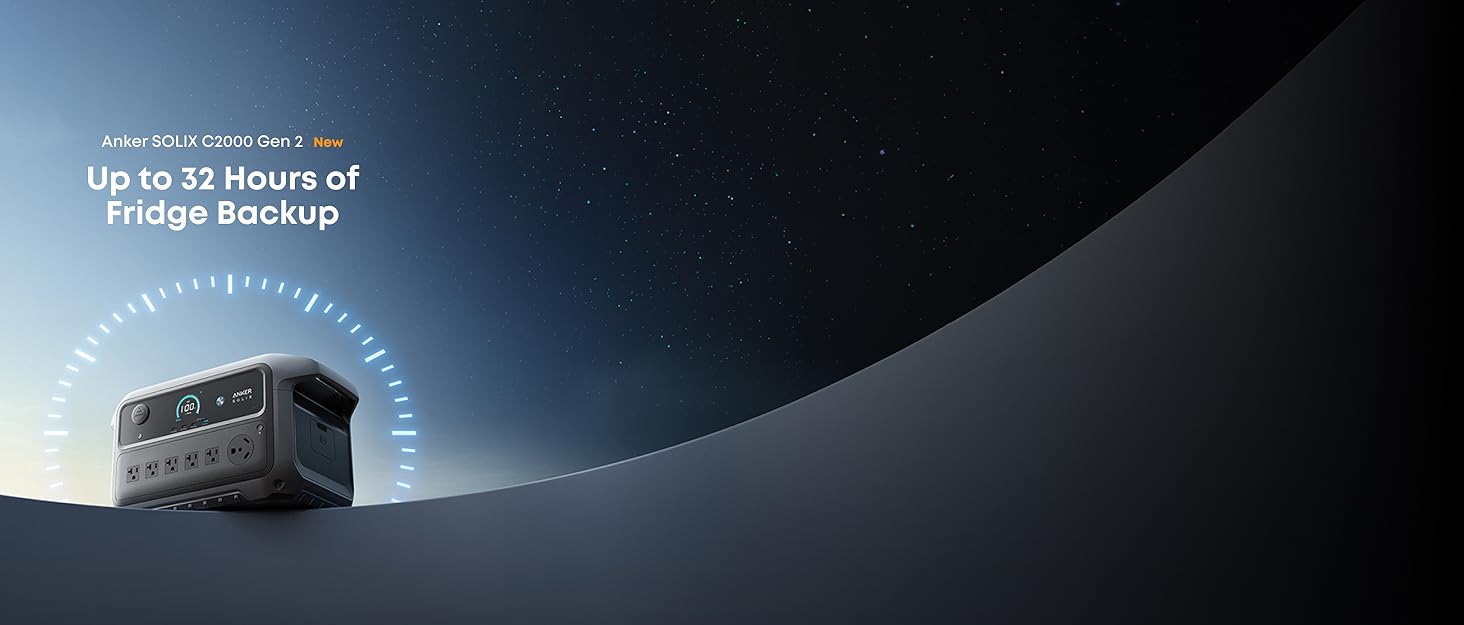
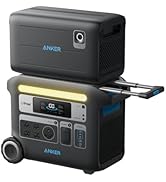
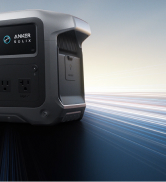
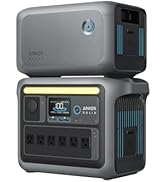
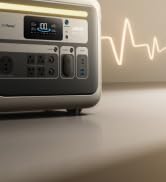
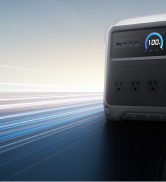
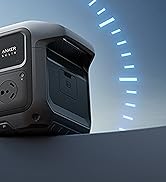
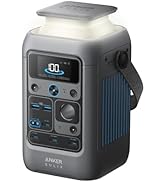
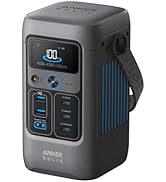
The Anker 521 Portable Power Station features a robust 256Wh LiFePO4 battery with a 10-year lifespan, delivering 300W continuous and 600W peak power through 6 versatile ports including dual AC outlets and a 60W USB-C PD. Designed for outdoor enthusiasts and professionals alike, it offers fast charging, durable performance, and compact portability, making it the ultimate reliable power source for extended trips, emergency backup, and multi-device charging.





























| ASIN | B09FF46FQ9 |
| Batteries | 1 C batteries required. |
| Batteries Included? | No |
| Batteries Required? | No |
| Battery Capacity | 80000 Milliamp Hours |
| Battery Cell Type | Lithium Ion |
| Best Sellers Rank | #1,080 in Patio, Lawn & Garden ( See Top 100 in Patio, Lawn & Garden ) #16 in Outdoor Generators |
| Brand | Anker |
| Color | Black |
| Current Rating | 10 Amps |
| Customer Reviews | 4.4 4.4 out of 5 stars (3,013) |
| Date First Available | September 3, 2021 |
| EU Spare Part Availability Duration | 5 Years |
| Engine Power Maximum | 200 Watts |
| Engine Type | 4 Stroke |
| Fuel Type | Electric |
| Horsepower | 0.08 |
| Ignition System Type | Electronic |
| Included Components | Anker 521 Portable Power Station (PowerHouse 256Wh), DC adapter, car charging cable, welcome guide, our worry-free 5-year warranty, and friendly customer service. |
| Item Package Quantity | 1 |
| Item Weight | 8.16 pounds |
| Item model number | A1720 |
| Manufacturer | Anker |
| Material | Plastic |
| Model Name | A1720 |
| Output Wattage | 300 Watts |
| Part Number | A1720113 |
| Power Source | Battery Powered, Solar Powered |
| Product Dimensions | 8.5"L x 5.67"W x 8.33"H |
| Recommended Uses For Product | Laptop |
| Running Wattage | 300 Watts |
| Size | 8.5"L x 5.67"W x 8.33"H |
| Special Feature | Portable |
| Special Features | Portable |
| Starting Wattage | 200 Watts |
| Style | Anker 521 Portable Power Station |
| Total Power Outlets | 2 |
| UPC | 194644083953 |
| Voltage | 110 Volts (AC) |
| Warranty Description | 2 year manufacturer |
| Wattage | 300 watts |
-**-
Working well so far in limited testing
I bought this as an auxiliary power source for use in a vehicle--I need to carry a 12 volt refrigerator with me (special dietary needs, road food, etc.), and occasionally charge up Milwaukee tool or DSLR batteries even if the vehicle is not running. The packaging of the 521 is ideal, although I wish the two 120V outlets had "real" 3-prong outlets. The size is perfect when a vehicle is loaded up--it uses little space. I ran two tests with the refrigerator connected to the 12 volt outlet. The refrigerator operates in both ECO and MAX modes. The ECO mode draws 30-35 watts while operating, while the MAX runs at anywhere from 40-50 watts. I ran the refrigerator indoors somewhat near a heat outlet, to simulate being inside a warm vehicle. The refrigerator is rated to deliver 256Wh of power, so I calculated that worst case would be the refrigerator running constantly for 5.5 hours. Turns out that with the refrigerator cycling on and off, it ran over 20 hours before the battery was down to about 2-4% capacity. EDIT: I had a charging issue that was partly my own misunderstanding and partly my car's wiring. I was at first unsuccessful in getting the 521 to charge from both inputs. First, I had to use a USB-C PD charger, which provides higher voltages than standard USB chargers. This allowed a full 65 watts on the USB-C input for charging. But I would add the 120 volt charger that came with the 521 in tandem with the USB-C charger wasn't getting the ~120 watts of charging. I later realized that for battery health, the 120 watt charging through both DC inputs only happens when the battery's state of charge is lower. If it's nearly fully charged, it cuts back to only a single DC input. Yet, I still could not get both to work in the car. I have a 150 watt 120-volt inverter in the car, which plugs into a rear accessory outlet using a lighter plug. It turns out that if I have both the 521's 120 volt charger and a USB-C PD charger plugged into the inverter, the inverter stops working. Likewise, if I use a separate USB-C charger that plugs into the accessory outlet (I have a 1:3 adapter with a voltage readout), the inverter cuts out. It seems the inverter is cutting out when voltage drops below a nominal value like 12.8 volts. In essence, the wiring from the fuse box to the accessory outlet cannot provide full wattage without voltage sag. When I plug the USB-C PD adapter into an accessory outlet in the center console (which is on its own 15 amp circuit), I can get 120 watts of charging to the 521. I will wire up my own circuit with 6-gauge wire to run a 300 or 400 watt inverter and a pair of accessory outlets, as this will eliminate the voltage drop. With ~120 watts, this provides a quicker recovery for the battery while the refrigerator is operating, which is exactly what I needed.
C**B
Perfect for drone/travel.
I bought this for frequent trips to the Everglades. It works amazing. You can get about 15 phone charges out of it. I can charge all three batteries on my dji air3s from dead to full once. It can run multiple things at once and shows your current output. Has a built in light that is easy to use. The outlet and car port must be turned on manually. I did try to overload the battery and it auto shut off. Battery can be charged in about an hour and seems to hold a full charge well (no leakage). You will hear the fan turn on but it’s not loud at all. I paid $130 on sell and I’m very happy with it Hand for size
B**N
light weight, long battery life
we use this in our basement where there are few outlets. It is great and charges all of our and our guest's devices quickly. Also works great camping when we sometimes bring a projector. Highly recommend.
J**N
A roller-coaster experience - Overall a good product.
Initial Review: I have been looking for a smaller "solar generator" that will be used daily to transfer solar power from my big, fixed, LFP battery - the later sits in my basement connected to panels on the side of my house. Key features needed were easy to carry, relatively fast charging, pass-through charging, PD output - plus the standard AC, 12V, and USB outputs. The Anker fit all of these plus the LFP battery is an advantage for a unit that will get cycled many times a week. I've had it for a week now, and it does basically do what I want, but it has limitations. The biggest is the lack of a real "off" mode: if I fully charge it and leave it in economy mode with all ports off it still uses 1 to 2% per day. My EcoFlow units and Jackery units have a true off and drop by less than that in a week. For that alone it drops 2 stars. More minor concerns: 1. Max AC ouput is only 200W, so I can't run anything needing more than that. Many units, even with the relatively small battery in this unit, can put out more than that. 2. The max power input is about 65W (by solar, AC, or PD); yes, I can get around that by combining solar/AC with PD input, but I wish I could use higher solar input so I could get full advantage from at least a 100W panel. Note that when looking at the solar input side I couldn't find anything about the max input voltage - while you can use a panel providing more current than the max input (it will only take what it can use) excess voltage can fry a unit. I looked in the manual and on the Web site and couldn't find anything. I sent an email to support, asking for the max VOC allowed, and their response was I could use a "any (12V-28V) solar charger with DC 7909 Male connector" - not a great response as a solar charger typically has a controller, which would conflict with the one in the unit, and there are lots of MC4 to DC7909 adapters available (and no mention that the voltage that matters is the VOC). Still, it means I can use my "12V" panels that have VOCs from 18V to 25V (a have a few panels) without problem. So, for my purpose the unit is fine for what I paid ($209) but others may be better for your needs. Final note: many focus on the 3000 cycles of the LFP over the 500+ cycles of a typical NMC unit, but for most this is irrelevant. Few will go through a charge cycle more than twice a week, which means 104 cycles a year or 5+ years to reach that 500 cycles, and even then, the battery doesn't die at 500 cycles, it just drops to 80% of the original capacity. Don't buy one just because it has LFP unless you charge through a cycle more than twice a week. Update: I tried to charge it by solar for the first time today. I tried two different panels, both of which work with my Jackery 240, and neither worked with this unit. In one case, the jack that was tight in the Jacker wobbled in the Anker, so it may be a connector issue with both. I've contacted tech support. I also saw some odd behavior with AC output yesterday: I tried to top up my EcoFlow unit from 75% to 80% for storage, plugging it in to the Anker. The EcoFlow was set to slow charge mode, so it should have pulled well under 200W, yet it just sat there clicking, unable to pull enough power to start. I was able to charge it with the 12V outlet from the Anker, but need to test the AC output more; maybe the EcoFlow pulled more than expected to start charging by AC. Update 5/21. I can't charge this with solar. Tech support said I need a 7909 connector, not the 8mm one which is pretty standard - and they don't sell a cable for solar charging or have one to recommend. I bought an 8mm to 7909 adapter and tried that today: doesn't fit. So, the Anker is going back. So much potential here, from a company that is normally great, but this one product is flawed. Update 5/30. After a lot of communication with Anker tech support, they provided one of their solar panels to try. It is a nice panel and works well with their unit and with my EcoFlow unit. I think that the solar charging issue I have comes down to an oddity with the connector, and if you have the right adapter the unit charges well with solar (within the limits of the 65W max input). Their panel comes with the adapter, and I assume that such adapters will be more readily available soon. So, if you don't need solar charging or either buy their panel or find the right adapter, it is a good unit. Not perfect because of the 65W solar limit and 200W max output, but pretty good, and it comes with great tech support. So my, my review goes up to 4 stars. Update Sept 19, 2022: The unit has been in use daily, primarily to top up my phone, tablet, and similar things, plus to top up tool batteries by DC or AC output. Working fine. I did some capacity tests with a 70W bulb and was pleased to see that it has a pretty efficient AC inverter, with low power loss. Another positive: with the right adapter cable, I can reliably charge this at 65W by solar, in addition to DC and AC. But a big negative: the display cannot track low power/USB usage. If all I do is use it for topping up phones and tablets by USB all week, it will stay at 99% and then switch off at zero. I don't see the same with problem with AC usage. (Recalibrating by a full charge, drain until power off, and a full charge, makes no difference.) Not a huge issue for me: when it dies unexpectedly from USB use I'll just use another battery unit while this one is being charged, but it is a problem.
F**9
Compact and Affordable
The Anker 521 was offered at a great price, works as described and has fit my needs for a compact and portable charging device.
V**S
I recently purchased the Anker Portable Power Station, and I am thoroughly impressed with its performance. As someone who frequently camps and goes on outdoor adventures, having a reliable power source is crucial. This power station has exceeded my expectations in every way. Key Features: High Capacity: With a 256Wh capacity, this power station can charge my phone multiple times, power my laptop, and even run small appliances like a mini fridge for several hours. It's perfect for extended trips off the grid. Multiple Outputs: The variety of charging options (AC outlet, USB-A, USB-C, and DC car port) is fantastic. I can charge everything from my smartphone to my drone to my laptop without any issues. Compact & Portable: The design is sleek and portable, and at just under 7 lbs, it's easy to carry in a backpack or store in my car. It’s also surprisingly quiet when in use—no loud fan noise like some other power stations I’ve used. Fast Charging: I was amazed at how quickly this power station charges both itself and devices. It’s perfect for quickly topping off my devices between outings or after a long day. Solid Build Quality: The Anker brand has a reputation for quality, and this power station definitely lives up to it. It feels sturdy and well-made, with a durable outer shell that gives me confidence it’ll hold up over time. Cons: The price is a bit higher compared to some other options on the market, but in my opinion, it’s worth it for the reliability, efficiency, and convenience it offers. It could benefit from a higher power output if you plan to use larger appliances, but for most everyday electronics, it does the job perfectly. Overall, I highly recommend the Anker Portable Power Station to anyone looking for a dependable and efficient power solution while on the go. Whether you're heading out for a camping trip, road trip, or just need a backup power source for emergencies, this power station has you covered!
L**S
J'ai commandé ce produit dans le but de gonfler mon paddleboard soit par prise classique soit avec une prise 12 volts et ça fonctionne très bien. De plus la lumière est très pratique le soir. Je m'en suis servi depuis à d'autres occasions et c'est vraiment parfait et le transport est très facile.
K**E
I bring this with me when doing craft shows and camping and it’s way better than carrying around a bunch of power banks. Recharged multiple devices multiple times and still had juice left over. Only thing it hasn’t been able to power was a small home printer.
R**M
Still early but so far, so good. Powers my cpap for 2 nights. Built in nite-lite is handy. It can accept 3 prong AC plugs. Well priced.
O**R
I found this works excellent and as advertised. I purchased this shortly after a power outage caused by an ice storm here in Ontario Canada and have given it a full test on how well it charges, works for charging and powering other devices finding it does what I need for the most part. Great item for camping or keeping things like cell phones and laptops running as well as providing a light during emergencies at home or while away.
Trustpilot
2 weeks ago
1 week ago