
Desertcart purchases this item on your behalf and handles shipping, customs, and support to Iceland.
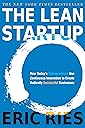
Most startups fail. But many of those failures are preventable. The Lean Startup is a new approach being adopted across the globe, changing the way companies are built and new products are launched. Eric Ries defines a startup as an organization dedicated to creating something new under conditions of extreme uncertainty. This is just as true for one person in a garage or a group of seasoned professionals in a Fortune 500 boardroom. What they have in common is a mission to penetrate that fog of uncertainty to discover a successful path to a sustainable business. The Lean Startup approach fosters companies that are both more capital efficient and that leverage human creativity more effectively. Inspired by lessons from lean manufacturing, it relies on “validated learning,” rapid scientific experimentation, as well as a number of counter-intuitive practices that shorten product development cycles, measure actual progress without resorting to vanity metrics, and learn what customers really want. It enables a company to shift directions with agility, altering plans inch by inch, minute by minute. Rather than wasting time creating elaborate business plans, The Lean Startup offers entrepreneurs—in companies of all sizes—a way to test their vision continuously, to adapt and adjust before it’s too late. Ries provides a scientific approach to creating and managing successful startups in a age when companies need to innovate more than ever. Review: A Must-Read for Anyone Interested in Building or Growing a Business - The Lean Startup completely changed the way I think about entrepreneurship and innovation. Eric Ries breaks down complex business concepts into clear, practical steps that can be applied to startups, small businesses, or even large organizations. What I loved most is how the book focuses on testing ideas quickly, learning from real feedback, and adapting fast instead of wasting time and money on unproven plans. The examples and case studies make the ideas feel real and achievable, not just theory. It’s packed with valuable lessons on product development, decision-making, and efficiency — especially the concept of “build, measure, learn,” which I’ve already started using in my own projects. Whether you’re an aspiring entrepreneur or just want to understand how successful companies innovate, this book is an absolute game-changer. Highly recommend! Review: Good book, important message, a few flaws - "All business books are wrong; but some are useful", to paraphrase GPE Box. Eric Ries' "The Lean Startup" is no exception, with both good and bad aspects to it. "The Lean Startup" has important things to say about entrepreneurial management. Eric Ries may have had difficulty selling these ideas to the established business community, but in my opinion, his methods are sound and practical, and he has done an excellent job of articulating these in the current book. For example, they: 1. address markets with high degrees of customer and technological uncertainty 2. assert that management is required, not optional; even though markets and technology are uncertain, you can't `just build it' 3. redefine accountability around cross-functional teams that are allowed to fail (validated learning) 4. define central roles for customer acceptance and market growth in product and model refinement 5. place learning, experimentation, and failure in a central role; strategy, accountability, and organization are diminished (`build-measure-learn' dynamic) The book is written in an accessible and enjoyable prose, and contains case studies and many practical messages for would-be entrepreneurs. Unfortunately, the strengths of Ries' personal experiences and insight are undermined by the occasional misstatement, on the one hand; and uncritical examples of some companies that are poster boys for bad management practice, on the other. Some of the latter is simply (I believe) gratuitous logrolling - for example HP, recently notorious for a sequence of embarrassing management shuffles. I suppose Ries is interested in being invited into HP for talks and consulting gigs; and I suppose he would not be invited were he to trash them for their improprieties. More concerning is his carelessness in summarizing case study business models - good and bad. For example, he pillories Enron and Lehman Brothers as Ponzi schemes - neither was. Enron failed because it tried to make markets in Internet bandwidth, waste water, energy and a lot of other markets; there were about 400 other B2B markets doing this at the end of the 1990s, but Enron fraudulently hid its losses offshore (not good). Lehman Brothers was as competently managed as other big banks in 2008, but got caught in the political backwash of the Bear Sterns bailout by the Fed of NY. Neither was a Ponzi scheme. In contrast, Groupon, which has been described as a Ponzi scheme by its investors, gets nothing but good words from Ries, in contrast to most reporting on the troubled company. Again, maybe this is just logrolling, but it detracts from the credibility of the book, and I docked it a star because of this. So, in summary, "All business books are wrong; but some are useful", and Ries' book falls into this latter category.


| Best Sellers Rank | #4,667 in Books ( See Top 100 in Books ) #1 in Starting a Business (Books) #6 in Small Business (Books) #14 in Entrepreneurship (Books) |
| Customer Reviews | 4.5 out of 5 stars 17,955 Reviews |
C**N
A Must-Read for Anyone Interested in Building or Growing a Business
The Lean Startup completely changed the way I think about entrepreneurship and innovation. Eric Ries breaks down complex business concepts into clear, practical steps that can be applied to startups, small businesses, or even large organizations. What I loved most is how the book focuses on testing ideas quickly, learning from real feedback, and adapting fast instead of wasting time and money on unproven plans. The examples and case studies make the ideas feel real and achievable, not just theory. It’s packed with valuable lessons on product development, decision-making, and efficiency — especially the concept of “build, measure, learn,” which I’ve already started using in my own projects. Whether you’re an aspiring entrepreneur or just want to understand how successful companies innovate, this book is an absolute game-changer. Highly recommend!
J**D
Good book, important message, a few flaws
"All business books are wrong; but some are useful", to paraphrase GPE Box. Eric Ries' "The Lean Startup" is no exception, with both good and bad aspects to it. "The Lean Startup" has important things to say about entrepreneurial management. Eric Ries may have had difficulty selling these ideas to the established business community, but in my opinion, his methods are sound and practical, and he has done an excellent job of articulating these in the current book. For example, they: 1. address markets with high degrees of customer and technological uncertainty 2. assert that management is required, not optional; even though markets and technology are uncertain, you can't `just build it' 3. redefine accountability around cross-functional teams that are allowed to fail (validated learning) 4. define central roles for customer acceptance and market growth in product and model refinement 5. place learning, experimentation, and failure in a central role; strategy, accountability, and organization are diminished (`build-measure-learn' dynamic) The book is written in an accessible and enjoyable prose, and contains case studies and many practical messages for would-be entrepreneurs. Unfortunately, the strengths of Ries' personal experiences and insight are undermined by the occasional misstatement, on the one hand; and uncritical examples of some companies that are poster boys for bad management practice, on the other. Some of the latter is simply (I believe) gratuitous logrolling - for example HP, recently notorious for a sequence of embarrassing management shuffles. I suppose Ries is interested in being invited into HP for talks and consulting gigs; and I suppose he would not be invited were he to trash them for their improprieties. More concerning is his carelessness in summarizing case study business models - good and bad. For example, he pillories Enron and Lehman Brothers as Ponzi schemes - neither was. Enron failed because it tried to make markets in Internet bandwidth, waste water, energy and a lot of other markets; there were about 400 other B2B markets doing this at the end of the 1990s, but Enron fraudulently hid its losses offshore (not good). Lehman Brothers was as competently managed as other big banks in 2008, but got caught in the political backwash of the Bear Sterns bailout by the Fed of NY. Neither was a Ponzi scheme. In contrast, Groupon, which has been described as a Ponzi scheme by its investors, gets nothing but good words from Ries, in contrast to most reporting on the troubled company. Again, maybe this is just logrolling, but it detracts from the credibility of the book, and I docked it a star because of this. So, in summary, "All business books are wrong; but some are useful", and Ries' book falls into this latter category.
K**.
nice
perfect
K**R
Very helpful and easy to read
As an aspiring entrepreneur I found this book very helpful and informative. It Gives entrepreneurs the tools they need to turn ideas into products and avoid common mistakes. It is clear that the author has years of experience creating startups and he provides the reader with the mindset that entrepreneurs and innovators should have. Eric Ries takes the uncertainty associated with creating a startup and turns it into a science. I initially feared that this book would read like a business textbook but I was quickly proven wrong. The book is very well written and easy to read. Eric Ries explains everything in plain english so that it is clear and intuitive. Ries does a good job of using real world examples and anecdotes to explain his concepts. Ries has experience consulting for companies like Intuit and IGN and includes lots of valuable insider information that can't be found in most business textbooks. He also includes alot of real start up success stories as well as many failures and discusses what must be learned from each. Before reading this book, I was discouraged from going forth with my Ideas because I feared my lack of business experience would hold me back. Now I feel like I have the tools to execute my ideas. If I had not read this book, I could easily see myself making some of the common mistakes that lead to startup failures. Instead of creating a minimum viable product to quickly get feedback like Ries recommends, I would spend months or even years developing what I considered to be the perfect prototype, only to find out nobody wanted to use it. All his ideas make perfect sense. Don't make assumptions about what people want, rather find out what your customers want before hand. Everything is about feedback, collecting it then applying it to your product. Don't waste anytime developing something unless you know it creates value. Anyone who is considering creating a startup or new product should read this book. The best thing about this book is that you don't need business experience to understand the core concepts.The principles he talks about can be applied to all types of types of business but are particularly helpful for software and tech products.He answers alot of the questions I had and even question I did not think of but should have been asking.It is only a matter of time before the lean startup method is universally adopted.
B**E
Fresh ideas on entrepreneurship
Lean Startup is a well-written book with a lot of fresh ideas and thinking about start-ups and entrepreneurship. Eric Ries, author of the book, has had a fair share of start-up experience and in his last start-up (IMVU) experimented with a lot of non-standard ways of managing start-ups influenced by Steve Blank and the Toyota Production System (or lean and hence Lean Startup). The book is divided in 3 parts which roughly map to 'phases' of start-ups: 1) vision, 2) steer, and 3) accelerate. Each of these parts is divided in 4 chapters each simply named with one word such as "Test" or "Measure" (not incredibly descriptive). The first part is called Vision and defines Lean Start-up and its influences. It explains how start-ups are about validated learning and how the optimization of start-ups needs to be about how fast they go through the build-measure-learn cycle. When starting a new product, the first thing you need to get is feedback on the product, so it is important to get a Minimum Viable Product out as quickly as possible as learning about how to use the product is a lot more powerful than research or asking customers. The second part continues with the Minimum Viable Product and the learning. The learning we'll need to get from the product is whether our business assumptions (leap-of-faith assumptions) were in fact correct. Start-ups need to change their accounting system to measure their progress in validated learning. When there is enough learning, they can check their leap-of-faith assumption and make the decision to pivot (change a bit in one direction) or persevere (continue). The last part (accelerate) first covers small batches, one of the basic concepts behind lean start-up and then explores the different "engine of growth" that companies have and stress to focus on one of these. After that it gives Eric's perspective on building lasting companies that continue to improve. The author shared his adaptation of the five why technique. It ends with some general discussion about innovation in larger companies. The epilogue contains a surprisingly positive perspective on the principled of scientific management from Fredrick Taylor. All in all, I enjoyed the book quite a lot, especially the first 2 parts. The way the author has weaved a bunch of concepts together into one holistic framework is quite nice and very concrete. It is not easy to manage your company the way the author suggests as it requires a lot of discipline and introspection (both lacking in many companies). But the Lean Startup moves us away from the black art of startups and creates an interesting structure, or at least perspective, to starting up new ventures. Recommended reading.
P**K
Deep Insights into Startup Best Practices
If you work for a startup in any sense, or have entrepreneurial visions of grandeur, The Lean Startup by Eric Ries will make an excellent addition to your bookshelf. Eric Ries, a seasoned entrepreneur and co-founder of IMVU (an 3D avatar based chat room), has crafted an excellent introduction to startup best practices. From inception to maturity, any startup, whether a seedling or an The Lean Startupoffshoot from a well established business sequoia, can gain valuable information on how to use lean startup methodologies to help eliminate wasteful activities and instead focus on the projects and techniques to help break through the bonds of linear growth and achieve the exponential. What I found most interesting about these best practices was the initial focus on a minimal viable product to test customer interaction and appreciation of a particular business idea. By building a rough draft of a product or feature, and unleashing it into the wild (even in perhaps an imperfect state), a company can gain valuable insights into whether or not the feature will gain traction with customers. Through the use of real life startup stories, Ries demonstrates how spending many months of careful planning, only to release a product that is ‘not quite’ what the customer is looking for, can cost a great deal of unnecessary time and energy. If instead, products and features are built to be ‘just good enough’, valuable customer data can be gathered, and utilized to either enhance the minimal viable product to make it more production worthy, or pivot onto something else that may be more valuable to the customer. This customer-centric approach permeated the entirety of the book, which, coming from a developer’s standpoint, is not something I feel we generally think about enough. Developers are often extremely code-centric in their thinking. This is certainly important (don’t want to build complete junk, even if it is only the minimal viable product), but we also should not be oblivious to the business needs of our customers. Ries emphasizes that in a startup, all employees and stake-holders, regardless of roles, should be in constant communication with each other to ensure the system being built is indeed for the customer. And while participating in business thought and discussion, developers can gain deeper insight into customer needs, helping them avoid rabbit trails and design the most appropriate system for any particular feature. At Within3, the startup I currently work for, company and product managers, business development, and customer support weekly share goals and practices which I definitely appreciate. It helps me feel more integrated into the company as a whole, and offers the engineering team the opportunity to better understand both the in-house and customer needs for our business. While reading The Lean Startup, I did feel some of the points were hammered home a little to hard, and I found myself zoning out in a few places where the information seemed overly redundant or was presented like a college lecture. But thankfully, Ries would toss a real life startup story my way and re-engage me. I found the stories by far the most interesting and helpful aspect of the book and the most effective tool in validating Ries’ suggestions. All in all, a good read and a valuable looking glass into the moving parts of the startup engine and how to make them churn along as efficiently, and powerfully, as possible.
J**E
game-changer for aspiring entrepreneurs and established businesses alike
Eric Ries' "The Lean Startup" is a game-changer for aspiring entrepreneurs and established businesses alike. This book introduces a revolutionary approach to building and scaling businesses, emphasizing the importance of continuous innovation and customer feedback. Key Takeaways: Build-Measure-Learn Feedback Loop: Ries introduces a cyclical process where businesses create a minimum viable product (MVP), measure its success, and learn from customer feedback to iterate and improve. Validated Learning: The book stresses the importance of testing assumptions and validating ideas through real-world experiments, rather than relying on intuition or guesswork. Pivot or Persevere: Ries encourages entrepreneurs to be flexible and adaptable, willing to change direction (pivot) if their initial approach isn't working, or to persevere with adjustments based on data. Innovation Accounting: The author provides a framework for measuring progress and success in a startup environment, focusing on actionable metrics rather than vanity metrics. Overall: "The Lean Startup" is an essential read for anyone involved in starting or growing a business. Its principles have been adopted by countless startups and established companies, and its impact on the entrepreneurial landscape is undeniable. If you're looking for a guide to navigate the uncertainties of the business world, this book is a must-have.
H**T
A frustraing experience
After reading Clayton Christensen, Geoffrey Moore and Steve Blank, I was expecting a lot from The Lean Startup by Eric Ries. I was disappointed. It could be that I did not read it well or too fast, but I was expecting much more. But instead of saying what I did not like, let me begin with the good points. Just like the previous three authors, Ries shows that innovation may be totally counterintuitive: "My cofounders and I are determined to make new mistakes. We do everything wrong. We build a minimum viable product, an early product that is terrible, full of bugs and crash-your-computer-yes-really stability problems. Then we ship it to customers before it's ready. And we charge money for it. After securing initial customers, we change the product constantly. [...] We really had customers, often talked to them and did not do what they said." [page 4] On page 8, Eric Ries explains that the lean startup method helps entrepreneurs "under conditions of extreme uncertainty" with a "new kind of management" by "testing each element of their vision", and "learn whether to pivot or persevere" using a "feedback loop". This is he Build-Measure-Learn process. He goes on by explaining why start-ups fail: 1- The first problem is the allure of a good plan. "Planning and forecasting are only accurate when based on a long, stable operating history and a relatively static environment. Startups have neither." 2- The second problem is the "Just-do-it". "This school believes that chaos is the answer. This does not work either. A startup must be managed". The main and most convincing lesson from Ries is that because start-ups face a lot of uncertainty, they should test, experiment, learn from the right or wrong hypotheses as early and as often as possible. They should use actionable metrics, split-test experiments, innovation accounting. He is also a big fan of Toyota lean manufacturing. I loved his borrowing of Komisar's Analogs and Antilogs. For the iPod, the Sony Walkman was an Analog ("people listen to music in a public place using earphones") and Napster was an Antilog ("although people were willing to download music, they were not willing to pay for it"). [Page 83] Ries further develops the MVP, Minimum Viable Product: "it is not the smallest product imaginable, but the fastest way to get through the Build-Measure-Learn feedback loop." Apple's original iPhone, Google's first search engine, or even Dropbox Video Demo were such MVPs. More on Techcrunch [page 97]. He adds that MVP does not go without risks, including legal issues, competition, branding and morale of the team. He has a good point about intellectual property [page 110]: "In my opinion, [...the] current patent law inhibits innovation and should be remedied as a matter of public policy." So why did I feel some frustration? There is probably the feeling Ries gives that his method is a science. [Page 3]: "Startup success can be engineered by following the right process, which means it can be learned, which means it can be taught." [Page 148]: "Because of the scientific methodology that underlies the Lean Startup, there is often a misconception that it offers a rigid clinical formula for making pivot or persevere decisions. There is no way to remove the human element - vision, intuition, judgment - from the practice of entrepreneurship, nor that would be desirable". I was probably expecting more recipes, as the ones Blnak gives in The Four Steps to the Epiphany. So? Art or science? Ries explains on page 161 that pivot requires courage. "First, Vanity Metrics can allow to form false conclusions. [...] Second, an unclear hypothesis makes it impossible to experience complete failure, [...] Third, many entrepreneurs are afraid. Acknowledging failure can lead to dangerously low morale." A few pages before (page 154), he writes that "failure is a prerequisite to learning". Ries describes a systematic method, I am not sure it is a science, not even a process. Indeed, in his concluding chapter, as if he wanted to mitigate his previous arguments, he tends to agree: "the real goal of innovation: to learn that which is currently unknown" [page 275]. "Throughout our celebration of the Lean Startup movement, a note of caution is essential. We cannot afford to have our success breed a new pseudoscience around pivots, MVPs, and the like" [page 279]. This in no way diminishes the traditional entrepreneurial virtues; the primacy of vision, the willingness to take bold risks, and the courage required in the face of overwhelming odds" [page 278]. Let me mention here a video from Komisar. Together with Moore and Blank, he is among the ones who advise reading Ries' book. I am less convinced than them about the necessity to read this book. I have now more questions than answers, but this may be a good sign! I have been more frustrated than enlightened by the anecdotes he gives or his use of the Toyota strategy. In na interview given to the Stanford Venture Technology program, Komisar talks about how to teach entrepreneurship. Listen to him! To be fair, Eric Ries is helping a lot the entrepreneurship movement. I just discovered a new set of videos he is a part of, thanks to SpinkleLab. Fred Destin had also a great post on his blog about the Lean Startup and you should probably read it too to build your own opinion. Lean is hard and (generally) good for you. Fred summaries Lean this way and he is right: "In the real world, most companies do too much development and spend too much money too early (usually to hit some pre-defined plan that is nothing more than a fantasy and / or is not where they need to go to succeed) and find themselves with an impossible task of raising money at uprounds around Series B. So founders get screwed and everyone ends up with a bad taste in their mouth. That's fundamentally why early stage capital efficiency should matter to you, and why you should at least understand lean concepts." Let me finish with a recent interview given by Steve Blank in Finland: "I have devoted the last decade of my life and my "fourth career" to trying to prove that methods for improving entrepreneurial success can be taught. Entrepreneurship itself is more of a genetic phenomenon. Either you have the passion and drive to start something, or you don't. I believe entrepreneurs are artists, and I'd like to quote George Bernard Shaw to illustrate: "Some men see things as they are and ask why. Others dream things that never were and ask why not." Over the last decade we assumed that once we found repeatable methodologies (Agile and Customer Development, Business Model Design) to build early stage ventures, entrepreneurship would become a "science," and anyone could do it. I'm beginning to suspect this assumption may be wrong. It's not that the tools are wrong. Where I think we have gone wrong is the belief that anyone can use these tools equally well. When page-layout programs came out with the Macintosh in 1984, everyone thought it was going to be the end of graphic artists and designers. "Now everyone can do design," was the mantra. Users quickly learned how hard it was do design well and again hired professionals. The same thing happened with the first bit-mapped word processors. We didn't get more or better authors. Instead we ended up with poorly written documents that looked like ransom notes. Today's equivalent is Apple's "Garageband". Not everyone who uses composition tools can actually write music that anyone wants to listen to. It may be we can increase the number of founders and entrepreneurial employees, with better tools, more money, and greater education. But it's more likely that until we truly understand how to teach creativity, their numbers are limited. Not everyone is an artist, after all."
S**S
Back to basic du business modern
Il y a tant à dire sur cet opus qui est à l'origine d'un mouvement de fond dans le monde du business actuel. Il n'y a rien de révolutionnaire dans les idées de Ries (une roue de Demming reste une roue) de manière unitaire. Par contre l'hybridation des idées changent tout : l'auteur revisite le processus d'amélioration continue et le lean management pour les idées d'entreprendre, qu'elles soient internes ou externes à l'entreprise. Oui vous avez bien lu : ce livre ne s'arrête pas aux boutonneux de la silicon valley voulant lancer le prochain facebook mais bien TOUT le monde. * Vous avez envie de vous lancez dans une activité de cookies => vérifier que vous avez des clients potentiels, regardez ce qu'ils acheteraient, allez les voir et construisez le plus petit produit viable (un cookie ?) * Dans votre entreprise vous voulez lancer une nouvelle activité => pareil ! Oui, ce livre est vraiment rafraîchissant, vous fait grandir et vous oblige à trouver l'entr(e/a)preneur qui est en vous.
U**F
الغلاف جيد والطباعه افضل من كتب اخري
الكتاب افضل من ناحيه الطباعه والغلاف من كتابين سابقين اشتريتهم والتوصيل سريع
M**L
جودة ورق ضعيفه
لم اتوقع سوء جودة الورق، الورقة خفيفة جدا مايل لونها على رمادي وباهته. لكن للامانه لم ابدا بقراءة الكتاب بعد. ان شاء الله يكون المحتوى يعوض عن هذه المشكلة
N**Y
Great book
Quality was good.
I**H
The Godfather of “MVP” and “build-measure-learn”
Eric Ries gebührt der Respekt, mit seinem Buch dazu beigetragen zu haben, dass Begriffe wie “minimal viable product” oder der Entwicklungszyklus “build-measure-learn” zum Standardrepertoire agiler Prozesse gehören. Manchmal ertappe ich mich jedoch bei dem Gedanken, dass mit den Begriffen nur zu gerne auch angegeben wird, ohne wirklich zu wissen, was originär damit gemeint war oder gar die Unternehmensprozesse tatsächlich danach ausgerichtet werden. Deshalb: es lohnt - wie in den allermeisten Fällen - sich mit der Originalliteratur auseinanderzusetzen, um Zusammenhänge zu durchdringen anstatt sie nur an der Oberfläche zu tangieren. Auch wenn das Werk inzwischen 9 Jahre alt ist - eine Ewigkeit in unserer schnelllebigen Welt - hat es nichts an Aktualität eingebüsst. Der Autor entfaltet für Startups mit seinem Vorgehen „VISION (Start - Define - Learn - Experiment) - STEER (Leap - Test - Measure - Pivot or Persevere) - ACCELERATE (Batch - Grow - Adapt - Innovate)“ einen fundierten Weg, um auch heute noch erfolgreich Produkte bzw. Services am Markt platzieren zu können. Sympathisch ist der Gedanke, dass Unternehmertum und Startup-Mentalität nicht der Garage vorbehalten sind, sondern überall stattfinden können. Ries setzt sich für den Begriff des Entrepreneurs statt des Managers ein, um dies deutlich zu machen. Darüberhinaus macht er eindrücklich klar, weshalb „validated learning“ ein MUSS für Neugründungen ist, die sich am Markt auch langfristig durchsetzen wollen. Auch seine vier zentralen Fragen (S. 64) würden auch heute noch so manche Produktentwicklung, die völlig am Markt vorbeigeht, vermeiden. Man sollte diese als Poster neben die gängigen Scrum- und Kanban-Boards hängen, um täglich daran erinnert zu werden und sich danach auszurichten. Wie eingangs beschrieben ist der „Feedback Loop: build-measure-learn“ in zahlreichen Produktentwicklungsteams heute EIGENTLICH Standard, wird aber im Ries‘schen Sinne nicht konsequent gelebt. Ries zeigt auf, welche Daten sich zu messen lohnen, wie man eigene Hypothesen widerlegen kann und sollte, gerade wenn man ihnen zu gerne Glauben schenken mag. Trotz zahlreicher eindrücklicher Beispiele, die über die typischen Apples und Facebooks hinausgehen, wäre eine Art Matrix, mit welcher man das eigene Geschäftsmodell noch besser messen und Erfolge suchen bzw. Misserfolge schnell vermeiden kann, hilfreich. So bleibt zwar das Verständnis des theoretischen Rahmens, aber einen praktikablen Bezug, was die Ergebnisse der gemessenen Fakten bedeuten, bleibt offen. Das ist aufgrund der unterschiedlichen Geschäftsmodelle nachvollziehbar, als Startup-Unternehnmer*in oder Investor*in entstehen natürlich genau an dieser Stelle die entscheidenden Fragen. Dennoch: Auch nach vielen Jahren noch immer ein fundamentales Werk, das den Zeitinvest lohnt, um die daraus entstandene Entwicklung zu verstehen und vor allem, maßgebliche Hinweise für erfolgreiches “Entrepreneurship” abzuleiten.
Trustpilot
1 month ago
2 months ago