
DOWNLOAD THE APP


Customer Services
Copyright © 2025 Desertcart Holdings Limited
DOWNLOAD THE APP


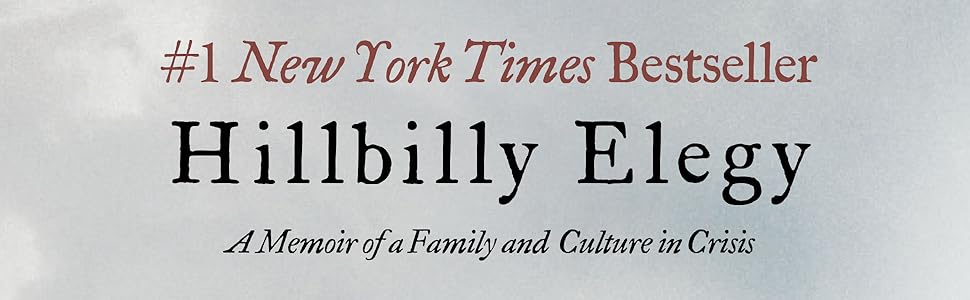
Hillbilly Elegy: A Memoir of a Family and Culture in Crisis [Vance, J. D.] on desertcart.com. *FREE* shipping on qualifying offers. Hillbilly Elegy: A Memoir of a Family and Culture in Crisis Review: An edifying and inspiring, if also troubling at times, read. - There is a lot to take in here, even for someone that's seen this life up close in many of its many guises. While ostensibly about the particular culture of the West Virginia Scots-Irish underclass, anyone that has seen white poverty in America's flyover states will recognize much of what is written about here. It is a life on the very edge of plausibility, without the sense of extra-family community that serves as a stabilizing agent in many first-generation immigrant communities or communities of color. Drugs, crime, jail time, abusive interactions without any knowledge of other forms of interaction, children growing up in a wild mix of stoned mother care, foster care, and care by temporary "boyfriends," and in general, an image of life on the edge of survival where even the heroes are distinctly flawed for lack of knowledge and experience of any other way of living. This is a story that many of the "upwardly mobile middle class" in the coastal areas, often so quick to judge the lifestyles and politics of "those people" in middle America, has no clue about. I speak from experience as someone that grew up in the heartland but has spent years in often elite circles on either coast. Two things struck me most about this book. First, the unflinching yet not judgmental portrayal of the circumstances and of the people involved. It is difficult to write on this subject without either glossing over the ugliness and making warm and fuzzy appeals to idealism and human nature, Hollywood style, or without on the other hand descending into attempts at political persuasion and calls to activism. This book manages to paint the picture, in deeply moving ways, without committing either sin, to my eye. Second, the author's growing realization, fully present by the end of the work, that while individuals do not have total control over the shapes of their lives, their choices do in fact matter—that even if one can't direct one's life like a film, one does always have the at least the input into life that comes from being free to make choices, every day, and in every situation. It is this latter point, combined with the general readability and writing skill in evidence here, that earns five stars from me. Despite appearances, I found this to be an inspiring book. I came away feeling empowered and edified, and almost wishing I'd become a Marine in my younger days as the author decided to do—something I've never thought or felt before. I hate to fall into self-analysis and virtue-signaling behavior in a public review, but in this case I feel compelled to say that the author really did leave with me a renewed motivation to make more of my life every day, to respect and consider the choices that confront me much more carefully, and to seize moments of opportunity with aplomb when they present themselves. Given that a Hillbilly like the author can find his way and make good choices despite the obstacles he's encountered, many readers will find themselves stripped bare and exposed—undeniably ungrateful and just a bit self-absorbed for not making more of the hand we've been dealt every day. I'm a big fan of edifying reads, and though given the subject matter one might imagine this book to be anything but, in fact this book left me significantly better than it found me in many ways. It also did much to renew my awareness of the differences that define us in this country, and of the many distinct kinds of suffering and heroism that exist. Well worth your time. Review: More questions than answers - J.D. Vance chronicles his "upwardly mobile" journey from a dirt-poor boy in the backwoods of Kentucky, to a Yale-educated lawyer in Washington D.C. It is quite a journey, to be sure. J.D.'s story is one of family ties, bad choices, cyclical dysfunction, and in some cases, redemption. "Hillbilly Elegy" first landed on my reading list due to an article in my newsfeed that listed Vance's memoir as potential insight into the group that supposedly swung this year's election in favor of Donald Trump - poor, working-class whites in the country's rust belt. We do indeed get an insider's glimpse into the mindset and lifestyle of the poor, white communities in Appalachia and surrounding regions. Yet politics and analysis is minimal, so any link between the group in question and our president is left mostly as an exercise for the reader. The book is fascinating on many levels, the least of which was the dichotomy between the strong family ties upon which the hillbillies draw their strength and honor, and the dysfunction, cheating, brawling, and deep-seated anger present in their everyday lives. Blood is indeed, thicker than water. To me, the real question is just how we break the cycle of poverty and bad choices. One particular story Vance relays typifies the scenario played out over and over in his community. A young man with a pregnant girlfriend landed a decent job in a tile warehouse. This man was chronically late, missed work at least once a week, and took hour-long bathroom breaks. Though warned repeatedly, his behavior did not change. Yet when he was finally fired, he lashed out at the manager for being inconsiderate of his difficult home situation (which, of course, he created in the first place!). This mindset of blaming others is very prevalent throughout the book. The author, however, places some of the blame at the foot of the conservative rhetoric - instead of pushing the poor to engage their issues, "the message of the right is increasingly: It’s not your fault that you’re a loser; it’s the government’s fault." I think this is a bit of a cop out, and to be honest, struck me as pandering to liberal elite that runs most of the media in this country. I would suggest that the creation of our massive welfare state, and the dependence of the poor on government handouts with little to no accountability is much more responsible for the poor's inability to truly confront their station in life. Similarly, Vance takes some time to disparage evangelical theology as taught by the church his dad attended. To be sure, there is often much to disparage. In fact, the suspicion of science and government held by his dad's church mirrors the attitude of many of my fellow evangelical brothers and sisters. Yet, the irony that his dad's home life was one of the few peaceful and stable families in his entire existence is not lost on Vance. In fact, he admits, "Dad embodied a phenomenon social scientists have observed for decades: Religious folks are much happier. Regular church attendees commit fewer crimes, are in better health, live longer, make more money, drop out of high school less frequently, and finish college more frequently than those who don’t attend church at all." Sometimes I think society at large wants the results of what they find in the church and organized religion, yet chafe at the thought of being told what to do, and what behavior is acceptable and what is not. The fact that possibly you can't get one without the other is a possibility our "enlightened" minds simply do not want to consider. And what is it, exactly, that these church-going people find at church? It's not a "phenomenon," as Vance categorizes it, but the power of Jesus Christ. I feel I would be remiss, as well, at this point not to push back against a sentiment Vance conveys as popular truth - evangelical churches are shedding members at an alarming rate. As a proof-point, he references an article from the Huffington Post that makes the tired claim that evangelicalism is being rejected by the current generation. Huffington Post, the darling child of hipsters and liberals everywhere, has never been a friend of evangelicals, and I would hope other, more balanced studies would be considered. The book, "Christians are Hate-Filled Hypocrites...And Other Lies You've Been Told" is a good place to start. Using strong scientific and statistical analysis, it directly refutes some of the very studies mentioned in the HP article. Anyway, I digress. Admittedly, conservative politics and the supposed failure of evangelicalism are overall a smaller focus in the book. For the most part, Vance simply recounts the story of his life, and that of his closest relatives. It is fascinating, heart-breaking, and often akin to watching the proverbial train wreck. In fact, I wonder if that is one reason the book has been so popular. For most of us, we can read about the dysfunction so prevalent in Vance's upbringing and pat ourselves on the back - we're not perfect, but at least we're not as bad as that Vance clan! Only near the end of the book, in Chapter 14, does Vance attempt some deeper analysis and retrospective thinking. And I would hope we would do the same. The situation surrounding poor, working-class whites in the Midwest, similar to that surrounding African Americans in urban settings, is complex and difficult, with no easy answers. But that doesn't mean we should't still be tackling these inconvenient issues. Everything from how we respond to the poor, to how we treat our spouse, is on the table. I appreciate Vance airing out his dirty laundry. I doubt many of us would want our family's deepest and darkest secrets to be exposed in a book for all to read. But in doing so, he gives us the opportunity to participate in the plight of an entire segment of our population that, until the last year, was rarely spoken of. --------------- I noticed desertcart and Goodreads have a slightly different meanings to their 5-point scale. I thought it was odd to have a different rating for the same book on two different sites, so I came up with my own scale below. For the record, it is fairly close to desertcart's scale, but allows me to be consistent between both sites. 5 - Fantastic. Life-altering. Maybe only 25 in a lifetime. 4 - Very good. 3 - Worth your time. 2 - Not very good. 1 - Atrocious

| ASIN | 0062300547 |
| Best Sellers Rank | #6,417 in Books ( See Top 100 in Books ) #1 in Sociology of Rural Areas #12 in U.S. State & Local History #39 in Memoirs (Books) |
| Customer Reviews | 4.4 4.4 out of 5 stars (124,372) |
| Dimensions | 6 x 0.93 x 9 inches |
| Edition | Reprint Ed. |
| ISBN-10 | 9780062300546 |
| ISBN-13 | 978-0062300546 |
| Item Weight | 1.1 pounds |
| Language | English |
| Print length | 272 pages |
| Publication date | June 28, 2016 |
| Publisher | Harper |
P**M
An edifying and inspiring, if also troubling at times, read.
There is a lot to take in here, even for someone that's seen this life up close in many of its many guises. While ostensibly about the particular culture of the West Virginia Scots-Irish underclass, anyone that has seen white poverty in America's flyover states will recognize much of what is written about here. It is a life on the very edge of plausibility, without the sense of extra-family community that serves as a stabilizing agent in many first-generation immigrant communities or communities of color. Drugs, crime, jail time, abusive interactions without any knowledge of other forms of interaction, children growing up in a wild mix of stoned mother care, foster care, and care by temporary "boyfriends," and in general, an image of life on the edge of survival where even the heroes are distinctly flawed for lack of knowledge and experience of any other way of living. This is a story that many of the "upwardly mobile middle class" in the coastal areas, often so quick to judge the lifestyles and politics of "those people" in middle America, has no clue about. I speak from experience as someone that grew up in the heartland but has spent years in often elite circles on either coast. Two things struck me most about this book. First, the unflinching yet not judgmental portrayal of the circumstances and of the people involved. It is difficult to write on this subject without either glossing over the ugliness and making warm and fuzzy appeals to idealism and human nature, Hollywood style, or without on the other hand descending into attempts at political persuasion and calls to activism. This book manages to paint the picture, in deeply moving ways, without committing either sin, to my eye. Second, the author's growing realization, fully present by the end of the work, that while individuals do not have total control over the shapes of their lives, their choices do in fact matter—that even if one can't direct one's life like a film, one does always have the at least the input into life that comes from being free to make choices, every day, and in every situation. It is this latter point, combined with the general readability and writing skill in evidence here, that earns five stars from me. Despite appearances, I found this to be an inspiring book. I came away feeling empowered and edified, and almost wishing I'd become a Marine in my younger days as the author decided to do—something I've never thought or felt before. I hate to fall into self-analysis and virtue-signaling behavior in a public review, but in this case I feel compelled to say that the author really did leave with me a renewed motivation to make more of my life every day, to respect and consider the choices that confront me much more carefully, and to seize moments of opportunity with aplomb when they present themselves. Given that a Hillbilly like the author can find his way and make good choices despite the obstacles he's encountered, many readers will find themselves stripped bare and exposed—undeniably ungrateful and just a bit self-absorbed for not making more of the hand we've been dealt every day. I'm a big fan of edifying reads, and though given the subject matter one might imagine this book to be anything but, in fact this book left me significantly better than it found me in many ways. It also did much to renew my awareness of the differences that define us in this country, and of the many distinct kinds of suffering and heroism that exist. Well worth your time.
J**R
More questions than answers
J.D. Vance chronicles his "upwardly mobile" journey from a dirt-poor boy in the backwoods of Kentucky, to a Yale-educated lawyer in Washington D.C. It is quite a journey, to be sure. J.D.'s story is one of family ties, bad choices, cyclical dysfunction, and in some cases, redemption. "Hillbilly Elegy" first landed on my reading list due to an article in my newsfeed that listed Vance's memoir as potential insight into the group that supposedly swung this year's election in favor of Donald Trump - poor, working-class whites in the country's rust belt. We do indeed get an insider's glimpse into the mindset and lifestyle of the poor, white communities in Appalachia and surrounding regions. Yet politics and analysis is minimal, so any link between the group in question and our president is left mostly as an exercise for the reader. The book is fascinating on many levels, the least of which was the dichotomy between the strong family ties upon which the hillbillies draw their strength and honor, and the dysfunction, cheating, brawling, and deep-seated anger present in their everyday lives. Blood is indeed, thicker than water. To me, the real question is just how we break the cycle of poverty and bad choices. One particular story Vance relays typifies the scenario played out over and over in his community. A young man with a pregnant girlfriend landed a decent job in a tile warehouse. This man was chronically late, missed work at least once a week, and took hour-long bathroom breaks. Though warned repeatedly, his behavior did not change. Yet when he was finally fired, he lashed out at the manager for being inconsiderate of his difficult home situation (which, of course, he created in the first place!). This mindset of blaming others is very prevalent throughout the book. The author, however, places some of the blame at the foot of the conservative rhetoric - instead of pushing the poor to engage their issues, "the message of the right is increasingly: It’s not your fault that you’re a loser; it’s the government’s fault." I think this is a bit of a cop out, and to be honest, struck me as pandering to liberal elite that runs most of the media in this country. I would suggest that the creation of our massive welfare state, and the dependence of the poor on government handouts with little to no accountability is much more responsible for the poor's inability to truly confront their station in life. Similarly, Vance takes some time to disparage evangelical theology as taught by the church his dad attended. To be sure, there is often much to disparage. In fact, the suspicion of science and government held by his dad's church mirrors the attitude of many of my fellow evangelical brothers and sisters. Yet, the irony that his dad's home life was one of the few peaceful and stable families in his entire existence is not lost on Vance. In fact, he admits, "Dad embodied a phenomenon social scientists have observed for decades: Religious folks are much happier. Regular church attendees commit fewer crimes, are in better health, live longer, make more money, drop out of high school less frequently, and finish college more frequently than those who don’t attend church at all." Sometimes I think society at large wants the results of what they find in the church and organized religion, yet chafe at the thought of being told what to do, and what behavior is acceptable and what is not. The fact that possibly you can't get one without the other is a possibility our "enlightened" minds simply do not want to consider. And what is it, exactly, that these church-going people find at church? It's not a "phenomenon," as Vance categorizes it, but the power of Jesus Christ. I feel I would be remiss, as well, at this point not to push back against a sentiment Vance conveys as popular truth - evangelical churches are shedding members at an alarming rate. As a proof-point, he references an article from the Huffington Post that makes the tired claim that evangelicalism is being rejected by the current generation. Huffington Post, the darling child of hipsters and liberals everywhere, has never been a friend of evangelicals, and I would hope other, more balanced studies would be considered. The book, "Christians are Hate-Filled Hypocrites...And Other Lies You've Been Told" is a good place to start. Using strong scientific and statistical analysis, it directly refutes some of the very studies mentioned in the HP article. Anyway, I digress. Admittedly, conservative politics and the supposed failure of evangelicalism are overall a smaller focus in the book. For the most part, Vance simply recounts the story of his life, and that of his closest relatives. It is fascinating, heart-breaking, and often akin to watching the proverbial train wreck. In fact, I wonder if that is one reason the book has been so popular. For most of us, we can read about the dysfunction so prevalent in Vance's upbringing and pat ourselves on the back - we're not perfect, but at least we're not as bad as that Vance clan! Only near the end of the book, in Chapter 14, does Vance attempt some deeper analysis and retrospective thinking. And I would hope we would do the same. The situation surrounding poor, working-class whites in the Midwest, similar to that surrounding African Americans in urban settings, is complex and difficult, with no easy answers. But that doesn't mean we should't still be tackling these inconvenient issues. Everything from how we respond to the poor, to how we treat our spouse, is on the table. I appreciate Vance airing out his dirty laundry. I doubt many of us would want our family's deepest and darkest secrets to be exposed in a book for all to read. But in doing so, he gives us the opportunity to participate in the plight of an entire segment of our population that, until the last year, was rarely spoken of. --------------- I noticed Amazon and Goodreads have a slightly different meanings to their 5-point scale. I thought it was odd to have a different rating for the same book on two different sites, so I came up with my own scale below. For the record, it is fairly close to Amazon's scale, but allows me to be consistent between both sites. 5 - Fantastic. Life-altering. Maybe only 25 in a lifetime. 4 - Very good. 3 - Worth your time. 2 - Not very good. 1 - Atrocious
R**D
We read this book together on our Kindles and were both surprised that a Republican was such an insightful and fair-minded human being. (Not that we had much opinions about the Democrats either.) But the candour and compassion for the poor, and even more the genuine respect for the complex people in the hillbilly communities, is refreshing. This genuine insight and respect are the opposite of the usual patronising or ‘othering’ of people who too often are dismissed as ‘garbage’. And the family details are searing, fascinating, often hilarious in their extremeness. The author is going to be a VP with unique insights and a practical approach to go with his obvious intelligence. Highly recommended, especially if one is concerned about the way things are going.
相**介
From the opening till the end, the author has calmly and objectively relived his own history. Very insightful, and though not all facts are so merry, the entire tone of the book remained somehow positive and upbeat. Excellent read.
"**"
Nur wer es gelesen hat, versteht die USA. Sehr aufschlussreich und auch gut lesbar! JD Vance - Kindheit-Jugend- bis heute
M**A
Un libro che partendo dalla storia autobiografica dell'autore descrive e analizza una realtà che raramente emerge quando si parla di Stati Uniti, quella dell'America bianca del Midwest, con i suoi problemi economici e sociali dovuti alla delocalizzazione, al dilagare degli oppiacei, alla disgregazione delle famiglie, all'erogazione di sussidi che invece di aiutare a riemergere dalle difficoltà spesso spingono a rimanerci. La parte finale è un po' scontata ma rimane comunque un libro interessante.
G**N
Hay un momento donde el autor, hillbilly confeso, pero graduado en Yale, relata como los estudios sobre el mal desempeño de los hijos de clases desfavorecidas en los EEUU son como clones de su infancia pero todos ellos se refieren a afroamericanos e hispanos. Es decir, la pobreza blanca de origen escocés-irlandés no entra dentro de los cánones mayoritarios e incluso académicos de los problemas de un nucleo de población que se concentra en los Apalaches. El exceso de violencia y desestructuración familiar, concluye el autor, no es un problema únicamente de las políticas públicas, de hecho señala sus limitaciones y problemas y hasta donde pueden llegar, sino de una subcultura donde el amor familiar y la autoestima están destruidos. Lectura cómoda, interesante, sorprendente en muchos momentos.
Trustpilot
3 weeks ago
1 day ago