


📈 Measure Sweet Success with Speed & Precision!
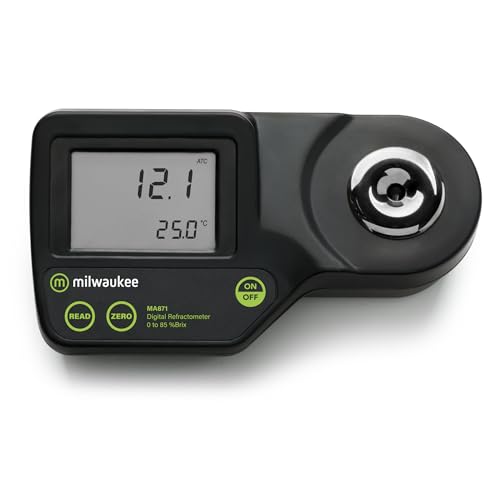
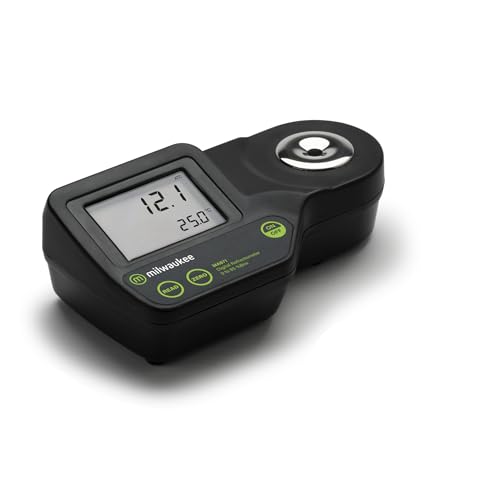
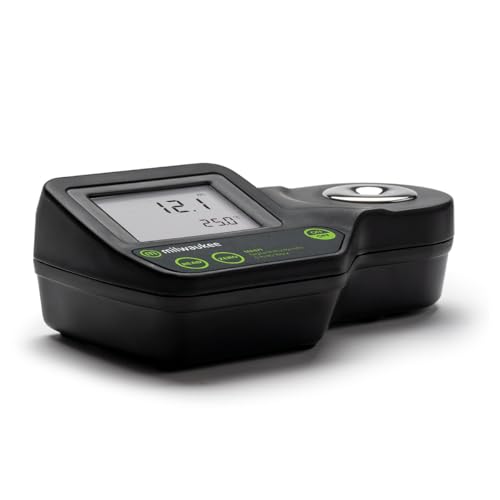
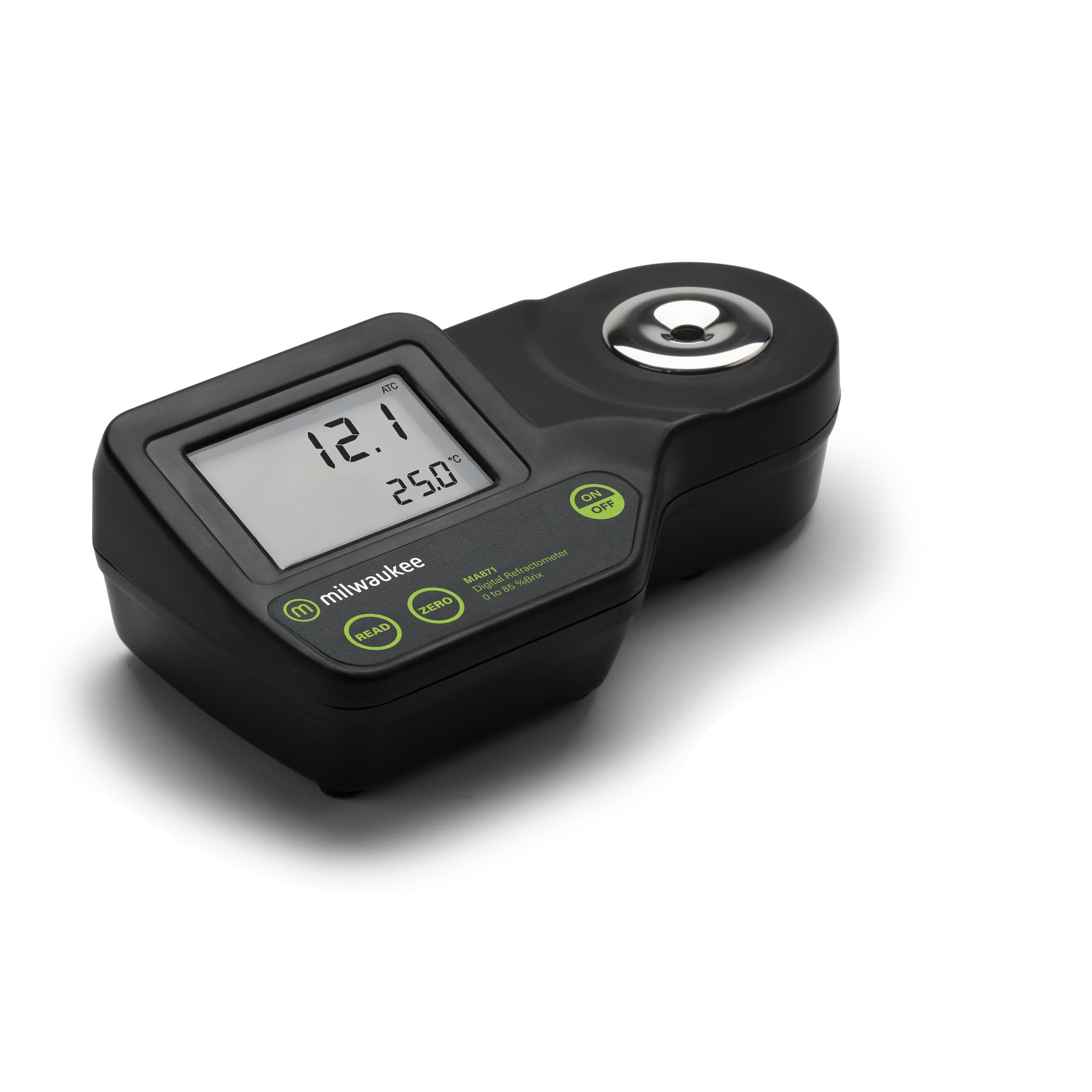
The Milwaukee MA871 Digital Refractometer is a rugged, portable tool designed for fast and precise sugar content measurement in liquids. Featuring a wide 0-85% Brix range, ±0.2% accuracy, and automatic temperature compensation, it delivers reliable results in just 1.5 seconds. Its intuitive two-button operation and easy-to-clean design make it an essential instrument for professionals demanding efficiency and accuracy.



| ASIN | B007Z4IN58 |
| Batteries | 1 Product Specific batteries required. (included) |
| Best Sellers Rank | #32,552 in Industrial & Scientific ( See Top 100 in Industrial & Scientific ) #14 in Lab Refractometers |
| Date First Available | December 31, 2010 |
| Global Trade Identification Number | 00810666006335 |
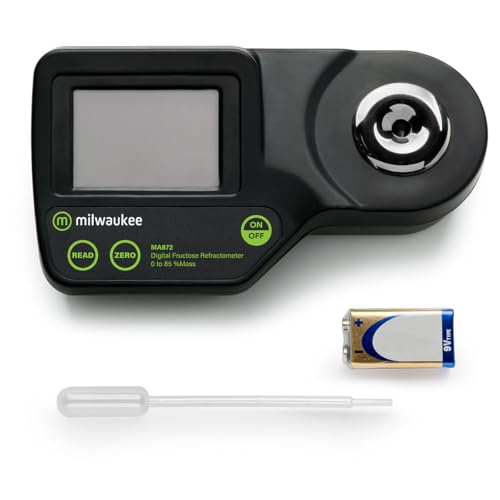
| Included Components | MA871 refractomer, plastic pipette, and instruction manual |
| Is Discontinued By Manufacturer | No |
| Item Weight | 14.9 ounces |
| Item model number | MA871 |
| Manufacturer | Milwaukee Instruments |
| Operating Time | 2 Seconds |
| Product Dimensions | 10 x 5 x 5 inches |
| Special Feature | Readout Accuracy 0.1 pH-grams |
| UPC | 610098313618 810666006335 783942601909 798527590684 |
W**J
I'll drink a beer to this refractometer
This product falls into one of those categories - it is something that you should have, but can't justify spending more money on a lab grade piece of equipment. There are too many other things that I need in brewing beer, and my hydrometers work rather well. The problem with using a hydrometer is the wasted beer. How much easier it is to pull several drops from your fermenting beer than to drain it into a test jar and then pitch it. After reading a lot about digital refractometers, I settled on this one. To begin with, this is a precision instrument. After it arrived, I quickly assessed that a carrying case was definitely needed. Having it packed into a padded case allows me to sleep well every night. The instrument arrived in great condition, packaged really well. READ THE DIRECTIONS. Although you might think it is easy, take 5-minutes out of your precious time and read the directions. It might not reveal anything that you do not already know, but it does allow you to rest assured that when you take the reading the proper way, and clean the pan after each use. It is also important to understand how Brix is different than OG/FG is different than Plato. If you use this instrument as it should be used and treat it as a precision instrument, anyone who brews beer should find this produce one of the best investments they make on any piece of equipment.
M**G
Worked Great
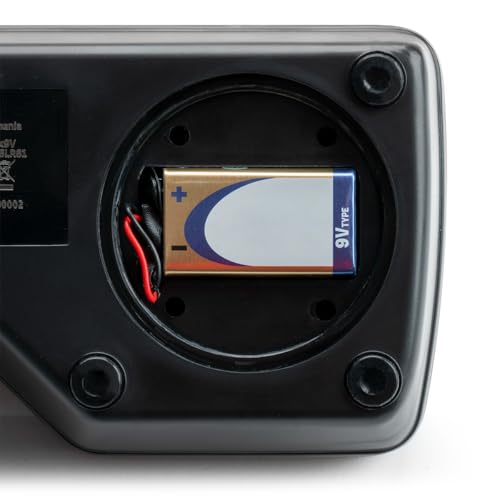
I purchased this to use for processing birch syrup. The instructions were brief but easily understandable to a new user. The 9 volt battery, which came with it, was a bit difficult to install. The space for the battery was just large enough to allow room for the battery. It did fit, however, the battery wire was pinched a bit and I was concerned with damaging it. No damage resulted, however, and the unit worked as it should. I had to spread the terminal connector a bit to get it to connect to the battery. My first attempt to make birch syrup was a resounding success and I could not have done it without a good refractomoter such as this. I also used it to measure the sugar content of our beer and wine. I suggest purchasing additional pippets. Two came with the unit but you will likely need more. Packaging could have been better.
B**N
Great for maple syrup operation
I use this product for our maple sugaring operation. There are other models on the market, and some that seem to be branded and marketed for maple sugaring in a way that inflates their price. This unit does the job, has temperature compensation, and works as advertised. I've used it all season for measuring sap and syrup, and find it to be well made and useful.
M**A
Worked great for testing maple syrup while doing a finishing boil
Worked great! I bought with the hopes of making maple syrup easier after my old hydrometer failed me on my last batch. The MOST important thing I can say is read the instructions before you use it! I was trying to figure it out and was having issues but those issues were user error! If testing a sample that is not room temperature you most wait till the sample heats the sensor area up to get a proper reading which the instructions say.
M**A
Good results if you follow this protocol
I've used this to test wort gravity while brewing my last 5 batches of beer. I was getting inconsistent results -- for instance I would press the read button, wait a few seconds and press it again, and the two reading would often be 0.5 degrees different. I emailed the company and got a quick response. The email indicated that the problem was likely due to residue sticking to the lens. The email was ungrammatical and seemed hastily written, so I won't post it here. Below I've listed the procedure I now follow based on the company's email. Since following this procedure I've been getting consistent and accurate results -- rarely do the readings for a particular sample vary more than 0.1 degrees. - Periodically clean the lens with Windex and a q-tip, then rinse with distilled water and dry with a soft cloth. - Calibrate often with steam distilled water (NOT RO water). - After each use, rinse with distilled water, and dry with soft cloth. - For best results, filter the sample before testing. I've been using qualitative filter paper (available on amazon), but I think a coffee filter would work just as well. This is a pain, but that is what the company recommends, and I've gotten much more consistent results by doing this. - Turn on the power before filling the well. - When gathering the sample, squeeze the bulb of the pipette in and out a couple times to mix the sample. Otherwise, your results might be skewed by, for example, a drop of rinse water in the pipette, or non-uniform distribution of gravity in the sample. - Fill the well about 1/2 full. - Take the reading quickly -- don't let the sample sit in the well for a long time. If the sample temperature is very much different than that of the device, wait for the sample to reach room temp before testing, rather than waiting a long time with the sample on the lens for the temperature to stabilize. - Immediately after taking the reading, dump out the sample, rinse with distilled, and dry the lens. - Don't take multiple readings in succession by pressing the "read" button repeatedly. Better to dump out the sample, rinse, dry, and test again.
A**Y
Great product for quickly testing sugar at the vineyard. Very quick to set up and super easy to use!
C**C
Conforme à la description
J**.
Love this item, I use it when making maple syrup. Very handy
K**N
Varía mucho si se realizan varias lecturas de una misma muestra
C**.
Ottimo articolo per la misurazione dei gradi Brix.
Trustpilot
2 days ago
1 month ago