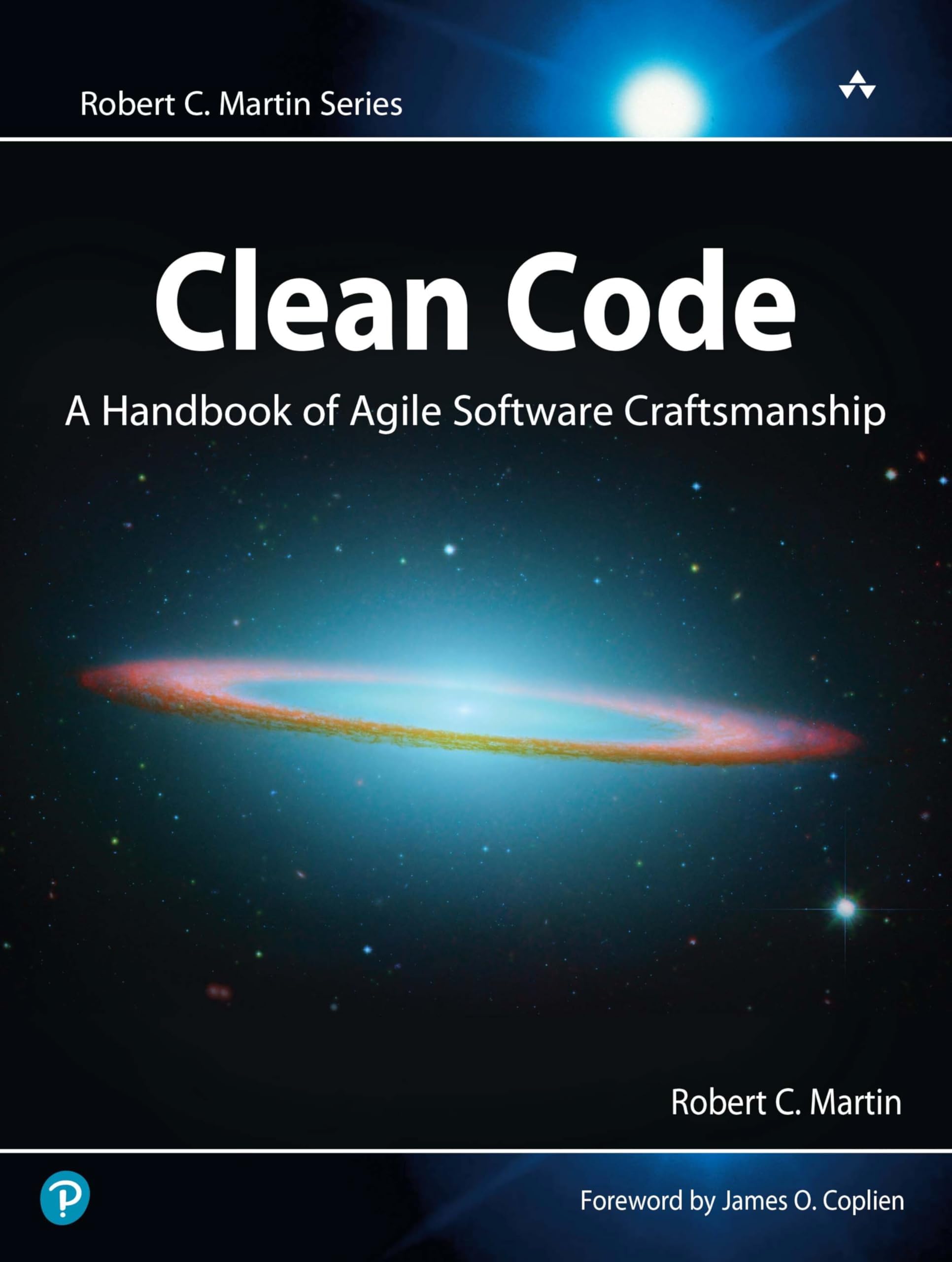

Pearson Clean Code: A Handbook of Agile Software Craftsmanship
Product ID: 250733802
⭐4.7/5 stars - proven excellence
📅Since 2008 - timeless wisdom
📚Paperback - portable learning
Buy anything from 5,000+ international stores. One checkout price. No surprise fees. Join 2M+ shoppers on Desertcart.
Desertcart purchases this item on your behalf and handles shipping, customs, and support to Iceland.
📈 Code smarter, not harder — the ultimate handbook for agile pros!
Pearson's Clean Code by Robert C. Martin is a bestselling, highly rated paperback guide published in 2008 that teaches developers how to write clean, maintainable, and efficient code. It’s a must-have for both beginners and experienced programmers seeking to improve their coding craftsmanship with practical examples and agile principles.

| ASIN | 0132350882 |
| Best Sellers Rank | #38,239 in Books ( See Top 100 in Books ) #63 in Computer Programming Languages #76 in Software Design, Testing & Engineering #3,914 in Higher & Continuing Education Textbooks |
| Customer reviews | 4.7 4.7 out of 5 stars (4,961) |
| Dimensions | 17.27 x 2.29 x 22.86 cm |
| Edition | 1. |
| ISBN-10 | 9780132350884 |
| ISBN-13 | 978-0132350884 |
| Item weight | 784 g |
| Language | English |
| Print length | 464 pages |
| Publication date | 21 August 2008 |
| Publisher | Pearson |
A**.
Ein Muss für jeden, der besser programmieren will – nicht nur für Anfänger „Clean Code“ hat mir persönlich sehr gut gefallen und ich würde es jedem empfehlen, der sich ernsthaft mit Softwareentwicklung beschäftigt – egal ob Anfänger oder erfahrener Entwickler. Als Ergänzung beim Programmieren lernen: Gerade wenn man neu ins Programmieren einsteigt, ist das Buch eine perfekte Ergänzung, weil es nicht nur zeigt, was man programmieren soll, sondern wie man es sauber und verständlich macht. Es geht weit über Syntax und Sprache hinaus und behandelt die Prinzipien guten Codes – etwas, das in vielen Kursen oft zu kurz kommt. Auch für Fortgeschrittene absolut lesenswert: Auch wenn man schon programmieren kann, lohnt sich die Lektüre. Das Buch hilft, schlechte Angewohnheiten zu erkennen und zu reflektieren, die sich im Laufe der Zeit eingeschlichen haben. Es geht dabei nicht um theoretische Regeln, sondern um praktische, nachvollziehbare Beispiele und konkrete Tipps, die man direkt umsetzen kann. Fazit: „Clean Code“ sollte jeder Programmierer kennen und gelesen haben. Es hat mir geholfen, meinen Code strukturierter, lesbarer und verständlicher zu schreiben – was nicht nur mir, sondern auch meinen Kollegen zugutekommt. Absolute Empfehlung für alle, die sauberen, wartbaren Code schreiben wollen – ein echter Klassiker der Softwareentwicklung.
C**A
Excelente libro
S**M
Every so often, a book comes along that codifies best practice in a way that manages to illuminate the path from where things are right now, to a better place that we'd rather be -- things like Fowler et al. Refactoring: Improving the Design of Existing Code (Object Technology Series) or the Gang of Four Design patterns : elements of reusable object-oriented software . This is one of those books. And if much of the material is the sort that seems obvious in hindsight -- well, that is the mark of a well written book, to make the concepts that clear. Taking a series of real world examples -- open source projects with significant user bases, including FitNesse and JUnit -- a series of worked examples take us from good, or at least adequate, code, to a form which is better factored, and easier to read, with the steps along the way clearly marked. Yes, even some of Kent Beck's code is put under the microscope, and carefully polished that extra stage or two more. The reader is cautioned that, without working long hours to follow these examples, this will be just another of those feel-good books. I don't quite agree -- spending just a little time to follow the transformations, and then reflecting on one's own outpourings should be enough to make this a feel-bad book. All the sins from obscurely named variables to sprawling functions that gaily mix abstraction levels, we've all done them (especially programming in FORTRAN on minicomputers with slow stacks and a rule of thumb that 1 call ~ 40 loc in terms of performance). The maxim to take from the book is based on Baden-Powell's "Try and leave this world a little better than you found it", and owes to the same school of thought as "whenever you are in the garden, pull at least one weed". The meat of the book is in distinguishing what are the weeds from the intended crop. So read it, understand the examples, and then refer to it often -- like the other titles mentioned, it is a reference work, and should join them as among the most thumbed on your bookshelf.
U**G
.
G**E
This is a great book. I have found the concepts informative and helpful. I'm glad I decided to get it. As an aid, I listened to the audio book version while I followed along reading it. This made taking notes a dream. I am now on my way to leveling up my programming skills.
Trustpilot
1 week ago
4 days ago