We remain fully operational. Our teams are working around the clock to ensure your deliveries continue safely.

DOWNLOAD THE APP


Customer Services
Copyright © 2025 Desertcart Holdings Limited
DOWNLOAD THE APP
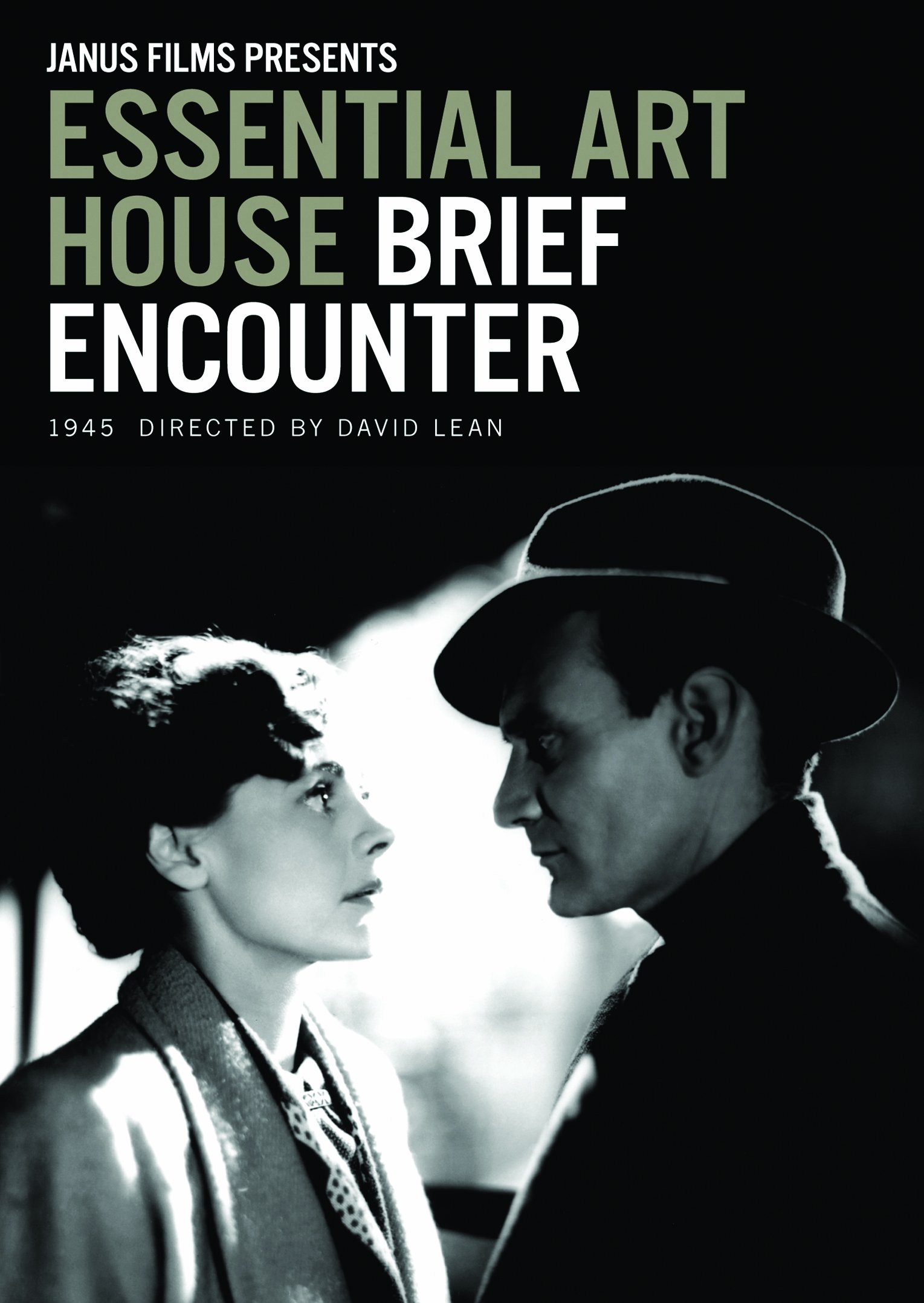
An Italian-born housewife and a married stranger meet in a British train station and briefly fall in love. Review: A Classic Film By A Classic Director And A Classic Playwright - It was only about ten years ago that I first became aware of and first saw Brief Encounter. It’s a famous romance story unknown to many people (at least to people I ask whether they have ever seen it). It’s an early work of David Lean who went on to direct blockbusters in later decades such as Lawrence of Arabia, Dr. Zhivago, and The Bridge On the River Kwai. Noel Coward is certainly a giant in the history of theater. Brief Encounter tells a simple and sympathetic story of two people, married to others, who meet by chance and feel compelled to get to know each other better. That process inexorably leads to them falling in love and dealing with the many hurdles of going forward together. The anguish it brings out in both is presented so well that I and many other fans of this film find ourselves captivated. So what is the “secret sauce” in this movie that makes it such a classic? Is it the charismatic performances of Celia Johnson and Trevor Howard? Is it the wonderful cinematography ranging from the dark scenes of trains hurtling through the train station at night with clouds of steam emerging, the wonderful shadows in passageways, or various scenes of English life in the 1940s? Or perhaps the evocative music of Rachmaninoff or even the shrill sounds of train whistles? Or the comic relief provided by various scenes involving other talented actors in the “refreshment room” of the train station where the movie begins? Or so many other wonderful details in the film? All of the above. I find many older movies dated and less relevant or interesting. Not this one. About five years ago, an independent theater in my area exhibited Brief Encounter. I was happy when I went to the theater and saw a good-sized crowd ranging from young adults to senior citizens. It made me happy to realize this film has such staying power over the years and will be seen by generations to come. Review: LOVE AND HEARTBREAK DONE WITH STYLE AND CLASS. - Master director David Lean's reputation undoubtedly consists mostly of his brilliance with his epic panoramas, such as the classics THE BRIDGE ON THE RIVER KWAI, LAWRENCE OF ARABIA, DOCTOR ZHIVAGO, and A PASSAGE TO INDIA. Of course those who look closely in these films will see that Lean chose only the best actors to flesh out real, true characters caught in the midst of overwhelming events--witness Peter O'Toole's vivid characterization of T. E. Lawrence and Peggy Ashcroft's beautiful, indelible Mrs Moore from A PASSAGE TO INDIA. With BRIEF ENCOUNTER, the actors are everything, too. The story is simple--in a very sad, post-WWII London, two married people meet by chance at a (glorious) train station and begin a friendship which slips quickly into love. The depth of their feelings is never in question, as Trevor Howard and the incandescent Celia Johnson portray these feelings honestly and without pretense, clutter, or the manneredness of modern depicitions of love. Whether the characters will be adulterers or not is important to them; they have principles and do truly care for their existing families. Again, they are two ordinary adults in the midst of something overwhelming; how they handle the situation is what gives them grace and dignity. The use of Rachmaninoff's Concerto no. 2 in C minor, especially the adagio section, was a stroke of genius. One cannot hear the piece ever again without imagining a tear streaming from Miss Johnson's large, soulful blue eyes. Fans of romance, classic cinema, or simply great acting should not miss this experience. The DVD transfer is excellent and Criterion should be applauded again for restoring a vital classic to modern audiences.
| ASIN | B0035ECHIG |
| Actors | Celia Johnson, Cyril Raymond, Joyce Carey, Stanley Holloway, Trevor Howard |
| Best Sellers Rank | #157,873 in Movies & TV ( See Top 100 in Movies & TV ) #6,022 in Romance (Movies & TV) #23,603 in Drama DVDs |
| Customer Reviews | 4.6 4.6 out of 5 stars (487) |
| Director | David Lean |
| Is Discontinued By Manufacturer | No |
| Item model number | CRRNEAH30DVD |
| MPAA rating | NR (Not Rated) |
| Media Format | Black & White, Full Screen, Multiple Formats, NTSC |
| Number of discs | 1 |
| Product Dimensions | 0.7 x 7.5 x 5.4 inches; 2.72 ounces |
| Release date | April 13, 2010 |
| Run time | 1 hour and 26 minutes |
| Studio | Criterion |
| Writers | Anthony Havelock-Allan, David Lean, Noel Coward, Ronald Neame |
J**R
A Classic Film By A Classic Director And A Classic Playwright
It was only about ten years ago that I first became aware of and first saw Brief Encounter. It’s a famous romance story unknown to many people (at least to people I ask whether they have ever seen it). It’s an early work of David Lean who went on to direct blockbusters in later decades such as Lawrence of Arabia, Dr. Zhivago, and The Bridge On the River Kwai. Noel Coward is certainly a giant in the history of theater. Brief Encounter tells a simple and sympathetic story of two people, married to others, who meet by chance and feel compelled to get to know each other better. That process inexorably leads to them falling in love and dealing with the many hurdles of going forward together. The anguish it brings out in both is presented so well that I and many other fans of this film find ourselves captivated. So what is the “secret sauce” in this movie that makes it such a classic? Is it the charismatic performances of Celia Johnson and Trevor Howard? Is it the wonderful cinematography ranging from the dark scenes of trains hurtling through the train station at night with clouds of steam emerging, the wonderful shadows in passageways, or various scenes of English life in the 1940s? Or perhaps the evocative music of Rachmaninoff or even the shrill sounds of train whistles? Or the comic relief provided by various scenes involving other talented actors in the “refreshment room” of the train station where the movie begins? Or so many other wonderful details in the film? All of the above. I find many older movies dated and less relevant or interesting. Not this one. About five years ago, an independent theater in my area exhibited Brief Encounter. I was happy when I went to the theater and saw a good-sized crowd ranging from young adults to senior citizens. It made me happy to realize this film has such staying power over the years and will be seen by generations to come.
R**S
LOVE AND HEARTBREAK DONE WITH STYLE AND CLASS.
Master director David Lean's reputation undoubtedly consists mostly of his brilliance with his epic panoramas, such as the classics THE BRIDGE ON THE RIVER KWAI, LAWRENCE OF ARABIA, DOCTOR ZHIVAGO, and A PASSAGE TO INDIA. Of course those who look closely in these films will see that Lean chose only the best actors to flesh out real, true characters caught in the midst of overwhelming events--witness Peter O'Toole's vivid characterization of T. E. Lawrence and Peggy Ashcroft's beautiful, indelible Mrs Moore from A PASSAGE TO INDIA. With BRIEF ENCOUNTER, the actors are everything, too. The story is simple--in a very sad, post-WWII London, two married people meet by chance at a (glorious) train station and begin a friendship which slips quickly into love. The depth of their feelings is never in question, as Trevor Howard and the incandescent Celia Johnson portray these feelings honestly and without pretense, clutter, or the manneredness of modern depicitions of love. Whether the characters will be adulterers or not is important to them; they have principles and do truly care for their existing families. Again, they are two ordinary adults in the midst of something overwhelming; how they handle the situation is what gives them grace and dignity. The use of Rachmaninoff's Concerto no. 2 in C minor, especially the adagio section, was a stroke of genius. One cannot hear the piece ever again without imagining a tear streaming from Miss Johnson's large, soulful blue eyes. Fans of romance, classic cinema, or simply great acting should not miss this experience. The DVD transfer is excellent and Criterion should be applauded again for restoring a vital classic to modern audiences.
M**E
Excellent movie, great movie quality.
Not much else to say. Captivating story and a great "transfer" or image quality. The two lead actors are excellent; the plot is believable. Excellent entertainment.
D**E
A post-war 'Madame Bovary'.
In 1970, David Lean's career virtually ended with the critical mauling given 'Ryan's Daughter', a bombastic reworking of 'Madame Bovary'. He had made a much more successful, unofficial adaptation of Flaubert's book, via a Noel Coward playlet, a quarter of a century earlier, with his first masterpiece, 'Brief Encounter'. Like Emma Bovary, Laura Jesson chokes in a stultifying middle-class home with an aggravatingly gentle and tolerant (read: indifferent) husband, who escapes by reading books, watching films and, eventually, having an adulterous affair. The first time you see 'Brief Encounter', you are most likely to be struck by its overpowering romantic qualities - in the same way Laura breaks the confines of her identity as wife, housewife and mother by loving another man, so the film's middle-class trappings (the clipped dialogue; the use of Rachmaninoff as an emotional signifier of class and taste) are burst by Lean's near-reckless visual intrusions, his violent editing and use of close-up at moments of extreme passion; the creation of awkwardly painful situations; the use of dark film noir lighting to at once swamp, threaten and ennoble this erring couple. Like Laura (see the emblematic scene where she laughs hysterically the night her son is run over, but probably first realises she's in love and her husband doesn't deserve her) - surface politeness becomes feverish, uncontrollable. This sense doesn't diminish on subsequent viewings - the film IS incredibly moving. But it becomes more noticeable how a critique or commentary is built into the film. It is easy to forget that we only get to see one scene of the affair that can actually be called objective - the opening sequence interrupted by Dolly - and this is characterised by what isn't seen or shown. Everything else is mediated through Laura's point of view, in a long flashback constructed as the confession to her husband she will never utter. We notice that, as a reader and film-goer, how prone to flights of fantasy she is (see the glorious travelogue montage). We see not only how many scenes feature prison-like bars (especially in the living room in which she is thinking about the romance), but how many feature windows, mirrors and screens. These are not just little boxes that confirm the confinement of Laura's life, or visual emblems of her split between duty and desire, but also little screens on which she, perhaps, projects her fantasies. She is often seen constructing stories or moods - putting on the Rachmaninoff before she reminisces; ringing up an acquaintance to cover up a lie. What I suggest is, Lean and Coward ask us to separate what is true about the romance and what is romanticised. It seems to be a crucial split between the mind and body. The liaison is an Ideal, a thing of the mind - though dangerous, it can be contained. But look what happens when sex rears its awkward head. The order imposed on the transgressive affair (how very English that adultery should be train-timetabled!), the formal logic in which the narrative is constructed breaks down. Firstly, Laura's voiceover is for the only time displaced by another, Alex's urging her to come to the flat; the second is her impossible knowledge of Alec's being confronted by his friend after she has run out the back way - she couldn't possibly have seen. This is when the film stops being a fantasy, and becomes truly disruptive and dangerous. The 'problem' is not the fear of adultery per se or social transgression, but a fear of sex itself. Because, 'Brief Encounter' is ultimately, like 'Madame Bovary' for France, a fierce critique of middle-class England, not just the way it chokes the life and imagination out of people, forcing them to replace life with second-hand romantic imagination; but the way the victims are complicit in their own imprisonment, lacking the will to escape or change. This malaise is symbolised in the grit that gets in Laura's eye (Alex, by taking it out, gives her a new way of looking at the world) or the disease-carrying soot Alec hopes to eradicate - the very atmosphere of Britain decays the soul. Maybe 'fierce' is too strong an adjective - Lean is very sympathetic to Laura's agony - but as his subsequent films prove, he was never very interested in staying still. 'Encounter' is so focused on the couple, we forget what a brilliant, funny and detailed portrait the film is of post-war, rationed, suburban England, where emotion, like money, must be strictly rationed.
Z**E
Oh, this is such a brilliant movie - means so much to me as I was born and raised in the U.K. and my mum used to take me to the Kardomah Cafe, where these two used to go, when I was a little girl. I guess this was kind of scandulous at the time and watching movies made around this era makes you realize how acting has changed - in that they "over-acted". But that aside - it's one of my very favourite movies - one that I want to watch again. AND THE MUSIC - perfection! Bought used and was perfect....not always the way.
マ**ク
メロドラマの秀作、というよりも恋愛映画史上に残る傑作。英国を代表する劇作家ノエルカワードの30分ほどの一幕劇、静物画の内容を膨らませて映画化した。 ドラマの大部分が主役ローラの独白で進んでいくという特異な作品でもある。駅、列車という人生を連想させるモチーフを巧みに利用したリーンの演出の妙。第三の男にも匹敵する陰影の効果。許されぬ恋に呻吟する主人公の心の内を繊細に表現したセリアジョンソンの卓越した演技力。ラフマニノフのピアノ協奏曲第2番がドラマを盛り上げる見事な作用。すべてがここに揃った名作である。 ノエルカワードについてもう少し。稀代のダンディで、ショーンコネリーがボンド役に決まった際、カワードを訪ねファッションのアドバイスを乞うたという逸話もある。役者でもあり、オードリーのパリで一緒に、にも出演している。プールサイドで美女に囲まれポーカーに興じる、ピンクのバスローブを粋に着こなす老人がその人である。 クランクインの際、カワードは撮影現場におらず、ストーリーに関しては一切口を出さなかったが、音楽だけはラフマニノフを決して譲らなかったそうである。カワードのディレッタンティズムが窺えるエピソードと言えるだろう。
B**N
This DVD was a gift for my husband. It was in perfect shape when received and has been watched several times since its arrival. The title is BRIEF ENCOUNTER and I believe it to be the first movie with this title that came out many years ago. Thank you again for the quick service from the order date until the date it arrived.
G**U
出会いと別れ、その過程の主人公のきめ細かい心情をドラマチックに描いてる。バックの音楽も素晴らしい。デビッドリーン監督といえばアラビアのロレンスやドクトルジバコなどの壮大な絵を描く監督であるが、こうゆう静物画のものも素晴らしい。一見の視聴あり。
J**D
J'ai vu ce chef d'oeuvre pour la première fois à sa sortie, donc en 1947, je crois, et j'en suis sorti très impressionné par le "rôle" qu'y joue le Concerto de Rachmaninoff. La qualité technique n'était pas prépondérante à l'époque. Ce n'est que plus tard, le revoyant que j'ai déploré la médiocrité de la bande son. je me suis donc précipité quand j'ai appris la commercialisation d'une version "remasterisée" , m'attendant à être "ébloui" par la qualité technique de ladite bande son, que j'étais en droit d'attendre grâce aux immenses progrès dans ce domaine. Hélas, hélas, hélas, il n'en est rien et j'éprouve la sensation d'avoir été abusé par la présentation de cette "nouvelle" version qui ne diffère en rien de celle de 1947...Je ne m'y laisserai plus prendre. Pas d'autre commentaire
Trustpilot
3 weeks ago
2 weeks ago