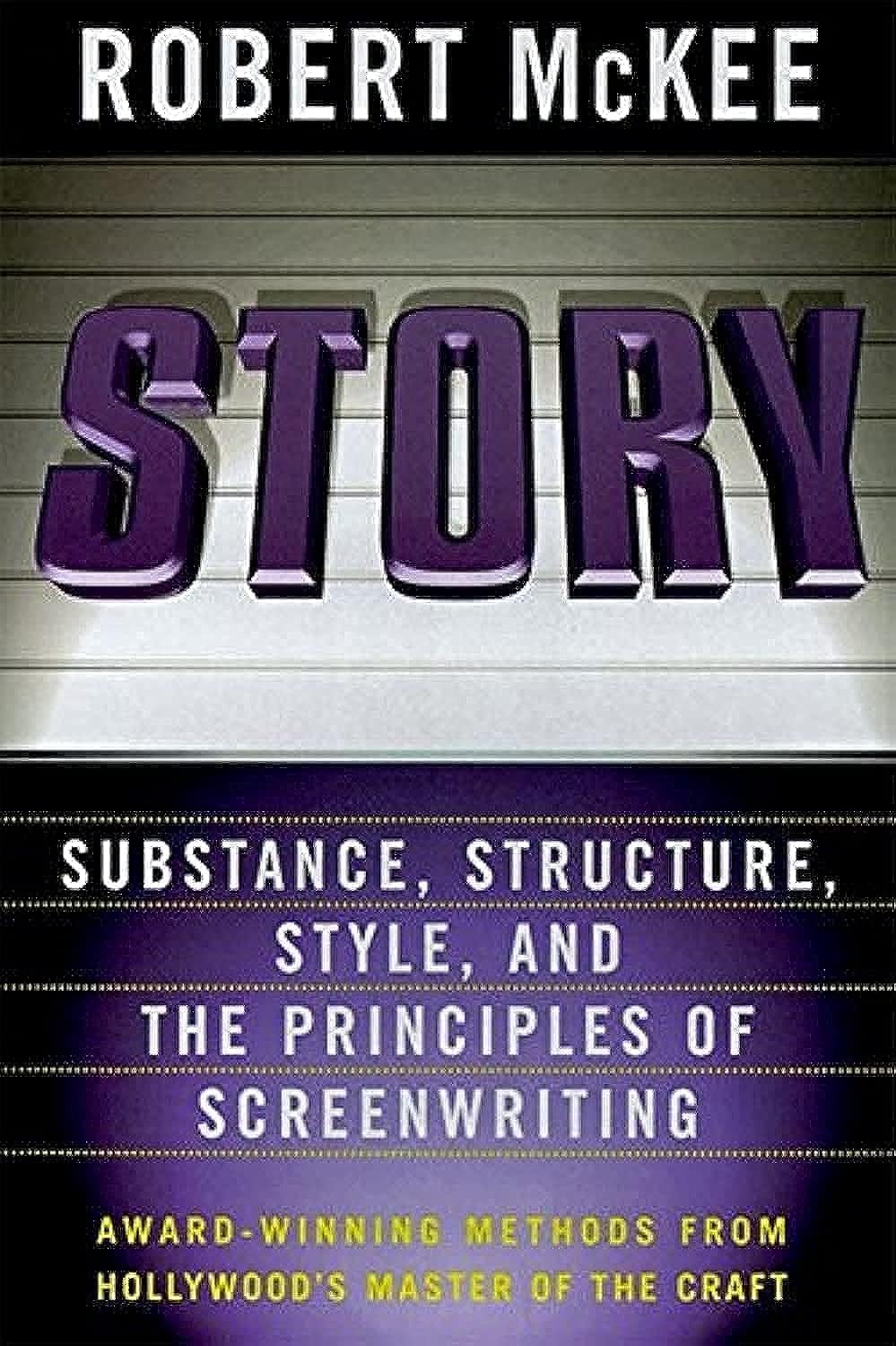
Story: Substance, Structure, Style and the Principles of Screenwriting
Product ID: 221416
Buy anything from 5,000+ international stores. One checkout price. No surprise fees. Join 2M+ shoppers on Desertcart.
Desertcart purchases this item on your behalf and handles shipping, customs, and support to Iceland.
desertcart.com: Story: Substance, Structure, Style and the Principles of Screenwriting: 9780060391683: McKee, Robert: Books Review: Fascinating and Wonderfully Helpful - I recommend this very highly to anyone interested in stories. Although it is mainly addressed to scriptwriting, it might very possibly be of great value to writers of books, etc, also. The author provides a wonderfully organized perspective, and sharp and persuasive analysis of film stories and scripts. And it seems well oriented towards being helpful to a writer, rather than being merely an entertaining read nor to show off his obviously extensive knowledge . Everything is put into well-organized context most useful towards constructing screenplays / stories . It gives a lot of perspectives that even a pro writer might find helpful, I'd think, yet is written clearly and accessibly so that even a beginning or aspiring writer should be able to find much and most of it understandable and helpful. There are also references to films, probably some of which one would have seen already. And in cases where one may not håve seen the film, the author describes the film or scene enough to understandably make the point intended or to serve as a good example of some particular topic or principle or pattern. The book's approach does not take a "formulaic" approach, nor tries to channel writers into any particular pattern or formula. The author's appreciation for a wide variety of genres is evident, as is his love for many unique and wonderful films, as varied in their uniqueness as humans, perhaps. But the book's genius is in deftly identifying and portraying and explaining various principles and patterns of stories and their construction, which though not hard-rules, are often in play, and can be helpful guidelines and perspectives for anyone writing a story or script. Most-helpful! I myself felt very stuck at one point in terms of how to proceed to revise a script I had written. Taking time out to read this book, I then felt very much enabled to move-on in various ways, improving the script. With the insights gained from this book, I felt much more at ease, and confident, in moving forward with further writing and revisions, and also, gained various new directions for improvements I'd very possibly not have thought of without the insights and methods gained from this book. Again, I highly recommend this, as a wonderful book to read early on in one's aspirations towards writing, and as an excellent book, probably, for a writer at any level of experience. Review: BEST BOOK ON HOW TO CREATE STORIES 100% hands down - Sorry I don’t have time to write a succinctly profound review but if you’re even barely considering buying this book, JUST DO IT. I honestly can’t believe the price is 25$. If you have an ounce of raw story telling talent, or if u consider yourself professional, this book is for you. Or if you appreciate the art of storytelling; or if u work in the industry and get scripts across your desk, this book is for you. I do not write scripts and have no plans to; I was introduced to this book years ago when reviewing a script someone was interested in getting funded and felt appropriate to educate myself on what makes a script great... Bc we all know when a script isn’t, but not necessarily Why. Robert blew my mind w this one; the depth, the clarity, the profundity and the genius simplification of one of the most complex art forms - telling stories about the human experience. The essence of the art form is principled out in the book. I’ve been raving about this book since I first read it in 2017, lent my hand-me-down copy, and bought my own last week to do a little book club w my gf. We enjoy watching episodics and movies and have a great time articulating why we think stories are great. I’m super excited diving back into this book again especially w a partner. In my over simplified, outsider opinion, this book is THE formula, the “bible” so to say, of the who what where when and most importantly WHY of scripting for screen. Just buy it. Buy two copies and gift one to your writing buddy or a director u work with. Heck, buy 3 copies and keep on in the car or at the office. Again, ~25$ - wow. If u want to get your script funded - this is the next place for you to go. Scripts are picked up bc they will sell, and in order to sell they have resonate universally. This book explains the essence, the principles of the art form of script writing. If you really think you have what it takes to be an all star writer then digesting this book should 100% fun for you. Just my 3 cents... again I have no plans of writing and I’m not a writer. But I enjoy the art form and I respect the mastery of technical and creative that blend as genius and excellence. For me, having this knowledge has made stories on screen that much more enjoyable as I watch the principles outlined in this book play themselves out like clockwork. I hope I’ve made it clear how magnificent and remarkable this book is in both knowledge and presentation. The hugest shoutout to Robert McKee and his wife who apparently edited this. And shoutout to all the other people behind the scenes on making this book happen. It’s brought me tons of joy, entertainment, knowledge and invigoration. And quite honestly had widened my perspective of the human condition and life itself. Just buy it, and read it. Take notes. Study it. Use it. Capitalize on it if script writing and story telling is in your cards. And if u love this book as much as I do let’s start a club lol.
| Best Sellers Rank | #15,054 in Books ( See Top 100 in Books ) #3 in Screenplays #3 in Screenwriting (Books) #9 in Authorship Reference |
| Customer Reviews | 4.7 out of 5 stars 3,137 Reviews |
C**.
Fascinating and Wonderfully Helpful
I recommend this very highly to anyone interested in stories. Although it is mainly addressed to scriptwriting, it might very possibly be of great value to writers of books, etc, also. The author provides a wonderfully organized perspective, and sharp and persuasive analysis of film stories and scripts. And it seems well oriented towards being helpful to a writer, rather than being merely an entertaining read nor to show off his obviously extensive knowledge . Everything is put into well-organized context most useful towards constructing screenplays / stories . It gives a lot of perspectives that even a pro writer might find helpful, I'd think, yet is written clearly and accessibly so that even a beginning or aspiring writer should be able to find much and most of it understandable and helpful. There are also references to films, probably some of which one would have seen already. And in cases where one may not håve seen the film, the author describes the film or scene enough to understandably make the point intended or to serve as a good example of some particular topic or principle or pattern. The book's approach does not take a "formulaic" approach, nor tries to channel writers into any particular pattern or formula. The author's appreciation for a wide variety of genres is evident, as is his love for many unique and wonderful films, as varied in their uniqueness as humans, perhaps. But the book's genius is in deftly identifying and portraying and explaining various principles and patterns of stories and their construction, which though not hard-rules, are often in play, and can be helpful guidelines and perspectives for anyone writing a story or script. Most-helpful! I myself felt very stuck at one point in terms of how to proceed to revise a script I had written. Taking time out to read this book, I then felt very much enabled to move-on in various ways, improving the script. With the insights gained from this book, I felt much more at ease, and confident, in moving forward with further writing and revisions, and also, gained various new directions for improvements I'd very possibly not have thought of without the insights and methods gained from this book. Again, I highly recommend this, as a wonderful book to read early on in one's aspirations towards writing, and as an excellent book, probably, for a writer at any level of experience.
B**Y
BEST BOOK ON HOW TO CREATE STORIES 100% hands down
Sorry I don’t have time to write a succinctly profound review but if you’re even barely considering buying this book, JUST DO IT. I honestly can’t believe the price is 25$. If you have an ounce of raw story telling talent, or if u consider yourself professional, this book is for you. Or if you appreciate the art of storytelling; or if u work in the industry and get scripts across your desk, this book is for you. I do not write scripts and have no plans to; I was introduced to this book years ago when reviewing a script someone was interested in getting funded and felt appropriate to educate myself on what makes a script great... Bc we all know when a script isn’t, but not necessarily Why. Robert blew my mind w this one; the depth, the clarity, the profundity and the genius simplification of one of the most complex art forms - telling stories about the human experience. The essence of the art form is principled out in the book. I’ve been raving about this book since I first read it in 2017, lent my hand-me-down copy, and bought my own last week to do a little book club w my gf. We enjoy watching episodics and movies and have a great time articulating why we think stories are great. I’m super excited diving back into this book again especially w a partner. In my over simplified, outsider opinion, this book is THE formula, the “bible” so to say, of the who what where when and most importantly WHY of scripting for screen. Just buy it. Buy two copies and gift one to your writing buddy or a director u work with. Heck, buy 3 copies and keep on in the car or at the office. Again, ~25$ - wow. If u want to get your script funded - this is the next place for you to go. Scripts are picked up bc they will sell, and in order to sell they have resonate universally. This book explains the essence, the principles of the art form of script writing. If you really think you have what it takes to be an all star writer then digesting this book should 100% fun for you. Just my 3 cents... again I have no plans of writing and I’m not a writer. But I enjoy the art form and I respect the mastery of technical and creative that blend as genius and excellence. For me, having this knowledge has made stories on screen that much more enjoyable as I watch the principles outlined in this book play themselves out like clockwork. I hope I’ve made it clear how magnificent and remarkable this book is in both knowledge and presentation. The hugest shoutout to Robert McKee and his wife who apparently edited this. And shoutout to all the other people behind the scenes on making this book happen. It’s brought me tons of joy, entertainment, knowledge and invigoration. And quite honestly had widened my perspective of the human condition and life itself. Just buy it, and read it. Take notes. Study it. Use it. Capitalize on it if script writing and story telling is in your cards. And if u love this book as much as I do let’s start a club lol.
J**A
Beyond screenwriting, Story goes so much deeper
I absolutely loved this book. I'm working on a novel series, and I am serious about my craft and career. I have read my fair share of "How to write an awesome novel" books, but none went into the true heart of the story like this book. It goes beyond simple "How to write awesome stories" guides. It goes to the heart of what story means to us as humans, how it touches us, why it touches us, and why some stories touch us more deeply than others. While this book is focused mostly on screenwriting, I still got a tremendous amount of information from it. I tend to write in a format more akin to watching a good movie rather than a deep literary fashion, so this was still right up my alley. It broke down many famous movies and helped me understand them better as well as understand why they struck me the way they did. I think that's the part that truly made me love this book - it's not a simple "how-to" guide, but a "why this works the way it does." The first part focuses on why stories affect us the way they do, and then it moves onto how a good story is formatted to best capture an audience. Now when I go back into editing mode, I can see if scenes are working properly and what to do if they're not. While most of the guides I've read tell you "Open the book right in the middle of the action to capture the audience," this tells you how to do it right, to emotionally engage the audience and make them stay with you to the end. While I can't say much about it in regards to actual screenwriting, I can see how the principles apply to the novel format, and now I know why some stories strike me as mediocre in comparison to others. I recommend that any new writers, especially those in the indie/self-publishing scene get this book and really understand how to make their story work. I've read stories with good plots and bad delivery because the author did not properly hone his or her craft. Seriously, get this (among many others, learn the craft!) and read it more than once because even I couldn't fully absorb it all in one pass. When I'm ready to do some serious editing, I'm going to read this again first to make sure my work has impact. If you are serious about your writing career and craft, get this book!
T**N
Very Good...
Robert Mckee has a series of books on writing of which this is one. I will read this just before I write and I want to hone a section of my work. In this case story. It is helpful to scan the book before I write to hone my focus on a particular topic.
F**I
Story Diagrams, Image Systems et al for Critical Analyses, Interpretation, and Study
After so many reviews of McKee’s “Story,” all the many things said about it as a screenwriting resource are true, but the book can provide additional benefits. McKee seems to be to film what people like critic Northrop Frye have been to literature. Furthermore, it appears he could provide a systematic basis for not only for examining and developing screenplays but also for critical analyses and understanding for other areas of interpretation and study. More specifically in Part I, “The Writer and the Art of Story,” McKee discusses the importance of story for humankind in deriving “livable meaning” and how the art of film has become a dominant medium in this endeavor. He also treats the challenges in devising compelling stories and films in our cynical and relativistic times citing the need to address key values along with the positive/negative changes in life. In Part II, McKee provides several diagrams and lists that help illuminate “The Elements of Story” in particular The Story Design Triangle (pg. 45), Listing of Film Genre’s (pg. 80), and Controlling Idea Graphs (pg. 123) and reminding me of Robert Denham’s work on “Frye’s Critical Method” (see my review). Continuing in the lengthy Part III, the author uses such graphics more extensively as in his Protagonist Expectations/Result Gap Progression Diagram (pg. 151), Inciting Incident and Quest Chart (pg. 197), and Act Design Schematics (pg. 221) to explicate “The Principles of Story Design.” While he goes on to treat ways his principles can be put into practice in Part IV, “The Writer at Work” what stood out for me in this concluding segment was McKee’s attention to the visual aspects of screenplays and storytelling in the film medium. He emphasizes the famous axiom ‘Show Don’t Tell’ and ‘Putting the Film in the Viewer’s Head’ (my substitution of Viewer for Reader in the heading on pg. 394). Commenting that “Whether a story’s content is beautiful or grotesque, spiritual or profane . . . it wants full expression . . . as audience in the ritual of the story, we react to every image, visual or auditory, symbolically . . . “ (pgs. 400-401), McKee also covers how writers have and can devise Image Systems to increase the expression of meaning in films. Can’t McKee’s opus be considered as an aid for critical analyses and understanding not only for films but also in media studies, humanities, and other areas of human affairs where stories and their interpretation are taking on increasing importance? Take a look and see.
H**R
The VERY Best Book on Screenwriting TO THIS DATE
Not only is one of the best books I've ever read, it does NOT disappoint in way, shape, form, or capacity. Robert McKee makes a science out of screenwriting and teaches you how to APPLY. I must admit that it is FULL of concepts and you will have to read this over-400-page-book more than once AND don't be shy if you still have to flip through it again or use AI for answers. It is THICK and I don't think we are supposed to understand it all UNTIL we start working the "rules" ourselves. Happy Screenwriting, Family. This is a marathon, not a sprint.
B**R
Must for writers especially screenplay
Wow. I’m BLOWN AWAY by this book. In a lucky non co incidence I met an actor and we got to talking and he recommended this book. I only trusted him because his favourite movie is MY favorite movie. This was proper BRAIN CANDY for me the whole of December and January I didn’t work at all I went out and enjoyed my holiday and I gobbled up this book like no other . I LOVE it, I ADORE it , it came to me at the perfect time I was ready to elevate my writing. This book should 100% inspire your creativity and ideas . I’ve seen people saying they don’t like rules but I don’t see it this way I actually felt my creativity being stimulated to the max. WOW WOW and WOWZA Now guess what I made a wall full of notes on this book and I re read it over and over I know some of the stuff by heart already.AND I plan to read it again and re do my notes if necessary someone on here said it’s the story telling bible and i couldn’t agree more , I will read it till I’m dead and beyond I’m SO HAPPY THANK YOU OMG THANK YOOOOOUUUUUUUU This guy is clever please listen to him. I’ll update this comment when my movie is out. Thank you *takes a bow*
L**D
How to create "story" -- the nuts and bolts
Just as Syd Field found a profound pattern based on the "golden proportions of structure in time" (the film's timeline), and he is perhaps one of the best to bring this to light, Robert McKee gives you that other thread in the "pleat of creation:" STORY. For there is STRUCTURE, there is STORY and there is IDEA. So, it's not about comparing which is best, Syd Field or McKee, it's about discovering the other strand that makes a film, novel, short story, theater play ... work. This book gives you the nuts and bolts of how to "spin a yarn" that makes not only sense and moves, but uplifts the human condition within it. I have not found (nor have I looked hard, yet) a book that describes the third thread in this pleat of story telling: IDEA. Ideas abound, but not all of them make great stories. Nevertheless, by following Syd Field's and Robert McKee's experiences, you can make your idea for a story (whether in film or novel) work so they don't fall flat. You may have a great IDEA but if it's not presented in the correct STRUCTURE, nor in the correct order to make it work as a STORY, as great as it may be it could become a blunder. McKee goes even further ... he analyzes various types of structure so as to fit story, for not all story formats can be made to fit in the classic pleat presented by Syd Field. They may need more than two Turning Points and a special event in the Middle of the story. But, as McKee presents it, there are drawbacks (interesting ones) when you shape your story into a different structure. Some reviews say that McKee's STORY isn't nuts and bolts. It is ... about Story, about how to tell a story, about how character motivations, desires, unconscious desires, make up story. As abstract as this may seem, he manages to present the subject in a very precise manner with lots of examples from films. The key to understanding this book is not to expect a work on "Script Format" nor on how to find great ideas, but, as the title says, on the inner workings of STORY, that which gives dimension to story. Just when you think that you know the basics (and a bit more) of story writing, McKee crosses your path and makes you wonder why his book didn't fall into your hands before. Maybe because you weren't ready ... :-) Leonardo Wild - writer (9 published books in Spanish and German), screenwriter (various produced documentaries and short films) and article writer (over 200 published articles).
Trustpilot
1 month ago
1 month ago