


๐ธ Capture Brilliance, Zoom Beyond Limits!
The Sony Cyber-SHOT DSC-HX300 is a versatile bridge camera featuring a 20.4MP Exmor R CMOS sensor, an impressive 50x optical zoom (24-1200mm equivalent), and fast hybrid autofocus with 493 points. It delivers Full HD 1080p video at 50fps with image stabilization, housed in a DSLR-style body with manual controls and a 3-inch high-resolution LCD. Ideal for professionals and enthusiasts seeking powerful zoom, low-light performance, and cinematic video in a compact form.
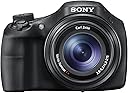
| ASIN | B00BEHRQB4 |
| Aperture modes | F2.8 |
| Are Batteries Included? | Yes |
| Aspect Ratio | 16:9 |
| Aspect ratio | 16:9 |
| Auto Focus Technology | Hybrid |
| Autofocus | Yes |
| Autofocus Points | 493 |
| Best Sellers Rank | 28,556 in Electronics & Photo ( See Top 100 in Electronics & Photo ) 275 in All-in-One Digital Cameras |
| Bit Depth | 12 Bit |
| Box Contents | Lithium-ion battery |
| Brand Name | Sony |
| Camera Flash Type | No flash |
| Camera Lens | Wide angle zoom lens with 24-1200mm focal length and variable aperture value of f/2.8-6.3 for versatile shots. |
| Colour | Black |
| Compatible Devices | Sony |
| Compatible Flash Memory Type | SD |
| Compatible Mountings | Sony A |
| Compatible mountings | Sony A |
| Continuous Shooting Speed | 10 |
| Crop Mode | 16:9 |
| Customer Reviews | 4.0 out of 5 stars 207 Reviews |
| Digital Scene Transition | zoom |
| Digital Zoom | 4 x |
| Digital-Still | No |
| Display Fixture Type | Fixed |
| Display Maximum Resolution | 20.4 MP |
| Display Type | LCD |
| Dots Per Screen | novecientos sesenta |
| Effective Still Resolution | 20.4 |
| Expanded ISO Minimum | 80 |
| Exposure Control | Program |
| File Format | JPEG |
| Flash Memory Bus Interface Type | SD |
| Flash Memory Speed Class | 2 |
| Flash Memory Supported Size Maximum | 32 GB |
| Flash Memory UHS Speed Class | U1 |
| Flash Memory Video Speed Class | V90 |
| Flash Modes Description | Auto, On, Off |
| Flash Sync Speed | 1/200 or 1/250 |
| Focus Features | Autofocus |
| Focus Mode | Continuous-Servo AF (AF-C) |
| Focus Type | Auto Focus |
| Form Factor | SLR (Bridge) Type |
| Generation | 1 |
| Global Trade Identification Number | 00027242862128 |
| Hardware Interface | AV Port |
| Has Color Screen | Yes |
| Image Capture Type | Video |
| Image Stabilization Type | Yes |
| Image stabilisation | Yes |
| Item Weight | 2.1 Pounds |
| JPEG Quality Level | Fine |
| Lens Construction | [Predicted: Multi-element] |
| Lens Type | 1200 millimeters |
| Manufacturer | Sony |
| Manufacturer Part Number | DSCHX300/B |
| Maximum Aperture | 6.3 f |
| Maximum Display Resolution | 20.4 MP |
| Maximum Focal Length | 1200 Millimeters |
| Maximum Image Size | 20.4 MP |
| Maximum Shutter Speed | 30 Seconds |
| Maximum focal length | 1200 Millimeters |
| Metering Methods | Spot |
| Minimum Focal Length | 24 Millimeters |
| Minimum Shutter Speed | 1/1600 Seconds |
| Model Name | DSCHX300 |
| Model Number | DSCHX300/B |
| Model Series | DSC-HX300 |
| Movie Mode | Yes |
| Network Connectivity Technology | NFC, USB |
| Night vision | No |
| Number of Diaphragm Blades | 9 |
| Number of Items | 1 |
| Number of Packs | 1 |
| Optical Zoom | 50 x |
| Photo Sensor Size | 1.5-inch |
| Photo sensor technology | BSI CMOS |
| Product Features | Auto Shut-Off |
| Real Angle Of View | 30.9 Degrees |
| Rear Webcam Resolution | 20.4 MP |
| Remote Included | No |
| Screen Size | 3 Inches |
| Self Timer | 10 Seconds |
| Sensor Type | BSI CMOS |
| Series Number | 300 |
| Shooting Modes | Panorama, Portrait |
| Skill Level | Professional |
| Specific Uses For Product | Wildlife observation, Landscape photography, Sports events |
| Supported Image Format | JPEG |
| Supported file format | JPEG |
| Total Still Resolution | 20.4 MP |
| Total USB 2.0 Ports | 1 |
| Total USB Ports | 1 |
| Total Video Out Ports | 1 |
| Touch Screen Type | Capacitive |
| UPC | 027242862128 017856003840 |
| Unit Count | 1.0 count |
| Video Capture Format | MP4 |
| Video Capture Resolution | 2160p |
| Video Output | HDMI |
| Viewfinder Type | Electronic |
| White Balance Settings | Auto |
| Wireless Technology Type | NFC |
| Write Speed | mindestens 10 fps |
| Zoom | Zoom optique |
P**L
Great product. Bad packaging.
I would give 5 stars for this, but the camera wasn't properly secured. It was placed in a small box, but there was still room for the camera to move a bit around. So I would call it a luck that it still works. Regarding the camera, it was as advertised and used in perfect condition. No scratch on the body or lens, no moisture in the lenses, the camera is fully working and takes beautiful pictures. Please improve packaging.
ใจ**ใณ
ๅไบบ็ใซใใใใใซใกใฉ
ใใฎๆไปฃใฎใตใคใใผใทใงใใใฎๅใใๅฅฝใฟใงๅฎใใฃใใใ่ณผๅ ฅใ็ป่ณชใๆฑใใใชใๅฝ็ถiPhoneใXperiaใ่ฒทใใฐใใใใงใใใฉใใญใๅๅ้ปๆบๆๅ ฅๆใใE:62:10ใๅบใฆใใใฎใฎ้ซๅ็ๆใฏใกใใใจๆใใฌ่ฃๆญฃใๅนใใฆใ(ๅคๅๅ็ปๆฎๅฝฑๆใฎๆใใฌ่ฃๆญฃใๅฃใใฆใ)ใใๅใใฆใฎใซใกใฉใงไฝฟใๆนใใใใใๅฟ้ โฆใใซใกใฉใฏใปใใใใฉๆชใใใกใผใซใผใฎๅฅดใฏ่ฒทใใใใชใโฆใ้ซๅ็(ๅ ๅญฆ50ๅใไฝฟใใใ็ฅใใใใฉ่ถ ่งฃๅใบใผใ 100ๅใ270ๅ)ใๆฌฒใใ๏ผใฃใฆไบบใซใใใใ
R**O
SONY H300 HV
Il prodotto รจ ben fatto ma alle volte scade su piccole cose come ad esempio il tappo obiettivo senza il cordoncino per assicurarlo alla macchina. Il problema รจ gestire un zoom cosรฌ potente, probabilmente avrei dovuto limitare la focale dello zoom ottenendo perรฒ messe a fuoco piรน semplici.
P**.
MindBoggling Reach; Glorious Pics
Summary: Only this camera empowers me to quickly tweak focus, freeze framing a duck on the other side of a large lake, or a Robin bathing in a neighbor's birdbath -- complete with the individual water droplets falling from that duck's bill as she drinks, or flying off that robin as she shakes herself dry. - - - - Concurring with the positive reviews, I write to highlight essential points. ::::: (1) Image Quality (IQ) ::::: Some blame "20 megapixels" for the poor IQ of their disappointing photos. Reality check: you can *choose* 20, 15, 10 or 5mp as the default. Some just generally declare "bad IQ" at the extreme zoom end; others love the IQ. The reason you're seeing such opposing opinions likely comes down to one fact: 50x zoom is new to us all. Some learn how to tame all that power; some don't. (More on this issue at #5&6 below.) Incidentally, Noise Reduction errs on the side of details (thankfully!), rather than smearing; configure as desired, in the Settings. ::::: (2) "Superior Auto" Modes ::::: There are two, one with a "Plus" designation. Plus adds a sort of *realistic* HDR, among other features; you'll hear machine-gun shutter snaps--- Sony uniquely blends them all into one final picture. Thus, you can not burst shoot while in SAP, but it is available in SA. Great surprise: each mode is pretty darn good! (Hanging out in auto mode when testing a new camera = cheat sheet to inherent firmware flaws. I've experienced no deal-breakers here.) It's even smart enough to apply a bokeh effect re zooms! (Still learning EXACTLY when I can expect that to kick in.) Scene modes are also quite helpful, and exploitable for more than the described purpose. ::::: (3) Lens, Zoom ::::: The lens is threaded for 55mm filters. (See #10) . . . . The headliner 50x optical zoom is complimented by at least 100x "ClearZoom." The latter delights *much* more frequently than disappoints. Toggle it on/off in the settings. There's a separate toggle for straight "digital zoom," which I keep off. ::::: (4) NeatOh! ::::: There's a customizable (limited) button on the top of the camera (oddly placed), & a *convenient* rotating push-in ribbed wheel that keeps, e.g. exposure compensation immediately accessible -- right hand for both. Optional always-present histogram & grid on screen; one tap to change/remove it on the fly (right hand, thumb). ::::: (5) Mechanics ::::: Zooming is reliably fast, as is auto tracking focus. Even at max zoom (50x & 100-140x), IF you adequately brace yourself. Think: you know 20x magnifies your slightest shake; whaddaya think 50x will do? Failing to respect that reality, and prepping yourself accordingly, results in eye-assaulting photos. Likewise, the complex nature of some scenes induces auto focus woes. Quickly curable, thanks to Sony's smart Plan B-- the zoom/focus ring, with a no-eyes-required ridiculously-easy-to-manipulate flip switch (auto/manual focus, left side). . . On the other hand, while snapping itself is fast, an irritating but tolerable wait-state materializes in burst mode's aftermath, per writing the shots to a Class 10 card. ::::: (6) Image Stabilization ::::: The system is golden. But expect no miracles when mimicking a modified version of a rapper within a mile of a microphone. Extreme zoom (50x/optical; 100--140x/ClearZoom) power is new to us all! Each additional mm of zoom necessitates additional care in bracing yourself. Approach the HX300 with related humility ("I don't know diddly 'bout handling a 50x+ camera, so I NEED to be super conscious of my body"), genuinely respect/ learn/ tame it, & you'll be a happy camper. Approach it in the same manner as a less-than-half(!!!) the zoom camera, and the predictable "ugh!" results will spark a bullet-speed return. Bottom-line: This NEW & INTENSE degree of zoom = doom, unless/until you develop bracing techniques (plural!) to harness all that power, AND study the options of *this* camera as well as *its* unique sweet spots. Don't misread me here -- experience via other cameras is helpful. But old-school kinda-braced ain't gonna cut it. Trial & error = my/your BFF. But I assure you, it IS doable! I own a tripod and monopod, which I've yet to use here. Was the learning curve frustrating? You betcha. Worth it? Oooo baby, you better believe it! ::::: (7) You Can D/L the PDF Manual, Now ::::: The full 240 page PDF user manual is linked at dpreview >> Forums >> Sony Cybershot >> search: hx300 PDF. While I rarely RTFM, the HX300's incredible reach alone inspired grabbing & studying that manual while awaiting delivery. Time well spent, as I have zero complaints about image quality, zooming or focusing. At the very least, play CliffNotes by studying the charts outlining what features are available per mode (starts around p80). ::::: (8) A Winning Review ::::: (March 30, 2013 - Amateur Photographer) For those who depend on formal reviewers for camera purchasing, FYI: This UK zine (Zinio on iPad, Web) reviews ultrazooms from Sony, Canon, Fuji & Nikon, awarding first place to the HX300. Reasons: ease of handling, image quality, reliable zoom, speedy autoFocus, "excellent" viewfinder. Having returned Canon's sx50 and Nikon's p510 long prior to snagging this camera, suffice to say that I agree (sluggish/unreliable zoom/focus, viewfinder from Hades, etc). ::::: (9) Suggestion (Images available for your review) ::::: Search Flickr ("hx300") to view FULL resolution 10/15/20mp photos. (Forums typically slice resolution.) You'll see birds, squirrels, ducks, the moon, cars, cityscapes, landscapes, indoors & other shots -- Superior Auto/Plus modes, 50x max optical zoom, 140x (!!) ClearZoom, handheld, no crop, no edit, low light, high ISO. FYI: where mine (pgBnax) look soft or lack focus, it's my bad, NOT the camera. Exception: max ClearZoom (100x to 140x) -- sometimes a wee bit soft IQ; not exactly earth-shattering news to those familiar with the foibles of any form of digital zoom. Even there, a couple of minutes of post-processing on my iPad (PhotoGene) cures whatever initially irked these retinas. Otherwise, I repeat: "grrr!" photos flow exclusively from *my* failure to PAF (pay attention, fool!) while lining up the shot. ::::: (10) Recommended Accessories ::::: ... Wasabi Power Battery (2 Pack) and Charger for Sony NP-BX1 and Sony Cyber-shot DSC-RX1, DSC-RX100, HDR-AS10, HDR-AS15 . Under $20. Avoids otherwise required in-camera charging. Plus, having 2 spare batteries juiced & ready lets me focus on my beloved hobby, rather than the precise number of shots left before I'm jacked. ... Maximal Power CA LENCAP55 Snap-On Cap for Lens - 55mm Black Lens cap WITH a cord to attach to camera strap. (Really, Sony, couldn't cough up that little but vital cord?!?) $3 ... Maximal Power 55mm Lens Filter Kit Includes Circular Polarizer, UV and Star Lens Filter Kit for 55mm Camera Lens (Black) Under $10. Nice for getting your feet wet with filters. ... AmeriBag X-Small Microfiber Healthy Back Bag Tote Under $30. Stays flat against my back, with minimal punching, as I run multi-mile park trails. I did add a padded sleeve, pulled from one of my dSLR camera bags. Teflon coating conquers rain fears. Bonus: external water-bottle-friendly hugs-it pouch; room for phone, wallet, spare batteries in a change purse, small notebook and more. External & internal pockets are secure, some zipped, some with Velcro. Guys: Color is key re the metrosexual test. ::::: Finally, ("pure opinion" alert!) a few words about.... Pixel Peepers Professional reviewers invariably blow up photos 100-200%, scrutinizing ad nauseum for shortcomings. Once upon a time, I suffered resulting brain-kidnap syndrome. I was so far gone, that I wouldn't even touch xyz camera until favored reviewers presented their "in depth" positive commentary. While awaiting those reviews, I'd move among assorted forums, hungry for morsels about that xyz camera. At some point (Hallelujah!), a few free brain cells sprung back to life, and it finally registered: * I am not paid to pixel peep. * I do not routinely print poster-size photos. * I will not be wallpapering a room with a photo. * I do not carry a computer monitor to share pics with buddies. * I do not work for National Geographic. On the other hand, I am one picky sunnuvawitch as I review the day's shots. But I now approach each look-see as a realist, not a purist. I typically share via iOS-app arranged printed postcards, standard size snapshots, my phone or iPad4, or StreamZoo or Flickr (I left InstaSpam). In other words, to me, common sense = accept/reject photos based on how they will actually/habitually be used, not on the basis of some pie in the sky version of perfection. dSLR vs Point & Shoot (P&S) . . . . I do not confuse a car with a truck, a bike with a Harley, nor a P&S with a dSLR. I understand: purpose dictates which is better for whom at what time. I realize: camera manufacturers are capitalists. . . . . A dSLR-size sensor within a P&S, WITH extreme zoom, IF mechanically possible, would kill lucrative len$e$ lines, not to mention my bank account. Ain't gonna happen. Meanwhile, dSLRs and P&S both *offer* great pics, but neither *guarantees* it. No camera, nor camera genre, is perfect; each & every one involves/instigates one or more compromises. Not one functions within a vacuum; results are fully dependent upon the photographer. . . . . I appreciate my dSLRs, but they're heavy, cumbersome & downright inconvenient. I've created (!) more photos in the past 7 weeks than I have since early November, and that includes holiday periods. NOT because this camera is new to me, but because its usually with me, unlike a dSLR. **And** because I am finally well-armed to capture scenes which, until recently, were within my line of sight, but beyond the mechanical prowess of the camera then in hand. Read: limited reach. BottomLine, for Me . . . . My history includes purchasing an uber-expensive 500mm telephoto lens. I returned it within 48 hours. Felt like I was carrying a football player's thigh. No thank you! . . . . The HX300 will sing in some hands, flop in others, for reasons previously outlined. Fact: it permits capture of scenes even my dSLRs have futzed -- for years -- solely due to reach limitations. This bad boy is now with me when I step out my door, a good 90% of the time. My dSLRs are headed to eBay. I've been through many a P&S folks. This is the first time I knew, deep within, that I'm sacrificing nadda in reaching for the P&S instead. Super-sweet purchase, no question!
J**S
Good. Main features include continuous snap shots and up ...
Good. Main features include continuous snap shots and up to 100x zoom
T**R
Review of The Sony HX300
Over the years as a serious amateur photographer I have owned and used extensively Nikon and Hasselblad film cameras and lenses and when digital cameras arrived I began with the Nikon Coolpix 900 and 950, then DSLR's including the Canon EOS 10D, and today I am using a Canon 5D Mark II equipped with L lenses (Canon's premium glass). The Sony HX300 is my first super zoom camera, and as such I spent several hours after receiving the camera from Amazon on March 14 thoroughly reading and studying both the Sony pdf manual and the Sony User's Guide in html format. This was time well spent as there are many useful features on the HX300 that are not found even on my much more expensive Canon 5D Mark II. During this study with both manuals, I tried each feature in the quiet of my living room making sure I understood exactly how the feature worked and what it did. Only then did I set out to explore the performance of the Sony HX300 under "real world" conditions and to compare it to the Canon 5D Mark II under controlled conditions. The two most import things about any camera are its image quality and its performance in actual shooting sessions. Image quality is, of course, a combination of many things including the camera's ability to resolve detail, to properly expose scenes shot under a variety of lighting conditions, color quality, absence of both chroma and luminance noise, etc. Performance is how responsive the camera is and includes such items as how quickly the camera is ready to take a picture after being turned on, the time delay between shots in single shot mode, the ability of the camera's autofocus to work quickly and accurately without "searching", and certainly in the case of a super zoom camera its ability to smoothly and rapidly zoom through its entire set of focal lengths. For a camera of its price and likely use, the Sony HX300 does a remarkably good job of providing high quality images and a very responsive camera. My first test of image quality was to simply walk around my yard and the neighborhood taking images of a variety of flowers that were in early bloom as well as taking pictures of birds coming to the bird feeder in our backyard from about 75 feet away using the Sony HX300 at full zoom. In virtually every single situation the HX300's autofocus was very quick and very accurate, and the powered zoom using the lever on the shutter release was highly responsive and quite fast. The images produced had exquisite detail with good highlight detail retention, perfect color rendition, very good exposures in auto modes, and under these cloudy but bright daylight circumstances with the camera working at low ISO's very low noise. These images straight out of the camera with no post-processing looked very good to excellent. Using very small amounts of post processing mainly to slightly sharpen the images, I was able to obtain excellent large prints (13 X 19 in.) using my Epson 3800 Pro large format printer. The shots of birds on the feeder at the maximum optical zoom (1200 mm) of the HX300 were all hand held, in focus, and showed good detail, albeit not equal to the ISO 80 shots previously described. With one exception (vide infra), I had absolutely no problem hand-holding and autofocusing these 1200 mm maximum zoom shots. The one exception is when I happen to line up a tree in the shot that was about 50 feet behind the bird feeder. In that case, the HX300 always wanted to focus on the texture of the tree trunk behind the feeder. The feeder is plastic without high contrast. I was able to solve the problem completely by switching the focus mode from multi-autofocus to center auto-focus and placing the center focus frame in the EVF on the edge of the bird feeder where there was sufficient contrast for the focusing system to work properly. This initial collection of maximum zoom shots brought home an important lesson about super zoom lenses including the Carl Zeiss lens on the HX300. Remember that the HX300's lens has a maximum aperture of 6.3 at 1200 mm and therefore the ISO will be set at higher values (400-800) to provide a sufficiently fast shutter speed to allow the camera to be hand-held at such a zoom setting. Of course, the higher the ISO, the higher the visible chroma and luma noise in the captured image. I found that these outdoor shots at 1200 mm zoom on a cloudy but not overcast day came in at ISO 800 and a shutter speed of 1/160 - 1/250 sec. The maximum zoom shots were reasonably sharp, but benefitted from noise removal in post-processing which, of course, is always a compromise between detail and noise reduction. Nonetheless, these images gave quite good prints and beautiful images up to 11 X 14 in. I believe with experience I can hand-hold maximum zoom shots at shutter speeds even below 1/160 second and manually set ISO to 200 and achieve even better maximum zoom shots. I think it will be difficult and perhaps impossible to get good maximum zoom images with excellent detail on very cloudy and overcast days or in other low light level situations. The HX300 in such conditions will require ISO's higher than 800 in such situations for maximum zoom images and the result will be more image noise than I would find acceptable. My next photo expedition with the Sony HX300 had the objective of comparing image quality under controlled conditions (tripod mounted camera with timed release of the shutter to avoid vibrations that would lower image detail) of the HX300 with my Canon 5D Mark II and the 24-70 Canon L zoom lens as well as with the Canon 100-400 L lens. I went to a nearby park which has a lake that affords a 1.5 mile unobstructed view to a wooden bridge and homes across the lake. Lots of trees surrounding the lake provided added detail. It was a sunny bright day with no clouds in the sky. I shot a series of shots with the Sony HX300 in IQ mode and in Scene Select Landscape Mode at focal lengths ranging from 24 mm (maximum wide angle) to 1200 mm (maximum optical zoom). I matched the shooting conditions and scene with my Canon 5D Mark II on a tripod using the two L lenses up to the maximum 400 mm of the Canon L zoom lens. Upon arriving home and comparing the images, I was truly amazed at how well the Sony HX300 had performed. In fact, until I got to 100% image size (pixel peeping!), I was very hard pressed to see any difference in the detail or overall quality of these two cameras. I found this to be very surprising since the Sony system is $500 and the Canon 5D Mark II with its L lenses is in the $3500-$4500 range! At 100% image size I was definitely able to see a difference in the quality of the images and it always favored the Canon 5D Mark II which, not surprisingly, showed greater detail and less image noise than the HX300 especially when comparing the 400mm shots made by the two cameras. With that said, the difference is best described as noticeable but not overwhelming as I might have expected. I have shown these comparison images to several photographic friends and all have expressed amazement at how well the Sony HX300 image quality holds up in comparison to the much more expensive Canon equipment. While at the lake I also had the opportunity to try out the Sony on some real "action" situations. A blue heron flew past and landed about 150 yards from me. I was able to get some terrific shots at full 1200 mm optical zoom (ISO 125) that I have printed at 16X20 size. I had the opportunity to try the burst mode of 10 images on a group of ducks in flight. I found that it was going to take some additional practice to master the art of zooming, tracking, and setting off the shutter for pictures of this type, but the camera did track and focus fairly well on this difficult scene. In another instance, a bird was circling high over the water and I was able to zoom to 1200 mm and get a nice detailed shot. While at the lake, I had the opportunity to try out the movie mode of the HX300. I found that it tracked focus on my subjects beautifully, allowed me to smoothly zoom during movie making, recorded the sound nicely, and performed in every way in movie mode as well as I could have desired to produce excellent 1080i AVCHD movies. Just a few final comments. Build quality on the Sony HX300 is quite good. Yes, it is made of composite (plastic), but it feels solid, has a nice textured grip that makes the camera easy to hand hold, and is so wonderfully light compared to my Canon 5D Mark II. I was using a 32 GB ultra high speed San Disk SDHC card, and I had no problem taking single images rapidly in virtually any mode, and even the burst of 10 shots previously described were recorded to the card in about 5-7 seconds which seems quite acceptable to me. The HX300 is not a perfect camera (nor have I yet found one that is!), and here are some things that I would like to see changed. A button press is required to switch between the EVF and the LCD. On the older HX200 there was a sensor which automatically went to the EVF upon sensing the eye. I wish Sony had not removed this feature. The button turning on the EVF is flush with the camera body and quite small making it difficult to find by touch. The same is true for the Focus button, although the latter is only required when changing focus modes. Of course I would like to see a larger aperture than 6.3 when at full optical zoom, but this would likely require a much much larger lens with all the weight and expense that would entail. My bottom line is that if you are in the market for a super zoom camera and you understand that under low light situations you may not find the 1200 mm zoomed images to be acceptable in their level of detail and sharpness, then I would highly recommend the Sony HX300. If you are printing huge images (larger than 16X20), this is probably not the camera for you. If you want a camera that will be great for vacation pictures, pictures of the family, bird photography, wildlife photography, etc. and you are willing to invest some time to learn to properly utilize the camera, then the HX300 may well be the perfect camera for you. Tom Note Added: I I have now posted the images referred to in the above review of the Sony HX300 including the comparison images with the Canon 5D Mark II on the dPreview.com Sony Cybershot Forum. The images, as per Forum requirements were posted at 1/2 the original image size. You can view the post at [...].
Trustpilot
5 days ago
1 week ago