
DOWNLOAD THE APP


Customer Services
Copyright © 2025 Desertcart Holdings Limited
DOWNLOAD THE APP
🏙️ Build smarter cities, not just skylines.
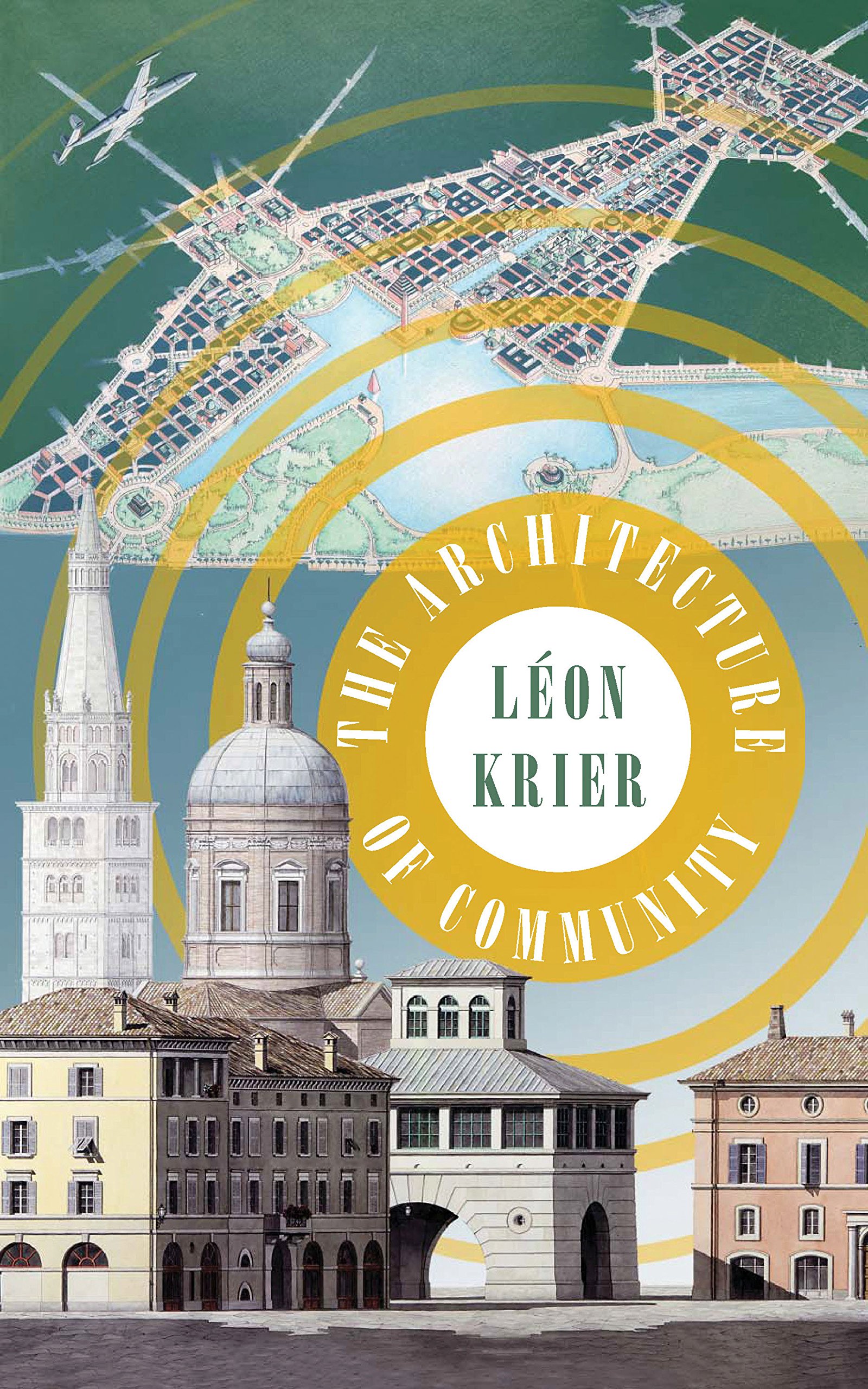
‘The Architecture of Community’ by Leon Krier is a critically acclaimed, used book that offers a profound exploration of traditional urban design principles. Featuring detailed hand drawings and photographs, it critiques modern architectural excess and presents Poundbury’s socially inclusive model as a sustainable future blueprint. Highly rated and ranked in architecture and urban planning, this book is essential for professionals seeking to ground their work in timeless community-building wisdom.
| Best Sellers Rank | #685,534 in Books ( See Top 100 in Books ) #226 in Architecture (Books) #270 in Urban & Land Use Planning (Books) #54,899 in Politics & Social Sciences (Books) |
| Customer Reviews | 4.7 out of 5 stars 66 Reviews |
R**O
Clearing a Path
Here's one architect and urban planner who has an appreciation of all that came before. Without a grounding in the history of traditional community building, how can designers claim professional expertise? Today...apart from practitioners like Leon Krier and Piercarlo Bontempi...the design of modern urban places has lost its way. The book is filled with fundamental insight in designing good buildings and wonderful urban places. There is direct reference here to the extremism and excess of modern design...and an understanding that skyscraper overbuilding results in the ultimately unsatisfying mega-city/suburban sprawl syndrome. In all his work, Krier displays a classical sense of restraint and humility, that leads us away from the mere copying of good architecture and townscapes, to the underlying principles that have created excellent places. It's to these principles...and not the false modernist tag of "pastiche"...to which Krier points the reader. The book is well illustrated with hand drawings, and photographs of built projects, culminating in the town extension of Dorchester, England...Poundbury. The town context, Krier understands, is the culmination and home of good architecture. It is in town design that socially important buildings find their proper monumental expression, and the context of all, the venacular streetscape, is established and maintained. And it is in Poundbury...with its 40% "social housing"...that Krier has created a model for a truly believable and sustainable future. And how do we know this? By listening to the modernist brickbats? We can know this, as the author states, by asking the people who live there.
M**Z
Superior stands on architecture and urban planning
This book provides a comprehensive viewpoint of the built environment. The author's graphics and words bridge the gap between human settlement and architecture. This is one of the best books I've read to date. It makes connection between the many human elements of what makes human settlements and its relationships between buildings, our landscapes and our civic spaces. The author make you think, as do many of the new urbanists of the 20th and 21st Century, about new ways of dealing with the public plurality and complexities of the urbanity. I need to mention it again, the graphics are a page turner as are the words that surround them.
B**6
Great book for community design
It is a fresh look at ancient original design and why it still works today. This book has a great look at European community design and how mixed use communities work well.
O**Ö
Hassle-free
What should be expected was also delivered upon. Hassle-free and without damage. 5 stars.
M**E
Destroys the temple of modernism
Krier gives a thorough lesson in architecture, taking obvious pleasure is shredding the myths of modernism to pieces and exposing its false prophecies. However, the text never goes beyond the most superficially descriptive, often involving comparisons and an appeal to common sense. While Krier can point out, using his trademark caricatures, how absurd the patterns of modern sprawl are, he has no explanation as to why such patterns would exist, except that it may be just one big conspiracy. He has even less to say about community, which is strange considering the word is in the title. It is as if in the vocabulary of neo-traditional architects community and space have become synonymous. (Many of the great villages and towns of Europe are dying because their community is dying, regardless of their physical form.) For this reason Krier produces a very sharp lesson in architecture, but provides no insight into morphology, and cannot really develop a model of urbanism that isn't simply architecture at enormous scale. It should be no surprise that his disciples have practiced town planning the same way.
J**R
Gift this book!
The Architecture of Community is a book for everyone, not just architects. It's very readable and has a wide appeal, the perfect gift for any thinking person.
T**E
Five Stars
Great book for non-architect as well
N**S
Book Review by Philip Langdon: The Architecture of Community
If you've never read Léon Krier, you've missed a tremendous pleasure. Krier, the Luxembourg-born architect who has sometimes been called the intellectual godfather of New Urbanism, may be the world's funniest living architectural theorist. He can be delightfully droll while making deadly serious points. For years his clever cartoons, especially, have alerted audiences to the ludicrousness of many contemporary architectural fashions. Several years ago, Washington, DC, architect Dhiru Thadani realized that Krier's writings needed to be brought together, expanded or updated in some instances, and published as a single book. The joyful result is The Architecture of Community, a profusely illustrated volume that lays out Krier's thoughts on how buildings and communities should be designed and constructed. I'm sure many critics regard Krier as an anachronism. He argues that there's no need for buildings to be more than a few stories high. He sees no point in pursuing the zeitgeist. The proper role of architecture, in Krier's view, is to uphold and strengthen the character of particular places, not chase after that modernist will o' the wisp, the "spirit of the age." Born in 1946, Krier came by his love of tradition naturally. "I grew up in an environment that, despite two recent world wars, was unblemished by modernist architecture and planning," Krier remembers. "Until the mid-1960s, Luxembourg was a miracle of traditional architecture, a small capital city of 70,000 souls, embedded in manicured agricultural and horticultural landscapes and lofty beach [beech] forests. ... My father's tailoring workshop occupied the ground floor of the townhouse, and for my primary education I hopped across the street when hearing the school bells chime from our garden." "My mother's piano playing filled the house, and during holidays my parents took us four children to Switzerland, France, and Italy to visit places of beauty." But he came upon modernist visions in books by Le Corbusier, Giedion, and Gropius. "The formidable promise expressed there had swollen my sails," he says. Thus, in the summer of 1963, he took his parents to see Le Corbusier's Cité Radieuse in Marseille. When, after enjoying beautifully intact old towns and landscapes nearby, the family encountered the "tawdry reality" of Corbu's creation, "we were all speechless with shock," Krier recalls. "Though I didn't realize it immediately, my life's orientation became defined by that visit." In these pages Krier presents a philosophy of civilized and soul-nurturing settings -- through short, vivid sections of text, pithy cartoons, and lovely drawings. Occasional misspellings and foreign words and sometimes less than fully explained photos of his buildings only accentuate the sense that here is a product of genius. From his close study of European settlements, Krier has concluded that communities can appropriately be organized through either of two geometric systems -- organic, irregular pattern-making, which Krier calls "vernacular networking," or artificially imposed straight lines, which Krier calls "classical networking." He sees organic planning as more practical and beneficial than is generally recognized. In Poundbury, a demonstration project for Prince Charles in southwest England, there are extremely irregular streets, which form convivial urban spaces and "induce spontaneously civilized behavior from car drivers -- without the help of ubiquitous traffic gadgetry," he points out. Krier repeatedly returns to what he sees as the need for tradition -- in architecture, materials, town-building, and other realms. "Today," he says, "one truth is evident: without traditional landscapes, cities, and values our environment would be a nightmare on a global scale." Modernists often complain about resistance from authorities or from a stodgy populace. "Modernity that augments daily comforts finds broad acceptance," Krier shoots back, citing the popularity of modern vehicles and machines. He rejects the idea that most people lack aesthetic appreciation. On the contrary, according to Krier, "humanity's aesthetic sense is as natural and universal a gift as the capacities of speech, motion, and reproduction." He doesn't deny that many traditional-style buildings from recent decades have "the aura of the fake, the ersatz, the surrogate." He blames this failing at least partly on synthetic construction materials, and asserts that the situation is destined to improve, because those substances -- including plate glass, glues, nails, and steel-reinforced concretes -- depend on fossil fuels, which will in time become too expensive, leading us back to using "authentic" materials. If he's right, we're in for a wrenching transition. Much as I admire Krier, I have never understood how a world rapidly heading toward a population of 7 billion can do without high-rises or fit a massive contemporary workforce into neighborhood-scale buildings. Nor do I see most Americans being eager to live in the tight little villages that Europe historically produced. To me, Krier's book is not entirely persuasive. But he gets many things right, and if our energy-profligate economy implodes, Krier's vision will look extraordinarily prescient. Philip Langdon is the Senior Editor at New Urban News Publications
Trustpilot
4 days ago
1 day ago