Buy anything from 5,000+ international stores. One checkout price. No surprise fees. Join 2M+ shoppers on Desertcart.
Desertcart purchases this item on your behalf and handles shipping, customs, and support to Iceland.
🌌 Unlock the Universe with a Tap — Your Personal Sky Navigator!
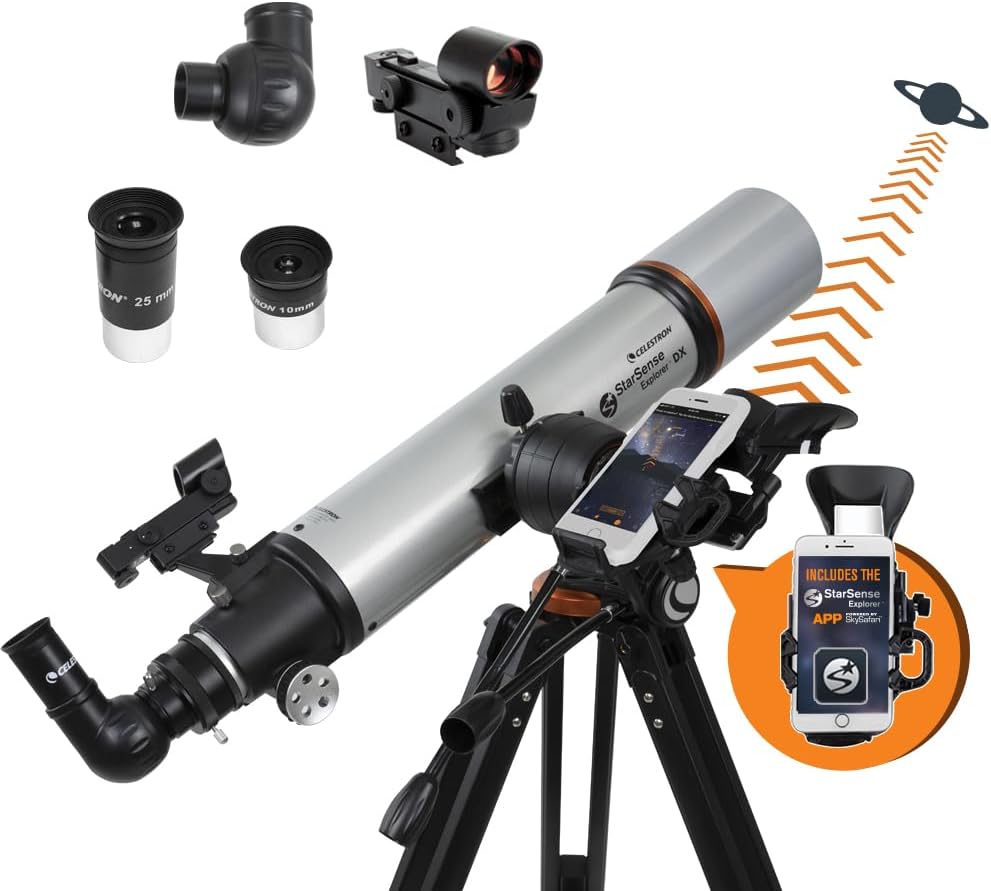
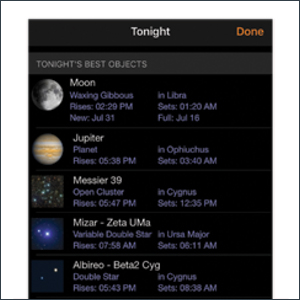
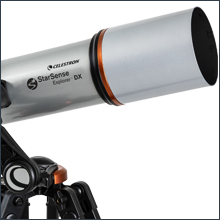
The Celestron StarSense Explorer DX 102AZ is an app-enabled 102mm refractor telescope that transforms your smartphone into a celestial guide using patented sky recognition technology. Designed for beginners, it offers effortless setup, real-time star and planet tracking, and curated nightly tours of the best visible objects. With fully coated optics, dual eyepieces, and a sturdy altazimuth mount, it delivers bright, sharp views of the Moon, planets, and deep-sky wonders. Compatible with iPhone and Android, it includes a 2-year warranty and US-based expert support, making it the ultimate gateway for millennial stargazers craving both tech-savvy convenience and immersive cosmic discovery.


| ASIN | B083JP3QYJ |
| Additional Features | App-enabled smartphone sky recognition technology |
| Best Sellers Rank | #139 in Camera & Photo Products ( See Top 100 in Camera & Photo Products ) #14 in Telescope Refractors |
| Brand | Celestron |
| Built-In Media | 25mm and 10mm eyepieces, Accessory tray, Erect image diagonal, Mount and tripod (preassembled), Optical tube, StarPointer finderscope, StarSense Explorer phone dock |
| Coating | Fully XLT Coated glass optics |
| Compatible Devices | Smartphone |
| Customer Reviews | 4.2 out of 5 stars 1,567 Reviews |
| Exit Pupil Diameter | 4.08 Millimeters |
| Eye Piece Lens Description | 25mm and 10mm eyepieces |
| Field Of View | 1.05 Degrees |
| Finderscope | StarPointer™ red dot finderscope |
| Focal Length Description | 650 millimeters |
| Focus Type | Manual Focus |
| Global Trade Identification Number | 00050234224604 |
| Item Dimensions D x W x H | 30"D x 32"W x 50"H |
| Item Weight | 14.2 Pounds |
| Manufacturer | Celestron |
| Manufacturer Part Number | 22460 |
| Model Name | StarSense Explorer DX 102 |
| Model Number | 22460 |
| Mount | Altazimuth Mount |
| Number of Batteries | 1 Lithium Metal batteries required. (included) |
| Objective Lens Diameter | 102 Millimeters |
| Optical Tube Length | 812.8 Millimeters |
| Optical-Tube Length | 812.8 Millimeters |
| Power Source | Manual Operation Without External Power Source |
| Telescope Mount Description | Altazimuth Mount |
| UPC | 050234224604 |
| Unit Count | 1.0 Count |
| Warranty Description | 2-YEAR WARRANTY |
| Zoom Ratio | 64 |
A**4
The Celestron StarSense Explorer DX 130AZ is a Fantastic Beginner Telescope!!!
I’ve been observing the night sky with telescopes for 35 years, have owned almost 20 different telescopes and have been asked many times for suggestions by people looking to buy a “starter” telescope. When I heard about the new Celestron StarSense Explorer line of telescopes, I was super intrigued and decided I’d purchase one to try out. Spending $399 on anything is a lot to spend. Spending $399 on a telescope, is relatively inexpensive compared to most telescopes on the market and certainly is within the price range of other beginner telescopes. So, what did I think of the Celestron StarSense Explorer DX 130AZ? The short answer is, as an entry level telescope, I loved it! If you want to know why, read further. I’ll start by saying the telescope was well packed. It came in an attractive box with the components packed in smaller boxes inside. All of it was packed within a standard shipping box. The instructions made assembly very smooth although I’m sure it doesn’t hurt that I have assembled a lot of telescopes. I went into it though trying to have the perspective of someone who is new to telescopes. Having said that, I did jump to one conclusion that I was happy to be wrong about. The StarSense Explorer DX 102AZ and 130AZ telescopes have slow motion controls for moving the telescope left and right as well as up and down. Every slow-motion control I’ve ever seen attaches to the mount using visible small thumb screws. The slow-motion controls for the DX telescopes use sunken Allen head screws that are not readily visible. This is in no way a negative. I’m simply mentioning it for anyone else like me that would expect to see the typical thumb screws. Unboxing everything and assembling the telescope took less than 30 minutes. The Celestron StarSense Explorer DX 130AZ is a 5.1” diameter reflecting telescope on an alt-azimuth mount with an adjustable height tripod. It comes with two entry level eyepieces; a 25mm that provides 26x and a 10mm that provides 65x. It also comes with a Celestron StarPointer red dot finder. The StarPointer is very similar to the finders I use on my more expensive and more sophisticated telescopes. It makes pointing the telescope at the targets you know the location of without using the StarSense app, very easy. It does need to be aligned with the telescope which can be done quite easily when you follow the included instructions. In my opinion, the real strength of the Celestron StarSense Explorer line of telescopes is the StarSense app. Using this app on your smartphone, coupled with this quality beginner telescope, makes finding objects in the night sky an almost effortless pleasure. The StarSense app walks you through aligning the night sky in the app with where the telescope is pointed. Once the two are aligned, click on the StarSense icon at the bottom of the screen on your smartphone, pick an object you want to look at and the app will guide you to move the scope manually to the chosen object. It does this with great accuracy which I’ll touch on later. It also provides a description, observing tips, and data for each object while standing at the telescope. StarSense is a very intuitive and informative app. I chose the Celestron Explorer DX 130AZ because it has the largest aperture in this new line of telescopes. The aperture of a telescope is the real power of the telescope. The larger the aperture, the more light it will collect, and the brighter objects will be. A 130mm (5.1”) telescope is enough aperture to keep an avid observer busy for years. Don’t get hung up on the advertised magnification of a telescope. After many years of using large 18” and 25” reflecting telescopes that required step ladders and stools to look through, I do all my observing with 4”, 5” and 6” refracting telescopes nowadays. During my first night out with the Celestron StarSense Explorer DX I observed 20 different objects including the planet Venus, the Orion Nebula, the Pleiades Star Cluster, four galaxies (M65, M66, M81, M82), and quite a few various other open star clusters. I used the StarSense app to guide me to each object. When using the supplied 25mm eyepiece, every object was placed in the center of the field of view. I was super impressed by just how accurate it was! I currently have a couple different expensive computerized GoTo telescope mounts that automatically slew whatever telescope I have on them to the selected object. The StarSense app pointed the DX 130AZ telescope with more consistent accuracy than I have experienced with my GoTo telescope mounts. Optically, stars were sharp, and objects appeared as I would expect when observing from my front yard with more than one streetlight keeping my eyes from being adapted to the dark. To truly experience the potential of any telescope, observe from the darkest location you can and let your eyes adapt to the dark. Use a red flashlight if possible. Also, take advantage of the night vision mode in the StarSense app. Doing so will tint your smartphone screen red, which will help your eyes stay adapted to the dark. In summary, the Celestron StarSense Explorer DX 130AZ is surprisingly enjoyable and easy to use. This is the most fun I’ve had with any telescope in its price range and in my opinion, it has the potential to change astronomy for beginners in a very positive way. What a fun way to be introduced to the universe! I can only imagine how different my early years under the stars would have been if I had this telescope coupled with a smartphone and the StarSense app. I highly recommend this for anyone wanting to start their journey into amateur astronomy!
R**O
Excellent scope for a beginner
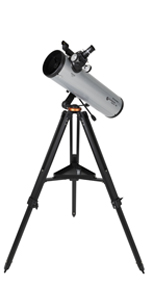
I've always been interested in astronomy. Got a decent little refractor scope when I was in elementary school, and received a little 3" SCT for a graduation gift because Halley’s Comet was due back the following year (yes, I'm old). Life happened and I paused that hobby, but always wanted to go back. Finally took the plunge and looked through many forum posts and pages of reviews until I settled on getting the Celestron StarSense Explorer DX 130AZ as my return ticket to backyard astronomy. I am really glad I did. I live in a major city with lots of light pollution. There's a street light right behind my house, my neighbors (all our houses are fairly close together) have high wattage security lights, etc. So I wasn't expecting much. Figured I would need to plan some nights out at places away from the city. But of course when the scope arrived I wanted to try it out right away. Putting it together took about 30 minutes, but I was purposely going slow so that I was sure I got everything right. The only hiccup was when I was "attaching" the accessory tray to the tripod. The instructions make it seem like you're screwing it into the cross braces of the tripod, but there are no threads or nuts in the holes. So you're just cranking the screws all the way into the tray so that when you position the tray over the cross braces, the screws go down through those holes keeping the cross braces from closing on you unexpectedly. I'm guessing it's designed that way so you don't have to unscrew everything to get the tripod closed. Just lift out the tray. Getting the red dot finder sighted in was easy. I did it during the day as noted in the setup guide. The ease with which I was able to find things later that night let me know it was working perfectly. My first surprise was how much I could see even with all of the light pollution. Naked eye viewing around here I maybe see 50 or so stars. The planets from Mercury to Saturn are usually pretty visible. Since Saturn was sitting right there in the southern sky that night, I started with it. I had never seen the rings of Saturn through the dinky little scopes I'd had in the past. That night I saw them clearly for the first time (too bad they're nearly edge-on now). It was awesome. From there I was like a kid in a candy store. Jupiter with the just-past-full moon right above it came up, so I spent a lot of time on them. And then the Pleiades. Once I put the red dot finder on something, it was in the eyepiece and the slow motion controls made it easy to keep it there. That was about the time I remembered the other major feature of this scope - the Starsense Explorer app. I opened the cover over the mirrored portion of the phone holder. Started the app and placed the phone in the holder, then followed the quick instructions on getting it setup. I pointed the scope at Vega which was shining brightly in the west, told the app that was the star I was looking at by zooming in on it on the phone, hit done and in 5 seconds the app told me it knew where it was. Testing it out, I told it to take me back to Saturn, and in 10 seconds I was seeing the ringed planet again. I went to go back to Vega and chanced across something that looked interesting. In the low power 25mm eyepiece it was a bright start that looked like it had a partner. Popped in the 10mm eyepiece and used the slow motion controls to get back on it, and saw it was a very pretty double star. One was bright orange-gold while the other was a cooler blue. I checked the app and it told me I was looking at Albireo/Beta Cygni. I hadn't ever heard of it. Clicked on the info and there was even an audio explanation of the stars. Awesome. Figuring out I could just slew the scope around and then check the app for what was interesting in that section of sky, I was off to the races again. I forget how many things I looked at - more double stars (I definitely recall looking at the double double/epsilon lyrae), Rigel, Betelgeuse, Bellatrix, and could even just make out a blurry cloud that was Andromeda. All from my very light polluted front and back yards. I did buy a phone mount to go with it, but hadn't even looked at that mount yet. I didn't get the scope for any kind of astrophotography, but figured I might want to take a few pix here and there. Now I wanted to show my wife and kids what I got to see, so I set about connecting it up. It's really difficult to get it lined up correctly with the eyepiece, but I got there in the end. I attached a couple of the better photos, but they're all terribly over-exposed and a little blurry as it was hard to get the phone camera to focus. Just know that this was done basically out-of-the-box after just a couple hours of use. No special camera or photo app or good viewing conditions. I was having a blast. The summary: This scope is perfect for a beginner (or a not-quite beginner that hasn't done any backyard astronomy for a looooong time). The price was less than I was expecting when I started looking, but it doesn't feel cheap. And I didn't want to break the bank in case this wasn't as fun as I recalled (it's even more fun/exciting/satisfying than I remembered). And the performance to me is exceptional. I've had it for two weeks now and I've been out every night that the weather has let me. I've gotten a couple upgraded eyepieces and a 2X barlow, and it's only gotten more fun. The app is extremely useful letting me get on what I want to look at in seconds, or as a source of info when I just want to start randomly touring the sky. And newtonians are a simple design, after looking over the hardware I don't think I'll have any problems when any maintenance (like collimation) is needed.
G**R
StarSense Explorer DX 5” Schmidt-Cassegrain - can this be a great beginner scope?
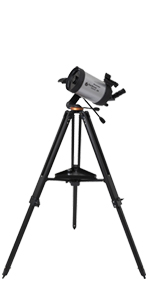
Let me start off by saying that if you are looking to use this rig for astrophotography then please forget it. If you want to do that be prepared to spend 4-5 times what this cost, and that’s just for the telescope and mount. If you want to do astrophotography at this price point, then buy one of the several ‘smart’ scopes in this price range. But if you want a small scope for beginning visual observing, read on.. Most people will tell beginners to get a 6 or 8 inch Dobsonian telescope and I would have to concur. I still use my 8 inch dob to this day and I will continue to use it because it’s the best bang for the buck when it comes to visual observation, but it can take up a bit of real estate in your home plus you have to move it in and out and put it in your car to head to dark skies, unless you live in dark skies in which case if you do, then go for a 10 inch dob haha. But in urban areas of bortle 7-8 you can see some nice stuff with a decent sized dob. Now Celestron does make a StarSense 8 and 10 inch dobsonian telescope and if you don’t own a telescope and you have the space in your home and you can tote them around, I would recommend either one of these as your first telescope. But I digress. The OTA: So this is pretty much Celestron’s C5 that has been in production since the 1970’s and was flown on the space shuttle back in the day. This one is f10 and is extremely serviceable, it came well collimated from the factory and has a solid feel and build quality to it. I bought this for the telescope since I was looking for a good ‘grab and go’ rig, something smaller and lighter than the dob to throw in the car. The focuser is spot on, visual back is typical Celestron SCT quality and of course you get serviceable eyepieces for a beginner scope, but all of this is easily upgraded especially if you already have some of these items in hand and if you don’t, what comes in the package will work and you can always upgrade at a later point. The main reason I ended up with this model was that I was in the market for a small SCT and with this years ‘Black Friday’ sales, I got this for a price I could not pass up. I’ve had a few clear nights since I bought this and took it in the yard along with my 8 inch dob and pointed them at the same objects and, using the same eyepiece did an A/B test between the two and I had a hard time telling the difference in visuals between them - the SCT does a great job gathering light in my light polluted sky. In short for what it is, I love this optical tube. StarSense: Now we come to it. So you can only get access to this app if you buy one of the telescopes in this line. There is a holder for your phone that’s on the mount for this model and after you download the app, you secure your phone to this holder and the app will help you align to the telescope. It’s easy to do and once done, the app will easily guide you through the sky. This is not a ‘go to’ mount, where the mount will move the telescope for you. Just follow the arrows on the phone screen to whatever object you selected by pushing the telescope, and once you find the object through the phone, if you did your due diligence with the alignment (again, pretty simple) the object will be in the eyepiece of the scope. I found it very intuitive and novel, and what a great way to start learning your way around the night sky. I’ve read that people have bought the cheapest scope in this series just for the StarSense and have figured out a way to rig the phone holder onto their much higher priced telescopes. Yeah, I’m not sure I would be willing to do that. But the app really works well and it’s been a lot of fun using it. The Mount: Here’s always the problem with beginner telescopes. They may give you a decent OTA (like this C5) but in order to save money they will give you a cheap mount. Yes the legs are some sort of stamped metal and can extend to a comfortable viewing height but the optical tube is held on by a plastic arm and it will shake with the slightest adjustment and that’s what you do not want. So I’ve seen that this mount is included in a lot of the StarSense line (except for the dobs, they are on a truly stable Dobsonian mount) but from what I can see, this mount is suited best for the 5” SCT. This mount is an Alt/Az mount (up/down, left right) which is fine for visual observation. Included in the mount are slow motion knobs which really help mitigate planetary drift and since these knobs are situated behind the mount and the visual of this small SCT is in the back, the knobs are decently situated and are easy to get to. On other models where you look into the side of the telescope these knobs are a joke as they are too far away to be of any use. Also don’t bother with any refractor telescope in this series, as they are nothing but junk scopes and will frustrate you. Bottom line: If you must get StarSense and you are new, or getting back into the hobby then I highly recommend either the DX 5” CST, or the 8 or 10 inch Dobsonian. Anything else will frustrate you. With the C5 you can easily upgrade and make a good scope even better, especially if you can get it for a good price. CSTs will always cost more than comparable dobs, but less than comparable refractors. To me if I were just starting in this hobby the C5 StarSense rig would really rock my world due to the size of the OTA and ease of use. I took two stars off due to the mount - but added one back due to the C5 and StarSense. Do as much research as you can and if possible reach out to a local astronomy club for some hands on experience before you spend any of your hard earned money. Try and figure out what you want in a telescope, what is really important to you because there is no one telescope that fits all. Just keep in mind, the best telescope is the one you use the most.
D**R
So easy to use!
As I approached a milestone birthday (I won’t tell you which milestone though), I found myself wanting to fulfill my childhood dream of owning a nice telescope. After much deliberation, I decided to treat myself to the Celestron StarSense Explorer 5". It felt like a nod to that starry-eyed kid within me, yearning to explore the mysteries of the cosmos. All my research and effort paid off…and hopefully it helps others out there too. (This scope rocks, go for it!!) Given the budget I had in mind, I quickly stumbled into the world of electronic telescopes with motors and little remote controls that steer themselves to things in the sky. I must have watched 30 YouTube videos on these types of scopes. While they seemed cool, I got the impression that I would be spending more time fumbling with the electronics than actually enjoying the stars. I have enough stress in my real life, and I wanted this scope to be simple and hassle free to use, just grab and go. No fumbling looking for batteries or doing a long set up process. The Celestron StarSense Explorer 5" caught my attention because it promised to be a telescope that didn't require a PhD to operate. Instead of a robotic telescope that steers itself to objects, you place your phone into the dock and move the telescope yourself. It made big promises of being equally as accurate as the electronic version, but simpler because you are moving it manually. There are a lot of StarSense models to choose from, but for me, the 5” is the best blend of quality and “grab and go” I was looking for. I live on a few acres of land, and I didn’t want to have to haul a large and bulky Dobsonian out to my astronomy spot. This 5” is the largest one that is still more of a traditional telescope. It also has the sturdier base and fancier controls compared to the budget models. When it arrived, I was pleasantly surprised by the telescope’s sleek and sturdy construction. It looks good enough to keep assembled near my back door so it’s always ready when I am. I actually followed the instruction manual step by step (not normal for me) and found that setting it up was a breeze. After a certain point, I didn’t need the manual because the app guided me through matching up the telescope with my phone. This was the part I was most nervous about, but it honestly took less than 5 minutes. And now that I have done it before, it takes me about 20 seconds. One feature that really got me excited was the smartphone app. I have some familiarity with the big constellations and brighter stars in the sky but I’m no expert by any means. So having the phone was like a cheat code to help me find things I am sure I could not find on my own. With the app, finding things with my scope became as easy as ordering a pizza. There’s even an audio feature to listen to info about what you are looking at. I like to pop in my earbuds and listen as I look in the eyepiece. Speaking of which, let’s talk about the real highlight—the views. From the rings of Saturn to the tiniest little galaxies and star clusters, each observation left me in awe. Although I am not in the middle of the city, there’s still some light pollution from the town and neighboring medium sized city. The scope cut through all that light pollution. I could see things in the eyepiece when it looked to my naked eye that there was nothing there. Of course, no product is without its imperfections. The main limitation I have with this scope is that I can’t do celestial photography. You need one of the electronic ones to track the sky so you can hook up a camera. But that’s a small price to pay for the simplicity of the StarSense Explorer. And I still have gotten some pretty great images of the moon by just holding my phone up to the eyepiece. I honestly have been using this scope regularly for months now, and now with warmer weather coming I am looking forward to a summer of stargazing every chance I get. In conclusion, the Celestron StarSense Explorer 5" is a solid choice for anyone looking to dip their toes into the world of stargazing. It's simple enough for beginners like me to use, yet powerful enough to keep things interesting and keep you coming back night after night. So go ahead, treat yourself to a little slice of the cosmos…you won't regret it.
B**E
An OK telescope, however...
First off, let me say that although my review is overall negative, consumers should appreciate that I believe that the DX130AZ is a good value as a beginner telescope and the few critical comments that I will make about the instrument should be taken as informational. Because I live in the British Virgin Islands, and maintain a PO box in the nearby US Virgin Islands, I often shop on Amazon which will deliver to the PO box. I have a third party service collect my mail and deliver to me here in the BVI. I purchased the DX130AZ which Amazon would not ship to my PO box, in all probability because of the large box in which it is shipped. I had it delivered to a freight forwarder in Miami, who then air shipped to me for just over for $241.50. When it arrived and I opened the box, I found that the primary mirror was dislodged from its mount in the optical tube. Being adrift inside the tube, it caused further damage to the secondary mirror, chipped and scratched. When I removed the mount I observed that the 6 screws securing the mirror were quite slack indicating that they were not capable of keeping the mirror secure. As this damage was unlikely due to the handling during shipping I called Celestron to report the problem under warranty, hoping to get replacement mirrors sent to me. However their warranty policy for products purchased on Amazon is to seek relief from Amazon first. I called Amazon. The return policy is admirable of course in that they accept returns without question and will ship me a replacement for the whole product including the scope, tripod and accessories. This works for 99.99% of the customers. In my case however it will cost me the round trip for the 3rd party shipper, getting the damaged unit back, and a replacement off to me, probably another $400 if I am successful in avoiding payment of the customs duty twice. I appealed to Celestron to simply ship me replacement mirrors and I would install myself and collimate without any difficulty. Or if not, then credit me with a replacement mirror set that I found on Amazon for $128. I would have been happy with this compromise, but it was not accepted. Then they offered to sell me a whole new optical tube, but subsequently have told me that the part is not available. Meanwhile it makes no economic sense for me to ship the entire order back, for two small parts that will fit in a small shoebox for shipping. So I ordered the replacement mirror set on my own and hope to receive shortly. I did manage to reinstall and collimate the damaged mirrors in the meantime and the scope and is functional for now. I can say in using the telescope, the most annoying aspect is the mount. It is designed to accept the phone mount for use with the starfinder app, but the neck is plastic and flexible to the extent that minor adjustments and exposure to light winds cause considerable vibration frustrating ones attempts to view objects in a stable manner. But at this price point it is not a major complaint, and minimizing the problem is part of the learning process. You will also be limited to altitude to roughly 65 to 70 degrees due to the limited clearance of the optical tube with the tripod. Makes viewing objects directly overhead difficult. Small matters but something to consider. In conclusion, I think Celestron could do better with warranty considerations for customers who clearly want resolution, but don't fit the "one size fits all" claims policy. I suspect other telescope manufacturers may be more customer service friendly, able to do the right thing when necessary. Meanwhile I could not recommend purchasing a Celestron product because of this experience.
D**Y
Excellent entry level SCT for under $500
The Celestron StarSense Explorer DX 5 is a good entry-level telescope, especially for those who appreciate the convenience of the StarSense app. The StarSense app makes it incredibly easy to find celestial objects. Ideal for those with limited space or needing a portable option. Provides clear views of planets and brighter deep-sky objects. The mount and tripod are a bit shaky, which can be frustrating. The StarSense app is necessary for the PushTo feature. I purchased mine as a used in like new condition, and I was not disappointed. I mounted the DX 5 to a Nextar 4SE goto mount and tripod. This setup works perfect.
S**R
Superb!
First, setup was straightforward. Follow the directions and take your time, about half an hour was what I took. I ordered a set of plossl lenses for it when I ordered the telescope since it comes with only two. The included ones aren’t terrible to get you started but I wanted more range right out of the gate. I ordered a set that came with a 40, 32, 6.3mm and 2x Barlow lens and ordered a adjustable lens that adjusts from 21mm-7mm. I think they were from Svonny? Not bad for the price. It has been cloudy a lot since I got it but the 10 or so times I’ve used it, it exceeded my expectations a great deal! The StarSense app and phone docking station work flawlessly once you learn how to use it. Btw, I have to take the phone out of my otter box because it interferes with the app’s plate solving ability. I usually use it to find an object, then check the alignment again to get it really dialed in. Once you get it figured out, and if the skies are nice and clear, the object it points you to will be right in the middle of the view!! The sky sense app is why I bought this particular model and it is EXACTLY what I was looking for to help figure out where and what to look for with anything this scope is capable of seeing. There are some deep sky objects that a130mm just isn’t big enough to see but I have been amazed at the amount of things it WILL allow you to see. I have yet to see a planet through it since they rise just before Dawn right now and I don’t feel like waking up that early or staying up that late. Soon they will be available for viewing in the time I do my stargazing. Until then there are tens of thousands of things to see in the night sky! I can’t imagine another scope being more beginner friendly that this one. It is nice and light for one person to move (ready to go) and is so easy to align it takes literally a minute and you’re ready to start finding stuff! The tripod is sturdy, the scope is capable of nice clear views and it seems to be in kind of a sweet spot of powerful enough to see plenty of deep sky objects yet light enough to be able to use anytime you want by yourself. If you are a beginner looking for a great beginner telescope but don’t want to spend a mortgage payment to see if you’d like Astronomy, look no further than this little gem! It punches way higher that it’s price range!
P**.
Agree with the quality control issues, and not as easy and intuitive to learn/setup!
I got this pre-black friday deal for a spectacular price but I should have brushed up on my astronomy and basics of telescope as just following the instructions will definitely get you confused; There's a lot of moving parts and installation is not easy if your new to astronomy (at least it was not for me). Also this item is bulky if your looking to carry it around you need a large telescope bag to break it down for transport. Here's where this item loses stars (lol, pun?) I actually had to purchase/upgrade to the pro scopefinder as the stock finderscope is literally a piece of plastic and the red dotfinder stopped working (not a battery issue- wasted like 3 batteries trying to fix it). The Pro scopefinder is worth the upgrade as it will make alignment so much easier. Also, you have to collimate this scope especially if you plan to take it down and set it up frequently, so I can see why many reviewers say this scope goes out of focus easily. Wish the knobs and screws securing the parts that you have to take on and off, were made of better material. I also can see why the 2 lenses included, are not that powerful so i'll consider getting a barlow lens once I can focus and get started. I am hopeful as I learn more how to use this item and fine tune it, it will bring me some enjoyment and observation of the moon, planets and galaxies.
F**I
Excelente compra
Hicimos la compra del StarSense Explorer DX 130. Es nuestro primer telescopio y es muy fácil su uso. La app de StarSense es un poco complicada, no es tan sencillo que se conecte y ubique su posición, entonces vas a batallar un poco, pero una vez que logras conectarlo, es muy intuitivo. De cualquier manera el telescopio es buenísimo aún sin la aplicación. Las fotos adjuntas son: las de la luna son con los dos lentes que vienen incluidos, sin filtros y sin edición, tal cual se ve directamente. Las fotos son tomadas con un iPhone 12. La otra es del eclipse en Mazatlán, es la foto del sol en su fase total, para este compramos un filtro solar. Como pueden ver, se ve súper súper bien, si estás iniciando, es maravilloso lo que se alcanza a ver. Recomiendo ver muchos videos en YouTube para poder armarlo y calibrarlo/conectarlo. Hay canales muy buenos en donde dan tips excelentes. Recomiendo mucho la compra.
ح**ي
تلسكوب ممتاز
مشاهدات رائعه
G**.
Para principiantes
Para ser mi primer telescopio, realmente cumplió con mis expectativas.
A**R
Very good views.
It was my dream to own a solid telescope and this checks out all my boxes. Bought it on a deal price too. Great observations and precise. Easy to install and setup and very convenient to carry in a car.
A**R
That it works great
The mount allows a little vibration which takes a few seconds to settle otherwise it’s a great package and I’m discovering many deep space objects with it
Trustpilot
2 months ago
2 weeks ago