Buy anything from 5,000+ international stores. One checkout price. No surprise fees. Join 2M+ shoppers on Desertcart.
Desertcart purchases this item on your behalf and handles shipping, customs, and support to Iceland.
🔧 Fix it like a pro—light it, shape it, own it!
Bondic Pro UV Resin Kit is a revolutionary liquid plastic welding system that bonds multiple materials instantly using UV light curing. Unlike traditional glues, it remains liquid until activated by the included UV LED light, allowing precise molding and shaping. The cured resin is waterproof, heat-resistant, non-toxic, and dries clear for professional-grade repairs on plastics, metals, wood, fabric, and more. Compact and travel-ready, this kit empowers millennials to tackle DIY fixes with confidence and style.


| ASIN | B00UAH19FS |
| Best Sellers Rank | #28,944 in Tools & Home Improvement ( See Top 100 in Tools & Home Improvement ) #38 in Soldering Heat Guns |
| Brand | BONDIC |
| Brand Name | BONDIC |
| Color | Clear |
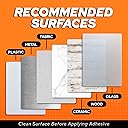
| Compatible Material | Ceramic, Glass, Metal, Plastic, Rubber, Wood |
| Container Type | Tube |
| Customer Reviews | 4.1 out of 5 stars 12,117 Reviews |
| Full Cure Time | 2 Minutes |
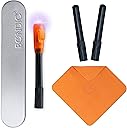
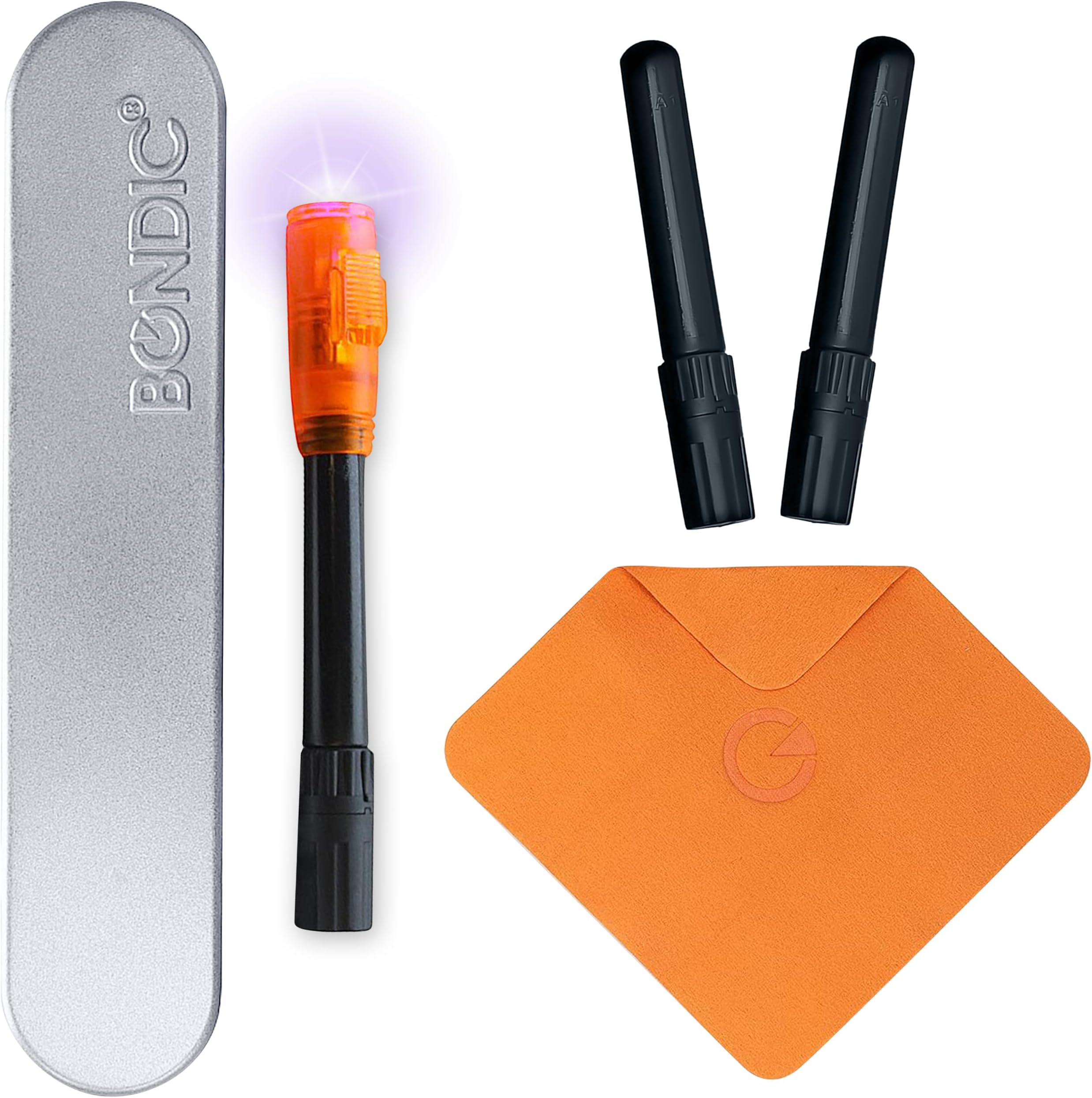
| Included Components | applicator, LED UV light, two tubes of liquid adhesive, and 15" x 15" Cloth |
| Item Form | Liquid |
| Item Package Quantity | 1 |
| Item Weight | 3 Ounces |
| Manufacturer | Bondic |
| Material | Plastic |
| Material Type | Plastic |
| Model | CECOMINOD032561 |
| Other Special Features of the Product | Dries Clear, Heat Resistant, Non Toxic, Waterproof |
| Part Number | CECOMINOD032561 |
| Special Feature | Dries Clear, Heat Resistant, Non Toxic, Waterproof |
| Specific Uses For Product | DIY Projects, Plastic Repair, Small Home Appliance Jewelry Making, Light Manufacturing |
| UPC | 636156077148 |
| Unit Count | 1.0 Count |
| Viscosity Level | Medium |
| Volume | 8 Milliliters |
| Water Resistance Level | Waterproof |
R**N
NOT A SCAM!!! REALLY WORKS!!
In a word, Wow!! Truth be told, I am not a stranger to fab shops, nor to glues either. Of course, I KNEW of the resin that cures under Ultra-Violet light (that's what's going on here), and I kept an eye out for it to show up on store shelves, all these many years. I figured that it at LEAST had hit the Industrial adhesive market, but various things kept my mind focused elsewhere. So this is a new discovery for me, believe it or not. This stuff is not a mumbo-jumbo glue scam. It is a liquid resin plastic that solidifies when hit with UV light - the same type of light that makes things glow in the dark in the novelty stores. This process has been used for decades by the auto industry as a first-effort version of a 3D Printer. It has been used with two UV lasers, set up in an X/Y configuration over a pool of this stuff to make prototypes appear to eerily "rise" out of the resin pool. Dentists have been using this plastic for years, which is why you sometimes saw them shining a blue-violet light into your mouth. My point is, this is NO SCAM. It is a commonly-used, RELIABLE material that's been used in the industry for well over a decade. OF COURSE it will work for you - WITHOUT QUESTION - if you use it properly. But it is no "Miracle Glue". In fact, it is NOT A GLUE AT ALL, which is why Bondic's working motto is "Don't use it like a glue, because it isn't one." It is a plastic resin that solidifies in SECONDS, if hit by a special type of light. The plastic has the ability to stick to a LOT of surface types, so it can do the job of a glue in many applications. I am sure that Bondic has a website to help clarify how this stuff can be properly used, and what surfaces you ca use it with. But the big difference in this and glues like Krazy Glue is: It lasts on the shelf without going bad for a REAL LONG time. It doesn't foul up the applicator, making you throw it away often. It doesn't get sticky on your hands or ANYTHING, before you apply the light. So just make sure you use a kleenex to wipe or clean the resin off of things before you use the light. One common mistake that happens using this resin - be sure that wherever you use it, there is still a way to let the UV light get to it, when you cure it. For example, putting a glob of resin on a rubber foot pad, and then sticking it on a box or something, and shining the light at the general area WON'T WORK!! Obviously, the light can't reach in between the pad and the box, to cure the resin that's put inbetween. However, if the footpad was CLEAR or TRANSLUSCENT, then it would work fine, as the light you shined at the pad would illuminate the pad, and consequently cure the plastic you applied. So a little thought needs to go into this. But not much. I also saw a question on this website asking if the stuff would glue a saw blade together. The stuff is just a tough plastic - so don't try to use it where any plastic would give out. The sawblade application takes nothing less than metal welding, if not total replacement. Also, saw blades get HOT, and plastic gets SOFT with heat. Use your brain, and check out the Bondic website if you aren't sure. Since the resin hardens under UV light, just be sure to keep the bottle away from Fluorescent lights or sunlight. EVERY commercial light source puts out at least a LITTLE UV light, so the secret is to keep the stuff in total darkness when not using it. The hardening process only takes seconds. Shine the little "bluish" LED light at the stuff for about 10-20 seconds, and you're done. The directions say to use a full 30 seconds to cure, but in truth, it sometimes takes as little as 10 seconds. No, the blue light Bondic provides DOES NOT harm your eyes or skin. Still, it's not smart to point ANY light source directly into your eyes, so DON'T DO IT. And no, you don't have to wear dark glasses, either. And this isn't emphasized by Bondic, but the resin is not triggered by TEMPERATURE. So putting it in a refrigerator does nothing to help keep the stuff good - or bad. Just put it in a dark cabinet at normal room temperature. Because the resin won't foul the tip of the applicator they give you, the applicator point can be really fine (which it is), allowing you to do some very precision detailed fixes. About the only thing negative I can find with this product, is that they are a bit chintzy with the quantity they give you, giving you only about 4 grams of resin in a tube. But for a lot of people, that will be enough for their needs. When you look to get more of this product in the future, just get REFILL TUBES of resin only, which are much cheaper, depending on the store you buy it from. Then you can keep using the same little cure light they gave you with the original order. It's just a little LED light that produces light of a special wavelength (so no other blue LEDs will work), but the light assembly is easily removed from the applicator, and uses a small button battery cell to function, which can be bought and replaced, should you eventually need to do so. In conclusion, this stuff is NO GIMMICK, and it is TERRIFIC!!! It will do everything you need it to do, provided that you use it properly.
S**I
Worth way more hype.
I originally ordered Bondic directly from the manufacturer from a tv commercial. It is a liquid polymer that turns as hard as glass when set in seconds by the blue light technology provided. When I ran out of my initial Bondic, I was thrilled to find it on Amazon. As an example of the amazing properties of this product, I was given 3 hand-blown glass globes that serve as oil lamps. I was well aware of their probable cost and their potential fragility...one of my favorite gifts ever. They are beautiful. Somehow, the breakage seemed inevitable. Of course, it would be my favorite of the three. I had already used Bondic before, so I knew it could restore the look and the set could at least look complete, but they are OIL lamps, what kind of adhesive is going to fix glass so that the oil absolutely doesn't leak out? I had very little hope, but I tried it. It works perfectly, and worked immediately! The one caveate I will say is that it was a large break, going from top to the bottom and coming apart as one large piece which was about 1/4 of the globe. There would be no way to only fill it a small amount and have it look normal. It either had to hold the glass together and withstand oil, or it simply would not work at all. The truth is that you cannot even see where the Bondic is applied or where the broken piece is joined back together! However, being hand-blown glass, with a bumpy surface made to look sort of like water, it has a natural "hiding" place. If the globe was smooth, an all one color, etc, while I'm sure it would still work, it may not be so completely hidden. However, on smaller pieces, like a chip on china, or a Christmas ornament (I dropped and fixed an ornament that was just the word "Noel" this Christmas. It took seconds to fix and lasted all season and is packed back away for next year. You really cannot see small joins.) I love this product!
B**R
A Unique Solution For Everyday Issues
I wasn't sure about this UV resin technology. I had to read and watch a few things to understand how it works. After understanding, I decided to give this a try on some things that I needed to be glued or reattached. The main tube has one end with a tiny needle-like end where the glue comes out. It's semi-liquidy and applies precisely. I glued a broken magnet for my first run. I roughed up the two ends and put resin between them, then I UV'ed them together. It takes about 5-10 seconds of light to harden. Additionally, the resin can work better if you build up layers, so I added more resin to the broken magnet seam and sealed it. My magnet looks just like new and I couldn't be happier. For the most part, this does what it promises. You can reattach certain things back together and it's as if they never broke. I started going around the house to see what else I could repair. It does have its limitations as to what it can repair, which are generally lightweight items. It's impressive once you get the hang of applying and hardening the resin.
`**‘
Used to fix cracked corner of phone screen
Amazing stuff honestly, comes with 3 tubes and after more than a year the uv glue is still in perfect condition. Can be used to fix do many things. I used it to fix the curved broken glass on the corner of my cell phone after I dropped it. I let it soak into all the cracks and got it all level before used the uv light to cure it. Once I did it I had to use a razor to clean it up a bit and after that it held cracked glass together without it ever cracking more of the screen. Touch screen still worked just fine too.
A**C
Good for SPECIFIC applications and purposes
This is not a glue, but a light-activated resin, and as long it's used for the right purpose, it works well. I wouldn't go as far as saying it will fix almost anything. You can fix a lot more with two part epoxy than with this stuff. The first and most important thing when using this product is checking to see if light can hit the area that you are bonding. For example, if you are trying to join two opaque parts where the resin will be hidden, you won't be able to cure it with the UV light. No UV light, no bond. Also, the repair area needs to be clean. I've been using it for making small repairs where a visible (but nearly clear) bead is acceptable, and I want a *fast* cure. It cures to a hard, plastic-like consistency with a slight yellow tint. It's best to use it indoors and away from sunlight if you want time to reposition the parts, and then shine the included UV light on the area to quickly cure it. To make sure it's fully cured, you can set the part out in the sun for awhile, especially if you are going to be building up an area with blob of this resin. Bondic would also be a good choice if I wanted to join clear glass or plastic, since the final result is clear and UV light has no problem reaching the entire area. Some of the cons are: It's not very suitable for repairs where the part(s) are going to be moderately stressed/flexed. How much stress the bond can take depends on the material, how much resin is used, and how well the resin is cured. Also, this stuff really expensive compared to more conventional adhesives. Bondic is acceptable for light repairs where you need an adhesive that gives you plenty of working time, but can be cured almost instantly with the UV light when you are ready. It's also useful for quick filling of small gaps / holes because you can fill the area with the resin, wait till it evens out, and then cure it instantly. It's handy to have around for these purposes.
P**R
Love to use this stuff!
I normally don't write reviews, but I'm having so much fun with this product, I just had to write about it. First off, yes, it really does work. The bond it makes isn't always as strong as some super glues provide, but the ability to form an instant bond with complete control is incomparable. With this stuff, I've been able to repair things that I never could have fixed without it. My best example is a repair I made on an expensive color laser printer. The tiny plastic piece that tells the printer when the paper runs out was broken at a most inconvenient spot. Without it, the printer is useless. This piece has a thin axle about the diameter of a pencil lead. That axle feeds through a plastic support bracket and it rotates in that bracket. Well, of course, the axle broke right at the point where it passes through the bracket. As you can imagine, the surface area of the broken axle was to small for super glue to provide much of a bond. Also, there was no way for me to clamp or hold the piece still long enough for it to dry properly. In comes the Bondic. With Bondic, I was able to first put a tiny bead of glue on the end of the axle to give me more distance from the bracket. Next, I was able to attach the broken piece onto this bead to complete the repair. The Bondic had enough strength to support the piece and allow it to once again rotate to indicate paper height. The printer is saved! I truly don't know how I could have made that repair without it. The only problem is, you'll want to use this stuff everywhere, even in repairs where you could get by with cheaper super glue. That's Ok, though. It's so much fun.
A**R
garbage
I've heard great things about this product, but now that I've tried it, I can't imagine why. The instructions for the UV light don't make much sense. Am I supposed to squeeze it, slide the button, or both? Squeezing it does nothing, sliding the button does nothing, but sliding the button while squeezing it occasionally works. But, doing both is almost a two-handed job because of the awkward squeeze/pull requirement, and that tiny button is tough to keep a grip on while it digs in under the fingernail. And if you have to use two hands for that, good luck holding the work pieces together. Having worked through that aggravation, I was further disappointed to get absolutely no bond between the pieces of cleaned, roughed, ABS plastic. Terribly designed UV light, and questionable product. (TBD if it will work better on other projects.) All in all, a major disappointment. UPDATE: Bondic did reach out to me and offer to replace the UV light -- I haven't taken them up on the offer -- but their attempt at clarifying the instructions were as poorly worded as what comes with the product: "The device can be turned on by pushing the orange button up and then holding down the area behind it." (Me: " When you say the orange button, do you mean the slider tab? Because it can only be pulled down, not pressed up... And there's nothing behind it to press, unless you're talking about the backside of the housing.") More and more, I believe the public side of the company has very little knowledge of their own product, and it doesn't appear to be merely a language gap. I also noted in my reply to them: "I noticed I could get it to stay lit by squeezing the front and back, just below the slider tab. I interpreted the instructions as suggesting the sides should be pressed, as that's closer to where the fingers are in the picture. There's no button of any sort, and no markings to indicate that's where to press. So, that part at least works, but the slider tab still seems to be defective."
J**E
Excellent repair material provides structural strength instead of just sticking things together.
I use a headset a lot. I've worn out 2 BlueAnt Ribbon bluetooth headsets, and am now on a Sony bluetooth headset. The benefit of the devices I like is that you can use whatever earbuds or headphones you find most comfortable. I especially like over-the-ear, clip-on headphones that don't have a headband holding them together. Each ear is independent, so you can wear one, or the other, or both. They also permit background sounds to reach you, which is useful for me so I can hear people talking to me. The problem with this is that I go through headphones at an alarming rate! The most common reason for replacing a headphone is that the extremely thin wire leading to one ear has been bent back and forth enough to break inside the insulation. It's nearly impossible to repair this, and the only reason it happens as often as it does is that there's little or no strain relief where the wire enters the device, and it gets bent back and forth against this pinch-point. Or the wire insulation gets pulled out of the device, leaving wires exposed. I got some Bondic because, unlike glue, it would harden to a solid mass with UV exposure. I moved the foam aside on my headphones, where the wire insulation was pulling out of the earpiece, and carefully applied a small amount where the wires were exposed. Then I used the UV LED lamp to cure it. I did this several times, building up a strain-relief at this point, and extending down the wire several millimeters so it could not simply bend at a different point. I cured it between applications, and now there's a definite extension of hard plastic at that point, with a thin sheath of the Bondic plastic extending down the wire to protect it from sharply bending. That was weeks ago, and I haven't had to replace this pair of headphones! They show no sign of failing as others have! I also used some to temporarily repair the indicator cursor on a very valuable vintage slide rule, until I could get proper replacement parts. This part, made over 60 years ago, is so subject to crumbling over time, there's an acronym for it -- KERCS: K&E Rotting Cursor Syndrome. I used some Bondic to hold the crumbling cursor guides together until the replacement guides, from a different plastic, could arrive. Without the Bondic, I might have lost hard-to-replace portions of the cursor before I could replace the guides. I'm sure I'll find other uses for this product over time. Its unique nature is sometimes just the thing you need instead of a glue, cement, or other adhesive. I highly recommend this product!
A**A
good
good product but has its limits
A**R
Wire work on miniature houses.
Fantastic resin which is set by the UV light. One end is the resin which lets you place the tiniest amount onto the project. The other end is the UV light. This lets me join wire pieces when I am making miniature furniture. Great product!!
A**F
Bueno para pegar
Cumple con lo esperado, sin embargo el producto chorrea un poco, parece que el cartucho no sella bien.
G**A
RECEBIDO...
Não gostei do produto é mais propaganda do que eficácia..
J**1
Works great for adjusting CIEMs
Used it to thicken my CIEMs around the ear canals and it works great. If using it for this purpose, make sure the bondic is fully cured before you test the CIEMs in your ears. After curing, the surface will be slightly sticky, having a solvent e.g. isopropyl alcohol or methylated spirits will help to smoothen the surface.
Trustpilot
2 months ago
1 month ago