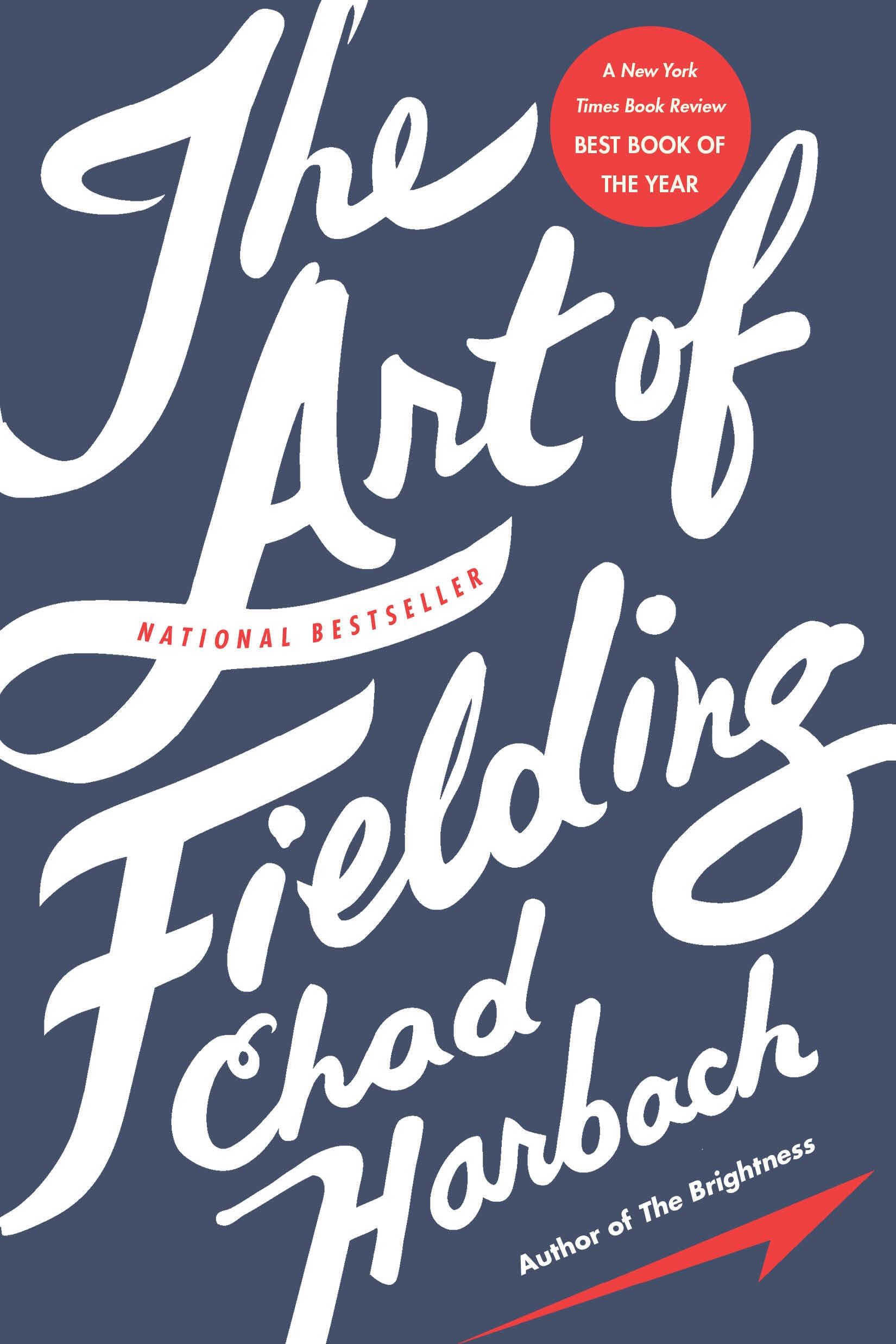
The Art of Fielding: A Novel
Product ID: 1548322
Buy anything from 5,000+ international stores. One checkout price. No surprise fees. Join 2M+ shoppers on Desertcart.
Desertcart purchases this item on your behalf and handles shipping, customs, and support to Iceland.
A disastrous error on the field sends five lives into a tailspin in this widely acclaimed tale about love, life, and baseball. "A magical, melancholy story about friendship and coming of age that marks the debut of an immensely talented writer.” — New York Times "Terrific...It's left a little hole in my life the way a really good book will.” —Jonathan Franzen At Westish College, a small school on the shore of Lake Michigan, baseball star Henry Skrimshander seems destined for big league stardom. But when a routine throw goes disastrously off course, the fates of five people are upended. Henry's fight against self-doubt threatens to ruin his future. College president Guert Affenlight, a longtime bachelor, has fallen unexpectedly and helplessly in love. Owen Dunne, Henry’s gay roommate and teammate, becomes caught up in a dangerous affair. Mike Schwartz, the Harpooners’ team captain and Henry’s best friend, realizes he has guided Henry’s career at the expense of his own. And Pella Affenlight, Guert’s daughter, returns to Westish after escaping an ill-fated marriage, determined to start a new life. As the season counts down to its climactic final game, these five are forced to confront their deepest hopes, anxieties, and secrets. In the process they forge new bonds, and help one another find their true paths. Written with boundless intelligence and filled with the tenderness of youth, The Art of Fielding is an expansive, warmhearted novel about ambition and its limits, about family and friendship and love, and about commitment—to oneself and to others. Named one of 2012’s best books by The New York Times , NPR, The New Yorker , The Los Angeles Times , The Washington Post , The Wall Street Journal , Christian Science Monitor , Bloomberg , The Kansas City Star , The Richmond Times-Dispatch , and Time Out New York . Review: Like Jonathan Franzen's work? Definitely give The Art of Fielding a shot. - In this book, the lives of five different characters - - three boys on a baseball team, a college president, and the college president's daughter - - intersect in interesting and unexpected ways on a college campus. Harbach takes on some really big themes in this book, and I think he does it well - - especially when he addresses success and how different people view it and the pitfalls that can occur as one tries to achieve it. He also does a terrific job with the concept of what it means to be true to oneself. Love, death, and grief are all touched upon as well, and in my mind, somewhat less successfully. My point here is that the book is more than a story about baseball, a lot more. However, at its heart, is the game of baseball, and it certainly would help to have a basic working knowledge of the game before reading it. If you love baseball (and I do), you can really appreciate the author's understanding and love of the game and it's strategies and what players who play it face. That being said, the book is NOT about baseball - - it's about relationships and the human spirit - - so a non sports fan can certainly partake of it and still get a lot out of the book. The writing style was very Johnathan Franzen, however, I would go on to say that despite being a new author, Harbach takes Franzen and does him one better. He evokes Franzen's engaging style and intersecting characters and strong character development, BUT he also writes much more likable characters. Characters that are flawed, but that you find yourself rooting for them. Characters who do bad things, but who are at their hearts good people. For me, Franzen's characters are ones I personally "love to hate", but I fell in love with Harbach's - - all of them - - and I sympathized deeply with their flaws. My only quibbles with the book is that there really are some moments where you must suspend disbelief. For example, Henry, a young promising shortstop, is recruited for the college baseball team by another player. And that player basically trains him and works with him and manages to control the team in good measure. Yeah, sure. That's not how recruitment works, and it is hard to envision for me. Also, the one female character really strikes me as a woman designed by a man - - as opposed to a real woman. A woman that a man would truly love to have, but that I have trouble envisioning in the real world. She's pretty much completely empathetic, will sleep with you when you need a lift, and yet not in the least bit clingy, and will totally love you even if you are gruff, sweaty, live in a hell hole, and have no money, because of course she sees through all that to your true heart. In five minutes. Ok, let's just say that she's no one that I know and leave it at that. All in all, I really can see why critics were crowing happily over this book. It's totally engaging to read, addresses important themes in a strong way, and gives you some great characters - - not to mention some great literary allusions. I'm very anxious to see what else this author does, but in the meantime, you can't really go wrong giving this book a try. Review: A Sports Book, But So Much More - The Art of Fielding isn't a book I would typically pick out of a bookstore (if those still existed), but because I seem to be on a tour of the buzziest books of 2011, I picked it up. I quit baseball somewhere around the age of ten. I was a pitcher who was decent at striking out batters, if only because their patience ran out and they swung before my "fastball" reached the plate. And I wouldn't call myself a fan. I go to the occasional game, if only because I have a team 10 minutes from my house and they occasionally have beer specials. However, I've played golf my entire life and Fielding reminded me a lot of some of the great fictional golf books out there, like Golf in the Kingdom or The Legend of Bagger Vance. It tries to explain a certain mysticism that occurs in the sport and did a good job at that. If you are a true baseball fan you won't be disappointed with how the sport is portrayed. If you have yet to form an opinion on the designated hitter rule, though, fear not. Harbach only uses baseball, specifically the Westish College Harpooners team, as the plot device that his characters orbit around, dealing with their own insecurities on and off the diamond. Half of the main characters are players on the team but the most interesting characters are the ones around the periphery such as the president of the college and his daughter, estranged for a few years but find themselves living together again. There is plenty of non-baseball related intrigue to keep the non-fan happy and to make the book worthwhile for them. Reading The Art of Fielding anywhere near the time you read Jeffrey Eugenides' The Marriage Plot is not a good idea. You will inevitably end up comparing the two because the subject matter is so similar: college life with characters that have too much literature on their minds. It's unfair, really. What was also unfair, in my case, was reading Fielding after I had read one of the favorite books of my life, Jennifer Egan's A Visit from the Goon Squad. But eventually a book would have to follow, and I thought the nearly unanimous selection to many 2011 book lists was a good choice and deserved the attention it received last year. I can't give it full marks due to a lack of originality (as I said, books like this one have previously existed, particularly in the sports genre), but it was a wonderfully written, very accessible story that is well worth the time.


| Best Sellers Rank | #70,647 in Books ( See Top 100 in Books ) #286 in Sports Fiction (Books) #573 in Coming of Age Fiction (Books) #2,319 in Literary Fiction (Books) |
| Customer Reviews | 4.2 out of 5 stars 5,170 Reviews |
A**Z
Like Jonathan Franzen's work? Definitely give The Art of Fielding a shot.
In this book, the lives of five different characters - - three boys on a baseball team, a college president, and the college president's daughter - - intersect in interesting and unexpected ways on a college campus. Harbach takes on some really big themes in this book, and I think he does it well - - especially when he addresses success and how different people view it and the pitfalls that can occur as one tries to achieve it. He also does a terrific job with the concept of what it means to be true to oneself. Love, death, and grief are all touched upon as well, and in my mind, somewhat less successfully. My point here is that the book is more than a story about baseball, a lot more. However, at its heart, is the game of baseball, and it certainly would help to have a basic working knowledge of the game before reading it. If you love baseball (and I do), you can really appreciate the author's understanding and love of the game and it's strategies and what players who play it face. That being said, the book is NOT about baseball - - it's about relationships and the human spirit - - so a non sports fan can certainly partake of it and still get a lot out of the book. The writing style was very Johnathan Franzen, however, I would go on to say that despite being a new author, Harbach takes Franzen and does him one better. He evokes Franzen's engaging style and intersecting characters and strong character development, BUT he also writes much more likable characters. Characters that are flawed, but that you find yourself rooting for them. Characters who do bad things, but who are at their hearts good people. For me, Franzen's characters are ones I personally "love to hate", but I fell in love with Harbach's - - all of them - - and I sympathized deeply with their flaws. My only quibbles with the book is that there really are some moments where you must suspend disbelief. For example, Henry, a young promising shortstop, is recruited for the college baseball team by another player. And that player basically trains him and works with him and manages to control the team in good measure. Yeah, sure. That's not how recruitment works, and it is hard to envision for me. Also, the one female character really strikes me as a woman designed by a man - - as opposed to a real woman. A woman that a man would truly love to have, but that I have trouble envisioning in the real world. She's pretty much completely empathetic, will sleep with you when you need a lift, and yet not in the least bit clingy, and will totally love you even if you are gruff, sweaty, live in a hell hole, and have no money, because of course she sees through all that to your true heart. In five minutes. Ok, let's just say that she's no one that I know and leave it at that. All in all, I really can see why critics were crowing happily over this book. It's totally engaging to read, addresses important themes in a strong way, and gives you some great characters - - not to mention some great literary allusions. I'm very anxious to see what else this author does, but in the meantime, you can't really go wrong giving this book a try.
J**G
A Sports Book, But So Much More
The Art of Fielding isn't a book I would typically pick out of a bookstore (if those still existed), but because I seem to be on a tour of the buzziest books of 2011, I picked it up. I quit baseball somewhere around the age of ten. I was a pitcher who was decent at striking out batters, if only because their patience ran out and they swung before my "fastball" reached the plate. And I wouldn't call myself a fan. I go to the occasional game, if only because I have a team 10 minutes from my house and they occasionally have beer specials. However, I've played golf my entire life and Fielding reminded me a lot of some of the great fictional golf books out there, like Golf in the Kingdom or The Legend of Bagger Vance. It tries to explain a certain mysticism that occurs in the sport and did a good job at that. If you are a true baseball fan you won't be disappointed with how the sport is portrayed. If you have yet to form an opinion on the designated hitter rule, though, fear not. Harbach only uses baseball, specifically the Westish College Harpooners team, as the plot device that his characters orbit around, dealing with their own insecurities on and off the diamond. Half of the main characters are players on the team but the most interesting characters are the ones around the periphery such as the president of the college and his daughter, estranged for a few years but find themselves living together again. There is plenty of non-baseball related intrigue to keep the non-fan happy and to make the book worthwhile for them. Reading The Art of Fielding anywhere near the time you read Jeffrey Eugenides' The Marriage Plot is not a good idea. You will inevitably end up comparing the two because the subject matter is so similar: college life with characters that have too much literature on their minds. It's unfair, really. What was also unfair, in my case, was reading Fielding after I had read one of the favorite books of my life, Jennifer Egan's A Visit from the Goon Squad. But eventually a book would have to follow, and I thought the nearly unanimous selection to many 2011 book lists was a good choice and deserved the attention it received last year. I can't give it full marks due to a lack of originality (as I said, books like this one have previously existed, particularly in the sports genre), but it was a wonderfully written, very accessible story that is well worth the time.
M**S
The Most Enjoyable Book I've Read in Years
I am updating my review below. If you have a Kindle or Kindle app, download the first chapter free and decide. The reason why many of the negative reviewers are so adamant and are recommending each others reviews is that it is clearly touching a nerve. There is no accounting for taste or for prejudices. Check out that chapter and decide for yourself. I'm just having a hard time deciding what book I can follow this with without having a let down. Thanks. MP I have no idea if this book is a classic. What I do know is that this intelligent and gifted writer has created great characters, a fast moving, funny, and touching story that will end much too soon for me. Like "Friday Night Lights, I'll want to know where these characters go. I haven't completed the book. I could have in one day, but I'm savoring it slowly, like a fine wine or piece of marvelous pastry. I think comparisons to Richard Russo, at his best, are right on target, the Russo of "Nobody's Fool" and "Straight Man, " somehow drawing you in to people you care about and want to know, a great feeling for the place, and both laughter and tears. I haven't seen the films of Preston Sturges mentioned anywhere, yet as I read this book I often feel like I'm in some wonderful Sturges movie, insightful, very funny, and also very compassionate. A word of caution as you read some of the negative reviews. There is no accounting for taste and I respect the views of people who didn't like the book. BUT I am surprised by the vehemence of some of these reviews, the emotionality. And there also are far many more negative responses to positive reviews of this book than is usually evident. Some superb reviews here, far better than mine, are receiving many negative responses. Curiouser and curiouser. Whenever I see this, I wonder if some emotional buttons are being pushed that result in responses way beyond just critical commentary. So then I wonder if homophobia is also at play in some cases. Did that aspect of the novel, though hardly a dominant one, somehow really bother some people? Are they threatened by it? Certainly, if homosexuality really upsets you, as opposed to just being something you disagree with, you probably should avoid the novel, even though that thread is done with taste, poignancy, and great warm humor. Given what I've said above, I'm sure my comments here will also take some hits. My reviews generally get far many more positive responses. That won't be true here. Easier to respond negatively than deal with one's own issues. Harbach would probably find this just another part of the human serio-comedy! So I will too. As for me, it is a book I'm treasuring and will hate to let go.
H**R
It was good -- BUT....
First thing I'll admit: I purchased this not so much because I was hankering to read a baseball-themed bromance about self-discovery in the dregs of a protein shake, but more because the dollar figure of writer Chad Harbach's advance was leaked to the press and legions of curious had to know if the writing warranted that giant $650,000 figure. As if any of us know what "warranted" looks like in this case, as if we had anything to compare that against. I just knew that was a lot of money, and if a first time novelist could command that dollar figure (in this era of declining advances and tightened publishing company purse strings) , I needed to find out what he was doing right. I finished it in 3 sittings. Worth mentioning, because I slog through most books in a single evening so there's no petty internal struggle over "WHY" I'm picking the book back up and whether I'm GENUINELY compelled to turn the next page or whether I'm simply reading out of some rote sense of duty to complete the project I've begun. With this book, that internal struggle was strong each time I hefted the book up onto my lap. Roommate would ask me, "Is it any good?" and I would say, "I'll wait until I'm done to answer that. I don't know yet." Which was my opinion up until the final pages. "I don't know yet." I was trying to separate my envy over the publicity and the giant advance check from my enjoyment of The Novel in its own right and finding that separation very difficult. And, as many reviews I read prior to dead lifting the novel warned, this was not a plot-driven baseball story, this was a character-driven baseball story. And it's not a baseball story at all, not really, because there's not really all that much baseball actually played out on the pages. It's just that the characters do their unfolding in relative proximity to a baseball field, for the most part. So, I'll quote the book jacket to give us our synopsis: "At Westish College, a small school on the shore of Lake Michigan, baseball star Henry Skrimshander seems destined for big-league stardom. But when a routine throw goes distatrously off course, the fates of five people are upended. Henry's right against self-doubt threatens to ruin his future. College president Guert Affenlight, a longtime bachelor, has fallen unexpectedly and helplessly in love. Owen Dunne, Henry's gay roommate and teammate, becomes caught up in a dangerous affai. Mike Schwartz, the Harpooners' team captain and Henry's best friend, realizes he has guided Henry's career at the expense of his own. And Pella Affenlight, Guert's daughter, returns to Westish after escaping an ill-fated marriage, determined to start a new life. As the season counts down to its climactic final game, these five are forced to confront their deepest hopes, anxieties, and secrets. In the process, they forge new bonds and help one another find their true paths. Written with boundless intelligence and filled with the tenderness of youth, The Art of Fielding is an expansive, warmhearted novel about ambition and its limits, about family and friendship and love, and about commitment -- to oneself and to others." Got it? Okay -- my official decision on whether or not the book "was any good." Yes -- but. Yes, The Novel was good in that the sentences were finely crafted, the prose obviously labored over with an eye and an ear to fluidity and clarity and philosophical repose -- but --- we had some "hollow character" issues. For instance: if we're expected to care whether the purported "protagonist" Henry lives or dies, Harbach needed to imbue him with a certain whiff of humanity or some menial degree of warmth or depth that was simply NOT THERE. Henry was, essentially, no more than the mitt into and out of which a baseball flies. SO, when we're expected to CARE about the person attached to the mitt: we don't. Which poses something of a problem when so many pages are dedicated to his mental, emotional, spiritual, and physical decline. Frankly, there's a scene where he wanders out into the lake to swim in a (naturally) weighted vest. It's a "workout," apparently -- I ended up hoping it was a suicide attempt. The character -- not so much a protagonist as a catalyst or a fulcrum or a prop -- was insufferably wooden. Yes, The Novel was good in the LITERARY sense; Harbach wielded the classic literary references (Melville, Chekhov, you name it) like I wield a knife around frosting. With much slathering. Which, sure, serves to remind us that The Man behind The Novel is well-educated, well-read, and well-equipped to remind us of both -- but -- the trade-off was authenticity. Missing from between the lines of literary reference upon literary reference was any sense that these were really, actually, young 20-somethings doing the thinking, the speaking, the behaving. If we'd been told that these characters were 33 or 43 instead of 23, perhaps some of the crisis of identity they experience while strung-out on Schlitz (yes, Schlitz) and Vicodin might have felt more believable. And -- yes, I'm going to go here -- there was this small matter of misogyny. Okay, okay, that's a strong term. Perhaps it was less a malicious intent to make women look useless and more of a uselessness for women in general that bleeds through. First, I have no illusions that this is a book about men. Written by a man, for men, starring men. There's nary a female that crosses the page (save for the token "love triangle girl") but -- when they do make an appearance, the only currency with which Harbach arms them is a sort of clumsy sexuality that plays out almost like caricature. Pella, the "Girl" in The Novel, manages to market herself to intellectually and spiritually confused man-boys as though the only language all college kids speak fluently involves condoms. Finally (and I know this will sound terribly nit-picky), there was a certain quaint, classical, almost old-fashioned tic to the way Harbach writes that evoked, culturally, anyway, a mid-century sort of college town. Something out of the 1950's. So it felt in-congruent any time he'd work in an iPod or a text message reference. It was as though we were straddling generations, comfortably floating through a 1952 collegiate paradise of baseball and puppy love and all things clean and contemplative, and then the iPhone reference would pop up, or he'd invoke the "PowerBoost" protein shake and the illusion was shattered. However -- when it gets down to it, if you ask me "was it any good?" I'd still end up saying, "Yes." Even though it wrapped up a little too neatly, the "happily ever after" felt a little too easy, and -- FERHEAVENSSAKE -- he actually went with the lame "sports movie" ending where the crestfallen player has the opportunity to take up his cross and save the team in the most spectacularly cheesy, eye-rollingly unrealistic climax EVER. I kept thinking to myself, "Tell me he doesn't go there. Tell me he doesn't go there. Tell me -- oh NO. He's doing it. He's having the little guy come in to save the day. Damn if he didn't watch Rudy too many times growing up......" So there was that. But the character of Mike Schwartz really should stand the test of literary time -- were I teaching a high school Lit class, I'd probably have them dissect the Schwartzy at length because he seemed like the least wooden, most believably human character in The Novel. Would I buy this for family members for Christmas? Hmmmmmmmmm. Only for the family member who are literature students, I think.
M**S
I loved it!
The Art of Fielding by Chad Harbach, a first time novelist and a co-founder of the literary journal n+1, is a gorgeous novel that is one of the "must reads" for 2011. Harbach creates a beautiful, elegant and believable world in this novel. I loved it. The story is set at a Midwest university, Westish, and is built around Henry Skrimshander, a small shortstop with amazing potential. He fields balls perfectly and rifles them to first base effortlessly. The language Harbach uses to describe the fielding in the first chapter is worth reading alone. Skrimshander is discovered by the captain of the Westish team, large and rough, Michael Schwartz. Under his watch, Schwartz develops Skrimshander to be major league material at this backwater university. After establishing himself as a record breaking fielder, Skrimshander releases a throw to first base that misses its target and unleashes devastating consequences for Skrimshander and the team. Like Chuck Knoblauch and Steve Sax, one missed throw undermines Skrimshander's confidence and potentially his baseball career and life. Meanwhile, Schwartz is trying to make post-college plans and facing the challenges of leaving college. Harbach populates the university with diverse characters: the university president, who is a perennial bachelor looking for love; his prodigal daughter, who returns to the university and her father after leaving school to marry an older man; and, Skrimshander's gay roommate and teammate, who plays a pivotal role in most of the characters' lives. The characters confront the challenges of failure, changing relationships and redefining roles for themselves in their community as the community shifts. Harbach does a masterful job with this story. The writing is lyrical and readable. The story moves. The characters live in a world of uncertainty and confront their fears. While the baseball is very important to this book, it is as much a book about failure, the fear of failure and overcoming limitations as it is about baseball. Harbach sprinkles literary allusions throughout the book, key among them, Melville's Moby Dick. Several current literary luminaries got behind this book and added their blurbs: Jonathan Franzen, Téa Obreht and James Patterson. Recommendation: Read this. If you liked The Natural (or anything that ties literature and baseball together), this is a must. If you like new and interesting voices, this is a must. If baseball is not your thing, don't be put off. You could still love The Great Gatsby is you didn't like large lawn parties and liquor.
C**N
Harbach starts out strong before losing a bit of his fastball in middle innings. Still earns W.
As a huge baseball fan, I was hesitant to give this one a read, because all too often I feel like authors/filmmakers don't really have a great grasp on the nuances of the game and I end of getting distracted by them. I'm pleased to say that while there were a few such instances (some of Schwartz's pre-game speeches are more fitting a football team than a baseball team), for the most part, I thought Harbach did a good job of capturing the subtleties and beauty of a great game. I felt this started very strong. In fact, it brought me back to my own playing days at an upstate New York university. The long bus rides down south in the beginning of the year and the Chinese food restaurants in the strip malls really brought back a flood of really happy memories. And then there were the not so happy ones. Unfortunately, I could relate to Henry more closely than I care to remember as I pulled myself out of a game at short stop after dropping a pop fly and losing all my confidence. I was able to come back the next day, but truth be told, I was never really the same. That's a line you never want to cross. Somewhere along the line though, I felt like Harback lost a bit off his fastball. For starters, I never quite got over some of the character names (Starblind comes immediately to mind). Not a big deal, but distracting at times. As far as the characters themselves, well, I can understand how some might find them unrealistic, but I'm willing to give Harbach the benefit of the doubt here. It is after all "fiction", and I cared about what happened to them. My problems with the characters were that once you get past the halfway point of the book, every character with the exception of Owen turns into a whiny, self loathing shell of his/her former self. For instance, let's take President Affenlight. Yes, I found the relationship between him and Owen a bit of a stretch, but I was able to move on (see above re: fiction). What I never quite came to grips with was how Affenlight was suddenly transformed into this blathering teenage boy who went completely gaga every time Owen was around. What's more, while Guert is going through this, we also have Henry dealing with his loss of confidence, Schwartz dealing with his rejection from law school, and Pella dealing with her sizeable baggage. After a while it became a bit much. I won't go into details about the ending, but like some others, I felt it was a bit abrupt and strained the bounds of logic (yes, even for fiction) a bit too much. And yet, here's the thing. I'm actually gonna miss these characters. I wish Owen the best in Japan, and I hope Pella and Mike will be happy together. And last but not least, I hope Henry gets his swagger back. In short, yes, there were inconsistencies and dropped story lines (Schwartz's pill popping for one), but at the end of the day, this worked for me more than it didn't. All in all, a good read, IMHO.
D**D
Swing or not, it's a HIT
I had THE ART OF FIELDING on my Amazon Wish List for ages. When it became available on Kindle Unlimited, I snapped it up. Generally, I don't read books about baseball because nonfiction never captures the spirit of the game for me, and fiction seems to sentimentalize baseball to the point of nausea. This book grabbed me immediately, and when I charted the parallels with my favorite novel, MOBY DICK, I read ART OF FIELDING more and more slowly, wanting it to never end. It took me too long to read it; by the time I finished, it was no longer offered in Kindle Unlimited. I immediately bought it to save all my annotations. This is one of those books that can be as trivial or as profound as the reader makes it. Or as spiritual or depraved; fascinating or dull -- much like the author of MOBY DICK himself, and the rest of his works. Melville provides a silent centerpiece for the entire cast of characters. All of them react to their lives as though stuck on a ship in the middle of nowhere, going nowhere else at full tilt, chasing a creature created in their own minds that might or might not even exist. Even the character who seems to have been born with a magical gift of Fielding owns the name "Henry Skrimshander," a skrimshander being an artist who manufactures scrimshaw - exquisite works of art carved upon whalebone. His gift ends up laying him low in a disastrous fall from sporting and spiritual grace. I don't think this work is for everybody. When nearly finished with the novel, I read a 2011 review of it from The Atlantic Monthly. The reviewer claimed the novel aimed to hit, but swung and missed. The review itself widely missed the mark by petulantly reviewing past reviewers. However, that review inspired me to write my own. The profundity of the book lies in its thematic webbing with intricate references to Melville's work and life. It doesn't require a literature degree to appreciate its complexities - I didn't earn one. A common reader can find a reference from the novel REDBURN about "American being the seat of snivelization," and laugh like anyone would. But an appreciative reading comes after admitting that THE ART OF FIELDING isn't a dumb book about baseball -- just like MOBY DICK isn't just a novel about a jaunty fishing trip gone horribly wrong.
K**R
Excellent readable bildungsroman centered on America's favorite pasttime
A winning examination of college life, middle age sexual rediscovery, and naturally, baseball. Chad Harbach interweaves the plight of five characters into one mercilessly funny and imminently readable experience. Comparisons have been made between this novel and the work of Jonathan Franzen or John Irving, and rightly so--The Art of Fielding exhibits some of Irving's zesty scenarios and Franzen's unlikable characters--at least on the surface. This comparisons prove facile, however, as the novel barrels forward. Harbach's tale is unique for its focalization. The plot begins with Henry Scrimshander, a brilliant young baseball player who seems like he might just be suited for a perfect career in the majors, until the unthinkable strikes. Henry is taken under the wing of rough and tumble Westish College team captain, Mike Schwartz. His training intensifies. He lifts weights, goes on long pre-dawn runs with a massive weight vest. He builds himself mentally with philosophical teachings from the book which lends its title to the novel. Meanwhile, Henry's roommate, Owen, a pint-sized erudite gay kid, begins a relationship with a faculty member and joins the baseball team beside Henry, though he spends much time in the dugout with his head buried in a book. Elsewhere, the Westish school president Guert Affenlight, falls into a midlife crisis when his daughter, Pella, now a married woman, returns to the school and takes up a job at the dining hall. The characters intersect in wonderful ways and it seems much of their actions are governed by themes of sacrifice and success, integral to the game which provides most of the novel's most rousing scenes. Baseball takes on a greater context than mere spectacle, however, as, Mike Schwartz believes at one point, "you loved [baseball] because you considered it an art: an apparently pointless affair, undertaken by people with a special aptitude, which sidestepped attempts to paraphrase its value yet somehow seemed to communication something true or even critical about The Human Condition. The Human Condition being, basically, that we're alive and have access to beauty, can even erratically create it, but will someday be dead and will not" (256-7). Schwartz, thus, provides a sense of looming doubt to counter Henry's naive enthusiasm. Ultimately, this is a novel of characterization, flipping from character to character with remarkable assurance. Throughout its 500 page length, you will never be bored, thanks in part to the endearing (if vastly flawed) characters and quite quick chapters. It would make a wonderful film but works well as a novel. There are many memorable scenes, including an inventive burial scene and a couple heart-wringing baseball games. You don't need to be a fan to find enjoyment here.
D**S
Good quality read
A good, interesting book that keeps you interested. I feel the ending didn't resolve much (which frustrates me) bug it was still a quality read.
J**I
Not only Baseball
I always thought that the German language is my favourite reading language. I thought will never fully enjoy and soak up an English language book, simply because I find the German language absolutely beautiful (Obsttörtchen), thoughtful (Augenblick), touching (Geborgenheit), odd (krass) and funny (Dreikäsehoch). Enter Chad Harbach. I loved the book for the beauty of its language, for its story, the characters, the emotions and it was a joy to read. This book seems to be a baseball novel, all characters somehow involved with the sport at fictive Westish College in Wisconsin. I do not know enough about baseball to even like or dislike the game, for all I know it is like cricket, quite boring, but the book managed to get me hooked, because it is not only about the sporting aspect of the game. In a small town the slender shortstop Henry Skrimshander is being discovered by the huge batter Mike Schwartz. Mike gets Henry into Westish College and onto the baseball team and the two characters will have a tight coach-student relationship. They will be best friends but I always felt that Mike is looking out for Henry like a big brother. Henry's room-mate Owen, also part of the baseball team, is gay, charismatic, tidy and loves books. Then there is the president of the College Guert Affenlight and his daughter Pella who just left her husband and returned to live with her father at the College. These five characters are taking centre stage in the book, all stories are revolving around them. This book is about friendship, ambition, all kinds of love, sport and complications of (college) life. I admire the writer for the detail in storytelling, the quirky connections and hints (Henry Melville's 'Moby Dick') and the imagination that went into creating this wonderful book. An absolute highlight for me.
T**S
wonderful book - in partcular for those who play baseball
coming of age combined with baseball, college, sexuality. must be a first novel. I'll read the net one. obligatory extra words
オ**ン
挫折しながら、自分の道を進む若者たちの内面と友情を描いた、長編の野球小説
ミシガン湖沿いにある小さなWestish大学が舞台。ここの野球部のキャプテンMike Schwartzは、天才的な球さばきをする高校生のショートHenry Skrimshanderを目の当たりにし、彼がWestishに入学し、部員となるよう尽力する。Henryは、往年の花形大リーガーが守備の極意を記した"The Art of Fielding"をバイブルにしている。入校後、彼は部員でゲイの美男子Owenとルームメイトになる。学長のGuert Affenlightはメルヴィルの研究者で、若くして結婚し西海岸に住む不仲の娘Pellaがいる。無エラーの記録を更新し続け、プロへの道を目前にしていたHenryの人生は、一失策を機に急転し始める。それは、全力を注ぎ彼を指導してきたMikeの生き方にも波及する。一方、AffenlightはOwenに心ひかれたことで学長の地位を危うくし、1人戻ったPellaは気まずい三角関係を作り出す。物語は、ユニークなこの5人の係り合いの描写に熱気に満ちた野球の場面が交錯しながら、ゆっくりと進行する。夢と挫折、秘密や過ちに直面し、それらを解決する中で生まれる友情、愛、新たなつながりを経験しながら、自分の道を前へと進む若者たちの内面が浮き彫りにされている。「若き日の我が身」とも重なり、胸に迫るものを感じる読者も多いと思う。
B**Y
The Great American Novel
I bought this promising first novel having read a number of enthusiastic reviews in the Guardian. As a result, I had great expectations that this would be a good book, and I can happily report it exceeded my wildest dreams. I will not provide a summary of the plot, as I will not risk inadvertently spoiling it for you. Suffice it to say that Chad Harbach has attempted to write a Great American Novel, following in the footsteps of Fitzgerald, Hemingway, Mailer, Bellow, Updike, Vidal, Heller, Roth, Auster and Ford. In my opinion, he has achieved his lofty ambitions. It may lack the biting satire of Catch 22 or the breathtaking sweep of Fiesta, but this novel manages to combine utterly compelling characterisation with a plot that is simultaneously contemporary and allegorically timeless. The central plot motif, with its depiction of individual and team excellence being thwarted by inner demons, before being triumphantly realised via selfless individual and team sacrifice, provides a penetrating and emotionally engaging mirror to the current American malaise. I for one, share the author's faith that the only thing to fear is fear itself, and that it is too early to call time on the American Dream!
Trustpilot
1 day ago
1 week ago