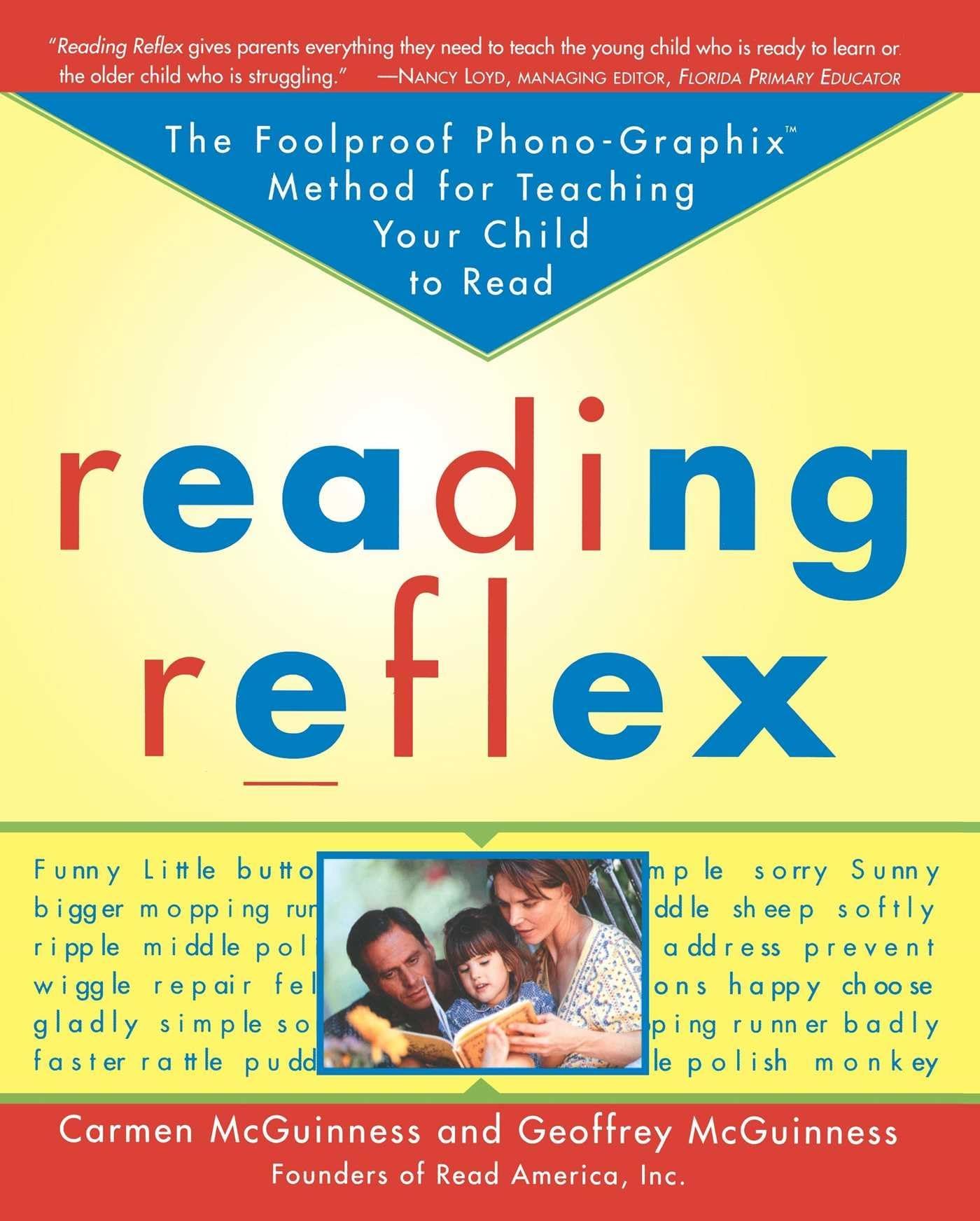
Reading Reflex: The Foolproof Phono-Graphix Method for Teaching Your Child to Read
Product ID: 1523820
Buy anything from 5,000+ international stores. One checkout price. No surprise fees. Join 2M+ shoppers on Desertcart.
Desertcart purchases this item on your behalf and handles shipping, customs, and support to Iceland.
desertcart.com: Reading Reflex: The Foolproof Phono-Graphix Method for Teaching Your Child to Read: 9780684853673: Carmen McGuinness, Geoffrey McGuinness: Books Review: Fun, Intuitive, Effective, Logical Method that Works! - I was taught using the rigorous Spalding Method - Writing Road to Reading. I felt the phonics based nature of Spalding gave me an excellent grasp of the English language, but I dreaded dragging my homeschooled children through memorizing a hundred spelling rules and exceptions (none of which I even remember anymore). Something just felt "off" about that... but I also knew that a ton of common reading programs just don't work well, and I had heard that the 100 Easy Lessons book can be agonizing for many as well. Discovering the phono-graphix method was exhilarating - a breath of fresh air! It uses the reliable, time tested phonics-based foundation, but in an extremely intuitive way that just makes sense for how kids' brains naturally work. This reading method feels like play-based learning. The first section of the book, despite its length, is important to read to understand WHY the phono-graphix method works so well. Methods that involve heavy rote memorization of letter blends, word families, sight words, or a hundred spelling rules and exceptions do not set kids up with an intuitive ability to decode new words and spell properly the way the phono-graphix method does. Instead of the drudgery of battling through page after page of repetitive lessons or rote memorization, you're using letter tiles to create, sound out, and manipulate words, then writing while sounding them out to mentally solidify the link between sounds and the "sound pictures." Even many nonsense words are used to prevent the dangerous "guessing" habit and ensure that each "sound picture" is deliberately decoded. Mistakes are an important, positive part of the learning process as well. This, along with the creativity wiggle room afforded by the play based method, makes it ideal for my strong willed child. Cons: You really have to spend the time learning the system and how to use the book to understand your objective and why it's important to teach this way. It also takes time to cut out the letter squares and store them in numbered envelopes. Tip: If you don't want to cut up the book, you can get a PDF of just the manipulative pages to print (maybe on heavier paper) and cut out: https://shop.phono-graphix.com/Reading-Reflex-Manipulatives-Pages-downloadable-PDF-RRpdf.htm Another con is that the complexity of navigating through each activity/lesson in the book; It's a bit of a maze to get from one activity to the next in the correct order and then repeat the process with each set of phonemes. Still 100% worth it, but if you need a system that's laid out more clearly, more linear, and easier for the instructor to navigate, the ABeCeDarian program is also based on the same Phono-Graphix approach and is known to be a little more user friendly (at the cost of more expensive and numerous books. One of my favorite benefits to the phono-graphix method is seeing my child easily advance to decoding longer, complex words with very little overwhelm, as well as watching him develop an uncanny intuition for spelling mastery at a younger than average age. I can't recommend this reading program highly enough! For preschoolers (playing the phonics games suggested for younger children), K-1 graders, and literally any other age. Review: Best, easy to use, reading program!!! - This is a fantastic stand alone reading curriculum or supplement that can take your child from beginning reading all the way through about a 4th/5th or 6th grade level of reading. The lessons are short and easy to do. There are no complicated extra items to buy. The curriculum has elements that are similar to the Spalding method where the child learns to spell words before they are told to read them. It also incorporates multisensory activities similar to the Orton Gillingham method. But it's approach is unique in that it focuses on phonemic awareness and sound/listening and speech skills first before learning what letters or letter combinations are used to represent different speech sounds. Letters do not say sounds, but rather we use different letters/sound pictures to represent our speech. I've spent a lot of money on other programs to teach reading to my kids including Barton, and Logic of English, and other less expensive ones. This book and a little red book called "Toe by Toe" (for ages 8+) have been the most helpful for my older dyslexic child. If I had found this book sooner, I probably would have saved a lot of money and wasted time with more expensive programs. With my youngest, 5 year old, I find it particularly engaging if we do some of the spelling or reading activities while playing a game like Candy land.
| Best Sellers Rank | #93,056 in Books ( See Top 100 in Books ) #77 in Parent Participation in Education (Books) #83 in Linguistics Reference #191 in Reading & Phonics Teaching Materials |
| Customer Reviews | 4.6 4.6 out of 5 stars (322) |
| Dimensions | 7.38 x 1.1 x 9.25 inches |
| Edition | 1st |
| ISBN-10 | 0684853671 |
| ISBN-13 | 978-0684853673 |
| Item Weight | 1.5 pounds |
| Language | English |
| Print length | 368 pages |
| Publication date | August 1, 1999 |
| Publisher | Free Press |
| Reading age | 5 - 7 years, from customers |
C**N
Fun, Intuitive, Effective, Logical Method that Works!
I was taught using the rigorous Spalding Method - Writing Road to Reading. I felt the phonics based nature of Spalding gave me an excellent grasp of the English language, but I dreaded dragging my homeschooled children through memorizing a hundred spelling rules and exceptions (none of which I even remember anymore). Something just felt "off" about that... but I also knew that a ton of common reading programs just don't work well, and I had heard that the 100 Easy Lessons book can be agonizing for many as well. Discovering the phono-graphix method was exhilarating - a breath of fresh air! It uses the reliable, time tested phonics-based foundation, but in an extremely intuitive way that just makes sense for how kids' brains naturally work. This reading method feels like play-based learning. The first section of the book, despite its length, is important to read to understand WHY the phono-graphix method works so well. Methods that involve heavy rote memorization of letter blends, word families, sight words, or a hundred spelling rules and exceptions do not set kids up with an intuitive ability to decode new words and spell properly the way the phono-graphix method does. Instead of the drudgery of battling through page after page of repetitive lessons or rote memorization, you're using letter tiles to create, sound out, and manipulate words, then writing while sounding them out to mentally solidify the link between sounds and the "sound pictures." Even many nonsense words are used to prevent the dangerous "guessing" habit and ensure that each "sound picture" is deliberately decoded. Mistakes are an important, positive part of the learning process as well. This, along with the creativity wiggle room afforded by the play based method, makes it ideal for my strong willed child. Cons: You really have to spend the time learning the system and how to use the book to understand your objective and why it's important to teach this way. It also takes time to cut out the letter squares and store them in numbered envelopes. Tip: If you don't want to cut up the book, you can get a PDF of just the manipulative pages to print (maybe on heavier paper) and cut out: https://shop.phono-graphix.com/Reading-Reflex-Manipulatives-Pages-downloadable-PDF-RRpdf.htm Another con is that the complexity of navigating through each activity/lesson in the book; It's a bit of a maze to get from one activity to the next in the correct order and then repeat the process with each set of phonemes. Still 100% worth it, but if you need a system that's laid out more clearly, more linear, and easier for the instructor to navigate, the ABeCeDarian program is also based on the same Phono-Graphix approach and is known to be a little more user friendly (at the cost of more expensive and numerous books. One of my favorite benefits to the phono-graphix method is seeing my child easily advance to decoding longer, complex words with very little overwhelm, as well as watching him develop an uncanny intuition for spelling mastery at a younger than average age. I can't recommend this reading program highly enough! For preschoolers (playing the phonics games suggested for younger children), K-1 graders, and literally any other age.
K**D
Best, easy to use, reading program!!!
This is a fantastic stand alone reading curriculum or supplement that can take your child from beginning reading all the way through about a 4th/5th or 6th grade level of reading. The lessons are short and easy to do. There are no complicated extra items to buy. The curriculum has elements that are similar to the Spalding method where the child learns to spell words before they are told to read them. It also incorporates multisensory activities similar to the Orton Gillingham method. But it's approach is unique in that it focuses on phonemic awareness and sound/listening and speech skills first before learning what letters or letter combinations are used to represent different speech sounds. Letters do not say sounds, but rather we use different letters/sound pictures to represent our speech. I've spent a lot of money on other programs to teach reading to my kids including Barton, and Logic of English, and other less expensive ones. This book and a little red book called "Toe by Toe" (for ages 8+) have been the most helpful for my older dyslexic child. If I had found this book sooner, I probably would have saved a lot of money and wasted time with more expensive programs. With my youngest, 5 year old, I find it particularly engaging if we do some of the spelling or reading activities while playing a game like Candy land.
B**S
Easy to read and easy to use
In Reading Reflex, Carmen McGuiness outlines an approach to teaching reading that maximizes all of the positive aspects of phonics-based instruction while eliminating certain aspects of that type of instruction that students find confusing. Her approach recognizes that people 'make sounds', not letters, and that letters simply represent the sounds that already exist in spoken language. Additionally, the phono-graphix approach recognizes and teaches the English written code (both basic and advanced) in the most straightforward, common-sense manner that I've ever encountered. The first two chapters outline why the method works and how to implement it, and the following chapters provide detailed, systematic lessons for teaching reading using the phono-graphix method. The book is well laid out and easy to use. McGuiness' method is research-based and clinically tested. I have worked in education for 10 years, and I've recently moved from teaching Spanish to secondary students to teaching reading to elementary students. I was taught to read using phonics. I was taught to teach reading using the whole language approach. I have been teaching reading for the past year using a phonics-centric blend of those approaches. While I've seen marked growth in each of my students using a phonics-centric approach, I have also encountered many of the problems described by McGuinness (too many exceptions to the rules for phonics rules to be useful, confusion about which letter 'makes' which sound when in fact letters only 'represent' sounds, and confusion over the names of letters versus the sounds they represent. I have only just begun to use the phono-graphix approach with my students, but I'm excited to see how the implementation of the strategies outlined in this book will move my students forward in their reading ability. I will update in 12 weeks when I've fully implemented the principles in the book, but I'm confident that I will see significant growth in reading ability in each of my students by the end of a 12 week trial period.
M**L
I can’t recommend this book enough. This book aligns with the science of reading. We had tried many many ways to teach my Dyslexic Autistic ADHD son how to read but they didn’t work. This did. You work on reading, writing, spelling and auditory discrimination of sounds to words. Everything you need is in the book you just need a photocopier and all lesson plans are given with instructions and solutions to mistakes made. There are peer reviewed studies backing up the efficiency of this method. One thing I would add whilst doing this book is Phonemic Awareness exercises. Easily done during the lessons as you can swap, remove letter tiles as an add on to the lessons. Honestly this book was a game changer for my son. The activities varied enough to help with transference of knowledge, no lessons are long so helped with concentration and the multi modal approach ensured he made the brain connections for the information to finally stick. I would recommend Dandelion Launchers and Readers alongside this as the follow the same order of Phonics being taught so the skills being learned can be practiced in real reading without the frustration. If you are reading this review it is probably because you have a struggling reader or want to help struggling readers. This should be in your toolbox. If you can read you can teach a child to read with this.
T**L
The condition of the book is poor. Folded and wrinkled cover and rusty old stains on the inside pages. This cannot be an original but a copy looking at the quality of paper. Can’t believe, I had to pay INR 1810 for this. At least the delivery service was better than expected so 1 star.
M**X
My son's kindergarten teacher uses this book in his classroom, and recommended that the parents follow a long a bit. I used this, Jolly phonics gestures that I learned from the internet, Usborne Phonics flash cards, and a tray with salt in it so he could practice letter formation. In two weeks he read the word cat, and at a month he could read the over 25 basic words and he wrote the word cat, Vie (his friend), and poop. This book works. I recommend it to EVERYONE! Honestly, it's helping me with my litteracy too! You will not regret using this book!
P**E
This book is very informative. It shows why phonics has a 33% failure rate and the current sight reading teachings have a 42% failure rate. These rates are not made up but studies have proved this. Reading Reflex has a 100% success rate that has been teaching adults to read for years. All of their students have learned to read and there has not been a single failure yet! I highly recommend this book to all teachers out there who have special needs students as well as transforming normal students into super readers.
R**W
I rarely write reviews but felt I must! this is a great item. This seems really useful for helping children with with reading. i do think the introductory sections in the book be shorter and clearer but the exercises themselves are laid out well. it would have been 5 stars if the intro chapters were better!
Trustpilot
1 month ago
1 month ago