Buy anything from 5,000+ international stores. One checkout price. No surprise fees. Join 2M+ shoppers on Desertcart.
Desertcart purchases this item on your behalf and handles shipping, customs, and support to Iceland.
❄️ Cool like a pro, perform like a king.
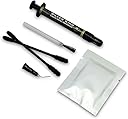
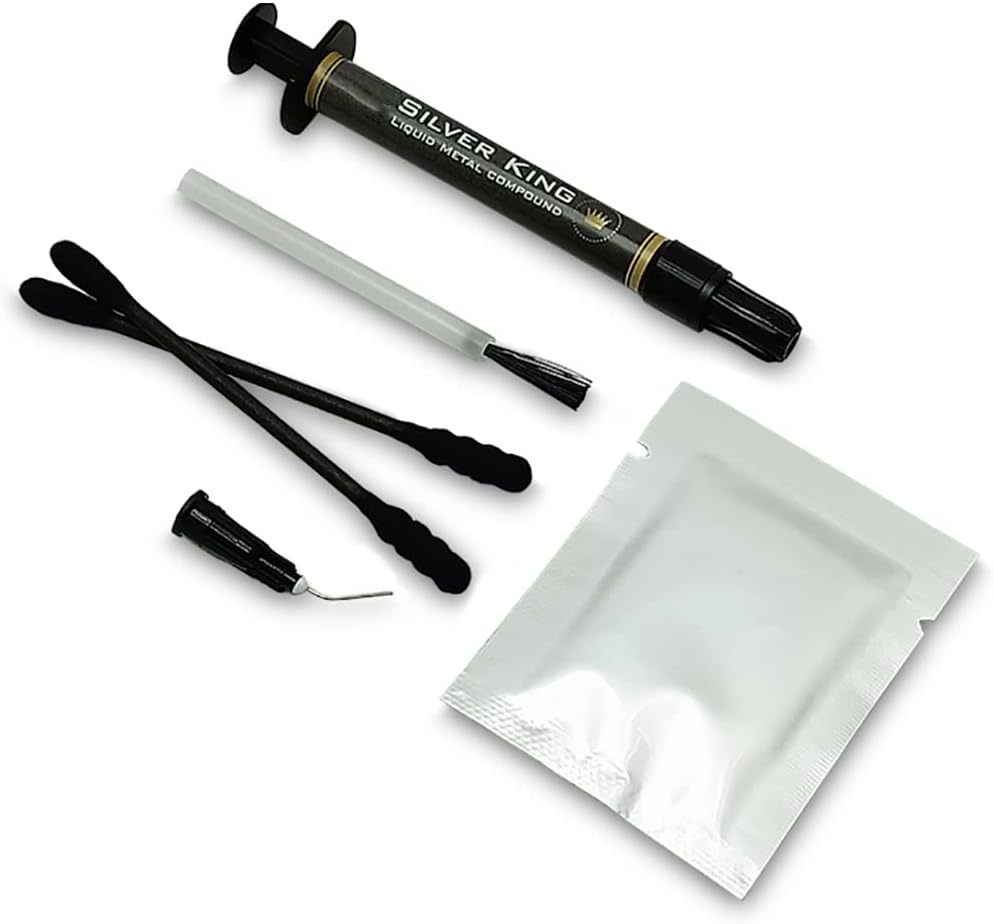
Liquid Metal Thermal Paste by One enjoy delivers an exceptional 79 W/mK thermal conductivity, engineered for copper heatsinks and experienced users seeking top-tier CPU/GPU cooling. This electrically conductive paste includes a precision spreader and cleanser, ensuring expert application and superior heat dissipation, resulting in improved system stability and performance.


| ASIN | B07S8VK1NL |
| Best Sellers Rank | 3,435 in Computers & Accessories ( See Top 100 in Computers & Accessories ) 15 in Thermal Paste |
| Brand | 1 one enjoy |
| CPU Socket | LGA (Intel) |
| Cooler Heatsink Compatibility | [do not use with aluminum] |
| Cooler Heatsink Material | Copper |
| Cooler heat sink material | Copper |
| Cooler heatsink compatibility | [do not use with aluminum] |
| Country Of Origin | China |
| Customer Reviews | 4.5 out of 5 stars 1,188 Reviews |
| Global Trade Identification Number | 00822361165163 |
| Item Weight | 18 g |
| Item weight | 18 g |
| Manufacturer | One enjoy |
| Manufacturer Part Number | SK1G |
| Model Number | SK1G |
| Mounting Type | Chassis Mount |
| Mounting type | Chassis Mount |
| UPC | 822361165163 |
L**E
Well worth the risk good product
Really good thermal paste, takes time to remove old Liquid Metal 😰 as it’s conductive plenty of que tips, spreads easy onto gpu, my fps improved as shown in pictures. Just take your time be careful and the results are worth it. Thankyou
J**D
very good heat retention its worth the money
paste quality very good heat retention not bad ease of application very good functionality does its job
C**R
Same quality as other brands
Thermal performance is great and the application process was smooth with the provided tools. My only complaint is i wouldn't get it if you're inexperienced in applying liquid metal as it's very easy to apply too much and they don't provide you with a syringe tip to remove any excess which otherwise is a long painful process to cleanup.
V**X
Major drop in temperature - This is an excellent option for LM
I was battling to get a decent overclock on an i9 9900K CPU using the Intel Performace Overclock Application. After applying the LM to the CPU I have now been able to get a stable 5Ghz on all Cores, this was impossible even using the best Thermal Paste on the market. When applying you need to take your time, keep spreading it over the CPU, it's almost like you have to tease it to take, at first it seems to bead on the surface but with continually spreading it over the CPU you will eventually get an even spread, it will almost be a mirror finish on the CPU when it's ready. Don't use too much at once, you do not need the entire 1Gram, the size is about 2 rice grains in size of what's needed on an Intel CPU, you will see when spreading it, it will cover very well and if you feel it's not enough you can then add a small drop if needed. Take out the CPU from the MB. Clean it with a paper towel and then clean it with the provided wipe. Then apply as above and when ready insert it back into the MB. IMPORTANT - The MB must be flat when placing the CPU, if you do this on the side, the liquid metal (LM) will go everywhere. This is really good stuff. No Bull... Just Take Your Time... Good Luck and Enjoy your lower temps!!!
C**S
Be very careful
I've got plenty of experience building, repairing, modding, watercooling high end laptops and desktops. I even once fully custom watercooled the rarest and most expensive graphics card at the time (Asus Ares 2 that's already water cooled, added it to my custom loop) So I'm not shy to have a go. This though, this scared even me, It's my first (and last) time using this. The product Is 10/10 no complaints. It's the using it that's the problem. I decided to try It on a 2080 Super In an Alienware Area 51m. I went with the nail varnish and electrical tape method, firstly I applied the tape just a little off the mark so took It back up, up with it came all the nail varnish that was protecting the capacitors. That left me humming and harring. Decided to leave the tape off in case It peeled up with the heat and took the varnish with it and caused more trouble than It was worth. Anyway Installed It all, all got up and running, got a few degrees Improvement (2-3 nothing major, only at highest temps too) The 9900k seemed to be running a tad hotter than usual though (no liquid metal just normal thermal paste) So i decided to take It all apart again and reseat everything / see how the liquid metal matched up. Took the heatsink off and I was shocked to see blobs of liquid metal over the capacitors, I very sparesly put It one, like a thin film but somehow It turned itself into little blobs and spead on areas of the PCB. Decided It's too risky and to take It all off, go back to the safer methods. Believe me when I say the applying It is by far and wide the easiest part. Removing It is risky and messy. It doesn't want to apply to anything that isn't your computer components. No "q tips" no toilet paper nothing. It just repels off it all like water off a ducks back. I had a bottle of vodka laying around so put some of that on a q tip and that helped MASSIVELY it pooled it all up into a little ball and I managed to get It out. Not all of It though, some of It made it's way Into areas of the gpu I just can't get to. It's there forever and will be in the back of my mind for as long. Computer Is up and running fine though, thankfully. Just be very very careful ladies and gentlemen. I was extremely careful and still had issues. Heed everyones warnings and maybe try It on an old laptop or something first to see If you are comfortable with it. I'm not. Good luck.
A**S
Great
Great
U**A
Temps are down and solid.
This isn't the same brand I normally go with, I honestly thought I was purchasing Grizzly again, but that's on me for not looking properly. However, having said that, this stuff works just as well. My GPU was clocking in it over 85 on minimal load and sounding like a jet taking off. After applying this, the temps - under load - are safely sat below 60. Happy with the product, happy with the install (basic as it is) and would purchase this again.
L**R
Be patient
I am no specialist, but a normal user building my PC every 5-6 years. My first attempt using liquid metal (desktop 7800x3d) so no comparing with similar products - replaced Noctua N1-H2, which, for some reason, sent my temp into the high 50s while idling (re-pasted a couple of times because I know I tend to be "generous" - no improvement). At the moment (1/2 hours after applying this) temps are low to mid 40s (with spikes into the low 50s for no reason, but that's AMD for you). If things change I will update After using Noctua paste and the Thermal Grizzly pad thingy (not too bad, maybe in a few years will be a viable product), this seems like the best value for money, time will tell. It takes a bit of patience to spread properly, so take your time (it is rather difficult to spread properly)
X**.
Silver King metal líquido 🌡️ rendimiento brutal, pero exige aplicación muy cuidadosa
Pasta térmica de metal líquido de 1 g con conductividad anunciada de 79 W/mK, pensada para CPU/GPU y disipadores compatibles. Le doy 5 estrellas porque el rendimiento térmico puede ser excelente cuando se aplica bien, pero no es una pasta térmica normal: es conductiva, delicada, peligrosa para ciertos materiales y exige mucha más técnica que una pasta de silicona, cerámica o carbono. Valoración: ⭐⭐⭐⭐⭐ 4.7/5 🧪 Qué tipo de pasta térmica es 🌡️ Es metal líquido, no pasta térmica convencional. Normalmente este tipo de compuesto está basado en galio y otros metales de bajo punto de fusión, con una conductividad térmica muy superior a la de las pastas normales. ⚡ También es eléctricamente conductivo, así que una gota mal puesta puede provocar cortocircuitos en componentes cercanos. 🧱 No debe usarse con aluminio, porque el galio puede atacarlo y degradarlo. Lo correcto es usarlo sobre cobre o, mejor aún, cobre niquelado. 🖥️ Tiene sentido en CPUs, GPUs, portátiles gaming, delid o equipos donde cada grado importa. ⚠️ No lo usaría como primera pasta térmica para alguien sin experiencia montando hardware. 🌡️ Rendimiento térmico ❄️ La mejora frente a una pasta térmica normal puede ser muy notable, sobre todo en chips calientes, portátiles con poco margen térmico o disipadores muy justos. 🔥 En cargas sostenidas ayuda a reducir temperaturas máximas, retrasar thermal throttling y estabilizar frecuencias. 🧊 En procesadores o gráficas que ya iban al límite, puede marcar diferencia real. 📉 No hace milagros si el disipador es malo, si el montaje tiene poca presión o si el flujo de aire de la caja es deficiente. 📌 Su ventaja está en la transferencia térmica entre chip/IHS y base del disipador, pero todo el sistema de refrigeración tiene que acompañar. 🧴 Aplicación correcta 🔬 Hay que aplicar una cantidad mínima. No se usa como una pasta normal haciendo un punto grande en el centro. 🪶 Lo ideal es extender una película finísima y uniforme sobre la superficie, casi como si se “pintara” el metal. 🧽 Las superficies deben estar perfectamente limpias, sin restos de pasta anterior, grasa ni polvo. Alcohol isopropílico y paciencia son casi obligatorios. 📐 Conviene proteger alrededor del chip con cinta Kapton, barniz/conformal coating o una barrera aislante si hay componentes SMD cerca. 🔩 Al colocar el disipador, hay que evitar deslizamientos bruscos que puedan arrastrar el metal líquido fuera de la zona de contacto. ⚠️ Riesgos importantes ⚡ Conductividad eléctrica: si toca resistencias, condensadores o pistas cercanas, puede cargarse el equipo. 🧱 Incompatibilidad con aluminio: no debe aplicarse sobre disipadores de aluminio ni bases con aluminio expuesto. 🟤 Reacción con cobre: en cobre desnudo puede manchar, oscurecer o “amalgamar” superficialmente la zona con el tiempo. No suele impedir el uso, pero dificulta la limpieza y deja marca. 🧲 Movimiento por bombeo térmico: con ciclos de calor/frío y mala presión, puede desplazarse más que una pasta densa. 🧼 Limpieza más complicada: retirarlo no es tan simple como pasar una servilleta; hay que hacerlo despacio y con cuidado para no esparcirlo. 🛠️ Compatibilidad práctica ✅ Adecuado para bases de cobre niquelado. ✅ Adecuado para IHS de CPU, die de GPU/portátil y aplicaciones avanzadas con buena protección. ⚠️ Aceptable sobre cobre desnudo, sabiendo que puede dejar marca y requerir mantenimiento. ❌ No adecuado para aluminio. ❌ No adecuado para equipos que se desmontan y transportan continuamente sin revisar. ❌ No adecuado para aplicar “a ojo” como si fuera pasta térmica normal. 🧼 Mantenimiento y revisión 🔎 Conviene revisar temperaturas después del montaje y compararlas en reposo, carga media y carga sostenida. ⏱️ Tras unos días de uso, merece la pena comprobar que no hay subidas raras de temperatura ni comportamiento inestable. 📆 En equipos portátiles o GPUs calientes, revisaría el estado pasado un tiempo si se detecta aumento progresivo de temperaturas. 🧽 Para retirarlo, mejor usar bastoncillos, alcohol isopropílico y mucha calma. Si ha reaccionado con cobre, puede hacer falta pulido muy suave, sin pasarse. 🛡️ Después de cada desmontaje, hay que volver a revisar que no haya restos alrededor del socket, VRM, memorias o componentes cercanos. ✅ Lo que más me ha gustado ❄️ Rendimiento térmico muy superior al de una pasta térmica convencional. 🌡️ Muy útil para bajar temperaturas en equipos que van justos. 🔥 Ayuda a reducir thermal throttling en cargas largas. 🧊 Ideal para CPU/GPU donde se quiere exprimir la refrigeración. 📦 Con 1 g da para varias aplicaciones si se usa correctamente. ⚙️ Buena opción para montajes avanzados, delid o portátiles gaming. 🔬 Extendido fino, cubre muy bien la superficie. 💶 Relación rendimiento/precio muy buena si se sabe aplicar. ⚠️ Lo que menos me ha gustado ⚡ Es eléctricamente conductivo y exige muchísima precaución. 🧱 No se puede usar con aluminio. 🧼 Más difícil de limpiar que una pasta térmica normal. 🟤 Puede dejar marcas en cobre desnudo. 📐 La aplicación requiere pulso, paciencia y protección alrededor del chip. 🔩 Un mal montaje puede desplazar el producto fuera de la zona correcta. 👤 No es recomendable para principiantes. 📦 El envase pequeño obliga a no desperdiciar nada. 📊 Notas por criterio 🌡️ Rendimiento térmico: 5.0/5 ⚙️ Utilidad en CPU/GPU exigentes: 4.9/5 🧴 Facilidad de aplicación: 3.2/5 ⚡ Seguridad eléctrica: 2.8/5 🧱 Compatibilidad con materiales: 3.4/5 🧼 Limpieza y mantenimiento: 3.1/5 📦 Cantidad y aprovechamiento: 4.5/5 💶 Relación rendimiento/precio: 4.8/5 🧮 Resultado ponderado 0.30×5.0 + 0.20×4.9 + 0.10×3.2 + 0.15×2.8 + 0.10×3.4 + 0.05×3.1 + 0.05×4.5 + 0.05×4.8 = 4.18 La nota técnica pura saldría más baja por los riesgos, pero la valoración final la dejo en 4.7/5 porque esos riesgos no son defectos del producto: son inherentes al metal líquido. Usado correctamente, el rendimiento es excelente. 🧠 En resumen Este metal líquido me parece muy bueno para lo que promete: mejorar la transferencia térmica de forma seria en equipos donde una pasta normal ya no da suficiente margen. En CPUs, GPUs o portátiles que trabajan calientes, puede ayudar mucho a bajar grados y mantener mejor las frecuencias. Eso sí, no lo trato como una pasta térmica cualquiera. Aquí no vale poner demasiado, cerrar el disipador y olvidarse. Hay que limpiar bien, proteger componentes cercanos, comprobar compatibilidad de materiales y aplicar una capa extremadamente fina. El margen de error es mucho menor que con una pasta térmica normal. 🎯 Veredicto Le doy 5 estrellas porque el rendimiento térmico es sobresaliente cuando se aplica bien y en superficies compatibles. Para montajes avanzados, mantenimiento serio de portátiles gaming, CPU/GPU calientes o usuarios que saben lo que hacen, es un producto muy potente. La advertencia es clara: no debe usarse con aluminio, no debe tocar componentes eléctricos y no conviene aplicarlo sin preparación. Es un producto excelente, pero técnico y delicado. En buenas manos puede dar resultados muy superiores a una pasta convencional; en malas manos puede causar una avería seria. Por eso lo valoro muy alto, pero sólo lo usaría con calma, protección y sabiendo exactamente dónde se está aplicando.
E**C
PS5
Replaced the HDMI port on my PSU and used this stuff for reassembly. Works great but make sure you smooth it out to a mirror finish on the CPU.
P**O
Ottimo!
Il metallo liquido è già inserito nella siringa apposita. Cercate di non sprecarlo facendo prove!
J**E
excellent produit et attention pour l'application
premier essai pour du liquide métal , mes conseils: - par sécurité enlever votre processeur de la carte mère , et faites le en dehors du boitier ! - mettez au début , et en plein milieu , une micro bille de la moitié d'un grain de riz ! - avec la tige , contentez vous de juste appuyer dessus et de tourner en rond sur peine 1 cm , il faut d'abord une première accroche , sinon si vous en mettez beaucoup , le liquide reste en boule , et roule très facilement et hors du CPU , d'où la dangerosité ! en effet , la pate sèche avec le temps , mais avec du recul ( en fouillant sur YouTube , une vidéo en anglais ) il est recommandé de répéter l'opération un mois après la première couche , donc en rajoutant "finement" une deuxième couche sur la première pour la 'réhydrater" ! c'eqt ce que j'ai fait apres 1 mois . j'ai été surpris en démontant mon boitier de voir que 2 grosses "billes" avaient coulé en dehors du CPU/rad , malgré la très fine première couche ! ce qui ma sauvé , est que mon boitier est couché , et non debout , sinon je pense que j'aurais perdu ma carte mere ASUS B450 strix + mon CPU RYZEN 5900X si mon boitier avait été debout . donc oui , j'ai eu peur , en hésitant à continuer , en cas de court circuit 500 € poubelle pour moi , et c'est beaucoup de sous , sachant que c'est une nouvelle config ... donc oui , faire très attention , s'entrainer sur un petit bout de métal , et commencer en dehors de votre boitier / carte mère. mon 5900X frôlait les 84 ° sous cinebench R23 , même si c'est un gros processeur cela me paraissait beaucoup . après application ( attendre quand même 24 heures de stabilité du liquide ) ,je suis 67/68° tous les Cores à fond ! donc oui , très content et cela malgré la canicule de Septembre dernier ( d'où ma grosse panique ) . Cpu refroidi par le gros noctua Double / tour , config montage vidéo sous filmora pour ma chaine YouTube .au final , mon SSD NVME profile d'une meilleur température aussi . donc oui , c'est risqué , mais entrainez vous avant et à peine l'équivalent de 2 petits grains de riz , vraiment !
M**.
Max 96 dereceden max 80 dereceye düşüş!
İnternette duyduklarınıza inanın. Abra A5 15.2 için kullandım. Sonuçlar tatmin edici. Oyunlarda 75 derecelerde dolaşıyor ve çekirdekler arası sıcaklık farkı çok az. Uygularken CPU ve GPU kenarlarına, komponentlerine şeffaf tırnak cilası uyguladım, erime vs ile karşılaşmadım. Sıvı metal umarım uzun süre bu performansı korur.
Trustpilot
2 weeks ago
4 days ago