Some deliveries may take a little longer than usual due to regional shipping conditions.

DOWNLOAD THE APP


Customer Services
Copyright © 2025 Desertcart Holdings Limited
DOWNLOAD THE APP
Full description not available
G**L
The Human side of Geopolitics
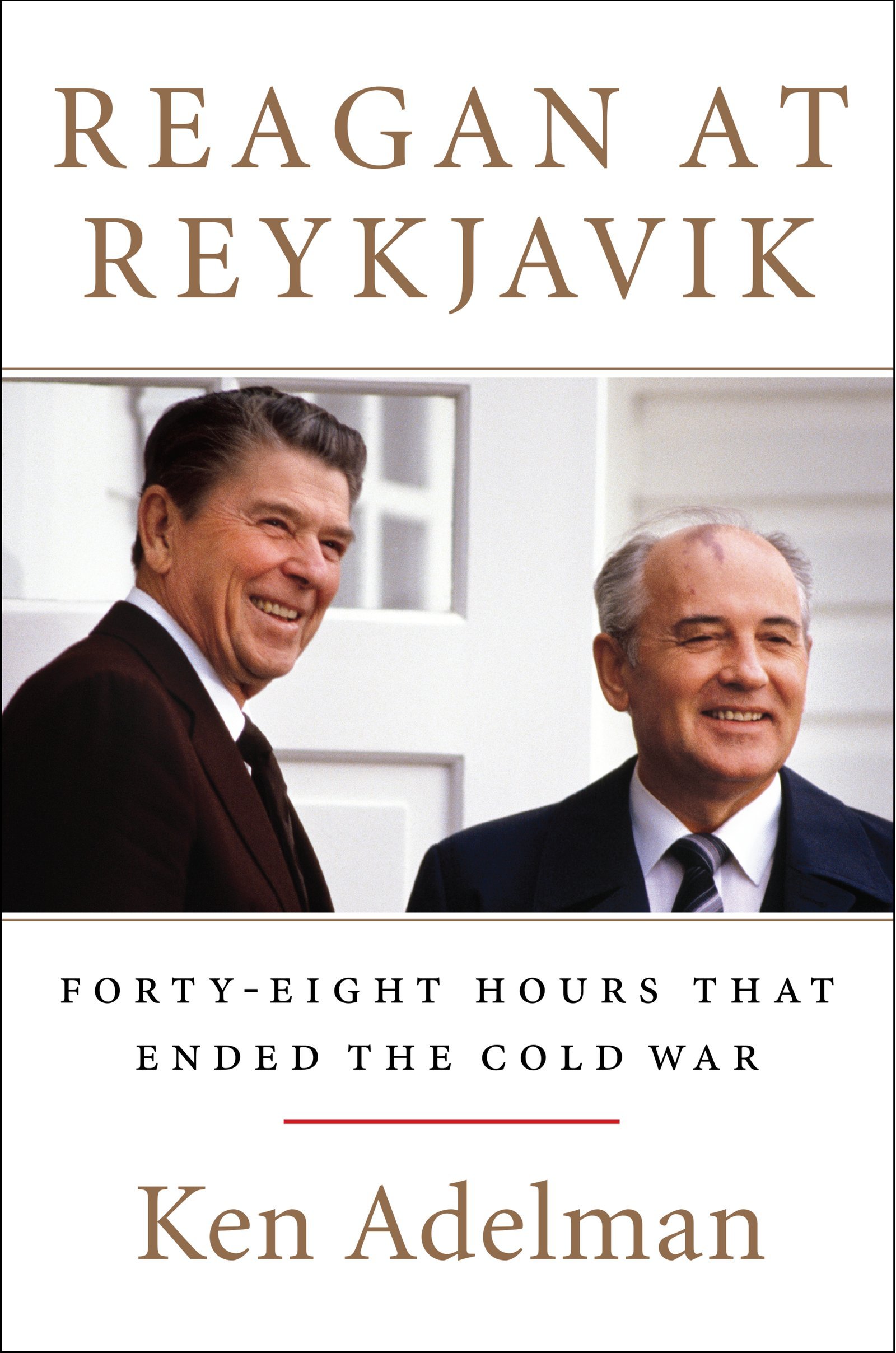
"Reagan at Reykjavik": The human side of geopolitics“Reagan at Reykjavik” by Ken Adelman. HarperCollins, NY, 2014The title could have been, perhaps more properly: “Reagan and Gorbachev at Reykjavik” but the contents of the book more than compensate for this possible omission. It is a book about geopolitics with great emphasis on human psychology. What Carlyle said in his essay on History: “When the oak-tree is felled, the whole forest echoes with it; but a hundred acorns are planted silently by some unnoticed breeze” can probably be applied to the October 1986 weekend meeting of Ronald Reagan and Mikhail Gorbachev at ReykjavikA meeting of the leaders of the most powerful countries on earth certainly does not classify as an “unnoticed breeze” but what made the weekend at Reykjavik a very unconventional and underestimated summit was the fact that the two leaders faced each other without a formal agenda, without large staffs and no protocol. Reagan called it “a private meeting”. Gorbachev said, afterwards: “ [Reykjavik was]a meeting between two leaders, talking directly over an extended period… a real conversation about key issues”. Its lack of pomp belied its historical importance. The place was chosen because it was half way between the U.S. and the Soviet Union. The meeting took place in Reykjavik, the capital of Iceland, in an isolated government house reputed to be haunted.It was proposed by Gorbachev and Reagan rapidly agreed. The Soviet Union and the U.S. were engaged in a cold war and, in addition to the great danger to the world this represented, their economies were suffering. In particular the Soviet Union could not sustain such massive expenditure much longer. Gorbachev wanted a breakthrough in reducing or, even better, reversing the arms race. Russia, says Adelman, was poorer than many of the countries it ruled over.Reagan’s motivation was more idealistic than financial. He had a dream of ending the nuclear threat. But Gorbachev was also morally motivated. In their conversations with his foreign minister, Eduard Shevardnadze, he had agreed that “a change is needed… everything is rotten”. It would in this frame of mind that the leaders would arrive at Reykjavik.Adelman describes the scenario and introduces the main actors in a very effective manner, including an account of the ways both Reagan and Gorbachev had arrived to the top of the political leadership in their countries. Both men, Adelman says, went to Reykjavik at the top of their powers.Reagan and Gorbachev were leaders difficult to classify. Reagan, said Kissinger, “was different. Not like the others. Sui generis. I cannot explain him”. Although considered by many to be an intellectual lightweight, Adelman defines him as a man “of surprising depth and dexterity on the critical issues of his day”. He, adds Adelman, “thought and intended in grand terms”. But, equally important, as the book shows, he was a man of intense human qualities, including a great sense of humor and a warm personality.Gorbachev was also a leader sui generis. Reviled at home and revered abroad. He was a totally different kind of Soviet leader. Serge Schmemman, a Soviet specialist is quoted by Adelman describing Gorbachev as “smiling, charming, gregarious and complete with an elegant, educated and cultured wife”. Although his record was far from perfect, says Adelman, mentioning the bloodsheds in Lithuania and Afghanistan, he deserved great credit for allowing a peaceful dissolution of the Soviet empire and for his performance at Reykjavik.What was discussed and accomplished in Reykjavik? Adelman lists several areas of negotiation: arms control on nuclear weapons, the Strategic Defense initiative, the ABM Treaty and nuclear testing. These were the “solid” components of the talks. A strategic component of the meeting was related to the ending of the cold war while a personal realm, that of Gorbachev and Reagan as two interacting human beings was a third aspect, probably the most important one.In the substantive component of arms reduction some dramatic breakthroughs were obtained: intermediate missiles were reduced to zero in Europe and Asia; a 50% reduction of strategic nuclear weapons was agreed as well as overall cuts in nuclear arms. In the more conceptual area of ending the cold war there is little doubt that the weekend at Reykjavik helped considerably. Gorbachev, quoted by Adelman, said: “Reykjavik marked a watershed “resulting in the the elimination of the cold war and removal of the world nuclear threat”. Reagan called it “a major turning point”.It is hard not to agree that the major ingredient at Reykjavik was the direct interaction of the two men, both defending with tenacity their point of views, both thinking of how history would evaluate their performances, deeply engaged in a discussion on the fate of humanity, trying to balance the short and long term effects of their decisions. This direct, face to face discussion of the two men makes up constitutes the most important part of the book, a true roller coaster of jubilations and disappointments. Gorbachev said ten years later: “Truly Shakespearean passions ran under the thin veneer of polite and diplomatically restrained negotiation….. “Adelman excels in his treatment of these two men and of the supporting cast. He cannot hide his admiration for Reagan and treats Gorbachev with great respect, almost affection. It was Gorbachev who took the initiative for the meeting and the one who made the greatest concessions in order to reach agreement. The role played by Gorbachev’s adviser Sergei Akhromeyev was fundamental. Adelman developed a cordial relationship with this hero of the Soviet Union, whose life would end tragically, in circumstances that dampened his previous honorable service.There are moving episodes described in the book: The handwritten letter of farewell to the people of the United States, after he was diagnosed with Alzheimer (I now begin the journey that will lead me into the sunset of my life). Akhromeyev’s suicide letter (I struggled until the end). Reagan’s disappointment after the meeting (telling Gorbachev: You could have said yes). Gorbachev’s touching the U.S. flag covering Reagan’s coffin. The day the Soviet Union died, in December 1991. Reagan’s famous words (Mr. Gorbachev, take down this wall). The deal breaker at the end of the meeting (“restrict SDI to the laboratory, requested Gorbachev. I can’t do it, answered Reagan).On the tenth anniversary of the meeting Ken Adelman went back to Reykjavik. Walking through the rooms of the old house, feeling nostalgic, listening in his mind to the voices of the men who shared with him those two days of 1986, he sent a postcard to Reagan, which the president, already well in his journey through the night of Alzheimer never got to read. It said: “I am in Reykjavik… thinking of the superb job you did that weekend. Of how well you served America and how very proud I was to serve you, Mr. President”.
D**N
Not the best book I've ever read about the subject.
I'm not sure I read the same book as others who have posted reviews here - this was hardly a great read, or an important historical record of the meeting in Reykjavik. It was rather a semi-personal perspective of the Reykjavik summit, along with an interpretation of Iran-Contra, and a rambling discussion of minute events in the USSR after the Reagan/Gorbachev meeting. I finished the book, tedious as it was, because I kept hoping for something of value given the reviews here, and in the conservative media - but with the exception of a few chapters the value simply wasn't there.There was a decent wrap-up in one of the last few chapters, summarizing the discussions at Reyjavik and evaluating the lasting effects on the world stage. However, even that chapter devolved into what to me seemed to be a thoroughly catty telling of the events of the times, and the people who helped to shape those events. And I guess that was my real problem with this very ordinary book. Mr. Adelman took a remarkable period of world history, and turned it into snarky comments about this leader, that leader, this administration expert or that newsman (or woman). At one point Mr. Adelman confesses to feeling a tingle on the back of his neck when Reagan entered the room. I honestly hope to never hear that turn of phrase again - whether it is on a neck, or up a leg.I will admit to being a strong admirer of Ronald Reagan. I do consider him to have been one of the truly great presidents our country has been blessed with in our history. Adelman purports to admire Reagan also, but his compliments all come with a backhanded remark or two that make me wonder how much respect he really had for President Reagan. This treatment was given to most of the people discussed in the book and reflects more, I think, on Adelman's perspective than on the individuals he is judging.Much of this book, rather than being first hand knowledge, is pulled from newspapers, television reports, historical documents, and recently released notes from other attendees. Adelman plainly states that he wasn't in the room with Reagan and Gorbachev. So, rather than getting a first hand insight into events, the author is giving us selected bits and pieces from other sources, with a few personal notes thrown in here and there. Throughout this book Adelman describes moments where he claims Reagan was asking plaintively, making wrong statements, telling stories instead of working on issues, seeming to be out of touch, and Adelman foes so far as suggesting that perhaps the Alzheimer's disease was already impacting his behavior. He was similarly judgmental about many of the attendees, both russian and american. While I don't believe anyone is perfect, I'm not sure how necessary it is in what is purported to be a historical book, to focus on flaws, that might exist, or might simply have been the interpretation of a lower level functionary who, although a participant in some of the negotiations, was not privy to the entire scope of the event.Ultimately, I never saw anything in this book to indicate that the forty-eight hours were actually the precipitating days that actually ended the cold war. Perhaps that is part of the problem with the whole narrative - the forty-eight hours Mr. Adelman participated in was only a small part of a much larger picture - and Adelman was focused on the narrow view, not the larger picture which undoubtedly held the focus of Reagan and Gorbachev, and their close confidants.As a final comment - at the end of this book (discussing the days following the death of Ronald Reagan) Mr. Adelman writes: "I sat for several television interviews and told tales about President Reagan, Reykjavik, and favorite moments with him. But I never felt that I did him justice." Mr. Adleman - you still haven't.
P**E
Absolutely Incredible Read
This was a remarkable narrative about President Reagan's biggest moment. The author was Reagan's key arms control official and accompanied him for the meeting with Gorbachev. The book has incredible dialogue between the two leaders, at times carrying out a philosophical debate about freedom vs. communism. It's also astonishing to see how close Gorbachev believed the U.S. actually was to developing SDI. An early chapter explained how early in his life, Reagan began to question the dogmatic view that Mutually Assured Destruction was the only viable deterrence to a nuclear war--rather than finding a way to just shoot a nuke down. There was a couple of low points, such as a overly long description of Iceland culture and history for the summit. I would urge readers don't bail out. This is incredible and everyone who loves American history should read this. Though it was certainly pro-Reagan, it was honest, as the author notes several times Reagan made some naive comments with Gorbachev, such as assuming if both the US and the USSR got rid of their nuclear weapons, other countries would follow the example. He also wrote about the bickering between the two first ladies--an episode less flattering to Nancy Reagan. Further, Reagan second guessed walking away from the deal--showing he's human. But ultimately the book explains how Reagan turned what seemed like a failure into a defining success.
C**N
Four Stars
Buena pieza para conocer la historia de como acabó la Guerra Fría al final de los años ochenta.
G**N
Offers a marvellous insight in one of the most important ...
Offers a marvellous insight in one of the most important events of last century. A must read book..
M**E
Reagan knew how to play cards!
Cleared up many questions about the birth of StarWars!
D**L
Five Stars
Top book and service
Trustpilot
2 weeks ago
2 weeks ago