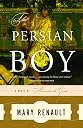
The Persian Boy (The Alexander Trilogy)
Product ID: 12673290
Desertcart purchases this item on your behalf and handles shipping, customs, and support to Iceland.
“It takes skill to depict, as Miss Renault has done, this half-man, half Courtesan who is so deeply in love with the warrior.”– The Atlantic Monthly The Persian Boy traces the last years of Alexander’s life through the eyes of his lover, Bagoas. Abducted and gelded as a boy, Bagoas was sold as a courtesan to King Darius of Persia, but found freedom with Alexander after the Macedon army conquered his homeland. Their relationship sustains Alexander as he weathers assassination plots, the demands of two foreign wives, a sometimes-mutinous army, and his own ferocious temper. After Alexander’s mysterious death, we are left wondering if this Persian boy understood the great warrior and his ambitions better than anyone. Review: Quietly and Consistently Magnificent - Deeply moving, and unfailingly historically accurate, this story of the young castrated lover of Alexander the Great is surprisingly educational in today's world because it talks about East and West. Through the eyes of "the Persian boy," we come to understand a gulf between mindsets that has not been bridged even to the present time. But you don't think about these things when you're reading Mary Renault's smooth and beautiful prose. You're swept up in the story and above all else, in her fully realized characters. Alexander the Great and his youthful brashness become completely real to you. You imbibe the history. That's how Mary Renault wanted it and she was marvelously accomplished at her task. You take away with you an emotional experience of this incalculably important period of time -- when Alexander through sheer will and conviction brought Hellenism, that is Greek philosophy and ideas to foreign territories all along the Mediterranean coast laying the ground for a way of life which we are still to this day enjoying -- and your comprehension of the sequence of events is forever deepened. Renault's The Last of the Wine brings to life ancient Athens in the same rich and unforgettable manner. Both are sad novels in a way, but sadness with Renault can be very sweet and very rewarding. Highly recommended. The best seller lists of today seldom include such literate and substantial and enduring novels. Review: People! It's a novel, fiction, already! - I read this book when it came out (no pun intended) in paperback in the 70s. I was a child to love (sex, yes), female or male, then of 26 years. I reread it a couple of weeks ago and loved it. I am 62 now. It is a story of love, not sex, for that is irrelevant. The First Edition hardbound dust jacket has these lines. "Alexander is a man with little experience of sensuality, but a profound need of affection. Bagoas' famous beauty has been much exploited, but his affection has been needed by no one. Their meeting is irresistible to both." Whereas the first sentence is arguable, yet incapable of proof, if one imagines Hephaestion to be a sensual lover, the second is the crux of this beautiful tale of deep affection. Testicles do not automatically confer manliness, any more than their absence confers femininity. One can never doubt Alexander's manliness, yet his warring parents apparently wondered if his mutual obsession with Hephaestion, nay besottedness, was healthy for the boy. He/they were probably 15 or 16 years old then. Philip and Olympias even wondered if their boy was a "gynnis," that is, a womanish man. So that raises another irrelevant question: who was top or bottom? Or both? Maybe they were both "versatile" in modern gay jargon. But then, who cares?! They were men and therefore sexual and very into a lifelong love. As there are only five references to Bagoas in all of the third hand (at best) ancient sources, we shall never know. Therefore this sensual, beautiful, and tender NOVEL should be judged on it's own merits and not pecked to meaningless pieces by modern labeling crows. So now for a bombshell. I am going to write a sequel to The Persian Boy. No, I'm not insane, just a romantic dreamer who weeps unabashedly and procrastinates reading this book's last 50 or so pages. I don't want Hephaestion or Alexander to die so young. Who ever does? Could it have been plausibly different? What could (and should) have intervened (no time-travel, aliens or such absurdist cheap devices) to change their lives and all of western history forever? One very small thing could have. I have the vision, or perhaps a mad delusion. Whatever! I shall write it!
| Best Sellers Rank | #343,615 in Books ( See Top 100 in Books ) #162 in Biographical Historical Fiction #344 in Biographical & Autofiction #2,288 in Contemporary Literature & Fiction |
| Customer Reviews | 4.6 out of 5 stars 1,309 Reviews |
A**E
Quietly and Consistently Magnificent
Deeply moving, and unfailingly historically accurate, this story of the young castrated lover of Alexander the Great is surprisingly educational in today's world because it talks about East and West. Through the eyes of "the Persian boy," we come to understand a gulf between mindsets that has not been bridged even to the present time. But you don't think about these things when you're reading Mary Renault's smooth and beautiful prose. You're swept up in the story and above all else, in her fully realized characters. Alexander the Great and his youthful brashness become completely real to you. You imbibe the history. That's how Mary Renault wanted it and she was marvelously accomplished at her task. You take away with you an emotional experience of this incalculably important period of time -- when Alexander through sheer will and conviction brought Hellenism, that is Greek philosophy and ideas to foreign territories all along the Mediterranean coast laying the ground for a way of life which we are still to this day enjoying -- and your comprehension of the sequence of events is forever deepened. Renault's The Last of the Wine brings to life ancient Athens in the same rich and unforgettable manner. Both are sad novels in a way, but sadness with Renault can be very sweet and very rewarding. Highly recommended. The best seller lists of today seldom include such literate and substantial and enduring novels.
L**S
People! It's a novel, fiction, already!
I read this book when it came out (no pun intended) in paperback in the 70s. I was a child to love (sex, yes), female or male, then of 26 years. I reread it a couple of weeks ago and loved it. I am 62 now. It is a story of love, not sex, for that is irrelevant. The First Edition hardbound dust jacket has these lines. "Alexander is a man with little experience of sensuality, but a profound need of affection. Bagoas' famous beauty has been much exploited, but his affection has been needed by no one. Their meeting is irresistible to both." Whereas the first sentence is arguable, yet incapable of proof, if one imagines Hephaestion to be a sensual lover, the second is the crux of this beautiful tale of deep affection. Testicles do not automatically confer manliness, any more than their absence confers femininity. One can never doubt Alexander's manliness, yet his warring parents apparently wondered if his mutual obsession with Hephaestion, nay besottedness, was healthy for the boy. He/they were probably 15 or 16 years old then. Philip and Olympias even wondered if their boy was a "gynnis," that is, a womanish man. So that raises another irrelevant question: who was top or bottom? Or both? Maybe they were both "versatile" in modern gay jargon. But then, who cares?! They were men and therefore sexual and very into a lifelong love. As there are only five references to Bagoas in all of the third hand (at best) ancient sources, we shall never know. Therefore this sensual, beautiful, and tender NOVEL should be judged on it's own merits and not pecked to meaningless pieces by modern labeling crows. So now for a bombshell. I am going to write a sequel to The Persian Boy. No, I'm not insane, just a romantic dreamer who weeps unabashedly and procrastinates reading this book's last 50 or so pages. I don't want Hephaestion or Alexander to die so young. Who ever does? Could it have been plausibly different? What could (and should) have intervened (no time-travel, aliens or such absurdist cheap devices) to change their lives and all of western history forever? One very small thing could have. I have the vision, or perhaps a mad delusion. Whatever! I shall write it!
C**N
A good novel about Alexander the Great
I'm not a big fan of Bagoas, but I really enjoyed reading this novel about the personal life of Alexander the Great from his triumphal entrance into Babylon until his death. The historical Alexander did indeed have a personal magnetism that inspired love in so many people. This novel fully explores that. Page 179 describes Alexander reading the Iliad to Bagoas and describing the love between Achilles and Patroklos, and Bagoas says, "He [Alexander] did not tell it with art, like the taletellers in the market, but as if he had been there and remembered everything. At last I knew where my rival [Hephaestion] stood, grafted into his spirit, deeper than any memories of the flesh.". Pages 328-329 describe what could have happened on the crossing of the Gredosian desert, when Hephaestion goes back to save Bagoas from death and asks Bagoas to look after Alexander. When Bagoas tells Alexander about it, the King says, "That is Hephaestion; it always has been."; and it was as if he closed again the curtain guarding a shrine." Pages 383 and 384 describe Alexander's grief after Hephaestion's death. "I [Bagoas] thought, He [Alexander] has rebuilt the legend in everlasting bronze. He will keep faith with it, if he lives to threescore and ten. Hephaestion's regiment is always to bear his name whoever may command it, just so he will be forever Alexander's lover; no one else will ever hear, "I love you best." "The Persian Boy" also describes the love and respect that Bagoas felt for Alexander, and that is very touching. I don't read many novels, but this one is worth the time and money.
P**K
can't put it down!
If you are looking for an exciting story, you can't go wrong with Alexander biographies and stories. Whether he is portrayed evil or good, his life was full of energy and events that simply amaze you. But of all the books I've read about him, this book is the one that captured my mind the most. First, she starts out with Bagoas's boyhood. Doing so she is successful in educating her reader about Persian people and their culture/customs, the environment and the way it was back then, to prepare us for deeper understanding of the future events. The first one-third of the book is about Bagoas's boyhood, mostly about his court life, which tells what had happened inside the Persian Empire before Alexander actually came into scene. This is a very smart start, because by the time Darius was killed, and his murderer Bessus was arrested by Alexander and executed, with nose and ears cut off, the reader is well prepared to understand why it had to be done that way. She also explains well the reason why Alexander became so Persianized, which created resentments and mutinies and lots of problems. Mary Renaults does the best job in making the reader understand this crucial point which cast shadow over him until he died. As for homosexuality and the love scenes, it is not as disturbing, since it is not graphic at all. Transparent, clean, and good taste. She also brings other characters to life. All that she mentions by their names, the reader will know what kind of person he/she was. Whether her portrayal of Alexander and the way she used the well-known events to develop the characters and story are factual or not, she will convince you effortlessly. Remarkable work, well-studied, well-reasoned, well-developed. You will not be able to put it down once you open the first page.
J**.
A huge hit
I loved this book! I couldn't put it down, so I ended up reading from about 11 pm to 6 am. This is probably the first real historical fiction I've ever read, and it's made me hungry for more. ::grins:: The characters were believable, if Renaults portrayal of the times/societies were correct. I loved Bagoas' "voice", and his absolute devotion and love he develops for Alexander. You see Alexander's transformation from Macedonian 'boy' to Great King, and his devotion to his soldiers, the Persians, and his dream. The respect the Persians have for Alexander, because of his desire and attempts to keep them equal with the Macedonians, becomes more and more obvious later in the book. The story telling is lush and gripping for the most part. While sometimes the story pacing felt a little slow, it wasn't enough to damage my enjoyment of the book. I haven't got the first or third books yet, but I will as soon as I can scrape some money together. [Because so many of the sources that could have been considered mostly reliable have been lost or damaged beyond what current technology can fix, we can only speculate based on biased anti-Alexander sources (Like the Athenians) what Alexander may have really been like. But if you'd like a glimpse of what such a widely known historical figure may have been like, to see Alexander and the people he was involved with as real people, I highly recommend this book.]
M**D
Great read
A beautiful romantic novel, very tender, well written
H**S
An interesting and important historical novel in the world of classical gay lit, but it was probably better 40 years ago
The book discussion group at the LGBT Center in NYC read this novel in September 2015. As expected, consensus on the novel was split. About half the readers loved the book and were captivated by this romantic story. And the other half liked it, but thought that it was too long and old fashioned. A couple of themes emerged. We were fascinated by the first-person narration from the point of view of a young eunuch. While most stories center around Alexander's much better known life-long lover Hephaistion, Mary selected Bagoas to tell this story. This is a fascinating choice since it allows her to be especially creative (and even a bit outlandish) in presenting the attractive Alex and Bagoas' intimate relationship, even if all that perfection and vaguely described sex does get to be a bit grating by the end. We discussed the role of captives several times. Bagoas is essentially a slave to the Macedonian king. To survive, he adopts the strategy of most successful captives of subjugated peoples: He forgets the past and his former high position and concentrates on day-to-day concerns and marches forward, doing what he can to thrive under the current circumstances. By doing this, he leads a prosperous life with a very powerful man. The modern concept of "love" turns the story into a romance and even melodrama at times. But this "love" that Bagoas describes would have been a completely alien concept to the actual historical characters. "Romantic love" between men didn't exist (this concept is a much later creation of the middle ages as part of the "courtly love" tradition), and even Alexander marries to consolidate his holdings and bear an heir, rather than because he loves Roxane. Later, when Alexander selects brides (and even paying for dowries) for all his officers, everyone considers this a brilliant idea - love wasn't involved. Bagoas' love for Alex makes for a romantic novel, but probably not very accurate. Finally, Mary has given us a clever story in the form of a historical novel. It's full of research and actual events, packed with details of ancient life and travels. I liked it for the first 100+ pages, then got bogged down with the forgettable names, the long campaigns, the unclear places, the not-very-interesting court intrigues, and the ancient politics. Both Alexander and Bagoas are too perfect. By the time they get to the wars in India, I really didn't care very much and just plowed through to the end, which was very satisfying. Looking at the reviews on Amazon, an awful lot of guys consider this their favorite novel. I'm guessing that most of these readers have very fond memories of reading "The Persian Boy" when they didn't have many choices for positive gay characters, or even much gay literature from which to select. It was an early novel (1972) to have an openly gay character who isn't punished for his sexuality and actually prospers with his lover. There's no great coming-out trauma for Alexander, Hephaistion, or Bagoas, and it's presented as a great love story, so in some ways it seems very modern and even post-gay. But then that old fashioned, plodding, and high-British tone sets in and we're stuck with a long and tedious novel with a few characters we don't care much about. "The Persian Boy" was probably a better novel 40 years ago. I'm not sure if anybody will be interested in reading it in another 50 years. But it has an important place in the history of gay literature and Mary Renault is an excellent writer of this genre. Your enjoyment of it will depend on your love of long historical novels, regardless of how imaginative or well written they are.
T**N
4.5 Conquered Stars
*Full review with quotes on Goodreads* Despite enjoying Fire from Heaven, I was reluctant to continue with The Persian Boy. I assumed it was written in a traditional, stilted, third-person account; like the former which took me almost a month to complete it. Many months later, upon realising that TPB was actually written in a first-person account, i.e. Bagoas, I picked it up immediately. And I was truly enraptured by the brilliance of it. Writing from Bagoas' perspective has its pros and cons. While it makes reading this a lot easier, I felt disengaged from it. I had wanted to witness Alexander's great conquests; like the Battle of Issos, Battle of Arbela, his Indian campaign, and a great many other which I couldn't remember because it was only mentioned in passing. After reading David Gemmell's Troy series and realising I quite dig the military tactics and battle strategies, I was hoping for that in TPB. What makes Alexander so great is him unconquered in battles and being one of the most successful commanders. I was disappointed that this significant aspect of his life was not the main focus in TPB. The romantic aspect of TPB was not what I had expected either. Written from Bagoas' perspective, the romantic feeling felt one-sided. And perhaps, it was just that. While we witness Bagoas undying love, loyalty, and devotion towards Alexander, we only caught glimpses of his affection towards Bagoas; sweet whisperings of nothing. It was inferred that Alexander 'was in love with giving, almost to folly'. That Bagoas was explicitly mentioned in sources as Alexander's eromenos simply puts him above the rest of his common men. But Hephaistion is in a class of his own. It was Alexander and Hephaistion's relationship I was craving for. The third-person account in Fire from Heaven hid no secrets that Hephaistion loved Alexander. And even if the love is, perhaps, unrequited, one could bear witness that the former did take up a large portion of his heart. Alexander did in fact went delirious shortly after Hephaistion's death; the exuberant funeral pyre, the public mourning, the attempt at raising Hephaistion to be a god. However, since this was in Bagoas' perspective, one could not witness the intense pain Alexander felt at the death of his beloved. Again, I was robbed off this. His determination to establish a Persianate society among ALL his people; adopting the elements of the Persian dress, the prostration, the massive dowries for the mass marriage of his Macedonian senior officers to Persian noblewomen, one could infer that Alexander has a strong attachment to Persia. To promulgate his desperate attempts at marrying these two cultures together, it is imperative that this aspect of his life be told from Bagoas' perspective. Conclusion: This is the third time I'm mentally sobbing in public over the death of my favourite hero, while commuting to work. I was trying to pass off my sniffles for sinusitis. I know it was coming. But Renault's lyrical writing just destroyed me.
C**E
One Of The finest Historical Novels Ever Written
There has never been a better telling of the life of Alexander the Great. Mary Renault draws you into the life of the warrior king, as seen through the eyes of his servant and lover, Bagoas, so deeply that returning to the 21st Century is a horrible shock.
D**E
Masterful
Mary Renault's The Persian Boy is a masterful exploration of love, power, and cultural collision in the ancient world. As the second installment in her Alexander trilogy, the novel takes the bold step of shifting perspective from the Macedonian conqueror to Bagoas, a Persian eunuch who becomes both Alexander's lover and our intimate guide through the final years of his campaign. Renault's greatest achievement here is her nuanced portrayal of Bagoas himself. Far from a passive observer, he emerges as a complex character caught between worlds—Persian and Greek, slave and confidant, outsider and insider to power. Through his eyes, we see Alexander not as the mythic figure of history books, but as a charismatic, flawed, and increasingly isolated man struggling to reconcile his grand ambitions with the realities of ruling a vast, diverse empire. The novel excels in its rich historical detail and psychological depth. Renault's extensive research brings ancient Persia and the Hellenistic world to vivid life, from the opulence of Persian courts to the dust and blood of military campaigns. Her prose is elegant and measured, perfectly suited to the ancient setting while remaining accessible to modern readers. However, the pacing occasionally suffers under the weight of historical exposition, and some readers may find Bagoas's devotion to Alexander borders on the obsessive. The novel also requires some familiarity with the period to fully appreciate its subtleties. The Persian Boy stands as both excellent historical fiction and a meditation on the nature of love and loyalty in the shadow of greatness. Renault has crafted a worthy successor to Fire from Heaven that deepens our understanding of one of history's most enigmatic figures through the eyes of someone history largely forgot. Recommended for: Readers of historical fiction, fans of ancient history, and those interested in LGBTQ+ themes in literature.
M**A
Pase años buscándolo
No encontraba esta trilogía por ningún lado y después de años al fin la tengo. Estoy muy feliz, es una gran autora y la historia te cautiva hasta el final.
E**I
Stupendo
Libro stupendo! Incuriosita su Bagoas dopo aver visto Alexander (sia all'uscita del film nei cinema anni fa, e di recente rivisto come Ultimate Cut dove Bagoas è più presente) ho deciso di cercare qualcosa di più su questo personaggio, scoprendo così questo libro. Devo dire che è davvero bello! Bagoas è un personaggio particolare e interessante, peccato che a livello storico non ci siano molte informazioni al riguardo. Appena avrò la possibilità recupererò anche gli altri libri della trilogia di Alessandro.
K**L
A dramatic account of Alexander the Great's life and his friendship with Hephaistion
Such a grand depiction of Alexander's adult life perceived from the perspective of a close friend and lover - thrilling. You will not be able to stop reading! Absolutely great.
Trustpilot
2 days ago
2 months ago