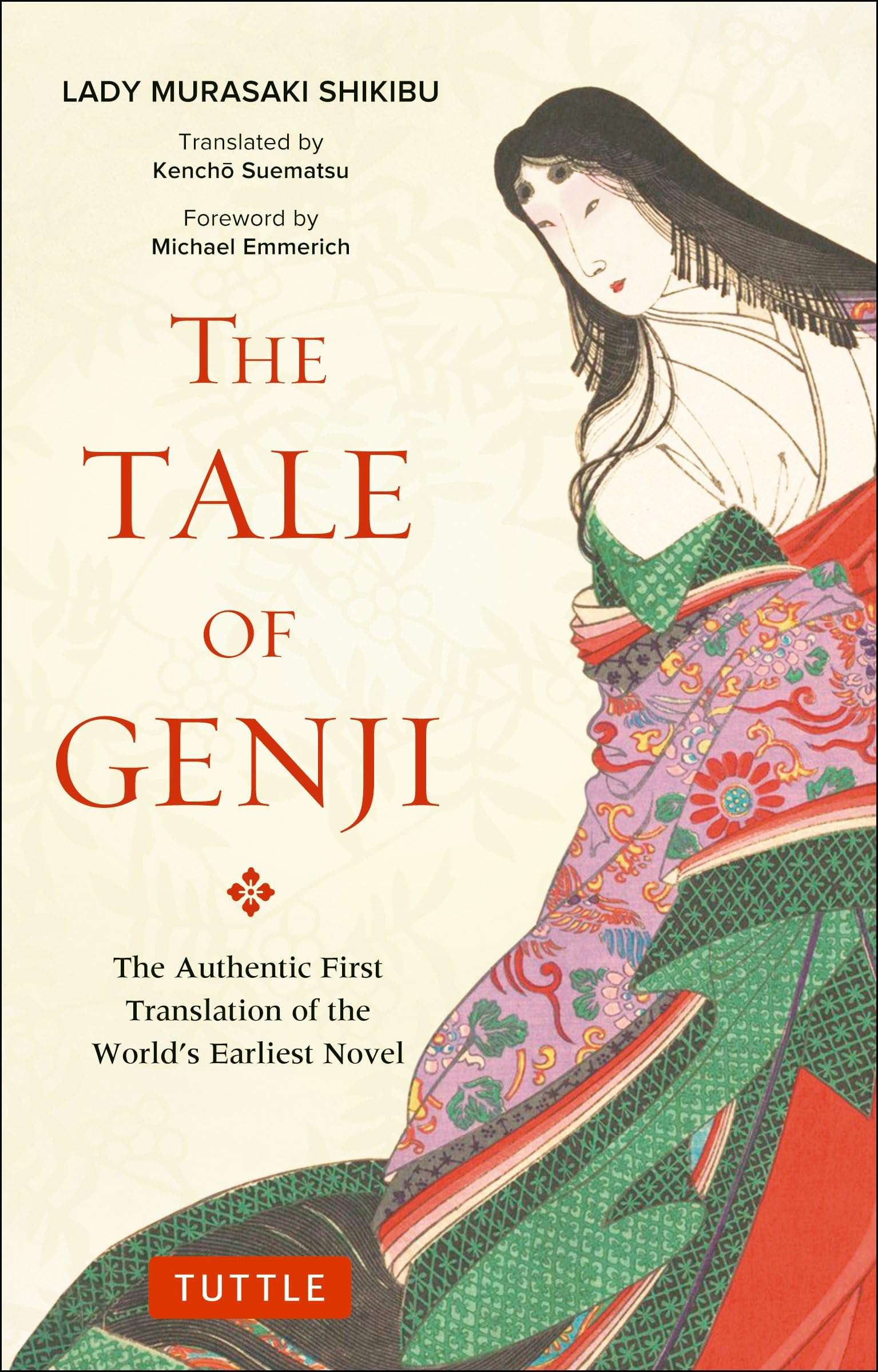
The Tale of Genji: The Authentic First Translation of the World's Earliest Novel (Tuttle Classics)
Product ID: 124496161
Buy anything from 5,000+ international stores. One checkout price. No surprise fees. Join 2M+ shoppers on Desertcart.
Desertcart purchases this item on your behalf and handles shipping, customs, and support to Iceland.
The most famous work of Japanese literature and the world's first novel—written a thousand years ago and one of the enduring classics of world literature. Written centuries before the time of Shakespeare and even Chaucer, The Tale of Genji marks the birth of the novel—and after more than a millennium, this seminal work continues to enchant readers throughout the world. Lady Murasaki Shikibu and her tale's hero, Prince Genji, have had an unmatched influence on Japanese culture. Prince Genji manifests what was to become an image of the ideal Heian era courtier; gentle and passionate. Genji is also a master poet, dancer, musician and painter. The Tale of Genji follows Prince Genji through his many loves and varied passions. This book has influenced not only generations of courtiers and samurai of the distant past, but artists and painters even in modern times—episodes in the tale have been incorporated into the design of kimonos and handicrafts, and the four-line poems called waka which dance throughout this work have earned it a place as a classic text in the study of poetry. This version by Kencho Suematsu was the first-ever translation in English. Condensed, it's a quarter length of the unabridged text. "Not speaking is the wiser part, And words are sometimes vain, But to completely close the heart In silence, gives me pain." —Prince Genji, in The Tale of Genji Review: A Heian era Novel about High Court life. - This book tells the story of a young Genji who's mother dies when he is three. Therefore, he is taken under the care of the current Emperor, Kiritsubo, for his love of the deceased mother. In this book people male courtiers fall in love at a glance and later rapidly become obsessed with the female they beheld. It is unclear to me if the Emperor had a relationship with Genji's mother but he certainly lamented her death. From this point the book describes in detail the movement of the primary courtesans of the Emperor's court seen from various narrative views with Genji himself being but a minor character until he later matures and begins chasing women. He moves from affair to affair, sometimes getting in trouble, sometimes breaking hearts and being heart broken. This might seem to make him an unctuous predator but that is not the case. There was no commentary from any of the narration or characters that implied judgement, courtesans creeped and launched ploys of cunning strategy to get near their aspiring love, women deflected their advances just as strategically. It was simply a characteristic of the noble women and men of the court and that was the tone I chose to read the book and leave my anachronistic judgments to the people of my time. If caught, that is an affair was unequivocally discovered, that was a different story and there would be consequences. In the court fashion Genji composes poetry, writes, travels, observes temple rituals, performs his court work duties [whatever those were] and essentially moves through the court in between his quests to conquer various loves; all described well in the novel concluding with the story abruptly ending. It is unclear if this was intended or if the author herself ran into some calamity preventing or destroying the completion of the work. There is no combat, war or physical action in this story. No doubt there was conflict going on during the time, even if only at a banditry level maybe, but the author, she chose not to include that. This book feels like the life elves from the Lord of the Rings would write about fir their courtesans. As a contrast, consider the Silmarillion which describes what happened to the ancient elves [the Valar] but provides no detail, I imagine filling in their lives with the stories written here. This novel was written approximately 1004 years ago during the relatively peaceful Heian era of Japan so it is possible there was no significant conflict between nobles to write about. Should you read this book? Yes, if... -If you want to get a glimpse of what the high Heian court life was like, she is pretty descriptive and I felt like I obtained a good view of what it was like to operate in the court. The various art and poetry contests were a fascinating process as was the movement of children born in the court where the court served as a finishing house for particularly bright and talented orphans who would live a miserable short life. -If you want to know why modern Japanese stories occasionally include a woman enclosed in a pod, suitcase or similar container who awakens from their slumber into a new life. This phenomena appears (to me) to have its roots in the Tale of the Bamboo Cutter which, written not too much before this novel [around the 9th-10th century] is referenced in this novel. -You have an interest in Japanese history and want to understand what, in Japanese culture, is often revered in the same way European culture regards Shakespeare. If you want to continue exploration of Heian era culture through its contemporary literature read "As I Crossed a Bridge of Dreams" another 11th century work that, instead of 1st class nobility, tells the story of a 5th class noble family that decides to travel [you will see in the story - a very risky proposition, not everyone makes it] to go on vacation in another district in Japan and describes in detail from the point of view of the 5th class nobleman's daughter. I found this work to be much more informative and interesting for the day to day life of what is essentially a middle class 11th century family. Review: Good book - Great book, really enjoyed it.



| Best Sellers Rank | #49,985 in Books ( See Top 100 in Books ) #12 in Japanese Literature #72 in Literary Criticism & Theory #1,589 in Classic Literature & Fiction |
| Customer Reviews | 4.6 out of 5 stars 318 Reviews |
O**A
A Heian era Novel about High Court life.
This book tells the story of a young Genji who's mother dies when he is three. Therefore, he is taken under the care of the current Emperor, Kiritsubo, for his love of the deceased mother. In this book people male courtiers fall in love at a glance and later rapidly become obsessed with the female they beheld. It is unclear to me if the Emperor had a relationship with Genji's mother but he certainly lamented her death. From this point the book describes in detail the movement of the primary courtesans of the Emperor's court seen from various narrative views with Genji himself being but a minor character until he later matures and begins chasing women. He moves from affair to affair, sometimes getting in trouble, sometimes breaking hearts and being heart broken. This might seem to make him an unctuous predator but that is not the case. There was no commentary from any of the narration or characters that implied judgement, courtesans creeped and launched ploys of cunning strategy to get near their aspiring love, women deflected their advances just as strategically. It was simply a characteristic of the noble women and men of the court and that was the tone I chose to read the book and leave my anachronistic judgments to the people of my time. If caught, that is an affair was unequivocally discovered, that was a different story and there would be consequences. In the court fashion Genji composes poetry, writes, travels, observes temple rituals, performs his court work duties [whatever those were] and essentially moves through the court in between his quests to conquer various loves; all described well in the novel concluding with the story abruptly ending. It is unclear if this was intended or if the author herself ran into some calamity preventing or destroying the completion of the work. There is no combat, war or physical action in this story. No doubt there was conflict going on during the time, even if only at a banditry level maybe, but the author, she chose not to include that. This book feels like the life elves from the Lord of the Rings would write about fir their courtesans. As a contrast, consider the Silmarillion which describes what happened to the ancient elves [the Valar] but provides no detail, I imagine filling in their lives with the stories written here. This novel was written approximately 1004 years ago during the relatively peaceful Heian era of Japan so it is possible there was no significant conflict between nobles to write about. Should you read this book? Yes, if... -If you want to get a glimpse of what the high Heian court life was like, she is pretty descriptive and I felt like I obtained a good view of what it was like to operate in the court. The various art and poetry contests were a fascinating process as was the movement of children born in the court where the court served as a finishing house for particularly bright and talented orphans who would live a miserable short life. -If you want to know why modern Japanese stories occasionally include a woman enclosed in a pod, suitcase or similar container who awakens from their slumber into a new life. This phenomena appears (to me) to have its roots in the Tale of the Bamboo Cutter which, written not too much before this novel [around the 9th-10th century] is referenced in this novel. -You have an interest in Japanese history and want to understand what, in Japanese culture, is often revered in the same way European culture regards Shakespeare. If you want to continue exploration of Heian era culture through its contemporary literature read "As I Crossed a Bridge of Dreams" another 11th century work that, instead of 1st class nobility, tells the story of a 5th class noble family that decides to travel [you will see in the story - a very risky proposition, not everyone makes it] to go on vacation in another district in Japan and describes in detail from the point of view of the 5th class nobleman's daughter. I found this work to be much more informative and interesting for the day to day life of what is essentially a middle class 11th century family.
A**O
Good book
Great book, really enjoyed it.
A**E
Classic!
I love this book!
L**Y
PLEASE, PLEASE, PLEASE READ THIS!!!
The full book is 54 chapters. This is an abridged version containing the first 17 chapters, condensed. It is well translated and is a phenomenal read, but please know that if you were planning to read the full novel, you need to look elsewhere! I was shocked (and a bit irritated) when I discovered this, and feel that the cover should say that this is an abridged version, but I digress… TL;DR This isn’t the whole book.
I**R
The Tale of Genji
Yes. Unusual considering how long it dates back!
M**M
First novel in history!
This is the most important book in the history of literature as it is the world's first recorded novel (not an epic poem but an actual novel). Written by Lady Murasaki Shikibu (born 978) of the famed Japanese Fumiwara clan, the 200 page heroic political romance is full of court intrigue, passion, and romanticism.
C**N
Beautiful storytelling
Beautiful storytelling and poetry. I can only imagine how much more beautiful it would be to read and understand it in the Japanese language of the time.
M**S
good condition and quick delivery
I'm pleased with the condition of the book and the speed of the delivery.
V**O
11th century Japanese novel, possibly the first novel written
Fabulous story. Classic Japanese literature. Written by a lady in attendance at the Japanese court, and informing the reader on the culture of the Japanese aristocracy.
A**R
Must have
Classic , a must read/have
N**K
Historic book
Purchased for a friend to take to Japan on holiday. Think she will like.
T**H
A deep dive in time
Good read
A**R
Livro clássico
Excelente
Trustpilot
3 weeks ago
5 days ago