We remain fully operational. Our teams are working around the clock to ensure your deliveries continue safely.

DOWNLOAD THE APP


Customer Services
Copyright © 2025 Desertcart Holdings Limited
DOWNLOAD THE APP
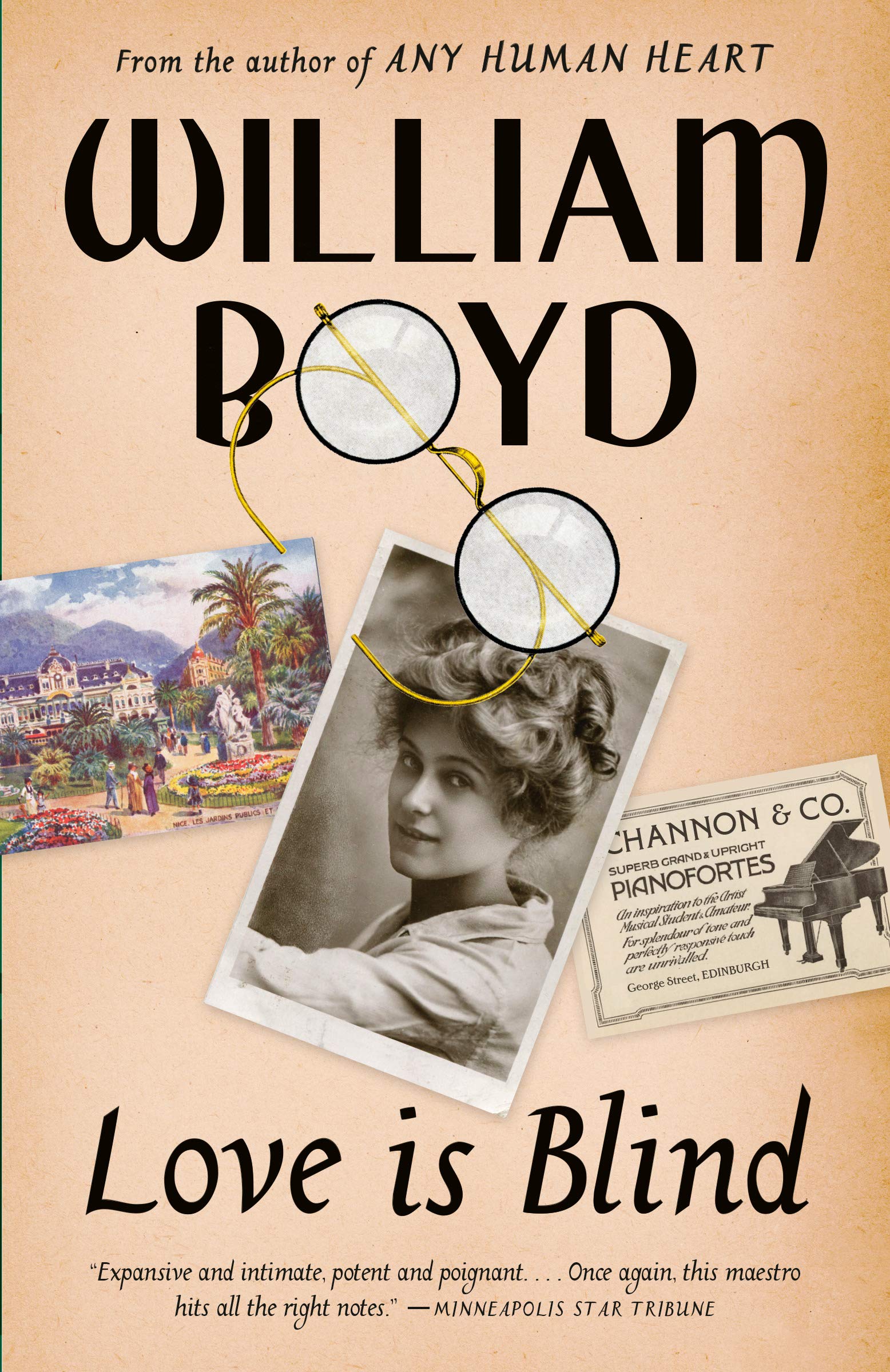
Love Is Blind: A novel - Kindle edition by Boyd, William. Download it once and read it on your Kindle device, PC, phones or tablets. Use features like bookmarks, note taking and highlighting while reading Love Is Blind: A novel. Review: It's all in the prose - Another epic novel from the pen of a master story teller that takes the reader half way around the world. The principal character of Brodie Moncur holds centre stage but it is not solely the action that holds the reader, it's the painstaking research that William Boyd has carried out coupled with his glorious prose that makes this book a winner. Every location is meticulously described and every character comes alive. Whether you can't feel Brodie's love for Lika Blum as graphically as for example the hatred Brodie feels for his hideous father, it does propel the story forward. The descriptions of the locations, especially in Scotland are magical and some of the finest you will find in literature today. William Boyd has a crisp economy in his prose that makes reading anything he writes an enriching experience. Review: Entertaining, original but... - Maybe I am just too old to believe the romance that is the center of this story. Brodie Moncur is a great character for a book - his interesting career as a early 20th century piano tuner puts him at the center of music and culture in the older age of pianos and touring concerts that were as popular as rap stars today. Boyd puts us there as Brodie moves from Edinburgh to Paris to St Petersburg and so many other locations. But the romance that brews between Brodie and opera singer Lika Blum seems too intense for all it's hurdles. Lika is attached to the great pianist John Kibarron and terrified of his business manager brother Malachi. The first part of the book where Boyd spends more time on pianos and the magic of the music and playing along with wonderful insights into Brodie's family works to perfection. As the book moves more towards the secret romance and the effects things seem to go a bit off the rails. Malachi as a deeply dark figure is not given enough substance to prove credible. John Kilbarron is a terrific over drinking super talented somewhat roguish figure that is hard not to like. But the ardor and passion of Brodie is the hardest to grasp. Separations between Brodie and Lika are sometimes quite long with much temptation. The instantaneous attraction and subsequent loyalty of Brodie feels forced. There is little evidence that their love is tested or constructed to allow for the fealty that continues on through the years. Overall entertaining and original and worth the time but left me wishing for the romance to be more authentic.
| ASIN | B07B794FT3 |
| Accessibility | Learn more |
| Best Sellers Rank | #145,628 in Kindle Store ( See Top 100 in Kindle Store ) #703 in Historical Literary Fiction #761 in Historical Mystery, Thriller & Suspense Fiction #762 in Mystery, Thriller & Suspense Literary Fiction |
| Customer Reviews | 4.2 4.2 out of 5 stars (7,366) |
| Enhanced typesetting | Enabled |
| File size | 3.4 MB |
| ISBN-13 | 978-0525655275 |
| Language | English |
| Page Flip | Enabled |
| Print length | 386 pages |
| Publication date | October 9, 2018 |
| Publisher | Vintage |
| Screen Reader | Supported |
| Word Wise | Enabled |
| X-Ray | Not Enabled |
S**T
It's all in the prose
Another epic novel from the pen of a master story teller that takes the reader half way around the world. The principal character of Brodie Moncur holds centre stage but it is not solely the action that holds the reader, it's the painstaking research that William Boyd has carried out coupled with his glorious prose that makes this book a winner. Every location is meticulously described and every character comes alive. Whether you can't feel Brodie's love for Lika Blum as graphically as for example the hatred Brodie feels for his hideous father, it does propel the story forward. The descriptions of the locations, especially in Scotland are magical and some of the finest you will find in literature today. William Boyd has a crisp economy in his prose that makes reading anything he writes an enriching experience.
D**S
Entertaining, original but...
Maybe I am just too old to believe the romance that is the center of this story. Brodie Moncur is a great character for a book - his interesting career as a early 20th century piano tuner puts him at the center of music and culture in the older age of pianos and touring concerts that were as popular as rap stars today. Boyd puts us there as Brodie moves from Edinburgh to Paris to St Petersburg and so many other locations. But the romance that brews between Brodie and opera singer Lika Blum seems too intense for all it's hurdles. Lika is attached to the great pianist John Kibarron and terrified of his business manager brother Malachi. The first part of the book where Boyd spends more time on pianos and the magic of the music and playing along with wonderful insights into Brodie's family works to perfection. As the book moves more towards the secret romance and the effects things seem to go a bit off the rails. Malachi as a deeply dark figure is not given enough substance to prove credible. John Kilbarron is a terrific over drinking super talented somewhat roguish figure that is hard not to like. But the ardor and passion of Brodie is the hardest to grasp. Separations between Brodie and Lika are sometimes quite long with much temptation. The instantaneous attraction and subsequent loyalty of Brodie feels forced. There is little evidence that their love is tested or constructed to allow for the fealty that continues on through the years. Overall entertaining and original and worth the time but left me wishing for the romance to be more authentic.
S**N
"Look at your love for me. It's blind. You don't see me as I really am."
“Love is blind” may seem like a tired proverb, but it fits literally and figuratively as a theme for the protagonist in Boyd’s new novel, which spans over a decade at the turn of the 19th century. Brodie Moncur is a 24-year-old handsome, educated gentleman, a first-rate piano tuner in Edinburgh,with perfect pitch and attention to detail. He has poor vision, though, and depends on his Franklin bifocals; otherwise the world appears “utterly aqueous.” When Brody’s boss at Channing & Co, a family-run piano shop, offers him a showroom managerial position in their Paris store in 1894, Brodie accepts. He offers an innovative idea to employ a pianist, John Kilbarron, known as the “Irish Liszt,” to play a Channon piano in concerts and hence boost sales. This leads Brodie to the love of his life--a tall, beautiful Russian opera singer--and thus to the main action of the story. Boyd’s novels tend to be genre-benders, and this is no exception. It is part romance, international adventure, classic drama, a bit of melodrama, and even shades of a play—or a Chekhov play. The epigraph is written by Chekhov’s widow, Olga Knipper. She describes a play that her husband intended to write in the last year of his life, in which the hero loves a woman “who either does not love him or is unfaithful to him.” This isn’t a spoiler for Boyd’s novel, only perhaps an inspiration for certain narrative flecks. But there are other Chekhov parallels—from “The Lady with the Dog” and Chekhov’s gun principle to a consumptive protagonist and a small but significant appearance of a Russian doctor, among many examples. I see most of the Chekhov allusions, however, as an aspect of the author’s playful wit, his levity that occasionally borders on farce. But Boyd’s use of the absurd is counterbalanced by an underlying poignancy, so intimate does the reader become with Brodie and his fate. Brodie is immediately smitten with Lika, Kilbarron’s sometimes-mistress, and feels “as if his innards were molten—as if he might melt in a puddle of sizzling magma on the floor.” Curiously, and I think this was the author’s intention, Lika remains inscrutable, inexplicable—not really three-dimensional EXCEPT from Brodie’s point-of-view. We see her through his eyes, not ours. In fact, she “stood at the very limits of both of the lenses of his Franklin spectacles—move and squint as he might, he still couldn’t bring her into focus.” The antagonist is John Kilbarron’s brother, Malachi, a truly old school villain who follows the couple “like a hell hound,” and is present at a duel that marks a turning point of the story. What kept me fastened to the novel was Boyd’s meticulous plotting and the deepening of Brodie’s troubles related to his constant love for Lika, despite the odds which would have driven most men away. He is committed to her despite threats to his life and his need to flee at intervals, and the stress it has on his tubercular health problems. The reader is sent on quite a journey—from France, to Scotland, to Russia—and then full circle where the novel opens with a prologue in the Andaman Islands in 1906. Many sections of the novel are like little short stories that could have theoretically expanded into their own separate narratives. One of my favorites is when the reader is installed at the Moncur family home in the Scottish Borders, with Brodie’s eight brothers and sisters and his fire-and-brimstone preacher father, Malcolm Moncur, a widower, perhaps an analogue of Malachi—a grim and sinister figure. The preacher acts despicably toward his children, especially Brodie, who Malcolm refers to as “you black bastard” and other racist images of Brodie’s coloring, which doesn’t match the rest of the family’s ginger complexion. Malcolm’s blackness comes from the heart “a dark singularity.” Brodie rejects religion as he rejects his father. Instead of blind faith to God, Brodie chooses the providence of blind devotion to Lika. The author expresses his narrative within the secular Chekhovian divination of love, art, time, and death. As Brodie is gazing into the guts of a piano, he reflects, “Mysteries—music, time, movement—reduced to complex, elaborate mechanisms.”
E**L
Boyd writes well but this book is less than wonderful
I may never finish this book. I purchased it because of the musical component and having enjoyed some of Boyd’s other books. Had I know of the Chekhov component I would have avoided this book. There is nothing subtle about this book - insipid characters and dreary atmosphere at best.
J**E
Ancora una volta siamo in grado di assistere, da spettatori più che lettori, al dipanarsi della storia che si presenta accompagnata da una sapiente scelta di dettagli e di precise atmosfera. Non a caso l'autore è anche sceneggiate e l'augurio è di vedere realizzata una pellicola da questa ricca storia.
C**L
After reading a less than satisfactory novel, I wanted something with guaranteed quality, so I turned to a William Boyd book I’d had on my Kindle for ages. It turned out to be short stories, which is not what I’d wanted/expected – I wanted a really good, solid read. At the end however, was the first chapter of “Love is Blind”. Immediately hooked, I ordered it and devoured it. I have long been an admirer of Boyd, and I love the effortlessness of his prose. You really get to know and believe in his characters, envisage the places they visit, and in this period piece, feel you are in the late 19th/early 20th Century. All without lots of effortful description, overwrought similes, psychobabble or cliché. I’ve often felt that Boyd doesn’t get quite the same levels of adulation as some of his contemporaries such as Martin Amis and Ian MacEwan. Perhaps he is regarded somehow as too “traditional” – well-crafted novels with a story, a plot, sound characterisation and a beginning, middle and end. But, call me boring, that is sometimes just what you want for a really satisfying read. Brodie Moncur is an engaging protagonist. Pleasingly he’s not too good looking or too hideous – his great height (I’m thinking 6 foot 4 inches or thereabouts), his very dark, swarthy looks and severe short sightedness are easily envisaged. I don’t think of him as either gangling or clumsy, and he’s clearly very bright and good at organising things and managing people. Plus, of course, his special talent for fixing and tuning pianos. I suppose there must have been a constant demand for such experts in the days prior to radio and television. I think of him as the equivalent of an IT expert, who can successfully fix computers – a skill in worldwide demand now as piano tuning was then. I wasn’t quite sure about his weird and dysfunctional family (especially his repulsive father) other than as a device to get him to leave Scotland and stay away. It is clearly implied that his relationship with his father is toxic, and although he is sorry for his sisters, he relishes the fact he is the “one who got away”. It is quite a Scots characteristic – the British Empire was heavily populated by Scots in all corners of the globe. Despite his many abilities, Brodie isn’t that clever with people on a professional basis. He seems to get entangled with and taken advantage of by unpleasant people with some regularity – although he sees through them, his desire to earn money and not give in seems to lead him to a sort of stasis. We are told of Brodie’s encounters with prostitutes and he is evidently attractive to women, and generally quite personable and popular. So, is the coup de foudre for Lika believable? He knows it is a rather messy situation, but is content when she obviously fancies him, despite her entanglements. Is it normal to hold a candle for one person to quite such an exclusive extent? Probably not, but when you consider reported incidences of stalking, obsessive jealousy and refusal to accept a former lover has moved on, perhaps it is less unusual than one thinks. Lika is not unlikable; she is clearly intelligent, musically literate, and somewhat duplicitous. She knows she is never going to make it big time as an opera singer – not just because of her height, she is aware her voice is not big enough. You are led to believe that in her way, she does love Brodie. She just loves herself more. The machinations of the plot are quite involved, and what with the problems of his TB (rather gorily described if you’re faint hearted!) I felt sympathetic towards him and his grand amour, despite his stubborn refusal to acknowledge Lika’s ultimately cruel treatment of him. Unlike some, I enjoyed all the detail – about piano tuning, TB, sanatoria, St Petersburg, duelling, you name it. I liked little snippets such as that although Brodie became fluent in French, it was owing to sheer hard work – he never mastered Russian or German, so clearly wasn’t a natural linguist – somehow this minor detail interspersed in the story made him more real. I wasn’t expecting the rather darker turn of the novel, when in his brief interlude of happiness with Lika, they traipse around Europe, eventually ending back briefly in Scotland and meeting his family. The existence of a not quite stock villain, and the denouement of his role in Lika’s life was intriguing. One couldn’t avoid the fact that it was probably not going to end well for poor old Brodie and his rotten lungs. He turns down the chance of a comfortable and interesting life with the unusual Margaret Mead-alike American, such is his belief that Lika will one day honour their agreement and turn up, and the ending was predictably sad, with Lika inevitably turning up just too late. I liked being left with a slight question mark over precisely how her husband had met his death. I really enjoyed reading this novel, found it hard to put down, and give it the full 5 stars.
A**R
Another wonderful book by David Lodge.
B**N
Ouvrage intéressant.
A**R
A bit long
Trustpilot
2 weeks ago
1 week ago