We remain fully operational. Our teams are working around the clock to ensure your deliveries continue safely.

DOWNLOAD THE APP


Copyright © 2025 Desertcart Holdings Limited
DOWNLOAD THE APP
Buy anything from 5,000+ international stores. One checkout price. No surprise fees. Join 2M+ shoppers on Desertcart.
Desertcart purchases this item on your behalf and handles shipping, customs, and support to Iceland.
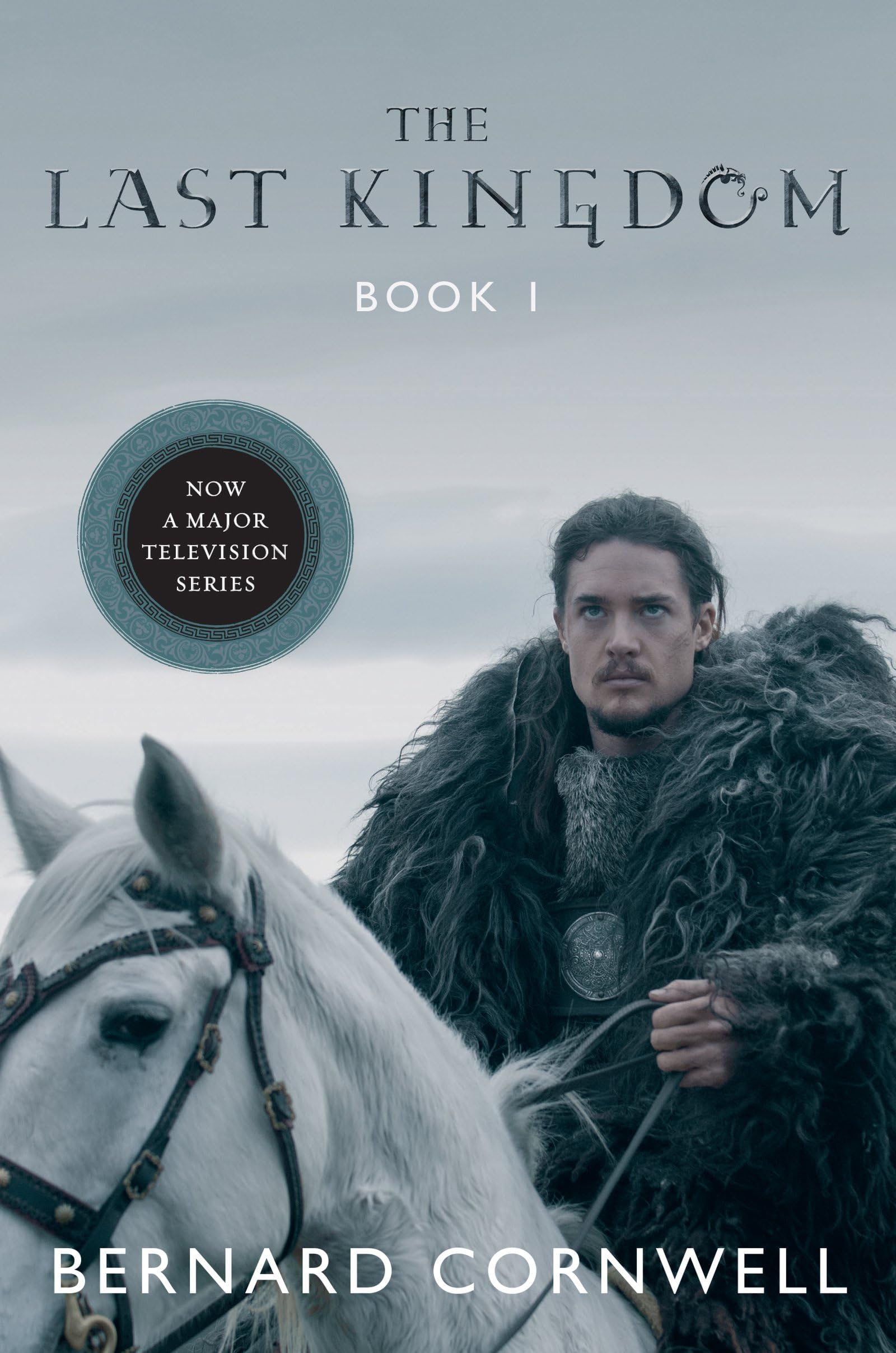
desertcart.com: The Last Kingdom eBook : Cornwell, Bernard: Books Review: Great Historical Fiction - I bought this after an Achilles tendon injury forced me to binge endlessly on Netflix - so I spent an interesting day plus watching the "Last Kingdom" series. (A far better day than some of the other binge-watching I did).) I enjoyed the series, but thought there might be something more in the novels on which the series was based. As usual, I liked the novel much more. I've never read any Bernard Cornwell before - apparently I've been living under a rock - but I really enjoyed the adventures of Uhtred. Cornwell's writing is easy to read, the novel is fast-paced and based on historically accurate happenings (credit to him for using the contemporary names for English locations - a nice touch and I thought the evolution of the names was quite interesting). I don't know who doesn't like Viking stories these days (if it's not Vikings, we're all excited about pirates or Tudors - it's a great time to be alive). Uhtred is young (easy to picture as Alexander Dreymon), sometimes he's on the side of Vikings, sometimes he's on the side of King Alfred, but since he's writing his story in retrospect he's appropriately humble about pointing out his errors (many of which allow him to take us to interesting places). It's exciting, about an obscure part in history for those of us in the U.S. (let's face it, most of us can point out the errors in Tudor stories now but this is something new!), and you just want to keep reading. Cornwall has created a dynamic, and viable, character in Uhtred, and Uhtred's somewhat one-sided perspective on his enemies makes for interesting situations. Great read, enjoyable picture of early Great Britain; looking forward to getting the next book in the series. Review: Danish Vikings on a Landgrab in England - This one is a nicely done rendition of the period when the Danes were overrunning England and Alfred, king of the holdout English kingdom of Wessex (land of the West Saxons), stood nearly alone against them. After the other kingdoms, including Northumbria, Mercia, and East Anglia had fallen, there was only Alfred's Wessex and Alfred, a somewhat prissy churchman, seemed the least likely of English kings to hold them off. But he proved a surprise to his contemporaries and, of course, to the Danes. This tale tracks an English lord, an ealdorman, who is snatched from home and hearth at the tender age of ten in the course of a Danish raid on his father's coastal holdings and subsequently reared as a Dane. Coming of age in the warlike culture of the vikings, young Uthred Uthredsson must balance competing loyalties to his adopted Danish father and his English heritage. This first volume in a projected series carries Uthred to King Alfred and his first big decision, and then back again into the jaws of destiny. There is not much of a story here . . . just lots of fighting and running (or sailing) about. But it's all well told and keeps the reader with Uhtred all the way. The book suffers from a certain thinness in characterization though. None of the players are particularly memorable, not even Uhtred, our protagonist. And Bernard Cornwell spends an awful lot of time giving us details of time and place, showing off his extensive research. But he makes it all work. I liked this one much better than I liked the first in his Warlord series, The Winter King (I never read the other two in that series because the first just failed to move me). That earlier one was about the Romano-Celt, Arthur, in his legendary fight to hold back the Saxon tide and defend the Celtic land of Britain. But, of course, as we all know Arthur lost despite his brief moment of glory when he defeated the Saxons in a series of big battles. This one, on the other hand, is about the descendants of those temporarily defeated Saxons, now firmly established in the land they conquered after Arthur, as they struggle to defend themselves against new invaders from their old homeland, their cousins the Danes. Of course, the Danes were among the earliest vikings so this one is basically a viking tale and there's a great deal more historical information to work with in telling it, including the record left behind by the English clerics of the period, the Anglo-Saxon Chronicle, which reports the earliest invasions of Saxon leaders like Hengest and Horsa and takes us right up to later viking times. But if you really like viking tales, as I do, there are lots of others out there, some better than this one. Among my favorites are The Golden Warrior: The Story of Harold and William by Hope Muntz, about the struggles of Harold, the last English king, against William of Normandy for the English throne, and the recently published Saga: A Novel of Medieval Iceland by Jeff Janoda. This one brilliantly retells a fascinating tale found in the Eyrbyggja Saga, one of the most famous of the sagas of old Iceland. Both are powerful novels in the old Norse saga tradition and either one has Cornwell's new entry beat. But The Last Kingdom is a decent read, too, and better than some of Cornwell's other efforts. SWM author of The King of Vinland's Saga
| ASIN | B000FC2RR2 |
| Accessibility | Learn more |
| Best Sellers Rank | #6,965 in Kindle Store ( See Top 100 in Kindle Store ) #5 in Medieval Historical Fiction (Books) #15 in Read & Listen for $14.99 or Less #18 in War & Military Action Fiction (Kindle Store) |
| Book 1 of 13 | The Last Kingdom |
| Customer Reviews | 4.6 4.6 out of 5 stars (22,019) |
| Edition | Repack |
| Enhanced typesetting | Enabled |
| File size | 3.0 MB |
| ISBN-13 | 978-0061760884 |
| Language | English |
| Page Flip | Enabled |
| Print length | 384 pages |
| Publication date | March 17, 2009 |
| Publisher | Harper |
| Reading age | 14 - 18 years |
| Screen Reader | Supported |
| Word Wise | Enabled |
| X-Ray | Not Enabled |
6**N
Great Historical Fiction
I bought this after an Achilles tendon injury forced me to binge endlessly on Netflix - so I spent an interesting day plus watching the "Last Kingdom" series. (A far better day than some of the other binge-watching I did).) I enjoyed the series, but thought there might be something more in the novels on which the series was based. As usual, I liked the novel much more. I've never read any Bernard Cornwell before - apparently I've been living under a rock - but I really enjoyed the adventures of Uhtred. Cornwell's writing is easy to read, the novel is fast-paced and based on historically accurate happenings (credit to him for using the contemporary names for English locations - a nice touch and I thought the evolution of the names was quite interesting). I don't know who doesn't like Viking stories these days (if it's not Vikings, we're all excited about pirates or Tudors - it's a great time to be alive). Uhtred is young (easy to picture as Alexander Dreymon), sometimes he's on the side of Vikings, sometimes he's on the side of King Alfred, but since he's writing his story in retrospect he's appropriately humble about pointing out his errors (many of which allow him to take us to interesting places). It's exciting, about an obscure part in history for those of us in the U.S. (let's face it, most of us can point out the errors in Tudor stories now but this is something new!), and you just want to keep reading. Cornwall has created a dynamic, and viable, character in Uhtred, and Uhtred's somewhat one-sided perspective on his enemies makes for interesting situations. Great read, enjoyable picture of early Great Britain; looking forward to getting the next book in the series.
S**Y
Danish Vikings on a Landgrab in England
This one is a nicely done rendition of the period when the Danes were overrunning England and Alfred, king of the holdout English kingdom of Wessex (land of the West Saxons), stood nearly alone against them. After the other kingdoms, including Northumbria, Mercia, and East Anglia had fallen, there was only Alfred's Wessex and Alfred, a somewhat prissy churchman, seemed the least likely of English kings to hold them off. But he proved a surprise to his contemporaries and, of course, to the Danes. This tale tracks an English lord, an ealdorman, who is snatched from home and hearth at the tender age of ten in the course of a Danish raid on his father's coastal holdings and subsequently reared as a Dane. Coming of age in the warlike culture of the vikings, young Uthred Uthredsson must balance competing loyalties to his adopted Danish father and his English heritage. This first volume in a projected series carries Uthred to King Alfred and his first big decision, and then back again into the jaws of destiny. There is not much of a story here . . . just lots of fighting and running (or sailing) about. But it's all well told and keeps the reader with Uhtred all the way. The book suffers from a certain thinness in characterization though. None of the players are particularly memorable, not even Uhtred, our protagonist. And Bernard Cornwell spends an awful lot of time giving us details of time and place, showing off his extensive research. But he makes it all work. I liked this one much better than I liked the first in his Warlord series, The Winter King (I never read the other two in that series because the first just failed to move me). That earlier one was about the Romano-Celt, Arthur, in his legendary fight to hold back the Saxon tide and defend the Celtic land of Britain. But, of course, as we all know Arthur lost despite his brief moment of glory when he defeated the Saxons in a series of big battles. This one, on the other hand, is about the descendants of those temporarily defeated Saxons, now firmly established in the land they conquered after Arthur, as they struggle to defend themselves against new invaders from their old homeland, their cousins the Danes. Of course, the Danes were among the earliest vikings so this one is basically a viking tale and there's a great deal more historical information to work with in telling it, including the record left behind by the English clerics of the period, the Anglo-Saxon Chronicle, which reports the earliest invasions of Saxon leaders like Hengest and Horsa and takes us right up to later viking times. But if you really like viking tales, as I do, there are lots of others out there, some better than this one. Among my favorites are The Golden Warrior: The Story of Harold and William by Hope Muntz, about the struggles of Harold, the last English king, against William of Normandy for the English throne, and the recently published Saga: A Novel of Medieval Iceland by Jeff Janoda. This one brilliantly retells a fascinating tale found in the Eyrbyggja Saga, one of the most famous of the sagas of old Iceland. Both are powerful novels in the old Norse saga tradition and either one has Cornwell's new entry beat. But The Last Kingdom is a decent read, too, and better than some of Cornwell's other efforts. SWM author of The King of Vinland's Saga
P**E
Epic Historic Fantasy! (Spoiler Free Review)
If you're into gritty heroic historic fantasy and have an interest in the Viking Invasions of England, then you'll enjoy this book. Story In the 9th Century, the Danes (Vikings) raid England in search of wealth, bloodshed, and conquest. King Alfred must skillfully negotiate, muster his armies, and win key battles to turn back the ruthless invaders! The story is told from the perspective of a young warrior, Uhtred, who ends up fighting for both sides in the wars. Legendary Viking Invaders, Ragnar, Ivar, and Ubba play key roles in the story. Characters The characters are all deep and well written. They have their own motivations for their actions and their beliefs. The main character is Uhtred, the second oldest son of an English nobleman, who watches cities fall and suffers great triumphs and losses throughout his life. As he grows into manhood, his beliefs are shaped by the Viking warlords and the Christian leaders of England. Writing Style The story is told from Uhtred's point of view as he reflects back upon his youth. He was a young boy when the story begins and this book covers about a decade of his life. He witnesses the destruction of towns, the slaughter of armies, and both cultures first hand. Because Uhtred is a warrior and not a scholar, the writing style is plain, simple, but still manages to be epic and visceral! Action The book is fairly action packed with battle strategies, tactics, politics, and epic battles! You feel the carnage of a shield wall and the terror of sailing through stormy seas in a leaky boat and the thrill of victory. There are fights, duels, skirmishes, and large scale battles with thousands of soldiers. The battles are exciting and the characters suffer consequences as a result. Fantasy This is a historic book based on the Viking Invasions. There's some superstition, but no magic spells, dragons, evil spirits, or goblins. Well, there is one goblin, but he's a dog. When the races and cultures are well defined and the action is exciting, you really don't need fantasy. Maturity: Teen There's some drinking, some war, some womanizing, but no sex or swearing. Overall This is a great book based on the Viking Invasions of the 9th Century. There heroes are memorable, the battles are epic, the story is fast paced, and the plot twists will keep you turning pages. Buy it if you love Vikings. Buy it if you're interested in medieval war. Buy it if you're interested in 9th Century History. Buy it if you love heroic war stories. Avoid it if you need a Poetic Writing Style, like the prose of Robert Jordan. Avoid it if you need dragons, elves, wizards, etc... Avoid it if you are deeply Christian and are offended by Christianity being mocked by the Danes. If you enjoyed this book, read something by David Gemmell! Legend, The Lion of Macedon, Sword in the Storm, Winter Warriors are all great books! You'll also like a fairly new book called Blood Song by Anthony Ryan. It's amazing!
D**I
I don’t have enough words to describe this book. Although English is not my first language, it was super involving and easy to read. I read in one week because I couldn’t help my self. It’s more than worth the reading.
L**N
This series, The Saxon Stories tell the tale of Alfred the Great and his descendants through the eyes of Uhtred, an English boy born into into a brawling noble family in Northumbria, who lost his heritage to a rival. This is my favourite of Cornwell's several series. He really brings to life the period with terrific historical detail and numerous characters who feature in actual history. There is Cornwell's usual, perhaps excessively detailed violence, but it is great to read someone who pulls no punches and shows how gristly and desperate fighting and killing can be. The plotting and betrayals, alliances and schemes that are part of the shifts in power, are shown convincingly, and the battles and battle sites draw from the historical record. You clearly see the role of superstition and ancient superstitions in this world, and how Christianity inveighled its way into British life and power. The vanished Romans are also a presence. Uhtred frequently wondrs about these past people who built so much better than any in his time, and whose paintings and mosaics show a life that accepted pleasure in ways suppressed by Christanity For me, this is a excellent way to learn history, by first giving a personality to many of the figures, and showing this world through the eyes of an active, if fictional, protagonist.
M**L
Interesting and unique voice--unmistakeably Uhtred. Told from his perspective after the events have passed, the simple, Polysyndeton flavored text is sprinkled with old English and Danish words, which are easily understood in the context. The matter-of-fact style doesn't go deep into emotions or physical descriptions of the events, rather into the character motivations with a general, political overview, fitting to the protagonist's viewpoint. The explanations end with powerful backloading (which repeats throughout the story) leaving the reader with strong emotions despite the fact that the narrator barely describes or mentions them. I admit it took me some time to read into this character, but once I did, I couldn't put the book down. It is very well written and a joy to read.
D**D
As a child growing up in Northumberland and a frequent visitor to Bamburgh - Bebbanburg in the book - and its wonderful wild and vast expanse of beach, I was fascinated by tales of the Viking invaders and Norse mythology, so a novel about Northumbria and the Vikings appealed. Later in the novel, I was rewarded with more connection to where I lived for several years - by the shores of Poole Harbour, described as 'The Poole' in the book. It’s the first Bernard Cornwell book I've read. Without doubt the novel is entertaining but there’s much graphic violence, which I’m not a fan of. There are thirteen book in the series and I doubt I’d read that many. It's historically informative and he uses the Saxon names for locations. There’s a glossary at the front which I had to refer back to remind myself where places were. Snotengaham, the old name for Nottingham made me smile. The narrative moves along at a fast pace and there’s lots of action. However, having just read a couple of novels by Sharon Penman, who writes about England in medieval times, I didn’t find Cornwall’s book quite as compelling. Her books are, in my view, superior - much less explicit violence, more intrigue, more complex characters, and not just told from one character’s point of view. If I could give her more than five stars I would, but Cornwell deserves five too and I can understand why he has a huge fan base.
G**I
Lo consiglio a chiunque voglia leggere i libri senza passare attraverso a traduzioni, che per quanto ben fatte, a mio dire distorgono un po’ l’opera come è stata concepita. Come livello di complessità della lingua, in rapporto anche al numero di pagine del romanzo, lo trovo abbastanza leggibile per chiunque abbia un livello dall’upper intermediate in avanti. Persone con un livello di padronanza scritta pari ad un A2 potrebbero leggerlo, secondo me, ma più per un crocevia tra apprendimento e piacere della lettura (trovo che la grammatica non sia complessa di per sé, ma sono presenti idiomi e in generale lemmi non proprio di base). La storia in sé non penso abbia senso commentarla perché esistono già molte recensioni in italiano che possono delucidare il potenziale lettore circa la qualità o i temi del testo. Posso solo dire, come da titolo, che il romanzo contiene tutti gli elementi atti a rappresentare bene i temi comuni un po’ a tutta la fascia del periodo altomedievale dell’Europa.
Trustpilot
1 week ago
3 days ago