📸 Elevate your close-ups—because every detail deserves the spotlight!
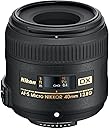
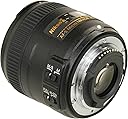
The Nikon AF-S DX Micro-NIKKOR 40mm f/2.8G is a compact, lightweight prime lens designed for Nikon DX-format DSLRs. It offers a true 1:1 macro reproduction ratio with a minimum focus distance of 0.53 feet, delivering sharp, high-contrast images from life-size close-ups to infinity. Featuring a Silent Wave Motor for quiet autofocus and a versatile 40mm focal length, this lens excels in close-up, portrait, and product photography. Its durable build includes a bayonet lens hood and protective caps, making it an essential tool for photographers seeking professional-quality macro and general photography in a portable package.
| ASIN | B005C50H2Y |
| Best Sellers Rank | #176 in SLR Camera Lenses |
| Brand | Nikon |
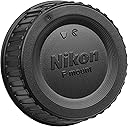
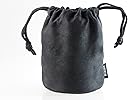
| Built-In Media | AF-S DX Micro-NIKKOR 40mm f/2.8G Fixed Zoom Lens for Nikon DSLR Cameras, CL-0915 Soft Case, HB-61 Bayonet Lens Hood, LC-52 Screw-on Front Lens Cap, LF-4 Rear Lens Cap |
| Camera Lens | Nikon F |
| Camera Lens Description | Nikon F |
| Color | Black |
| Compatible Camera Mount | Nikon |
| Compatible Devices | Nikon |
| Compatible Mountings | Nikon |
| Customer Reviews | 4.7 out of 5 stars 1,757 Reviews |
| Exposure Control Type | Automatic |
| Focal Length Description | 40 |
| Focus Type | Auto Focus |
| Global Trade Identification Number | 00018208022007, 05269692854833 |
| Image stabilization | no |
| Item Highlight | 40mm f/2.8 lens with SWM motor and 1:1 magnification for macro, portraits and landscapes |
| Item Weight | 8.32 ounces |
| Lens | Macro |
| Lens Coating Description | Standard |
| Lens Design | Prime |
| Lens Fixed Focal Length | 40 millimeters |
| Lens Mount | Nikon F |
| Lens Type | Macro |
| Manufacturer | Nikon |
| Manufacturer Part Number | NIKKOR 40mm f/2.8G AF-S DX Micro - 2200 |
| Maximum Aperture | 2.8 millimeters |
| Maximum Focal Length | 40 millimeters |
| Media Type | ProductImage |
| Minimum Aperture | 22 |
| Minimum Focal Length | 40 millimeters |
| Model Name | NIKKOR 40mm f/2.8G AF-S DX Micro - 2200 |
| Model Number | NIKKOR 40mm f/2.8G AF-S DX Micro - 2200 |
| Model Series | Micro-NIKKOR |
| Number of Diaphragm Blades | 7 |
| Number of Items | 1 |
| Photo Filter Size | 5.2 centimeters |
| Real Angle Of View | 38.85 degrees |
| Screen Size | 3.2 inches |
| UPC | 182080220070 018208022007 |
| Unit Count | 1 Count |
| Video Capture Format | MP4 |
| Video Capture Resolution | 1080p |
| Warranty Description | 1 Year Limited Warranty |
| Water Resistance Level | Not Water Resistant |
S**E
Wow! This is My Favorite Lens
I'm an all around photographer whose interest is in photographing whatever captures my eye. It could be portraits, landscapes, florals, art, and wildlife. For the last year or so, I've been interested in getting a macro lens for my Nikon D7000. I've read many reviews on the Nikkor 40mm Micro and decided to give it a try. The price was within my budget. I ordered this lens two weeks ago and have been using it non-stop with wonderful results. I've set aside my 18-200mm, 35mm, and 50mm lens. That's how good this 40mm lens is. I received this micro lens in time to capture the early Spring flowers. This 40mm micro lens does a great job capturing close-ups of flowers and plants. My pictures are coming out sharp and clear. Do you hear a "wow" from me? I have taken a close-up picture of my Citizen watch with no flash. Another wow! I've included a picture in the gallery. This lens also does a great job in capturing non-macro shots. I've used this lens indoors with no flash and have captured some amazing low-light pictures. Yep, another wow! There is no VR on this lens. Not necessary to have as this lens is lightweight and with much practice, hand held shots are easy to take. For low-light photography, I do recommend using a monopod or tripod with this lens. Reality check: you can only hand hold a camera for so long before you get some camera shake and resulting blurred pictures. As I get older, I've come to the realization that I can no longer hold the camera perfectly still. For macro shots, I primarily shoot in Aperture mode. I've found my sweet spot to be around f/4 and f/8. For normal shots, I tend to switch between Program and Aperture modes. I use the included lens hood 100% of the time. Within the first few hours of using this lens, I accidently bumped the front lens against the door. Good thing I had my hood on. Lesson well learned. Need proof? I have posted two floral pictures (Pink dogwood and helleborous) along with the photo of my watch in the photo gallery. Seeing is believing. This is a great fixed lens that does double duty for macro and normal shots. I'm glad I trusted the reviews and my instinct and purchased this incredible lens. ** Update 06/16/12 ** This lens has been on my D7k for last several weeks. I've added another picture of a spider on a yellow daylily. It should be on page 6 in the gallery. For this picture I used my compact SB-400 flash as the picture was taken during the late evening hours. I'm enjoying this lens!
S**R
Images are Sharp As A Tack!!
Lens does just what I hoped it would do. Razor sharp images, excellent close up portraits, fantastic Macro capability. It's small, light and auto focus is quick enough to get the photos I am after. Typical NIKON quality and construction. Very happy with this lens so far!! Hope this helps - Bill.....
R**H
Amazing capabilities .. Amazing price
As an amateur photographer .. I was comparing the Nikon 35mm f/1.8 .. the Nikon 50mm f/1.8 and the Nikon 40mm f/2.8. The Nikon 35mm f/1.8G AF-S DX Lens for Nikon Digital SLR Cameras is 200$ .. Nikon 50mm f/1.8G AF-S NIKKOR Lens for Nikon Digital SLR Cameras is 210$ and this Nikon 40mm is 280 $. The apretures as you see are better in all other lenses compared and they're also cheaper .. but i chosed this one though .. because actually if you want a "bokeh-licious" lens only for portrait (35mm and 50mm) you're wasting money because it doesn't feature macro .. so you're adding 60$ and adding the best focusing range in all nikon lenses . as no lens focuses closer than 0.163cm. I tried this lens in all condition .. ( weddings , birthdays , macro "flowers" , portrait , street photography etc.)and here are my notes: WEDDINGS: - as you need a wide-angle in wedding for the bride and groom this lens isn't perfect .. but it's perfect when capturing moments for it's fitting focal length and its apreture .. like with their best friends dancing or the guests . It's also light-weight so it fits perfectly for wedding and to complete the wedding arsenal .. i recommend the Sigma 18-50mm f/2.8 EX DC HSM Macro Lens for Nikon DSLR .. only 200$ BIRTHDAYS: - if this birthday is a business (you're not invited) .. this lens is perfect for everything .. because if you're sitting with them on the table .. this isn't perfect. MACRO: -as a macro lens i ONLY recommend this and the Nikon 105mm f/2.8G ED-IF AF-S VR Micro-Nikkor Lens and the price difference is huge .. and this is in a category and the other one is another category. Its focus is a little bit annoying because it changes every mini-second .. so you can fix this by pressing the AE-L button .. when reaching the desired focus . PORTRAIT: - Its bokeh is closing the case .... PORTRAITS ARE VERY NICE .. WITH A VERY NICE BOKEH. I highly reccomend this Lens to ANYONE
M**S
Entry Prime > Entry Zoom. Yes Please
Bright sharp budget lens for APC-S sensors. Autofocus can get finicky when getting into macro ranges with the lens. If you have a live view zoom, I recommend using manual focus with this lens at distances closer than 3’. Lens has an autofocus cutoff switch at .2 Meter focus distance to help prevent the issue, but it’s not perfect. With “full” selected on the lens, the autofocus will search through the entire focal range for the lens. Lens is bright and fast. If you’re not under 3 foot distance the focus is fast and fairly reliable. If this is your first prime lens, you’ll be impressed by the focus speed over your kit zoom lenses. (And many other things too) Bokeh is great, some and mostly round. Lens clarity will blow away your kit lenses, especially in the f/5.6-8 aperture range. Not great for studio portraits. The 40mm range of lens brings you close to the subject for a full frame headshot with some little perspective distortion. However, if you’re looking for a viewing aspect to capture the story in the scene outdoors, this will take a great portrait. I’ve yet to notice any major CA with this lens, but my older D50 body produces its own at the sensor regardless of lens. I would say there is minor lens CA at some camera settings. The lens minimum f/22 aperture stops aberrations from becoming a major issue either. YMMV based on your body and sensor. This lens will put your FX body into DX mode for capturing images. Don’t plan on photography of live insects or other living maco subjects. The 1:1 macro reproduction scale is in focus at .163 meters from your camera sensor. With the magnifying focus travel in the lens, you might be 2” from lens to focus at 1:1. Lens does have very noticeable focus breathing (the lens appears to zoom upon focus) and the aperture is variable from f/2.8 wide open @ infinity to f/4.2 wide open @ .163m focus, over a full stop of difference. (1 +.3 to be specific). This makes a 1:1 reproduction from this lens darker, not even counting camera distance. This variable aperture does hamper the effectiveness of autofocus at macro ranges, especially the true 1:1 macro. The 40 mm aspect on the APC sensor is very close to “natural view” at an equivalent of 60mm on a Nikon APS-c (1.5 crop factor). Right in between 35mm and 50mm lenses, giving you a little of each while being neither. If you are looking for an entry into macro photography and want a fast lens that can also function as an everyday prime lens, this budget entry is everything that you need. The 40mm viewing aspect will help learn and recognize the importance of composition without limiting as much as either a 35mm or 50mm lens alternative. YMMV here based upon your own preferences on viewing aspect. This is easily my favorite lens and my go-to for most situations. It’s bright, fast and sharp. Even with the focus breathing and aperture variations, I have not been disappointed.
P**N
Buy this instead of the 35mm f/1.8 DX
Many forum threads have pondered whether to choose the 40mm micro of the 35mm 1.8. I have owned both, used them extensively and can safely conclude that the 40mm micro/macro is the better all-around lens. It can do most the 35 can do, but offers the added bonus of macro and superior sharpness and resistance to chromatic aberration. Here are the pros of the 35mm 1.8 - affordable prime lens - fast 1.8 aperture makes it potentially wonderful for indoor and low-light shots when flash is not available or permitted - extremely sharp if you get a good copy (I've owned two copies. One was tack sharp all the way down to f/1.8. The other had a lot of chromatic aberration and purple fringing wide open). - great starter lens for a photo class Here are the cons of the 35mm 1.8 - purple fringing wide open - blurry wide open (what's the point of 1.8 if you can't use it?) - lens hood is way too small - build quality is plasticky (but this applies to 40mm micro as well) Here are the pros of the 40mm micro - A great lens for amateur food photography (at the actual restaurant/kitchen with actual food) - Nikon's most affordable macro lens - f/2.8 aperture is still very good for general photography - Macro feature works like a charm - Lens is lightweight enough that you can get away with handheld shots - 40mm focal length (60mm on full-frame) makes it good for product photography of larger objects - has focus limiter switch to disable macro and speed up autofocus - great manual focus feel Here are the cons of the 40mm micro - autofocus hunts more than a regular af-s lens - you're way too close to subject if you want 1:1 magnification (where 24mm wide object fills length of frame) - Max aperture is f/4.4 at 1:1, but that's normal for all macro lenses Because both lenses produce the equivalent of 52/60mm on a film camera, neither is appropriate for head & shoulder portraits, unless you shoot in landscape orientation. Both are great for full body or waist-up portraits. I like shooting up close, so I think you can fit a maximum of two or three people in the shot with these lenses. I would go wider for group photos. Overall, though, I would choose the 40mm macro lens. It's sharper overall, focus is pretty fast (even when it hunts), and has the added value of close-focus/macro ability. Great for food & product photos.
A**N
Great Lens
Overall, I love this lens. I would say I'm probably an advanced beginner at photography. I am still using my first DSLR (Nikon D3300) and this was the first lens I bought aside from the two that I got with the camera. 40mm is a great focal length for an all purpose lens. This lens may not be quite as fast as the 35mm 1.8, but it is still very capable everything most people would be doing (excluding very low light photography without flash). It's a versatile lens which allows you to get closer than most other lenses will allow, which is something I can really appreciate! I would recommend this lens for someone who, like me, is interested in macro photography, but doesn't yet want to make the large financial commitment needed when buying one of the more dedicated macro lenses. I decided on this one, after extensive research, over one of the more expensive macro lenses because it made more sense for me to test the waters before going all out and buying an expensive macro lens. You've got to get quite close to the subject in order to get 1:1 magnification and run a risk of casting a shadow, but it's still possible to get some pretty cool pictures if you experiment with it. If you're deciding between this lens and the 35mm 1.8 and have any interest in dabbling in macro photography, get this lens! If you're more than a little interested in macro photography (and on a budget), but would also like a good all purpose lens, I'd also say this would be a good lens for you. If you want to do extensive macro work, you probably don't even need to read this review to know you'll need a more expensive, dedicated macro lens. 2020 Update: I actually ended up selling my Nikon DSLR and all my lenses....EXCEPT this one! I got an adapter just to use it on my Fujifilm XT-3. You can see how much I like this lens. 2023 Update: I still like this lens and use it occasionally on my Fujifilm camera for macro. It's still working fine, although I need to use manual focus and aperture since I'm using an adapter.
H**Y
I can’t believe I waited so long to order!
I was certain I was going to be devastated when my item arrived today. The box was completely smashed and I just knew the lens was crushed too. Thankfully the sender had wrapped the lens pretty securely and all seemed well! I’ve already started playing around with the lens - I must say, it is pretty incredible compared to my regular degular lens. It’s very crisp and easy to use. It fit my D3200 like a glove. I’m so happy with this purchase and I can’t wait to use it more!
E**C
Very happy with this as my 3rd lens
Just because I think it helps to see where this fits in my collection, here's my progression of lens buying... Camera: D7000 1st Lens: 18-200mm - A jack of all trades but master of none. My most-used lens, but wanted something faster that could do shallow DOF at closer distances. 2nd Lens: 50mm 1.8D - Figured I could take advantage of the D7000 being able to use this cheaper non-G lens. Also, due to having a manual aperture ring, allowed me to use it with basic macro tubes. While I got decent results with the macro tubes, they were clunky to use and were prone to ghosting if the sun caught them the wrong way. Also, while it did the job for good indoor low light performance at f1.8, I often found 50mm a bit too tight on my DX body. 3rd Lens: I was between the 35mm 1.8G and this 40mm 2.8G... I went with this one and I'm glad I did. While it's not going to come close to a 105mm VR (if I could afford one now) for insect photography, it's functional in this task as long as the subject isn't *super* jittery. While everyone says you wind up using manual focus/camera moving for macro, being able to let the AF get you "close" before fine-tuning in manual was a huge help for things like butterflies when they might only be in one spot for a few seconds (when compared to non-electronic macro tubes). For a sample of such shots, I have a few in the customer images. For non-macro work, I feel that this can do 90% of the same things the 35mm 1.8 could have, and for those situations where I need that extra 1 stop more light/shallower DOF, I have my 50mm 1.8. And truth be told, the D7000 does so well at high ISO, I can often compensate by upping that and still be happy with the results. Within a year or two I fully intend to own a 105mm 2.8 VR macro... but this lens was a great way to stave off that craving for under $300 instead of spending $900. And even once I own the 105, I don't see this lens going anywhere... it's great for larger objects like flowers or product shots, as well as it's general prime use, and much easier to carry than a 105.
A**A
Best Multi Purpose lens with decent price.
One of the best lens from nikon family.. I have Nikon D-5600 DX body so I was confused between Nikor 35 mm f/1.5, Nikon 50 mm f/1.8 and Nikon 40 mm micro prime lens. Finally I started searching about the lens and tried to know the fact regarding usefulness of Nikon 40 mm, But did not get any one who is using Nikor 40 mm, So I decided to buy nikon 40 mm micro prime. The that was a worth decision in each term. Sharpness ie excellen. General purpose micro and product photoshoot. Low light performance is excellent. Easy to handle. Best video quality even in low light. Great bhoke. Worth for each panny you spent over lens. I got this lens from amazon at 16500/-
R**E
La quintescence de la netteté et du piqué Nikon
Ayant possédé du temps de la photo argentique deux Micro Nikkor 55 mm qui m'ont permis de réaliser des belles images bien nettes et très piquées, je n'ai pas été déçu par ce Micro Nikkor de 40 mm que j'utilise sur un boitier 24 Mpixels Nikon D3300. A peine reçu, je lui ai fait subir mon test optique habituel sur une mire de définition optique de ma conception, et j'ai immédiatement compris que la vitesse d'obturation devait rester élevée (1/250 à 1/500ème), même sur pied (amateur), si l'on ne voulais pas altérer la netteté excellente de cette optique par un vilain flou dû au bouger de l'appareil (on ne peut hélas remonter le miroir en PDV sur le D 3300 et les vibrations de cet élément perturbent l'image de ces pavés de mires sagittales à des vitesses inférieures à 1/250ème). La couverture sur tout le champ se confirme de F8 à F16 avec un meilleur rendu optique pour F8 et F11. Les résultats deviennent marginaux à F22. La netteté centrale est acceptable de F2.8 à F 5.6. La production réalisée en mode manuel F8-1/500ème à sensibilité variable, par beau temps (ISO entre 250 et 650) est remarquable de saturation (optique exempte de diffusion parasite), de netteté, de contraste et de piqué. La mise au point AF-S est délicate sur la mire de définition et j'ai utilisé le Mode Live View avec loupe pour caler une mise au point précise et difficile à atteindre d'un point de vue mécanique car la bague de mise au point reste dure. La mise au point AF-S en production courante est précise et permet de mettre en relief les avants plans afin de générer des arrières plans flous du plus bel effet (le fameux Bokeh!). Je suis ravi de cet investissement qui me permet de retrouver le plaisir de mes premiers Nikon (Nikkormat FTN, EL, F3) à optiques fixes qui permet de soigner le cadrage en se déplaçant par rapport à son sujet. Bref, c'est un must dans la panoplie du Nikoniste passionné...
P**A
Die Alternative zu den Festbrennweiten 35mm und 50mm!?
Ich möchte in dieser Rezsension meinen Gedankengang und Erfahrungen zur Wahl des Objektives und Nutzung schildern. Wer über die Nutzbarkeit bzw. das Fazit lesen möchte sollte etwas weiter runterscrollen. Zu Beginn stellt sich vermutlich jeder die Frage: Welche Festbrennweite sollte man denn nun kaufen? 35mm oder 50mm? Wenn man sich damit beschäftigt, dann kommt noch ein 3. Kandidat in Frage: Das Nikon 40mm f2,8. Die Auswahl wird dadurch noch deutlich schwieriger. Am liebsten sollte man alle 3 kaufen oder gleich mehr Geld investieren aber das ist ja nicht immer möglich. (Oder nötig?) Das Nikon 40mm f2.8 hat nahezu die optimale Brennweite und wäre dadurch eine super Wahl. Das 50mm f1.8 gilt als günstige und exzellente Portait Linse. Dementsprechend ist die Brennweite für die normale Fotografie im Alttag eher ungeeignet.Obwohl sich damit auch exzellente und kreative Bilder erzeugen lassen. Das Nikon 35mm f1.8 gilt als das Immerdrauf Objektiv und manche könnten damit den ganzen Tag fotografieren, da die Brennweite so praktikabel ist und die Blende wunderschöne Möglichkeiten bietet. Zum Nikon 40mm nimmt sich die Brennweite aber nicht viel. Als Tipp für all jene mit dem Kitobjektiv: Falls ihr euch unsicher seid, welche Brennweite euch wichtig ist, dann versucht einmal nur mit der jeweiligen Brennweite zu fotografieren. Zoomen geht plötzlich nicht mehr und man bekommt ein ganz anderes Bild von der Situation. Als großes Problem erscheint (und ist es auch vielleicht aber dazu später mehr) die Blende von f2.8. Da bieten 35mm und 50mm deutlich mehr mit f1.8. Damit lässt das Objektiv doppelt soviel Licht durch und das Bokeh bzw. Tiefenunschärfe wird auch nochmal deutlich verstärkt. Das Nikon 50mm f1.4 bietet dort nochmal mehr, kostet aber auch mehr. Das 40er lässt aber auch schon 4x soviel Licht wie das Kit mit f5.6 durch und ist dadurch schon eine sehr starke Verbesserung. In dem Punkt ein deutlicher Vorteil von den anderen Festbrennweiten. Wenn man die optischen Werte betrachtet (Reviews und subjektive Meinungen) dann gilt das Objektiv als exzellent ohne große Schwächen und mit hoher Schärfe. Das 50mm soll zwar das schärfste sein aber das 35er soll hingegen weitaus "softer" bei f1.8 und f2.8 sein als das 40er. Das Bokeh soll ebenfalls weitaus besser sein. Aber das 40mm bietet ein extrem interessantes Features, welches die anderen nicht besitzen und das 40mm zu einem starken Allrounder machen. Die 1:1 Makrofunktion. Damit kann man soviel näher an sein Objekt ran und bekommt soviel bessere Nahaufnahmen! Ein richtiges Makroobjektiv ist unglaublich teuer, schwer und ist fast nur für Makro (naja fast) ausgelegt. Nicht so dieses Objektiv. Also man könnte das 40er als fast optimale Brennweite mit Makrofunktion nennen. _____________ Taugt dieses Objektiv denn nun als Makro? Ist es eine würdige Alternative zu den anderen Objekten? Ist die Qualität ausreichend? Makrofunktion: Da ich es ja als Funktion dargestellt haben durch die man auch auf f1.8 verzichten kann stellt sich die Frage: Lohnt sich das? Es lohnt sich teilweise und richtet sich stark nach den Wünschen. Das große Problem ist die Brennweite und somit auch Nahstellgrenze! Für 1:1 Makro muss man sehr nahe an sein Objekt ran und das teilweise auf wenige Zentimeter, wodurch große Probleme entstehen können. Es kommt sehr leicht dazu, dass man das Licht von der Sonne oder anderen Körpern sehr leicht blockiert und man so weniger Licht bzw. einen Schatten auf den Bild hat. Von oben fotografiert durchaus ein Problem. Zusätzlich wird so z.B. die Insektenfotografie sehr problematisch. Es ist möglich aber man muss so Nahe an das Insekt ran, dass man es fast schon berührt... Die Qualität hingegen hält ohne Probleme mit guten Makroobjektiven mit. Ich besitze mittlerweile das Sigma 105mm f2.8 und das 40er schlägt sich hervorragend gegen das Sigma (und das kostet 420 euro). Wenn man spontan mal ein Makro braucht oder gerne hätte, dann hilft dieses Objektiv super aus! Nicht jeder will oder kann das schwere Objektiv mit schleppen, insbesondere wenn Makro gerade nicht auf dem Tagesplan steht und dann hat man trotzdem ein 1:1 Makro mit. Zudem funktioniert das Objektiv viel besser als Zwischenringe (obwohl die auch nicht zu verachten sind) oder andere "Notlösungen". Der große Nachteil ist hier aber die Brennweite und das sollte jedem klar sein: Man muss sehr sehr nah, bis auf wenige Zentimeter, an das Objekt ran. Bildqualität: Schärfe: Exzellent! Das Teil ist bereits bei f2.8 gestochen scharf und das Maximum liegt irgendwo bei f5.6 aber man merkt die Unterschiede kaum. Das Objektiv überragt das Kit - Objektiv einfach und ich habe das seither nicht benutzt und verkauft. Das ist natürlich subjektiv aber ich möchte damit einfach die Allgemeine Meinung unterstützen, dass dieses Objektiv sehr scharf ist. Das gleiche gilt für das Bokeh. Das ist butterweich und ich habe nichts zu beanstanden. Also kein Sandpapier wie beim 35er. Es gibt leichte CAs aber die fallen niemals in der normalen Ansicht auf. Dafür gibt es das sogennante "Bokeh Fringing". Vignetting ist bei f2.8 vorhanden aber das fällt kaum auf bzw. lässt sich leicht korrigieren. Autofokus: Relativ schnell aber sehr zuverlässig im normalen Modus. Im Makro Modus wird der Autofokus leider langsam und funktionierte für mich nicht mehr so zuverlässig. Da ich aber nur manuell für Makro fokussiere, war das kein Problem für mich. Um zwischen den Modi durchzuschalten, muss man am Objektiv ein Schalter umlegen. Für Unendlich bis 0,2m und Full für Makro. Verarbeitung: Alles Kunststoff bis auf das Metall Bajonett. Es ist dennoch gut verarbeitet und hochwertig. Der Fokusring ist meiner Meinung nach etwas steif und leider nicht ganz so weich und präzise wie beim Sigma 105mm f2.8. Ich befürchte es ist wie bei allen Nikon G Objektiven. Es lässt sich trotzdem gut damit arbeiten. Fazit. Je nach Anwendung ein exzellentes Objektiv. Gerade die Makrofunktion ist ein tolles Feature, wenn auch nicht für alle Makroaufnahmen geeignet aber es ist immer Toll ein 1:1 dabei zu haben. Optisch ist das Objektiv hervorragend. Das größte Problem für mich ist tatsächlich die Blende. Ich würde mir so sehr eine F1.8 Blende bei diesem Objektiv wünschen. Aber man kann wohl nicht alles haben. Also die Alternativen sind eindeutig die anderen Festbrennweiten mit größerer Blende oder ein 17-50mm f2.8 Zoom von Tamron oder Sigma, falls man die Makrofunktion sowieso nicht benötigt. Aber diese kosten dann auch etwas mehr. Es ist gut möglich, dass ich auch für meine Fotografie und wegen dem Sigma 105mm auf ein Zoomobjektiv mit f2.8 wechsel. Dafür werde ich versuchen das 40mm f2.8 behalten. Es ist mir mittlerweile ans Herz gewachsen ;)
E**A
Buen lente para iniciar en macro y muy buen lente para retratos
Soy principiante en fotografía. Me gusta la macro fotografía y retrato, este lente es un poco de ambos mundos. Toma buenas fotos macro aunque tienes que acercarte mucho al sujeto que muchas veces tiende a espantarlo cuando hablamos de insectos, fuera de eso las macro que toma son geniales.. Para mi sorpresa toma muy buenos retratos, imágenes muy nítidas. En ocasiones donde la luz es escasa batalla un poco pero en general muy buen lente. Muy Recomendado.
W**T
Nikon Lens
Excellent
Trustpilot
2 months ago
2 weeks ago