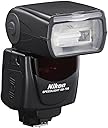
Desertcart purchases this item on your behalf and handles shipping, customs, and support to Iceland.
⚡ Light up your shots, not your gear bag!
The Nikon SB-700 AF Speedlight is a versatile, lightweight flash unit designed for Nikon DSLR users seeking professional-level lighting control. Featuring a powerful Guide Number 92, advanced i-TTL flash metering, and wireless commander capabilities, it offers flexible flash head positioning and rapid recycle times. Ideal for both beginners and pros, it enhances creative lighting with portability and precision, backed by Nikon’s trusted build quality and a 1-year warranty.


| ASIN | B0042X9L6A |
| Battery Average Life | 1 years |
| Battery Life | 1 years |
| Best Sellers Rank | #66 in Shoe-Mount Flashes |
| Brand | Nikon |
| Built-In Media | Nikon SB-700 TTL AF Shoe Mount Speedlight Flash - USA Warranty |
| Camera Flash | On Camera |
| Color | Not Available |
| Compatible Devices | Nikon cameras with i-TTL flash metering |
| Compatible Mountings | Nikon |
| Connectivity Technology | Wireless |
| Customer Reviews | 4.6 out of 5 stars 2,707 Reviews |
| Exposure Control Type | Manual, Manual Flash (with Nikon Creative Lighting System digital and 35mm SLR cameras), i-TTL Balanced Fill-Flash with CLS compatible cameras |
| Flash Sync Speed | Camera Dependent |
| Global Trade Identification Number | 00018208048083 |
| Guide Number | 92/28 (m/ft, ISO 100, STANDARD) |
| Included Components | Nikon SB-700 TTL AF Shoe Mount Speedlight Flash - USA Warranty |
| Item Dimensions D x W x H | 10"D x 10"W x 12"H |
| Item Part Number | FSA03901, FSA03901PL |
| Item Type Name | Nikon sb-700 af speedlight flash for digital slr cameras, black (4808). |
| Item Weight | 12.7 ounces |
| Manufacturer | Nikon |
| Manufacturer Part Number | 4808 |
| Model Name | Accessories |
| Model Number | FSA03901 |
| Model Series | SB-700 |
| Mount Type | Hot Shoe Mount |
| Number of Batteries | 4 AA batteries required. |
| Number of Items | 1 |
| Number of Packs | 1 |
| Screen Size | 3 inches |
| UPC | 018208048083 |
| Unit Count | 1 Count |
| Warranty Description | 1 Year Limited Warranty |
| Wireless Technology | {MY |
R**A
Excellent Flash - just missing power input and PC plug
2/5/11: Final postscript: Sent the SB700 to Nikon; had to wait a month (according to Nikon, they had to wait to get parts shipped); but - they did repair the flash at no charge. Nikon's service has always been good. ----------------------------------------------------------------------------------------------------------------- 12/25/10: Update to my review - today was my first real tryout of the SB700; and unfortunately; I have to report the battery door fell apart as I was changing batteries. The battery door design is different than past Nikon units. There is an actual pushbutton that you need to depress to release the door. As I was trying to open the door - it fell apart into 3 pieces. I'm not sure what Nikon was thinking; the old door designs seemed to work fine (aside from the SB800 w/ the removable door/battery chamber). On a positive note; I did not have a problem w/ thermal shutdown - but - that said; I'm very disappointed in the door design and am thinking I'll probably stock up on some SB600's while they are still being manufactured. While I hate the pushbutton setup on the SB600; at least I haven't had any reliability problems w/ the unit. ------------------------------------------------------------------------------------------------------------------ Just received the SB700 today from Amazon after a 3 month wait - I am not disappointed. I have been a Nikon user since the 70's, and have owned every F and D pro bodies, and associated flash units. I have seen all the reviews on the web criticizing Nikon for omitting the PC input and power input - they know if they included these features it would have killed sales of the SB900. Like others, unless I need maximum power from my flash (which is rare); I can get by with the SB600 and most recently, the SB400 for most of my (fill) flash work. I mainly use the flash for fill and have it on the camera 100% of the time. For "walking around" the SB400 works great due to its size and weight. When I need to use bounce flash, I typically use the SB600. I still own the SB800 and SB900 but find myself rarely using them. The SB700 fills the gap - the best features of the flash are the smaller size and weight (vs. the SB900); easier to use controls (I hated the SB600/800 controls); and finally the hard plastic snap-on color correction filters. Nikon needs to make these (hard) filters for the SB900 - trying to use their gels and holder in the field is crazy - you will either lose or damage the gels the first time you are working under pressure. Also the bounce dome is also smaller than the large unit that comes w/ the SB900. The SB700 is the first Nikon flash I've used that seems to get the exposure right on. Normally I have to set the flash exposure to -0.7 to get what I consider a normal exposure. I do not have to do this on the SB700. I also like the fact that Nikon has gone to switches (vs. menu) to switch from Auto to Manual exposure - I care less about the switch for the flash coverage as that's not a setting I change - but others who do change it will like the fact that it's easy to switch on the fly. Back to the power input and PC sync input - those who are fans of the Stobist are very unhappy about the inability to use their PC cords to their Pocket Wizards - most folks do not like using the PC - Hot shoe cords; one more thing to go wrong in the electrical chain. Personally - I miss the power input for the Nikon battery packs - and although I'm sure Quantum will come out w/ a battery adapter to use w/ their packs, I haven't use my Quantum packs in years since I've converted to using the Nikon external packs that use the AA's. That said - think the SB700 will become the de facto standard flash; and the SB800 will continue to sell on eBay and Craig's list for more then they sold new (I'm keeping mine) for the Strobist fans. As to the overheating issue; haven't had the unit long enough to see if it reacts the same as the SB900 - another review said that the unit slows down on recycle time before shutting down - I've had my 900 shut down; so I have to carry a backup just in case. As of today (12/13/10) looks like Amazon isn't even taking orders for the unit; if you are in a hurry suggest checking your local camera store - mine told me they were getting some in periodically - Bottom line: if you are in the market for a Nikon flash - buy this one!
R**T
Another Must Have From Nikon
Like many other reviewers, I am a huge Nikon CLS (Creative Lighting System) user. I shoot with a Nikon D300s, MBD10 Grip, 2 SB-900's, 2 SB-700's, Pocket Wizards, full line of Nikon lenses, clamps, etc... I photograph by the two L's: Light and Lens; light being the most important element. This is where Nikon Speedlights excel and the SB-700 is the perfect companion / compliment to the SB-900. The SB-900 is a very large high-powered flash. In fact, I was surprised when I first opened the box and soon came to learn it could be a pain to pack when I went light (as in weight). The SB-700 was a welcome sight since, at times, extreme portability matters. In short, I was looking for slightly less power than the SB-900, just in a smaller package. I considered any other features (such as commander mode) to be a bonus. This was on the heels of just purchasing two SB-600's (later sold on EBay), which I found counter intuitive due to the menu system and need to press multiple buttons at the same time to adjust settings. Plus, the light output from my SB-600's seemed a little harsh and warm in the center. The SB-700 is functionally the same as the SB-900. If you learn the SB-900, you know the SB-700. I measured power output of the SB-700 (92 feet spec) at less than the SB-900 (131 feet spec) and greater than the SB-600 (though specs say it should be a little less at 92 feet versus the SB-600 98 feet). Essentially, I use my SB-900's as key light(s) in most situations. So, it not only is a great compliment to an SB-900 but also a suitable replacement (in lieu of) for the SB-900 if you are on a budget. In fact, I judge the SB-900 to be overkill unless you are a semi-pro or pro photographer. The on-board flash controls are simply incredible. I also find the LCD screen far better than the screen on the SB-600 or even the SB-800 (old Nikon flagship flash). The flash is easy to adjust on the move and very intuitive. Build quality is what you expect from Nikon, which is very good to great, though I am a little concerned about the battery door. But, unless you are juggling your flashes, I do not seen anything to worry about. Plus, the SB-700 comes with a built in bounce card (needed by the way) whereas the SB-600 did not. Additionally, with the SB-700 you get filters, a decent case, diffusion dome, and stand. Word on the dreaded "thermal issue." The SB-900 contained a thermal shutdown feature to prevent the user from essentially melting the flash. The SB-700 will instead slow down recycle time to about 3.5 seconds compared to the rated 2.5 to control the temp. Trust me- most people will never encounter this situation unless they try. It's just something not worrying about. Therefore, this would be a great 2nd flash for advanced shooters and great first/primary flash for beginners to intermediate shooters. But, I do agree with Ken Rockwell that most users who buy non-professional (consumer grade) DSLR bodies could easily go with an SB-400 flash. So, if you are in this category, you may be able to save a few hundred dollars and get everything you need. If you decide to upgrade later, your equipment is scaleable and resell-able (Nikon gear retains value very well).
N**T
This is my second one
Much cheaper than the 900 or 910, easy to use. It's plenty strong enough for portraiture. (Dare I say sometimes too strong even when dialed all the way down when you are in close quarters and can't move it back and your modifiers only modify so much?). Believe it or not, 1/128th of a second is occasionally a little more than I want. I've used it at up to 30 feet (ish) at events and gotten some light on the scene. My true problem is that my camera's sync speed (1/250) isn't high enough to suit me for action shots shot with a wide open aperture in bright light, even with an ND filter and my camera doesn't have a flash sync override feature. That's not the speedlight's lack. I use plain old rechargeable AA batteries - no buying some esoteric hard to find or insert batteries. I used to shoot all day events for a park and always had plenty of juice left. The ONLY time I ever ran out and needed to swap in a new set, was when I shot 700+ pictures for a wedding. I've read that the flash will slow down if it is getting warm (versus shutting off in the 900). It's never been a problem for me - any slowdown has been barely noticeable, if indeed, it's even happening. But again, I'm shooting mostly portraits or things that aren't zooming around. If you are wanting to shoot stop action, multiple frames, over and over, you will likely get some heat-caused slowdown. (Nikon users, be aware that shooting in Jpeg instead of RAW/NEF and turning off Active-d lighting in your camera will bring back some frame speed for you-just an FYI). I bought my first around two years ago and have used it well - I do try not to ABUSE it however. Nothing has ever broken off, it still works great. Hence my decision to add another one for more light control that's portable. If you are looking to buy your first flash - I recommend it. It has more capabilities than the lesser versions and it's not hard to learn. Get a Dummies book, or the DVD that Nikon put out on this speedlight if the manual makes you blind. You will outgrow a lesser flash faster than you think if you plan on using flash in general. The iTTL feature is nice. You will also have the choice of using it in manual or with your guide number. I've since purchased Flex5 radio triggers by Pocket Wizard that will work without requiring line of sight and also work with the iTTL feature. I've put out a little money on all this over the last two years, but not an exorbitant amount and my equipment is shaping up around my needs fairly well. (When I win Lotto, I'll finally buy a full frame camera) ;) The only thing I can really complain of, which users of even the 910 have posted - is "Nikon-why don't you put a battery charge scale on it?" It'd be nice to know.
R**N
Awesome (and a little pricey). Be aware of different camera limitations. (LONG, but helpful review)
Most importantly, I am not a professional photographer. I would say I am a very enthusiastic hobbyist when it comes to photography. That being said, I always do my research when it comes to photo gear. For the purpose of this review, I use the Nikon D5100 which is a "cropped" (DX) sensor. That is somewhat relevant when looking into gear and flashes. Overall, this is a great flash/speedlight upgrade to the built-in flash on your dSLR. There are cheaper and simpler options available, but if you want to buy a high quality product that has features that will let you expand your photography skills, this is a great option. Important general things you should be aware of when consider any flash/speedlight upgade: (Final "Pros/Cons" at the bottom) • Upgrading to an good mounted flash/speedlight will dramatically expand your options when using a flash as well as the overall quality of the photos taken with a flash. Keep in mind, a good mounted flash/speedlight like this can be used indoors AND outdoors to provide fill-light which is helpful when your subject is backlit or you are take shots in low-light. • One of the primary benefits/goals for upgrading to a mounted flash/speedlight is to obtain better fill-light and softer, more even lighting to reduce or soften shadows. In order to make sure you have the most options, you will want a flash that can rotate up/down as well as left/right. This will allow you to "bounce" the flash off of a ceiling, wall or other reflective surface. This is one of the keys to getting softer shadows and it is super-simple to take advantage of. The SB-700 is 100% capable of doing this, but be aware that some other Nikon or third-party flashes do not rotate or only rotate up/down. If you plan to shoot in portrait mode (vertical orientation) you will need to be able to rotate the flash left/right in order to point at the ceiling. • There are MANUAL flashes and "Automatic" TTL compatible flashes. The main difference is that MANUAL flashes require that you adjust the flash power/compensation yourself for each shot as the exposure changes and you zoom in/out. There is no "auto" mode like your built-in flash. Flashes that are more "automatic" are TTL compatible which means that use information from your camera (TTL = Through The Lens) to automatically calculate the amount of flash needed for a given shot based on other camera settings that determine the exposure needed. That being said, most experienced photographer comments/reviews I have scene will tell you that MANUAL is the way to go to learn and is perfectly suitable. However, I am sure many of you (like myself) are looking for something that is automatic most of the time, but gives you the option of manual adjustments, (This SB-700 offers both). Many of the cheaper (but not necessarily worse) flashes do not offer TTL or "Automatic" flash adjustment. • Manufacturers like Canon, Nikon etc have their own proprietary "lighting systems". Think of these lighting systems as a set of rules/standards by which their cameras communicate with "compatible" flashes to properly light a scene with one or more flashes. IMPORTANT: Not all flashes are compatible with these proprietary lighting systems. Nikon's system is referred to as "CLS" compatible which stands for "Creative Lighting System". This SB-700 is fully compatible with that system, but your camera may not all Nikon cameras have 100% of the hardware capabilities to take advantage of all of the CLS features. More on that later. Many third-party flashes do not offer compatibility with some of these proprietary systems. Some do, but I have read that there can be some compatible issues so be sure to do your research if you go the route of third-party flashes. • Not all flashes/speedlights (and cameras) are capable of using high shutter speeds (above 1/200 of second or so). In my research, this seems to be an issue with the mid-range dSLRs (Like the D5100 and others) due to the fact that they use a mechanical shutter as opposed to an electrical one. It all has to do with how quickly the shutter can open/close and react to the timing of the flash. I believe this is referred to as flash sync of xSync. What does this mean? Well, if you want/need to use a flash and are hoping to "freeze" fast motion (faster than average at least), some cameras will not be capable of utilizing faster shutter speeds above 1/200 of a second. The special flash/shutter mode that allows this is referred to as "Auto FP" or "HSS" depending on your camera, etc. Is this an issue for you? I was kind of bummed about this and found out about it AFTER I purchased the SB-700. That being said, it really isn't a huge deal. The drawback to using Auto FP/HSS (if you have it) is that is dramatically decreases the power/light of the flash to about 25%. So you aren't going to get a ton of light anyway with those higher shutter speeds. Plus, at that point, the speedlight is acting more like a constant light than a true speedlight (to FREEZE motion). Would Auto FP/HSS be helpful in capturing faster than average motion? Probably. Should the lack of Auto FP/HSS on your camera prevent you from buying a flash? Probably not. So, the SB-700 is capable of AutoFP/HSS, but you camera (including the D5100) may not be. • Master/Slave/Commander Stuff. You will definitely see info about master, slave, commander when researching flashes. This basically comes down to using one or more flashes off-camera (usually wirelessly) to achieve different lighting affects. From my "hobbyist" research, it basically involves a "Master" flash unit "Commanding" one or more "Slave" flashes. In order for a "Master" flash to control a "Slave" flash, the "Master" flash OR camera must have a "Commander" feature/capability. The good news is that the SB-700 is capable of being used as a master or slave flash, BUT the SB-700 does not (I believe) have "commander" functionality built-in (The SB-900 does). If you have a higher-end dSLR, you camera probably has "Commander" functionality built-in so you are good to go. Sadly, the D5100 does not have this functionality. What does this mean? If you want to use the SB-700 off-camera (but by itself) with a camera WITHOUT "commander" functionality, you will either need to use a hot-shoe cable from your camera to the SB-700 OR you will need to purchase an additional "Commander" unit (or the previously mentioned SB-900 mentioned) that attaches to your hot shoe and "adds" commander capabilities to your camera. The good news is that once you have "commander" functionality you can wirelessly control one or more slaves. Bottom line...if you are not concerned about using the SB-700 off-camera or with other flashes you don't need to worry about this, BUT options are available if you decide to expand you lighting. • Full-Frame vs Cropped Sensors (FX vs DX) and Flash Zoom modes. I won't get into everything about sensors (because I don't know everything about them), but I will say that not all flashes are fully compatible with both FX and DX format cameras/sensors. I THINK this ultimately means that the actually power and exposure of the flash will not be fully utilized by your camera if you have a DX camera (Like the D5100) and use a FX only flash. So if you buy a cheaper "high-power" flash, your DX camera may not get to use all of the advertised flash power. A lot of the time you will see stuff about GN or "Guide Number" this (I believe) has a lot to do with the flash power at different focal lengths and subject distances. The good news is that the SB-700 DOES support both FX and DX formats so you are somewhat future-proofed. WOW. Ok, so If you made it this far, I am sure you are serious about a new flash. Hopefully I help you and saved you some time. Below is my "summary" of "pros/cons: Pros: Very versatile flash/speedlight upgrade Can be used in "Automatic" mode OR Manual mode. Fully compatible with Nikon CLS system Supports both FX and DX cameras/sensors Can rotate vertically and horizontally (ideal for bouncing in landscape AND portrait orientation) Includes built-in diffuser and bounce panel Also includes mountable diffuser dome for direct flash use Supports automatic TTL and Manual modes LCD Display is clear, backlit and easy to use Offers master/slave capabilities for expanded lighting setups. No built-in commander though. Most professional features for a more reasonable cost Well-built and sturdy Nice, laser-like pre-flash for proper focusing and exposure From other reviews I have ready, it has a very fast "recycle" time which means you can take multiple shots with flash in quick succession. It seems to work well for me, but I have not calculated this myself. Cons: Pricey for non-professionals - although worth the price. Have to be careful to depress side button when rotating. A little stiff Definitely adds some size and weight to your setup. There are smaller/lighter options available. You can get MANY of these features from third-party flashes/speedlights for LESS money, BUT you sacrifice full CLS/iTTL compatibility and probably are not getting the same level of product. The other feature usually missing from third-party flashes is either an "Automatic" mode and/or full support for FX & DX sensors. For mid-range dSLRs (Including d5100), you can't utilize Auto FP or HSS for higher than 1/200 of a second shutter with the flash. Cameras without "Commander" functionality can't use the SB-700 as a master without the use of a hot-shoe cable OR a separate "Commander" unit. There is not ability to "trigger" the SB-700 via the built-in flash of the D5100 and many others. If you found my review helpful, please indicate so below or share a comment. Thanks.
I**E
Great combination of power and features for the price.
Considered getting the SB900 or the SB800 models. The SIZE of the SB900 is HUGE and considerably more expensive. It has a little more power, but for my purposes I don't need a MAX power system. I'm not trying to light up a school auditorium or sports arena. The SB800 was an option, but it is an older model. The SB700 had good reviews, and after seeing that it has a KNOB on the back to set it for "remote" or "commander" to wirelessly control other wireless flashes instead of having to drill down through menus to make those settings it was a no-brainer to choose this model. I use the SU800 wireless controller to control the SB700 wirelessly as well as the R1C1 macro lights. No cable running anywhere to get tangled up, short out, fray or develop loose connections. The flash has a built in wide angle diffuser that stores INSIDE the top lip of the flash head as well as a mini-bounce flash card. Handy. And it comes with custom molded color filters for incandescent and fluorescent lighting. There is a micro switch on the flash head that these filters activate to communicate with the camera to set white balance accordingly. (nice touch) Recycle times are FAST, especially if you turn the output power down a bit. Rarely do you really need FULL flash power... instead you are relying on the metering to cut OFF the power with iTTL (Nikon) metering. So... why not turn down the flash a little in the first place. Makes for MUCH faster recycle times and extends battery life. The flash head swivels almost 360 degrees on the body and tilts from a DOWNWARD angle of about 15 degrees to slightly over 090 degrees vertically. That covers almost every conceivable angle you'll need for a flash. I use this flash primariy with a Nikon D7000 body. But, it also works fine with the other bodies I use... a Nikon D70, D90 and Fujifilm S5PRO (which is actually a Nikon D200 with Fuji sensor and firmware). It works flawlessly with the SU800 wireless controller for off-camera use as well. Or, you can run it via a corded cable system like the SC series cord with or without the infrared focus assist module. I like the size and light weight. Plan to run NiMh rechargeable batteries in it. Some models of NiMh batteries now have a 15 quick charge capability to have one set in the flash and another set on the charger when shooting a major event (like a wedding or other event where LOTS of flash will be required). Summary: Similar feature set to both the SB900 and SB800, but better layout of buttons and knobs instead of relying so much on menus. Is smaller than the SB900 and similar in size to the SB800. Maybe a tad less power than either the SB900 or SB800, but not enough to be a deal-breaker for my purposes. Don't forget that it comes WITH the MOLDED COLOR diffusers for different lighting and will auto-set white balance with they are used. Nice unit.
K**D
Nikon Flash - Second To None
Used flash. Works well. It is the second SB 700 that I have owned. Can’t beat Nikon. Used their equipment professionally since about 20 years
A**.
Best flash yet... Definitely worth the extra money over the SB600
This is the second full size Nikon flash I've bought. I needed a second flash to use with my SB-600 for off camera lighting. This flash is better in every way than the SB-600. The useability of this flash is amazing compared to the SB-600. The new power switch makes it really easy to switch between ttl/manual flash and between on-camera/wireless/commander modes. No longer is there any need to pull up secret menus to get to the wireless flash functions. The addition of the SU-4 slave flash mode makes this a worthy upgrade from the SB-600 alone. Performance wise, I feel that this flash gives me better exposures than my SB-600. I felt the SB-600 tended to overexpose by a 1/3 stop while this tends to underexpose by a 1/3 stop but with less hot spots. Both easy enough to adjust on with the flash exposure. Speaking of flash exposure though, the one gripe I have with the SB-700 is the flash exposure adjustment is more complicated than the SB-600. The big button on the back of the SB-600 was idiot proof. The two button system on the SB-700 just takes a little more time for minor adjustments. One other thing to be aware of is that the SB-700 defaults to TTL-BL for all photos unless center-weighted exposure is selected on the camera. Although I initially found this annoying, I found it was implemented much better than the TTL-BL used on the SB-600 which tended to give me improper exposures. Although the SB-700 currently runs ~$100 more than the SB-600, the additional accessories included with the flash make up for the difference. The included "stofen-style" filter and two color gels make for a great kit without having to buy additional 3rd party supplies. Also, I love having the built-in flash card. I know I could use a 3x5 card to do the same thing, but having it always there means I'm more likely to be able to use it when necessary. If you are looking at the SB-600 and SB-700, definitely swallow the extra cash and pay for the SB-700. You will not be disappointed. Adding an external bounce flash was one of the best changes I made to my pictures allowing me to really get the colors I wanted. ps - I learned today the flash is pretty resilient too! Fell over on a 6' light stand onto concrete with only a few minor scratches. Everything else works great.
I**L
Great in a minimalist approach and in a multiple flash scenario
I own, as well, a Nikon SB-910. I was going to pick up another SB-910 when I decided at the last moment to save the money and pick this up instead. I am very happy that I did that. I wasn't worried about losing 2 channels with the CLS system since I plan on using PocketWizards in the near future. I have been using the SB-910 on a stand with a softbox for side fill and this SB-700 with a SC-29 coiled cord and a very small 6" x 8" softbox for front fill. I usually shoot backlit by the sun and this setup works out really well for that. I plan on possibly getting a pistol grip one day. I have also used this with a diffuser dome and the SC-29 as my only lighting source besides ambient. Works well for bounce. In comparing to the SB-910, I prefer to use the SB-700 most of the time since I do not need the extra power of the SB-910 a lot of the time. I find that I am quicker at adjusting the manual settings of the SB-700 than I am on the SB-910. I find the results of the SB-700 to be very similar to the SB-910 in most TTL situations. I find that I prefer the smaller size of the SB-700 in almost every situation. Please don't take this as a knock to the SB-910. I have used that Speedlight more than any other Speedlight. It is an excellent unit that I highly recommend, and it is practically a portable sun. I just find that I can get away with using the smaller and less powerful SB-700 more than I originally thought I would, and I prefer the controls on the SB-700. If I was dead set on using off camera TTL and the CLS system and not switching to PocketWizard Plus III's then I would not have purchased a SB-700. I would have gotten another SB-910, but for the time being this works well enough with the CLS system. I generally find that I prefer the minimalist approach and smaller items. I don't shoot with a grip anymore, I just carry extra batteries. I only shoot with primes, no long zooms. Two fast primes are usually smaller and lighter than 1 zoom such as the 70-200 (I walk more now.) This speedlight fits into my "stealthier" and smaller setup very well. Received in perfect condition from Amazon in good packaging in the expected time frame. No complaints there.
M**T
Guter Blitz
Ich habe mir den Blitz für meine Nikon D5100 gekauft. Der interne Blitz der Kamera ist doch etwas mager und ich wollte schon immer ein externes Blitzgerät als Zubehör haben. Der Blitz funktioniert hervorragend. Die ersten Testbilder haben ganz gut geklappt, obwohl ich noch Einsteiger bin. Positiv: + Gute Verarbeitung trotz Made in China + Arbeitet mit AA Batterien oder Akkus + Blitzreflektor dreh und erhöhbar + Sehr einfache Bedienung + Gute Bedienungsanleitung in Deutsch + Arbeitet perfekt mit der Nikon D5100 zusammen + Schöne Tasche und sinnvolles Zubehör enthalten. Negativ: - Die Arretierung des Blitzreflektors ist ziemlich hakelig und nervt anfangs unendlich, ist aber mit ein wenig Übung zu machen. - Es sind keine Batterien im Lieferumfang enthalten. Wer das Gerät ausprobieren will, muss also erst mal welche besorgen. - Arretierung am Blitzschuh der Kamera wirkt etwas wackelig, ist sie aber nicht. Bemerkungen: Der Einschalter muss nur mit dem Arretierungsknopf in der Mitte entriegelt werden, wenn man den Master / Slavebetrieb einschalten will. Für den Normalgebraucht kann der Schalter auch ohne den Knopf in der Mitte geschaltet werden. Die Entfernungsangabe im Display wird nur angezeigt, wenn der Blitzreflektor sich in Nullposition und absolut geradeaus befindet. Ich würde mir den Blitz jederzeit wieder besorgen. Sollte ich nochmal einen Blitz als Slaveblitz benötigen, wird es auch ein SB-700 werden. Preis-Leistung ist gerechtfertigt, wenn auch kein Schnäppchen. Volle Punktzahl.
R**U
Wow, this speedlight detect fast and easy to use
Easy and multiple function to suit individual when operating. Love this Nikon speedlight flashlight
T**Y
Top quality, bottom price.
All Nikon equipment is top quality, and the SB700 is no exception. Powerful and works brilliantly in tandem with a second flash. For a lot more money could have bought the model that works the second flash by remote but this model depends on both flahes being close to in line of sight. But in normal indoor settings the flashes work fine together. Everything you'd expect from Nikon.
P**U
Luce perfetta, ECCEZIONALE...
Perfetto accoppiamento con la mia Nikon D3300. Consiglio l'acquisto del caricabatterie "Technoline BC 700" e un kit 8 batterie "Sanyo Eneloop AA", le migliori... L’unità flash Nikon SB-700 può operare nelle modalità più diffuse, tra cui i-TTL, automatismo particolarmente preciso e affidabile in ogni condizioni di ripresa, oppure Manuale “M” per assicurare la consistenza di illuminazione artificiale quando si ha il totale controllo della scena. Lampeggiatore versatile e di semplice utilizzo, compatibile con le fotocamere SLR formato FX e DX e con Nikon Creative Lighting System. Sorprendentemente intuitivo da utilizzare, è dotato di una gamma di funzioni avanzate che rendono semplice gestire la qualità e la direzione della luce. Grazie ai tre pattern di illuminazione, è possibile controllare totalmente la copertura del flash e il modo A:B, di semplice accesso, consente il controllo wireless di più unità flash. Dotato di un corpo compatto, è l'accessorio ideale da avere a portata di mano quando si desidera scattare in modo creativo oppure ottenere immagini più bilanciate in situazioni di illuminazioni difficile. Sistema automatico di protezione termica: avvisa dell'eccessivo surriscaldamento durante scatti ad alta intensità e, se necessario, ritarda la ricarica. Zoom motorizzato multi-step: copre un ampio angolo di campo da 24 a 120 mm. Funzionamento intuitivo: l'ampio schermo LCD di facile lettura e i comandi posizionati in modo pratico consentono di regolare le impostazioni senza difficoltà. È possibile selezionare i pattern di illuminazione standard, ponderato centrale e uniforme, per adeguarsi a qualunque situazione di ripresa. Accessori Inclusi Speedlight Stand AS-22, Soft Case SS-700, Diffusion Dome SW-14H, Fluorescent filter SZ-3FL, Incandescent filter SZ-3TN. Consegnato PRIMA della data prevista... OTTIMO SERVIZIO AMAZON
K**R
SB700.
Having owned and still own the SB600 flash for 3 years I thought long and hard about buying this flashgun. I wanted an extra unit for creative lighting but was going to go for the more powerful 910. Well, for my needs the 700 does an excellent job. I was lucky enough to have dropped onto Amazon when this flashgun was being sold for an unbelievable low price so I took advantage and just grabbed the last one as they were disappearing before my eyes. I was a little concerned after reading reviews about the the 700's slightly lower power output compared to the 600, but in real world phtography this just is not the case. Where the 700 shines over the 600 is the quicker access to features such as ttl, manual control and Nikons excellent CLS off camera flash to name a couple. The head rotation and positioning are more flexible than the 600 and a bounce/catchlight card are incorporated into the flash head too. Extras include two clip on filters for different indoor lighting situations and a flash diffuser. Also the the 700 works as a commander for other compatible Nikon flash guns using the CLS system, this feature is not so important to me as I have it built into my camera, but for more basic Nikon cameras such as the D40/60 etc it is very useful. Another great feature on the 700 is its ability to be a slave flash, meaning it will fire remotely off camera triggered by any make of flash as long as that flash is set to manual mode. The 700 also features an automatic cut out should it start to overheat due to constant repeated use, but as the flash has a meter on the display monitoring the temperature of the flashgun I have never seen it rise to levels that become a concern. Recycle times are very good with rechargable nimh batteries fitted ( I use the Sanyo Eneloops) with the flash used at normal output being ready almost immediately. All round I find this flashgun a significant upgrade compared to the 600 for its ability to access control of different settings, flash output is very similar on both and the 600 is still a great flashgun. Build quality of the 700 is excellent and its extra control and features plus its excellent lighting capabilities makes it a great buy for anyone with Nikon camera equipment.
Trustpilot
5 days ago
1 month ago