Desertcart purchases this item on your behalf and handles shipping, customs, and support to Iceland.
🚀 Unlock lightning-fast storage on the go—because your data deserves the best!
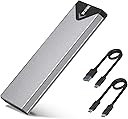
The SSK M.2 to USB NVMe SATA SSD Enclosure is a compact, aluminum-encased adapter supporting NVMe and SATA M.2 SSDs (2242/2260/2280). Featuring USB 3.2 Gen2 10Gbps speeds, UASP & TRIM support, and broad OS compatibility, it delivers fast, reliable, and cool external storage with plug-and-play ease. Perfect for professionals needing quick data transfers and portable SSD solutions.


| ASIN | B07MNFH1PX |
| Best Sellers Rank | #6 in Enclosures |
| Brand | SSK |
| Built-In Media | 10Gbps USB-A Cable, 10Gbps USB-C Cable, Installation Package, heating pad |
| Color | Space Gray |
| Compatible Devices | Desktop, Laptop, Smartphone, Tablet |
| Connectivity Technology | USB 3.2 10Gbps |
| Customer Reviews | 4.5 out of 5 stars 21,698 Reviews |
| Data Transfer Rate | 10 gigabytes_per_second |
| Enclosure Material | Aluminum |
| Hard Disk Form Factor | 2.28 meters |
| Hardware Interface | USB 3.2 Gen 2 |
| Hardware Platform | USB 3.2 Gen 2, Windows/MacOs/LINUX/Android/ios |
| Item Dimensions L x W x H | 4.52"L x 1.55"W x 0.43"H |
| Item Highlight | For NVMe/SATA SSD, M/B+M Key, RTL9210B Chip, 10Gbps PCIe, 6Gbps NGFF, UASP, SMART & TRIM, 2240/2260/2280, LED, Aluminum |
| Item Weight | 0.1 kg |
| Manufacturer | SSK Corporation |
| Material | Aluminum |
| Memory Storage Capacity | 4 TB |
| Mfr Part Number | SHE-C325 PRO |
| Model Number | SHE-C325 PRO |
| Number of Items | 1 |
| Product Dimensions | 4.52"L x 1.55"W x 0.43"H |
| Supported Devices Quantity | 1 |
| Unit Count | 1 Count |
| Warranty Description | 1 Year |
O**M
Reliable NVMe SSD Adapter for Cloning and File Transfers
I bought this NVMe SSD adapter to transfer data from my old SSD to a new one, and it worked perfectly. I also use it for transferring files, and it has been reliable so far. The adapter is easy to use and provides good transfer speeds. It does get hot during longer transfers, but I have not applied the included thermal pad yet. Adding the thermal pad should help with heat management. Overall, a good NVMe adapter that works well for SSD cloning and regular file transfers.
A**A
Fast and Well-Built SSD Enclosure with Excellent Compatibility
The SSK M.2 NVMe SATA SSD Enclosure is a compact and reliable option for turning internal SSDs into portable external drives. The enclosure feels solid thanks to the aluminum construction, which also helps with heat dissipation during longer file transfers. 💾 Setup is straightforward, and the enclosure supports a wide range of SSD sizes including 2242, 2260, and 2280 drives. The connection feels stable, and transfer speeds are quick with the USB 3.2 Gen 2 10Gbps interface, especially when paired with a fast NVMe SSD. The included chipset support for UASP and TRIM adds to the overall smooth performance, and the compact design makes the enclosure easy to carry in a bag or pocket. Overall, this is a well-built and versatile SSD enclosure with fast performance and broad drive compatibility.
Y**G
A must have for drive cloning! Maximum Speed is 1000mb/s Read + Write
This is a life saver and a must have to clone drives. Up until about two months ago there were no NVME compatible external drive enclosure on the market and the only m.2 enclosures were SATA drive compatible, NOT NVME. Most laptops only have one drive slot and whenever you wanted to clone a laptop drive, you had to undergo a long tedious multi-step process: 1. Clone the laptop drive to an external hard drive via USB 2. Remove the old NVME SSD 3. Install the new NVME SSD 4. Use some sort of bootable cloning usb drive like Macrim Reflect to copy the contents of the external USB drive to the new drive. 5. Restart and pray that it works and that nothing got messed up along the way. 6. If it does't boot or messes up, repeat the process over again With a NVME external enclosure the process is significantly simpler: 1. Plug in new NVME drive in to enclosure and plug into the USB port 2. Clone old NVME SSD to new NVME SSD 3. Remove old NVME SSD and replace with new NVME SSD 4. Done. The old way resulted in numerous annoyances and non-boots as Windows DOES NOT boot from external drives and you must rely on third party bootable cloning apps. If any errors pop up during any step in the chain, you'd have to redo the process all over again until you get it right. With a NVME enclosure you can direct copy from laptop drive to new drive and switch out the old drive with the new directly. Much less assembling and disassembling frustration. This enclosure works exactly like it's supposed to. The build quality is good but not amazing. The bottom and tops of the drive enclosure rub and get scratched on the metal sleeve whenever the enclosure opens or closes. This can be problematic if you open and close it often, but not if you plan on putting a drive in there and leaving it there. The drive bay PCB has exposed copper veins to help conduct heat. I'm not entirely sure this does much but I suppose it's better than nothing. Also worry not as the veins would only touch the tops of the memory chips or controllers, not any exposed leads so no shorts would happen. You can also put in a thermal pad to better conduct the heat from the drive to the PCB. There is also included a nut that has a low side and high side which should fit if you have thicker double sided SSDs or single sided SSDs. The included thermal pad is great for conducting heat to the aluminum sleeve for dispelling heat. During during disk cloning and sustained data transfers, the aluminum enclosure does get quite hot . The temps do cause transfer speeds to drop. However if I grab the enclosure with my hands it cools off quickly and speeds return. There's no active fan for air circulation so hot objects stay hot. However a metal enclosure is better than none. One annoyance is that they only include a USB-C cable and no USB-C to USB-A cable. Though USB-C is superior, many older systems do not have USB-C and having a cable adapter would have been helpful. One final observation is that the maximum transfer speeds of this enclosure is 1000mb/s read and write. This is a hard cap and no matter how fast of an SSD you put in here, the max speeds are capped. I've put in drives that were capable of 3500mb/s reads and 2900mb/s writes and the max speed is 1000mb/s. I've tried it on thunderbolt to PCIE ports, the max speed is 1000mb/s. This is likely due the internal controller of the enclosure. The speed is pretty good for an external drive as few thumbsticks or USB external SSDs are capable of hitting these speeds (they're usually around 500mb/s or SATA speeds). Overall this is a pretty good and cheap drive. I have few issues with it other than the aforementioned ones. ***If this review was helpful, please give me a helpful vote!***
S**.
Six years and still working, but the screws mean I gave it the drive I never swap
I have had one of these since 2020, so about six years now, and it still works. No connector wear, no flaky connections, no failures. For a cheap aluminum enclosure that is a better result than I expected, and durability is the main reason it is still in my rotation. The drawback is drive access. Getting a drive in or out means unscrewing the housing, sliding the drive tray out, and then dealing with another screw inside to actually release the drive. It is not difficult, just tedious, and it adds up if you do it often. I have since used enclosures with a tool-free latch, and the difference is significant enough that I changed how I use this one: it permanently holds a 1TB drive I never need to swap. That is the honest summary of where it landed for me. It gets warm, at times hot, when actively working. Nothing that has caused a problem in six years, but you will notice it. Connection is USB-C to USB-C and it works with other USB-C cables rather than demanding the one in the box, which is worth knowing since some enclosures are picky about this. Buy it if you are putting a drive in and leaving it there. If you plan to rotate between multiple SSDs regularly, spend a little more on something tool-free and save yourself the screwdriver. Suggested media: None required. A photo of the screws would illustrate the complaint, but the complaint is clearly described in text and the enclosure's appearance is already covered by the listing.
L**E
Fast little portable NVME enclosure
tl;dr: Using this on a 2013 Mac Pro (yes...an old trash can Mac!) with an Intel 660p, and get pretty sustained writes of 400 MB/sec moving large video files around. I often have to copy our raw video footage (25-100 GB at a time) from our ingest station (the Mac Pro) to one our editor's workstations, as moving them around via sneakernet is much faster than the ancient ethernet connection in our suite. My biggest complaints thus far is that the included cables are rather short, although it's difficult to find longer high quality USB C cables that support the full 3.1/3.2 Gen 2 speeds this is capable of. Most of the time I end up using one of the really nice OWC Thunderbolt cables that shipped with their docks. I have also used on off-brand USB C to USB A adapter with great success and still get the 400 MB/sec sustained speeds. A number of other reviews have spoken to the temperatures these enclosures get to - our office is pretty cool all of the time and I've never had this get uncomfortably hot to touch. I also don't move files for more than 10-15 minutes at a time. I did end up swapping the included thermal pad with a dab of thermal paste right on the SSD controller chip (Arctic MX-2), which I think is allowing it to run a little bit cooler than with the pad. I believe the heat is sinking more effectively, therefore it's not getting as hot as less heat is building up inside the enclosure. The plastic tray that carries the SSD has a slight tension which presses the the controller and NAND packages against the side of the aluminum shell, so it's always got some thermal contact even without thermal pastes or the included pad. Overall I'd say these are pretty solid, I have carried this around in a back pants pocket and sat on it and not had any issues after the fact. The installation process is a breeze, and it's been fairly easy to swap the drives occasionally when I need access to another one (although realistically, these are cheap enough I should just get enough for all the drives I have kicking around here.) The screw for the drive mount and the single screw that holds the case together both have a brass fitting rather than plastic, so they won't easily strip over time.
T**I
Compact, thermally conductive, easy to assemble, practical......
Excellent, compact and easy to use aluminum enclosure with good heat transfer between an m.2 SSD and the case. It also has a nice hefty feel vs plastic although that's purely subjective. Comes with extra mounting hardware for the device and both a Type A to Type C and a Type C to Type C short (about 8"each) cable. A (blue) LED illuminates a good sized chevron that lets you know it's connected and that blinks during data transfer. The case can get hot with larger capacity/higher speed M.2's which means it is transferring heat from the memory device to the outer case where it can dissipate away. Some people will downgrade this as though it's a bad thing, but a hot case just means it's working/doing its job to transfer heat away from your device. The case is lightly textured aluminum, but flat on both sides, so if the surface temperature is too much of an issue, you can figure out how to mount an exterior heat sink with a thermal pad or some thermal paste. I'm just using mine as externally mounted local storage on a NAS for my Roon music server's database, so I'm only housing a 128Gig M.2 that I need to connect via a USB 3.2 and it stays on the high side of warm to the touch. So far every negative review I have read is complaining about either an incorrect assumption of what they received and how it works or a misunderstanding of high capacity and/or high speed solid state storage thermal characteristics. This is an excellent, elegantly designed product that does what it is supposed to and comes complete with necessary hardware including a small screwdriver for the one screw and standoff to mount the memory and if desired, a second screw to lock the case. It's the top seller for a reason, despite not being the lowest cost. Buy it and stop agonizing over the huge number of other products out there.
M**R
Not the easiest to setup, but works perfectly
I bought this device after trying a different one and that one failed (it would shut down on its own after being powered up for about a minute). This particular unit has a little more complicated module installation, but it functioned perfectly, which is where it counts. I ran it continuously for some time without a glitch. I highly recommend this particular device.
S**C
USB-C cable caused hours of headache
My SSD was not usable with this enclosure. Until I solved the problem. I'm using this SSD to create a full system backup image of a clean Windows 11 install with all my preferences and software. I like to tinker and break things so this will be a huge time saver as I reinstall my OS sometimes several times in a day. I could see the drive (in DISKPART and Disk Management) so I went about cleaning it (wiping it), partitioning, and formatting....still formatting...still at 0%...several minutes later nothing...cancel...try again. Wipe the drive, partition again, everything seems good....start to format...nothing....stuck "formatting" again...for ten minutes this time. I try several more times waiting in longer intervals, which tells me something is wrong. While I wait, I start researching. What's happening here? It's an empty SSD so it shouldn't take more than a few seconds to format. Fine, I'll go down the rabbit hole and diagnose this new SSD. An annoying problem to have, but I'm a tech junkie so I'll figure it out. Reading technical walkthroughs. Checking firmwares. Getting into enclosure properties from the Device Manager. Trying to find out why this hard drive is being such a pain. I can see the drive. I can interact with the drive. I can see it in Windows. I can even see my partition type is RAW, which is correct bc I haven't assigned a "file system" for it yet (NTFS, FAT32, etc). I am attempting to format it to NTFS so I have cross-compatibility between Mac/Windows computers. I have a top of the line machine with USB 3.2 Gen 2 interfaces. Top of the line CPU with strong motherboard. Yet something about formatting, this drive won't do it. Okay. I submit. You win, SSD. I'll return the drive and try again with another I guess. But one last thing... I know my way around networking, and a common problem with speeds is cable quality. I just upgraded a few ethernet lines in my house...cut and added new RJ45 connectors to the end so they could be plugged into PC's and routers and data outlets, etc. Only sharing for credibility. So, let's try changing the cable to another USB-C to USB-C cable I have. Thankfully I had one. Went through my SSD check list...wipe it, partition it, format it (using NTFS) and....voila. Instantly formatted to 100%. That crappy little 6" cable they provide was the weak link (USB-C to USB-C). I can't believe that was the problem. Hours of trying to figure this out. Maybe they're dumping poor quality cables and dealing with the customer fallout? Maybe that's why this is $16 and other brands are selling at $20-$30. Though it appears they're based in Shenzhen, which is pretty much the fast-and-cheap tech capital of the world because it's a prototyping hub. So it makes sense they'd be able to offer a more affordable version. Long story short, I wish I checked the cable sooner, but I was fully interacting with the drive other than being able to format it...so no reason to think the cable was the issue. The device comes with a USB-A to USB-C cable as well, but my preference is USB-C as I have a mixed Mac/PC environment. So, I don't steer away from that. Several hours and a few gray hairs later, and I have a working drive and enclosure...unfortunately using my a cable that is not a spare. You shouldn't have to buy the cable either. I'm hoping I just got a bad one. But I did read another buyer had another issue, which tells me cable quality may be suspect if you're going for the cheaper enclosure as I did. I'm going to reach out to them to see if I can get a new cable (or a couple to be safe if they were willing). The enclosure itself otherwise seems great. Simple to install the SSD. Solid metal construction. Drive fit like a glove. Everything works perfectly now that I replaced their USB-C to USB-C cable with my own.
D**N
Fast, robust, easy install - what's not to like?
I'd decided that I wanted to use M.2 SSD devices as part of my travelling toolkit for server builds/software installation, so was looking for a suitable caddy. I particularly wanted a solid case; on the basis of reviews I went for this one, and it doesn't disappoint on that score. In short, I'm very happy that I went down this route, especially after the surprise I got described further down in the review! I was quite impressed with first one, so I've now purchased two more of these enclosures over the last 6 months or so - another one for me and one for a family member who does a lot of video work. They're easy to put together, everything you need is in the package including a screwdriver, a thermal pad (important!) for your NVMe device and two short USB cables (USB-A to USB-C and USB-C to USB-C). The small screws (2 needed) are slightly fiddly to fit if you have chubby fingers like me, but nothing unusual there. It takes about 5 minutes including unpacking to get it ready to go. I use Samsung 970 EVO Plus (256G and 1TB) devices in the caddies. The performance I thought was pretty darn good compared with the USB3 flash drives I used before, worth the 'upgrade' to NVMe. For mid to large file transfers I see typically 300MB/s+ even using Windows copy - see the first pic. But then I upgraded my home desktop PC, fitting NVMe devices alongside a Crucial BX500 SSD. Hmm... The first file transfers were pretty much the same, around 300MB/s+ from the SSK to the Crucial SSD. But then I did a copy from the SSK caddy to one of the internal NMVe devices... oh, my...! In the second pic, you'll see the rate at 1.8GB/s (actually it was faster initially), which is probably close to the USB 3.2 max. I'd forgotten that the transfer rate for SATA SSDs was probably the limiter... What this tells you is that the controller in the caddy has properly implemented NVMe and USB 3.2 Gen 2. One thing you will want to watch for. The NVMe drives run pretty hot, more so than USB flash drives, so it's a good idea to make sure they're in free air when you use them. The thermal pad applied to the device and the aluminium body help to get the heat away, which will help the life of the device; just be aware that yes, it really does get that warm!
A**S
Super good and original
Super awesome and original it is made in Vietnam and really super good, and I recommend this seller too much
R**T
Product
Original product and operated normal
M**T
Alabileceğiniz en iyi NVME SSD Enclosure
Cihazı Ubuntu kurulu, Hikvision 512Gb SSD takarak test ettim, masaüstü bilgisayarımda anakart üzerinde bulunan USB 3.2 Gen 2 x 1 portunun vaad ettiği 10 Gbps hızı tamamen sunuyor, okuma ve yazma değerleri portun tam desteklediği değerleri sunuyor. Piyasada satılan türevlerine göre bu farklı kontrolcü kullanıyor ucuz olan modellerde JMS583 kullanılıyor. Resmi olarak Windows\Linux ve Mac desteği sunuyor. Ucuz olan başka modelleri tercih etmek isteyenler olabilir, içerisinden çıkan kablo bende yazma problemleri yaşattı fakat bunun içerisinden çıkan kabloda hiçbir sorun yaşamadım. Parasını kesinlikle hak eden bir ürün, içerisinden çıkan termal pedde bozulmamış, sağlam halde geldi çok memnunum.
F**O
Buenas prestaciones y precio
Probada con un SSD Samsung de 3500/3200 MB/s y donde, con la carcasa conectada a un puerto USB 3.1 Gen 2 de 10Gbps, me da una lectura de 1Gb/s de lectura y 750Mb/s de escritura. Desde un puerto USB 3.1 Gen 1, funciona como cabe esperar a 5Gbps, donde los resultados han sido de 460MB/s de lectura/escritura, que tampoco está nada mal para este tipo puerto. La disipación de calor es bastante buena, ya que al tener una ligera amortiguación hacía la carcasa, la almohadilla térmica está en contacto con la carcasa de aluminio, disipando mejor el calor que otras carcasas que he visto, donde la almohadilla térmica se queda al aire. En mi caso se calienta muy poco la unidad. Escribiendo grandes cantidades de datos se calienta, pero dentro de lo normal
Trustpilot
2 weeks ago
2 months ago